Photo: Wikipedia
Demographics of Seward, AK
Affluence Level in Seward, AK
A middle-class area roughly in line with national averages across income, home values, education, and employment.
People of Seward, AK
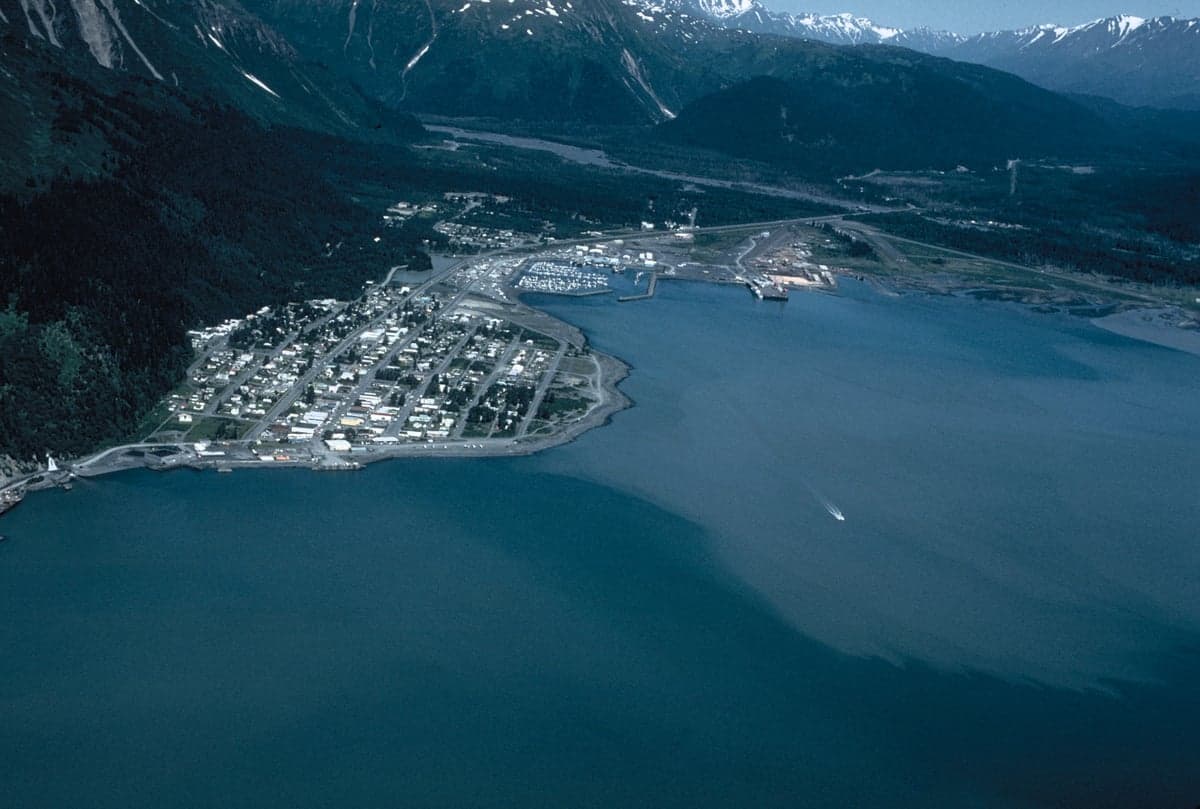
The people of Seward, Alaska, today number roughly 2,735, forming a tight-knit, predominantly white community with a distinctive frontier character shaped by its role as a transportation hub and gateway to Kenai Fjords National Park. The city’s population is notably older and more rooted than the state average, with a high proportion of long-term residents and a relatively low 2.9% foreign-born share. Seward’s identity is defined by a blend of commercial fishing families, tourism workers, and a small but stable cohort of federal and state employees tied to the Alaska Railroad and the port. This is a community where independence and self-reliance are valued, and where the population density remains low, with most residents living in single-family homes spread across a compact, walkable town.
How the city was settled and grew
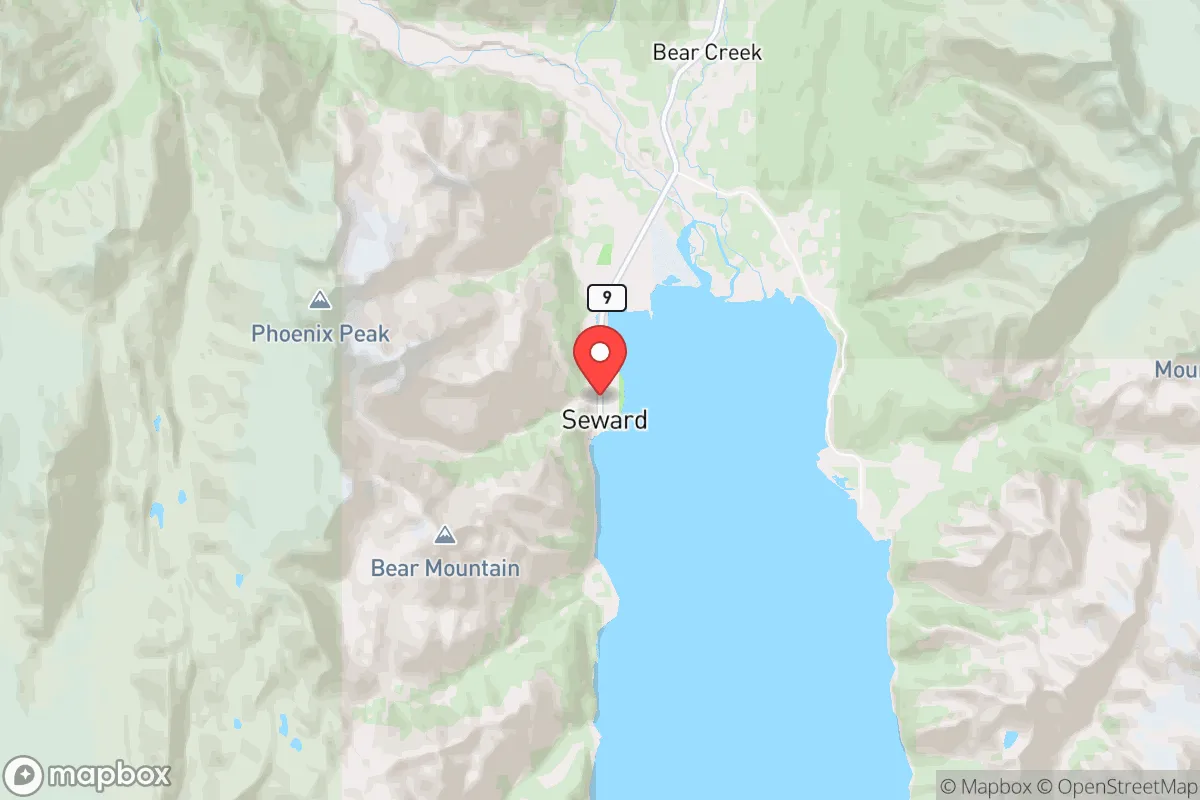
Seward’s human history begins not with indigenous settlement—the area was traditionally used by the Sugpiaq (Alutiiq) people for seasonal fishing camps—but with a deliberate act of federal infrastructure. The city was founded in 1903 as the ocean terminus of the Alaska Central Railroad (later the Alaska Railroad), a project intended to open the interior to resource extraction and settlement. The original wave of settlers were overwhelmingly white American and European railroad workers, miners, and entrepreneurs, who built the first permanent homes in the Waterfront District along Resurrection Bay. This area, with its deep-water docks and rail yards, became the heart of the working-class community, housing the laborers who unloaded cargo and serviced the trains. A second early neighborhood, Lowell Point (just south of town), grew as a fishing village, settled by Scandinavian and Finnish immigrants who brought their boat-building and net-mending skills. By the 1920s, Seward’s population had stabilized around 1,000, with the Downtown core along Fourth Avenue emerging as the commercial and civic center, dominated by saloons, hotels, and the railroad depot. The 1964 Good Friday Earthquake devastated much of the original Waterfront District, leveling homes and businesses, but the community rebuilt, with many families relocating to higher ground in the Bear Creek area, a residential neighborhood that grew rapidly in the late 1960s and 1970s.
Modern era (post-1965)
The post-1965 period brought no major foreign-born influx to Seward; the city’s demographic story is one of domestic in-migration and stabilization rather than ethnic diversification. The completion of the Seward Highway in the 1950s and the growth of the Alaska Marine Highway System in the 1960s transformed the city from a rail-dependent outpost into a year-round road-accessible community. This attracted a wave of white Alaskans from the Interior and the Mat-Su Valley, drawn by the fishing industry and the growing tourism economy. The Nash Road neighborhood, a cluster of modest homes on the north end of town, absorbed many of these new arrivals in the 1970s and 1980s, becoming a blue-collar enclave of commercial fishermen and cannery workers. The Iditarod Avenue area, near the airport, saw development of newer, larger homes in the 1990s and 2000s, attracting professionals—pilots, park rangers, and marine biologists—who work in the tourism and conservation sectors. Today, Seward’s racial composition remains overwhelmingly white at 71.8%, with a Hispanic population of 3.7% (largely seasonal workers in the seafood processing plants) and a Black population of 2.5% (many associated with the Alaska Railroad or military-related jobs). The East/Southeast Asian community (0.8%) is small and concentrated among a few families in the Waterfront District, often connected to the fishing industry. The Indian-subcontinent population is effectively zero, and the foreign-born share (2.9%) is well below the national average, reflecting the city’s limited appeal to recent immigrants.
The future
Seward’s population is not homogenizing or tribalizing into distinct ethnic enclaves; rather, it is slowly aging and stabilizing. The city’s growth rate has been flat to slightly negative over the past decade, as young adults leave for Anchorage or the Lower 48 for education and employment, while retirees from elsewhere in Alaska move in for the mild coastal climate and scenic beauty. The Hispanic community, while small, is likely to grow modestly as seafood processors continue to recruit seasonal labor from Latin America, though few settle permanently. The white population will remain dominant, but the city may see a slight increase in remote workers and second-home buyers from outside Alaska, drawn by the post-pandemic trend toward location-independent living. The Bear Creek and Nash Road neighborhoods are expected to absorb most new residential development, as they offer larger lots and lower property taxes than the older, denser Waterfront District. The next 10 to 20 years will likely see Seward remain a predominantly white, older, and stable community, with a small but persistent seasonal workforce from Hispanic and Asian backgrounds.
For someone moving in now, Seward offers a place where the population is predictable and the social fabric is woven from generations of Alaskan families. The city is not diversifying rapidly, nor is it experiencing the cultural tensions seen in larger, more heterogeneous towns. It is a community where knowing your neighbor is the norm, where the economy revolves around the sea and the railroad, and where the demographic future looks much like the present—white, rooted, and resilient.

* Values derived from national, state, county, city and local statistics and may differ in a specific area. Last updated: 2026-04-19T19:36:05.000Z
Narrative content on this page is AI-generated and may contain mistakes. Verify any details that matter before acting on them.
ReloMaps may earn a commission from affiliate links at no extra cost to you.

