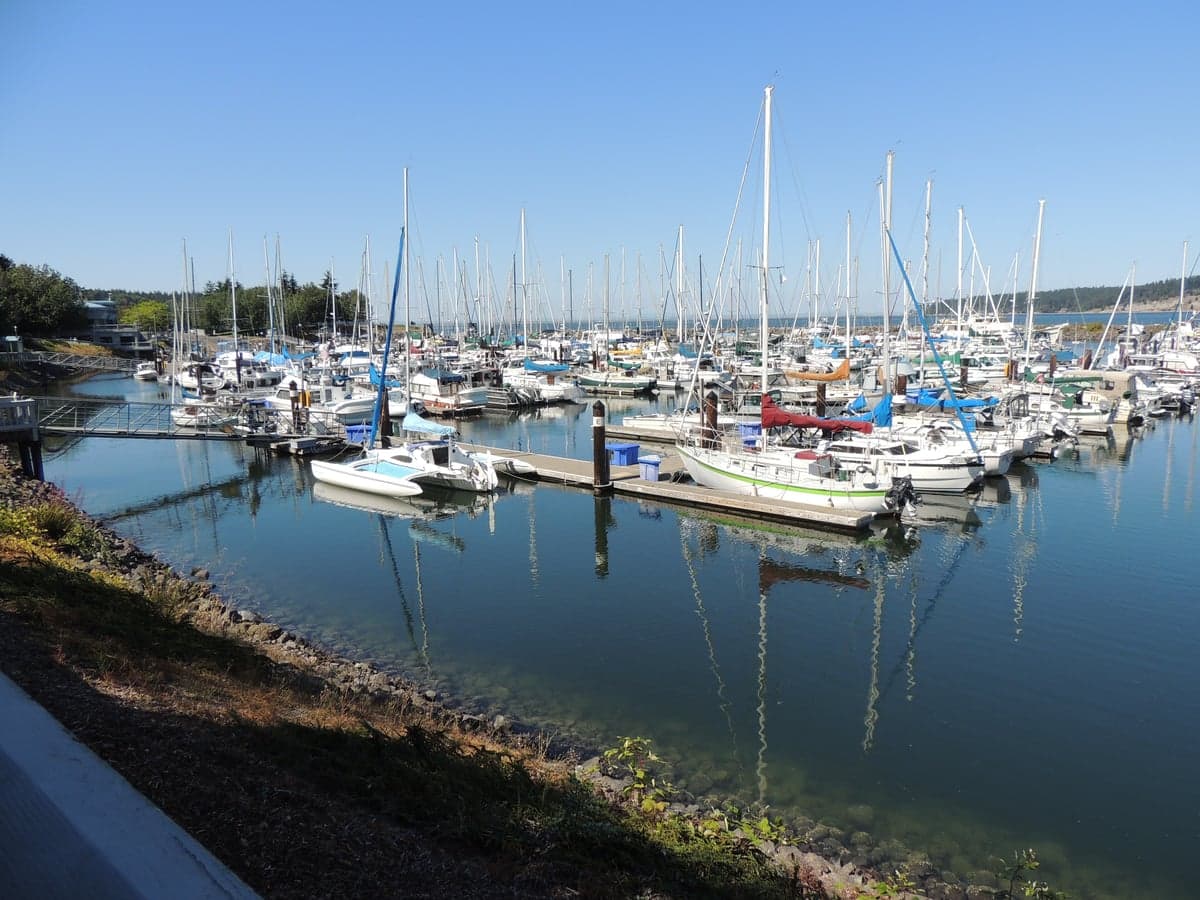
Photo: Wikipedia
Personal Sovereignty in Sequim, WA
Viable for self-reliance. Generally workable, though some barriers may limit total independence.
What does Personal Sovereignty tell us?
Personal Sovereignty measures your capacity for self-reliance and independence with minimal government friction. Higher scores mean fewer barriers between you and the way you want to live... but it assumes you have the space you need and good neighbors.
What does this tell us?
Personal Sovereignty measures your capacity for self-reliance and independence with minimal government friction. Higher scores mean fewer barriers between you and the way you want to live... but it assumes you have the space you need and good neighbors.
State Policy
Energy independence: Importer (55% of energy produced in-state)
Personal Liberty
Homesteading

Personal Liberty Analysis
Sequim, Washington, offers a notably high degree of personal sovereignty relative to many other parts of the Pacific Northwest, particularly for those who value self-reliance and minimal government intrusion in daily life. While Washington State as a whole leans progressive on many social and regulatory issues, Sequim’s location in Clallam County—a politically mixed, rural area with a strong independent streak—creates a local environment where personal autonomy is more tangible than in Seattle or King County. For a relocation-minded individual or family with conservative leanings, the key trade-off is between a relatively light local regulatory touch and a state-level framework that imposes notable constraints on taxation, self-defense, and property use. Understanding this layered sovereignty landscape is essential before making a move.
Tax burden and regulatory posture in Clallam County
Washington State’s lack of a personal income tax is a significant advantage for personal financial sovereignty, and Sequim residents benefit directly from this. The state funds itself through a combination of a high sales tax (roughly 8.7% in Clallam County, including local options) and property taxes that are moderate by national standards. For a median-priced home in Sequim (around $500,000 in 2025), annual property taxes typically run between $4,500 and $5,500, which is competitive compared to states like Texas or Illinois. However, the state’s regulatory posture is more intrusive than its tax code suggests. Washington imposes a strict State Environmental Policy Act (SEPA) review on many development projects, which can delay or block new construction, even in rural areas. Sequim’s local government is generally more permissive than the state average, but property owners should expect permitting processes for anything beyond a simple shed to take several months. The city’s zoning code is relatively straightforward, but the county’s rural zoning allows for more flexibility—a key point for those seeking to minimize bureaucratic friction.
Self-defense and gun law specifics for Sequim residents
Washington State’s gun laws have tightened significantly in recent years, which is a primary concern for sovereignty-minded individuals. As of 2025, the state requires a background check for all firearm sales, including private transactions, and has a 10-day waiting period for handgun purchases. Magazine capacity is limited to 10 rounds for rifles and 15 rounds for handguns, and the state bans certain semi-automatic firearms classified as “assault weapons.” Open carry is legal without a permit, but concealed carry requires a license, which Clallam County issues on a shall-issue basis with a relatively straightforward process. Sequim itself is a gun-friendly community, with multiple local gun shops and a strong hunting culture—the Olympic National Forest and surrounding public lands offer ample opportunities for lawful shooting. However, the state’s restrictions mean that residents cannot rely on the same level of self-defense autonomy found in states like Idaho or Montana. For those prioritizing the right to carry without restriction, Sequim represents a compromise: the local culture supports firearms ownership, but state law imposes meaningful limits on capacity and types of weapons.
Self-reliance and homesteading viability: lot sizes, zoning, and off-grid feasibility
Sequim’s agricultural and rural character makes it one of the more viable locations in Washington for homesteading and off-grid living. The city’s urban growth area allows for lot sizes as small as 6,000 square feet, but outside city limits, Clallam County zoning permits parcels as large as 5 to 20 acres in rural residential and agricultural zones. Many properties in the Dungeness Valley and along the Olympic foothills come with existing wells, septic systems, and irrigation rights, which are essential for self-sufficient living. Off-grid feasibility is high in theory, but state and county regulations impose practical hurdles. Washington requires all new dwellings to connect to a permitted water source (well or public system) and to install a compliant septic system. Solar panels are permitted, but net metering rules require a utility interconnection agreement, and battery storage is not yet fully standardized in local codes. Rainwater collection is legal for outdoor use but restricted for potable purposes without a permit. The county’s building department is known for being pragmatic, but any off-grid setup will require navigating SEPA review if it involves significant land disturbance. For those willing to work within the system, Sequim offers a genuine opportunity for a self-reliant lifestyle—just not a completely unregulated one.
Personal liberties: parental rights, medical autonomy, speech, and property
On personal liberties, Sequim reflects a mix of state mandates and local tolerance. Parental rights in Washington are generally strong, but the state has enacted laws that limit opt-out options for school curricula, including comprehensive sex education and LGBTQ-inclusive materials. Clallam County’s school districts, including Sequim School District, tend to be more community-responsive than urban districts, but parents should expect limited ability to exempt children from state-mandated content. Medical autonomy is a contested area: Washington has legalized assisted suicide and recreational cannabis, but it also mandates childhood vaccinations for school attendance (with medical and philosophical exemptions available, though the latter is under legal challenge). Sequim has a robust alternative medicine community, including several naturopathic clinics and a strong interest in holistic health, which aligns with a self-directed approach to healthcare. Free speech and property rights are protected under the state constitution, but local noise ordinances and land-use restrictions can limit certain expressive activities (e.g., shooting ranges near residential areas). The county’s planning department enforces setback requirements and height limits, but property owners generally have wide latitude to use their land for farming, workshops, or home-based businesses, provided they don’t create nuisances. Overall, Sequim offers a relatively high degree of personal liberty in daily life, but state-level mandates on education and health create friction for those seeking complete autonomy.
In the broader context of the Pacific Northwest, Sequim stands out as a place where personal sovereignty is more attainable than in urban centers, yet less absolute than in states like Idaho or Montana. The combination of no income tax, a gun-friendly local culture, viable homesteading land, and a community that values self-reliance makes it a strong candidate for those who want to live independently without complete isolation. The trade-offs are real: state-level gun restrictions, regulatory hurdles for off-grid systems, and limited parental opt-out options in schools. For a relocation researcher advising a conservative-leaning individual or family, Sequim represents a balanced choice—a place where you can own your life to a significant degree, provided you are willing to work within a system that still respects personal initiative. It is not a libertarian utopia, but it is one of the more freedom-friendly enclaves in Washington State.

* Values derived from national, state, county, city and local statistics and may differ in a specific area. Last updated: 2026-10-29T04:34:41.000Z
Narrative content on this page is AI-generated and may contain mistakes. Verify any details that matter before acting on them.
ReloMaps may earn a commission from affiliate links at no extra cost to you.

