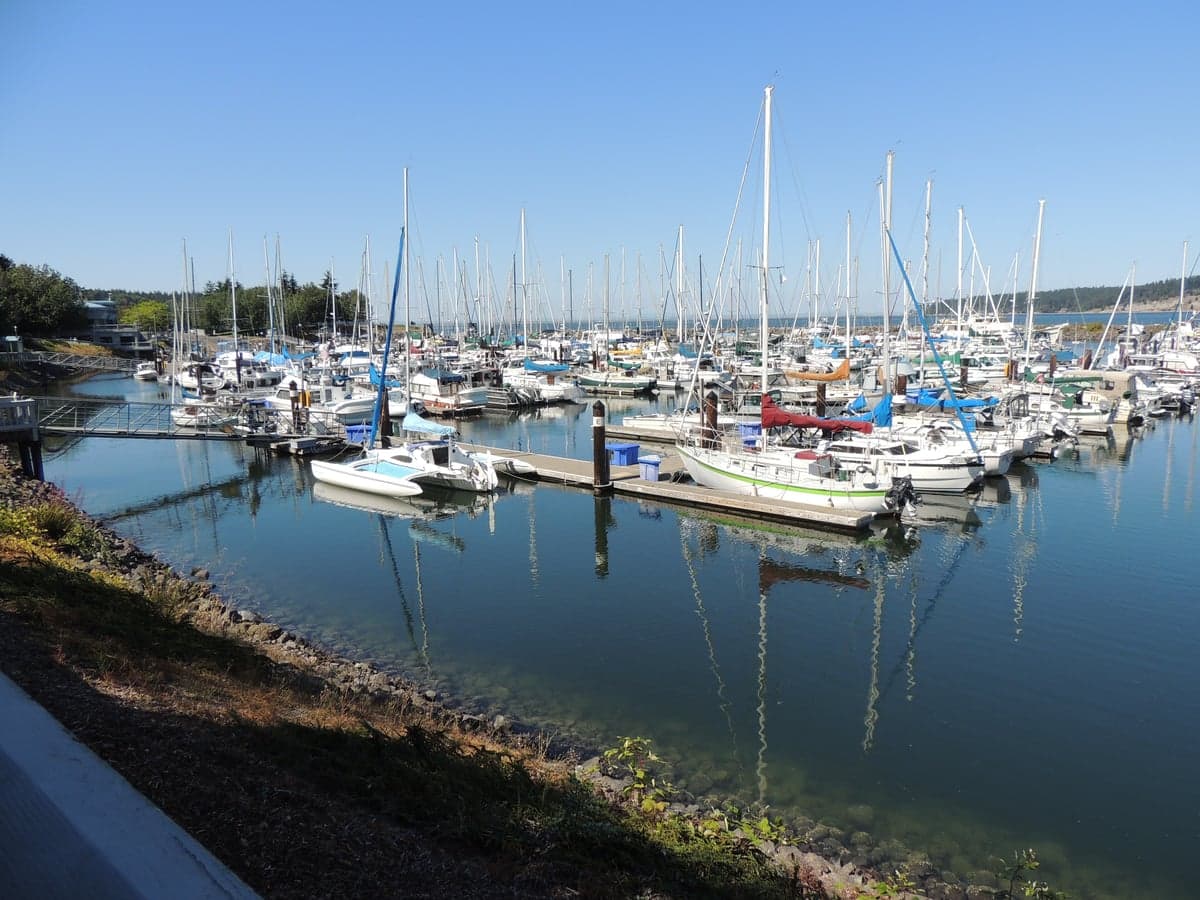
Photo: Wikipedia
Demographics of Sequim, WA
Affluence Level in Sequim, WA
A middle-class area roughly in line with national averages across income, home values, education, and employment.
People of Sequim, WA
The people of Sequim, Washington today number roughly 8,130, forming a predominantly white (82.6%) community with a notably low foreign-born share of just 2.9%. The city’s identity is shaped by a strong retiree and veteran presence drawn to the “blue hole” rain shadow climate, a growing Hispanic minority (5.0%), and small but distinct East/Southeast Asian (3.4%) and Indian-subcontinent (1.0%) populations. Despite its small size, Sequim feels older and quieter than the national average, with a median age well above 50 and a culture that prizes outdoor recreation, low crime, and conservative-leaning local politics.
How the city was settled and grew
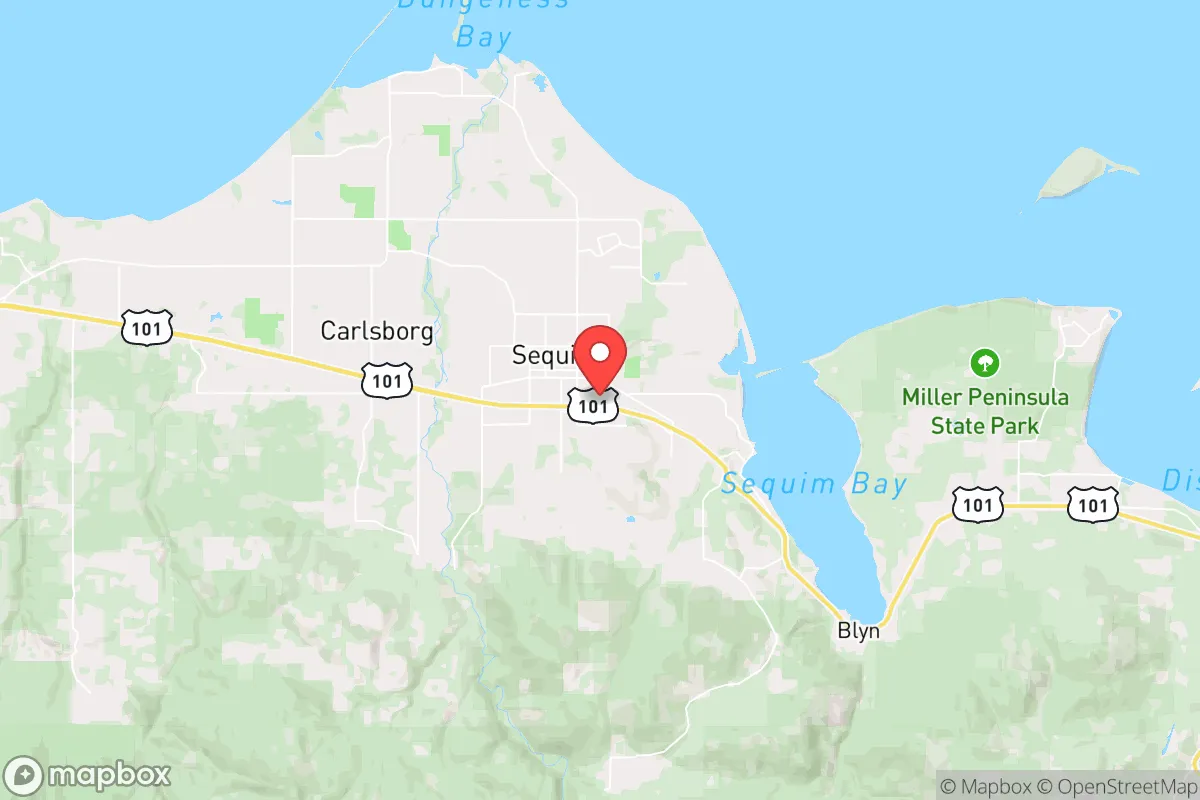
Sequim’s human history begins with the S’Klallam people, who established seasonal villages along the Dungeness River and Sequim Bay for thousands of years before European contact. The first permanent non-Native settlers arrived in the 1850s and 1860s, drawn by the Donation Land Claim Act and later the Homestead Act. These early homesteaders—mostly of English, Irish, and German stock—cleared land for dairy farming and timber around what is now Old Town Sequim, the original commercial core near Sequim Avenue and Washington Street. By the 1890s, the discovery of artesian water transformed the dry prairie into productive farmland, attracting Scandinavian immigrants, particularly Swedes and Norwegians, who settled in the Dungeness Valley area west of town. The arrival of the Seattle, Port Angeles & Eastern Railroad in 1914 spurred a modest boom, with new residents clustering in the Bell Hill neighborhood, named for early developer John Bell. Through the mid-20th century, Sequim remained a small agricultural and logging town, with a population under 1,000 as late as 1950.
Modern era (post-1965)
The modern transformation of Sequim began in earnest after the 1965 Hart-Cellar Act, though the city’s low foreign-born rate (2.9%) means immigration played a far smaller role here than in most of Washington. Instead, the dominant post-1965 trend has been domestic in-migration, especially of retirees from California, Oregon, and the Midwest seeking the area’s mild, dry climate and lower cost of living. This wave accelerated in the 1980s and 1990s, filling new subdivisions like SunLand, a golf-course community on the west side that became a magnet for active adults, and Carlsborg, an unincorporated area east of town where younger families and service workers found more affordable housing. The Hispanic population, now 5.0%, grew primarily through agricultural labor in the Dungeness Valley’s berry and lavender farms, with many families settling in the River Road corridor south of town. East/Southeast Asian residents (3.4%) include a small but established Filipino community, many of whom arrived via military or healthcare connections and live scattered through the Blyn area near the Jamestown S’Klallam Tribe’s casino and health center. The Indian-subcontinent community (1.0%) is newer, largely composed of professionals in healthcare and technology who tend to settle in the Sequim Bay waterfront neighborhoods. The Black population (2.0%) remains small but has grown slightly since 2000, concentrated in no single neighborhood.
The future
Sequim’s population is projected to continue growing slowly, reaching roughly 9,000–9,500 by 2035, driven almost entirely by domestic in-migration of retirees and remote workers. The city is becoming slightly more diverse: the Hispanic share is expected to rise toward 7–8% as agricultural families age in place and new service-sector workers arrive, while the East/Southeast Asian and Indian-subcontinent shares may each inch toward 2% as healthcare and tech jobs expand at Olympic Medical Center and the nearby Pacific Northwest National Laboratory campus. However, the foreign-born rate will likely remain well below the national average, and the white share will stay above 75%. New development is concentrating in the West Sequim corridor along US-101, where master-planned communities like Woods Meadow are targeting active adults, and in the East Sequim industrial area, where light manufacturing and warehousing are drawing younger workers. Culturally, Sequim is likely to retain its conservative, retiree-oriented character, though a growing number of younger families—attracted by relatively affordable housing compared to Seattle or Portland—may gradually shift local politics toward a more moderate center.
For someone moving in now, Sequim offers a stable, slow-growing community where the population is older, whiter, and more politically conservative than the state average, but where small but visible Hispanic, Asian, and Indian-subcontinent communities are quietly expanding. The city’s future is one of gradual diversification within a firmly established retiree culture—a place where newcomers will find a welcoming but not rapidly changing social landscape.

* Values derived from national, state, county, city and local statistics and may differ in a specific area. Last updated: 2026-10-29T04:34:41.000Z
Narrative content on this page is AI-generated and may contain mistakes. Verify any details that matter before acting on them.
ReloMaps may earn a commission from affiliate links at no extra cost to you.

