 Popular
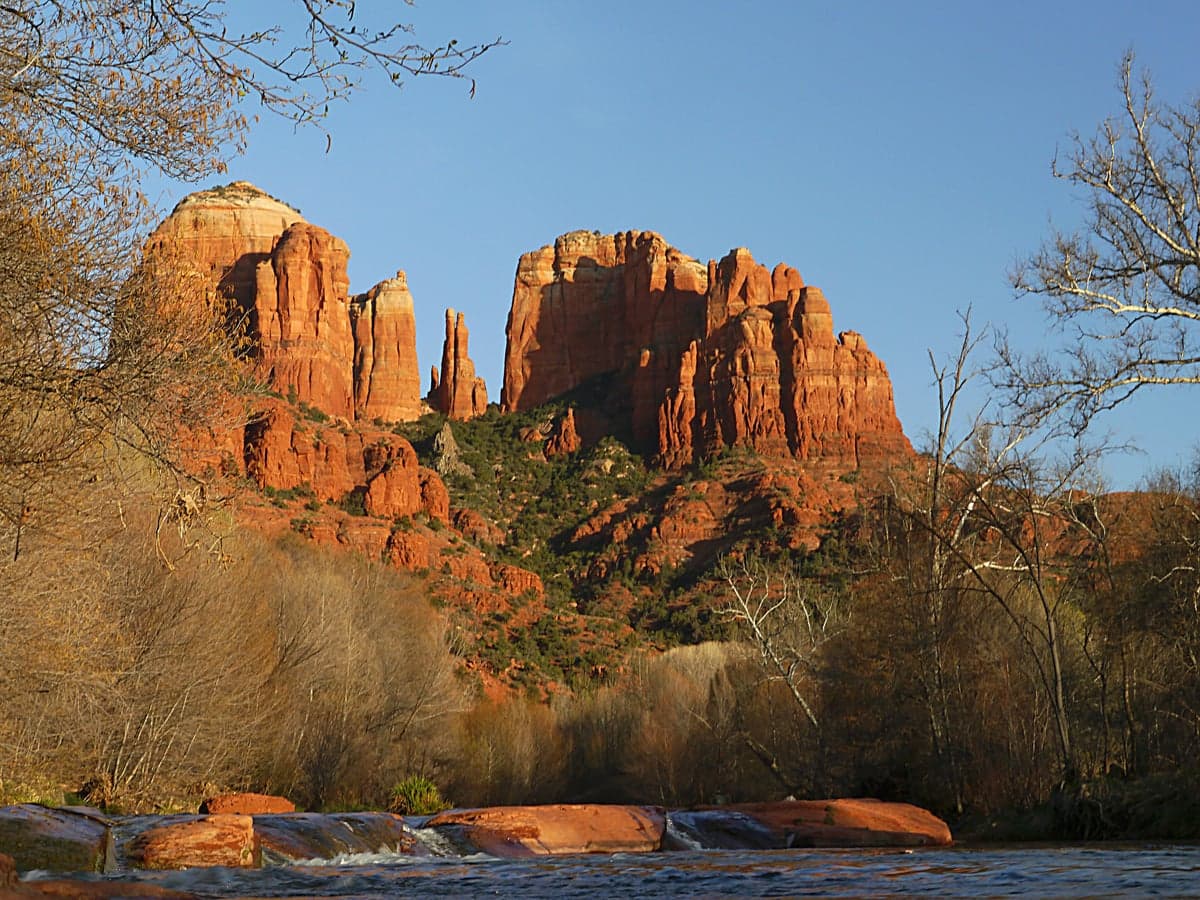
Photo: Wikipedia
Personal Sovereignty in Sedona, AZ
Viable for self-reliance. Generally workable, though some barriers may limit total independence.
What does Personal Sovereignty tell us?
Personal Sovereignty measures your capacity for self-reliance and independence with minimal government friction. Higher scores mean fewer barriers between you and the way you want to live... but it assumes you have the space you need and good neighbors.
What does this tell us?
Personal Sovereignty measures your capacity for self-reliance and independence with minimal government friction. Higher scores mean fewer barriers between you and the way you want to live... but it assumes you have the space you need and good neighbors.
State Policy
Energy independence: Importer (20% of energy produced in-state)
Personal Liberty
Homesteading

Personal Liberty Analysis
For the strategic-minded individual or family evaluating Sedona, Arizona, as a relocation destination, the concept of personal sovereignty is a critical lens. Sedona offers a unique paradox: a deeply blue, tourist-driven town nestled within a red state that generally champions individual liberties. While the local municipal government leans progressive, the overarching legal framework of Arizona provides a robust foundation for self-reliance, gun rights, and limited government overreach that a survivalist or prepper mindset will find appealing. The key is understanding where the state's protections end and where local ordinances begin, particularly regarding land use and regulatory enforcement.
Tax burden and regulatory posture in Sedona vs. Arizona state law
Arizona is a low-tax state with no state-level estate or inheritance taxes, and a flat income tax rate of 2.5% as of 2026. This is a significant advantage for anyone seeking to maximize retained earnings for self-sufficiency investments. Sedona itself imposes a 3.75% city sales tax on top of the state's 5.6% rate, bringing the combined rate to over 9% in some areas—a notable bite for daily purchases. However, property taxes remain a bright spot. Yavapai County, which encompasses Sedona, has an effective property tax rate of roughly 0.6% of assessed value, well below the national average. This low property tax burden directly supports long-term land ownership and homesteading goals. On the regulatory front, Arizona is a right-to-work state with minimal business licensing hurdles, but Sedona's local zoning is notoriously strict. The city's General Plan heavily restricts commercial development and enforces stringent building codes, particularly regarding water usage and environmental impact. For a prepper, this means that while the state won't tax you into poverty, the local government will actively limit your ability to modify your property or build independent infrastructure without costly permits and environmental reviews. The regulatory posture here is best described as "state freedom, local control"—and local control in Sedona is decidedly green and restrictive.
Self-defense and gun law specifics in Arizona and Sedona
Arizona is a constitutional carry state, meaning no permit is required to carry a concealed firearm for anyone legally allowed to possess one. This is a bedrock of personal sovereignty for the prepper community. There is no state-level firearm registration, no waiting periods for purchases, and no magazine capacity restrictions. Stand-your-ground laws are fully in effect, with no duty to retreat in any place where you are lawfully present. Sedona itself has no local gun ordinances that supersede state law, so the city cannot ban open carry or impose additional storage requirements. However, the practical reality is that Sedona is a tourist-heavy, liberal-leaning enclave. Open carry in downtown Sedona or near popular trailheads may draw unwanted attention from law enforcement or confrontations from anti-gun visitors. The safer play for a survivalist is concealed carry, which is fully legal without a permit. For those building a long-term cache, Arizona law explicitly protects the right to keep firearms in your vehicle, even on school parking lots, and prohibits employers from banning firearms locked in personal vehicles. The state also has strong preemption laws, meaning no city—including Sedona—can pass its own gun control measures. This legal shield is a major plus for anyone prioritizing self-defense as a core component of personal sovereignty.
Self-reliance and homesteading viability: lot sizes, zoning, and off-grid feasibility
This is where Sedona's appeal for the self-reliant individual becomes complicated. The city's zoning is heavily oriented toward preserving the red-rock viewshed and managing water resources. Minimum lot sizes within the city limits are typically one acre or larger in residential zones, but many parcels are smaller due to historic subdivisions. Outside city limits, in unincorporated Yavapai County, you can find larger parcels—2.5 to 5 acres or more—that offer more flexibility. Off-grid living is legally feasible but practically challenging. Arizona state law does not prohibit rainwater harvesting, and Sedona actually encourages it through rebate programs. Solar panels are allowed, but homeowners' associations (HOAs) in many Sedona neighborhoods may restrict their placement or visibility. Composting toilets and greywater systems are permitted under state health codes, but require permits and inspections from Yavapai County. The biggest hurdle is water. Sedona relies on a combination of groundwater and reclaimed water, and new construction often requires proof of a 100-year assured water supply. This makes drilling a private well expensive and subject to strict groundwater management rules. For a prepper looking to be fully off-grid, the surrounding areas of Cornville, Camp Verde, or the Verde Valley offer more permissive zoning and cheaper land, while still being within a 30-minute drive of Sedona's amenities. The city itself is not a homesteading paradise, but the broader region provides viable options for those willing to live outside the tourist bubble.
Personal liberties: parental rights, medical autonomy, speech, and property
Arizona has a strong track record on parental rights. The state has a Parents' Bill of Rights law that affirms the fundamental right of parents to direct the upbringing, education, and healthcare of their children. This includes the right to opt out of public school curricula and to access school records without bureaucratic hurdles. Sedona's public schools, part of the Sedona-Oak Creek Unified School District, are generally well-regarded but lean progressive in curriculum. For parents concerned about government overreach in education, Arizona's robust school choice program—including Empowerment Scholarship Accounts (ESAs)—allows you to redirect state education funding to private, charter, or homeschool options. This is a powerful tool for maintaining control over your child's education. On medical autonomy, Arizona is a mixed bag. The state does not have a broad medical freedom law, but it does allow for naturopathic doctors and has relatively loose vaccine mandates compared to blue states. However, Sedona's local health community is heavily alternative, with many practitioners offering holistic and functional medicine. Property rights are generally strong under Arizona law, with the state's "Arizona Private Property Rights Protection Act" requiring government to compensate landowners for regulatory takings. That said, Sedona's strict zoning and environmental overlay districts can feel like a de facto taking for anyone wanting to build a bunker or a self-sufficient compound. Free speech is fully protected, and Sedona's public forums—including the city council meetings and local media—are active, though the dominant political culture is left-leaning, so conservative viewpoints may face social friction rather than legal suppression.
Overall, Sedona offers a high degree of personal sovereignty relative to most coastal blue states, but it is not a libertarian free zone. The state-level protections—constitutional carry, low taxes, school choice, and parental rights—provide a strong baseline for a survivalist or prepper lifestyle. The local reality, however, is that Sedona's municipal government and cultural climate are actively hostile to many forms of self-reliance, particularly off-grid development and visible gun ownership. For the strategic relocator, the smart play is to live outside the city limits—in the unincorporated areas of Yavapai County or the nearby Verde Valley—where you can leverage Arizona's state-level freedoms while avoiding Sedona's local regulatory drag. The red-rock beauty is real, but so are the trade-offs. If your priority is maximum personal sovereignty with minimal government interference, the rural fringes of the region offer a far better fit than the city itself.

* Values derived from national, state, county, city and local statistics and may differ in a specific area. Last updated: 2026-05-14T18:03:46.000Z
Narrative content on this page is AI-generated and may contain mistakes. Verify any details that matter before acting on them.
ReloMaps may earn a commission from affiliate links at no extra cost to you.

