
Photo: Wikipedia
Personal Sovereignty in Seatac, WA
Viable for self-reliance. Generally workable, though some barriers may limit total independence.
What does Personal Sovereignty tell us?
Personal Sovereignty measures your capacity for self-reliance and independence with minimal government friction. Higher scores mean fewer barriers between you and the way you want to live... but it assumes you have the space you need and good neighbors.
What does this tell us?
Personal Sovereignty measures your capacity for self-reliance and independence with minimal government friction. Higher scores mean fewer barriers between you and the way you want to live... but it assumes you have the space you need and good neighbors.
State Policy
Energy independence: Importer (55% of energy produced in-state)
Personal Liberty
Homesteading

Personal Liberty Analysis
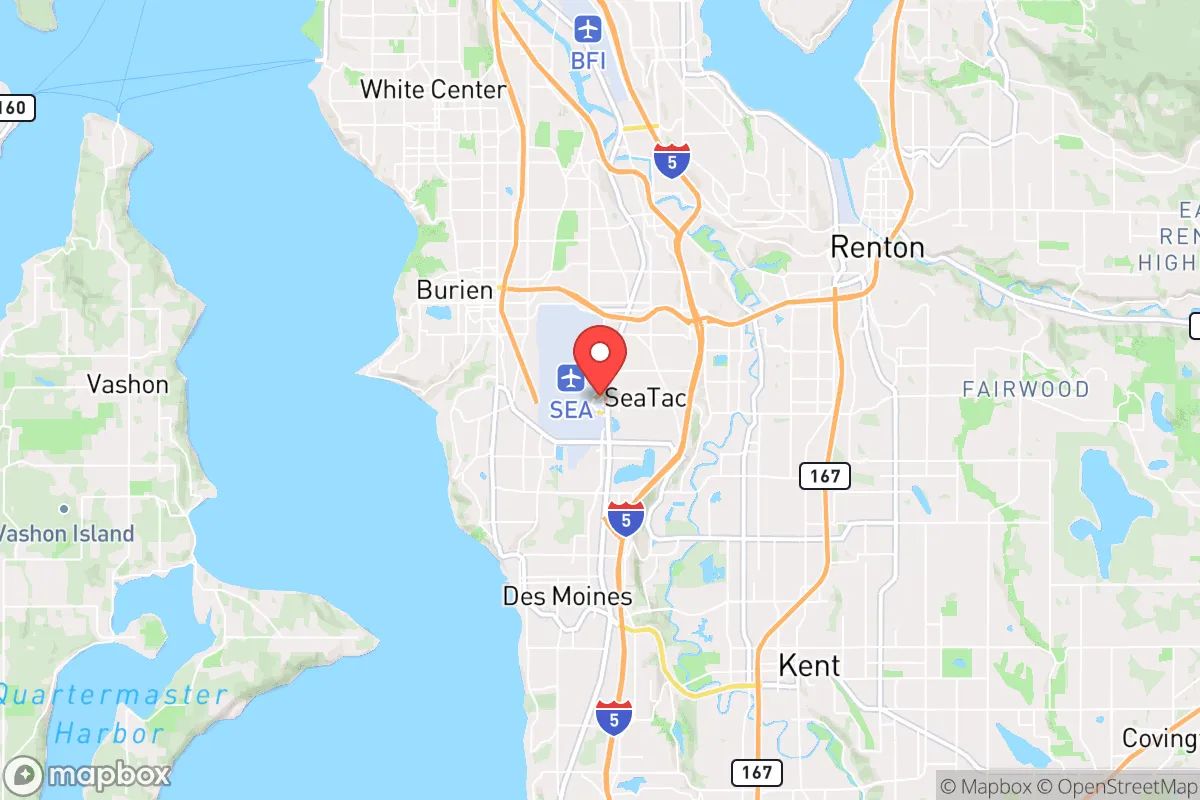
SeaTac, Washington, presents a challenging environment for personal sovereignty, where state-level policies significantly constrain individual autonomy despite the city’s proximity to rural escape routes. For those prioritizing self-reliance and minimal government interference, the area’s high tax burden, restrictive gun laws, and limited homesteading potential create a landscape that demands careful strategic consideration. While the Pacific Northwest offers natural resources and a relatively independent-minded culture, King County’s regulatory apparatus and the state’s progressive legal framework often override local flexibility, making SeaTac a location where personal sovereignty is more about navigating restrictions than enjoying freedoms.
Tax burden and regulatory posture: how Washington’s system impacts your autonomy
Washington State’s tax structure is a double-edged sword for sovereignty-minded individuals. There is no state income tax, which preserves more of your earnings for self-directed investments in land, supplies, or training. However, the state compensates with some of the highest sales taxes in the nation—SeaTac’s combined rate is around 10.4% as of 2026—and high property taxes that fund expansive government programs. For a prepper or survivalist, this means every purchase of gear, building materials, or bulk supplies carries a significant premium, effectively taxing self-reliance efforts. The regulatory posture in King County is equally burdensome: building permits, land-use changes, and even minor home modifications require extensive approvals, with fees that can run into thousands of dollars. The state’s Growth Management Act heavily restricts rural development, and SeaTac’s urban growth boundary limits your ability to buy undeveloped land for a retreat within a reasonable commute. This regulatory density creates a friction that erodes personal sovereignty, forcing you to either comply with costly processes or operate outside the system—a risky proposition in a jurisdiction with active code enforcement.
Self-defense and gun law specifics: what you can and cannot do in SeaTac
Washington’s gun laws are among the most restrictive in the West, and SeaTac residents face a web of limitations that directly impact self-defense capabilities. The state banned the sale of many semi-automatic rifles and standard-capacity magazines (over 10 rounds) in 2023, and a 2024 law requires a 10-day waiting period for all firearm purchases, including handguns. Concealed carry permits are shall-issue, but the process involves fingerprinting, a background check, and a fee—and open carry is effectively prohibited in many public spaces due to local ordinances and the state’s “sensitive places” restrictions, which include parks, transit stations, and government buildings. SeaTac’s proximity to Seattle-Tacoma International Airport adds another layer: carrying on airport property, even in parking lots, can lead to charges under state law. For a prepper, this means your defensive options are limited to bolt-action rifles, pump shotguns, and handguns with restricted magazine capacity. Magazine capacity restrictions are particularly galling for those who view self-defense as a fundamental right. The state also has a “red flag” law that allows authorities to seize firearms based on a court order without a criminal conviction, a tool that sovereignty-minded individuals view as a direct threat to due process. If self-defense is a priority, SeaTac is a location where you must be prepared to navigate a hostile legal environment, potentially storing critical gear outside the county or state.
Self-reliance and homesteading viability: lot sizes, zoning, and off-grid feasibility
SeaTac’s urban character makes traditional homesteading nearly impossible. The city is dominated by small residential lots—typically 5,000 to 7,000 square feet—with strict zoning that prohibits livestock, extensive gardening, or any structures not approved by the city. Raising chickens is allowed with a permit, but goats, bees, or larger animals are banned in most residential zones. Off-grid living is effectively illegal: the city requires connection to municipal water and sewer, and solar panels must be grid-tied with utility approval. Rainwater collection is permitted but limited to 5,000 gallons per property, and any system must be registered with the health department. For a survivalist seeking true self-reliance, SeaTac offers little. The best strategy is to view the city as a base for income generation while maintaining a separate property in a less regulated county—like Mason or Lewis County, where lot sizes of 5+ acres are common and zoning is more permissive. Even then, the commute from those areas to SeaTac can be 90 minutes or more, which is a trade-off many preppers accept. Within the city, the focus should be on urban preparedness: secure storage, water filtration, and a bug-out plan that accounts for the dense population and limited escape routes (I-5 and SR 99 are notorious chokepoints).
Personal liberties: parental rights, medical autonomy, speech, and property
Washington State has a mixed record on personal liberties that directly affects families and individuals in SeaTac. Parental rights are under pressure: the state mandates comprehensive sexual education in public schools, and parents cannot opt their children out of specific lessons—only the entire curriculum. Medical autonomy is similarly constrained. Washington has a strict vaccine mandate for school attendance, and during public health emergencies, the governor has broad authority to mandate treatments or restrictions, as seen during COVID-19. For those who prioritize medical choice, this is a significant sovereignty loss. Free speech is protected under the state constitution, but SeaTac has local ordinances that restrict “disruptive” speech in public forums, and the state’s hate crime laws are aggressively enforced. Property rights are the weakest link: the state’s Growth Management Act gives local governments broad power to downzone land, restrict development, and impose environmental regulations that can effectively take property value without compensation. The city’s tree ordinance, for example, requires permits to remove even dead trees on private property, with fines up to $5,000 per violation. For a prepper who values the right to modify their property for security or self-sufficiency, these rules are a constant source of friction. The overall environment is one where personal liberties are conditional, subject to the shifting priorities of a state government that views individual autonomy as secondary to collective goals.
Compared to other areas in the Pacific Northwest, SeaTac ranks low on personal sovereignty. Neighboring cities in Pierce County, like Puyallup or Graham, offer more permissive zoning, lower taxes, and a less aggressive regulatory posture, while rural counties like Ferry or Stevens provide near-total freedom for those willing to live off-grid. For a conservative-leaning individual or family focused on self-reliance, SeaTac is best approached as a temporary base or a strategic location for employment, not a long-term sovereignty haven. The trade-off is clear: you gain access to a major airport and urban infrastructure, but you sacrifice the autonomy to live, defend, and provide for yourself on your own terms. If you choose to settle here, plan for constant vigilance, legal compliance costs, and a secondary property in a more freedom-friendly jurisdiction. The state’s trajectory suggests these restrictions will only tighten, making SeaTac a place to operate from, not to build a sovereign life in.

* Values derived from national, state, county, city and local statistics and may differ in a specific area. Last updated: 2026-04-21T11:15:05.000Z
Narrative content on this page is AI-generated and may contain mistakes. Verify any details that matter before acting on them.
ReloMaps may earn a commission from affiliate links at no extra cost to you.

