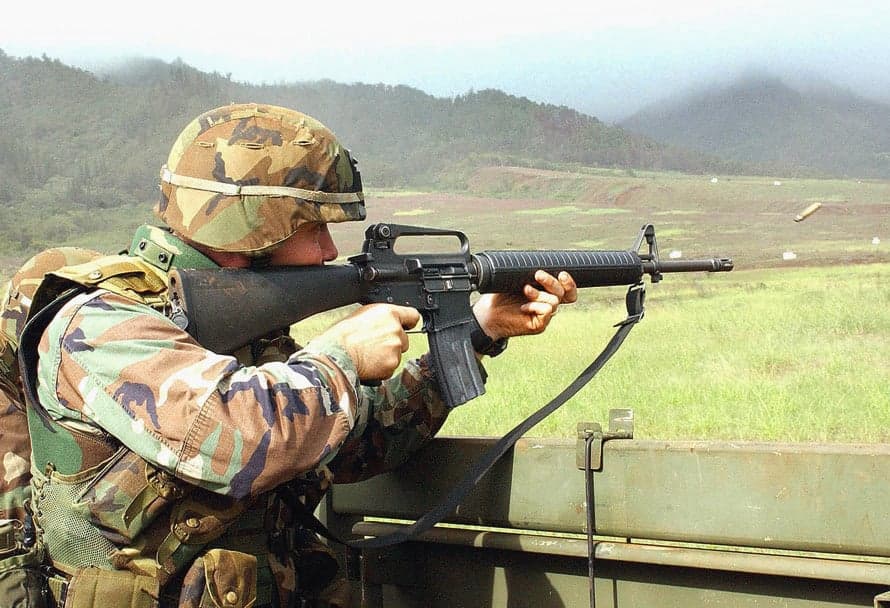
Photo: Wikipedia
Strategic Assessment of Schofield Barracks, HI
Meaningful friction. Expect exposure to either population pressure, blast zones, or natural disaster risk. Consider buying a retreat property.
What does the Strategic Assessment tell us?
Our Strategic Assessment grades tactical survivability of an area. Major population centers, military targets, fallout zones, natural disasters, and border exposure all drive risk — lower exposure means a more defensible position in a crisis.
This is heavily inspired by Joel Skousen's Strategic Relocation book. Highly recommended you checkout the book ($)What does this tell us?
Our Strategic Assessment grades tactical survivability of an area. Major population centers, military targets, fallout zones, natural disasters, and border exposure all drive risk — lower exposure means a more defensible position in a crisis.
This is heavily inspired by Joel Skousen's Strategic Relocation book. Highly recommended you checkout the book ($)Strategic Pillars

Key Distances
Regional Safe Places
Below is our recommended "safe zones" in Hawaii and the surrounding area based on our strategic heuristics. For most people, it's unrealistic to live in a “safe zone” full-time due to work, family or other personal reasons. They tend to be more rural. However, many of these areas are perfect for second homes and retreat properties that double as a vacation home or even a short-term rental.

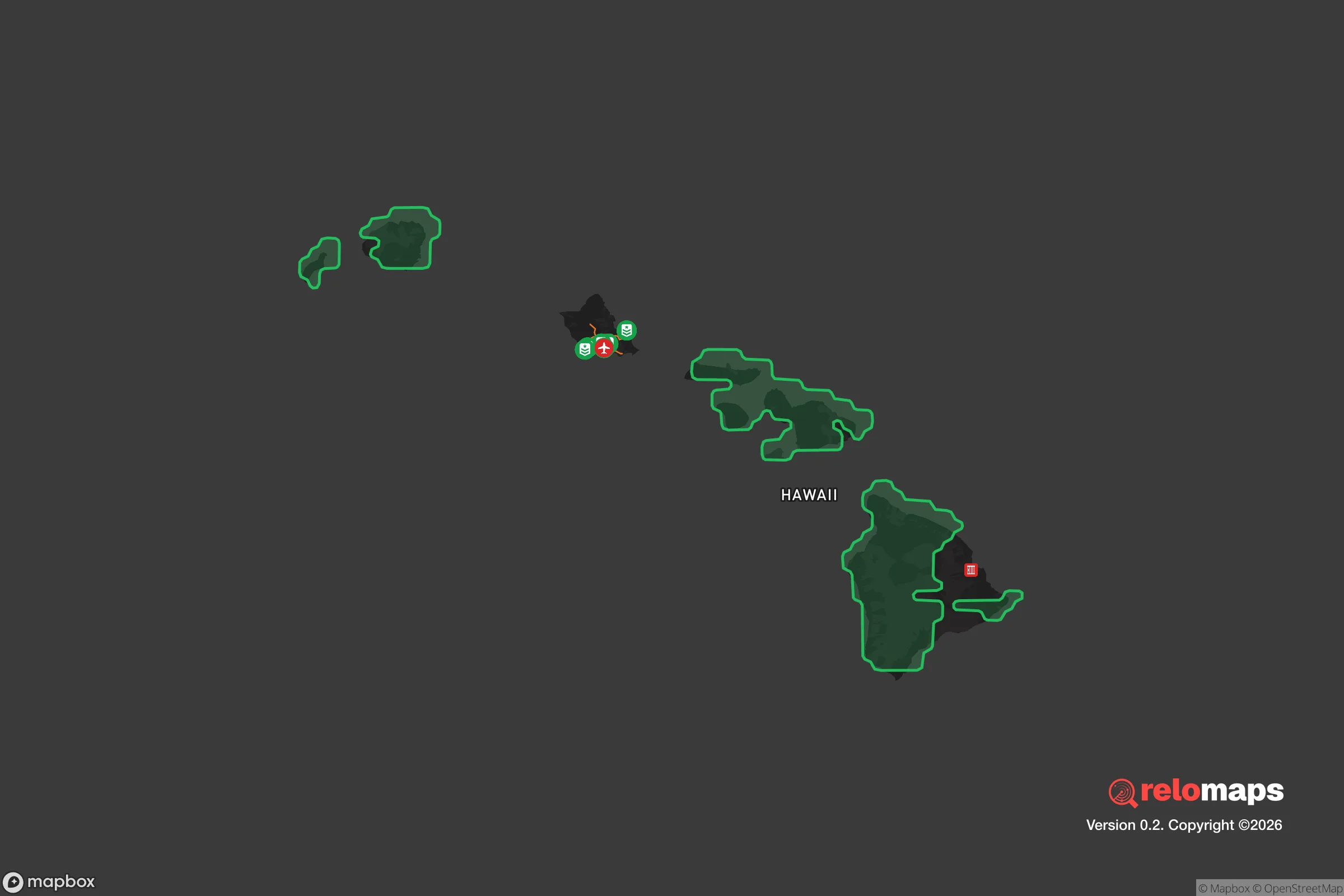


Important Note: For informational purposes only. This does not mean nothing bad ever happens in the green zones. Please use common sense. This is based on public data and modeled with AI. We tried to take a conservative approach but mistakes happen. We update this regularly as new information becomes available.
Solar Generator Recommendations
Backup power matters more here than in safer locations. We've picked three solar generators across budgets and capacity tiers — start with the budget unit if you only need a few essentials, or step up if you want to run a fridge and HVAC for days at a time.

Jackery Portable Power Station Explorer 300
Budget OptionPower on the Go: Weighing only 11 lbs, it's convenient to set up and store with book-sized foldable solar panels

BLUETTI Portable Power Station AC180
Designed for both indoor and outdoor scenarios, AC180 is highly capable as it has a robost capacity and continuous output power.

EF ECOFLOW DELTA Pro Ultra Power Station
Upgraded PickEcoFlow DELTA Pro Ultra is a whole-home energy system designed to grow with your family. Integrated with the Smart Home Panel 2, it scales to meet your evolving energy needs — keeping your home powered, intelligent, and secure through every stage of life.
We earn a commission, at no additional cost to you.
Strategic Assessment Analysis
Schofield Barracks sits in a uniquely resilient position on Oahu, offering a rare combination of geographic isolation and robust infrastructure that makes it one of the more defensible military installations in the Pacific. For the single individual or family thinking about long-term preparedness, this base provides a strategic foothold far from the mainland’s crumbling urban centers, yet close enough to critical supply chains and natural resources to sustain a community through disruption. The key advantage here is that Schofield is not just a base—it’s a self-contained ecosystem with its own power, water, and food systems, all nestled in the leeward side of the island, away from the densest population centers like Honolulu and Waikiki.
Geographic position and natural advantages for long-term security
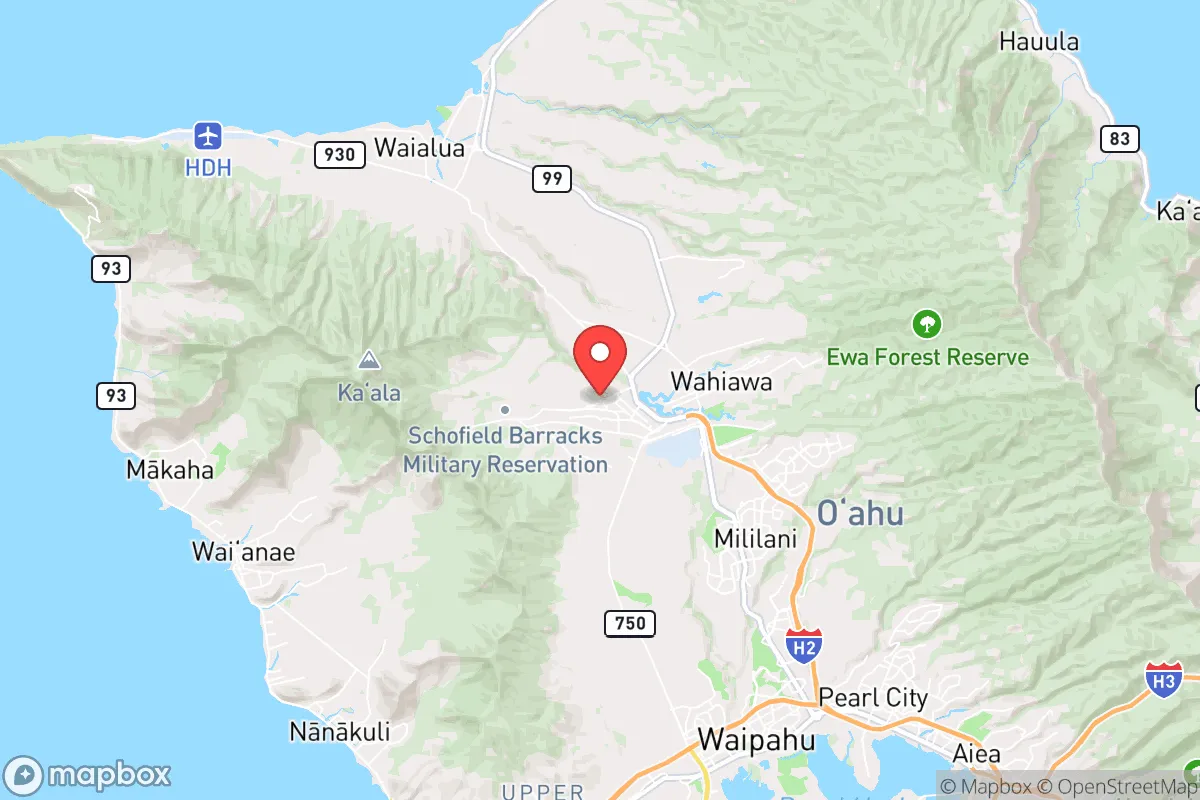
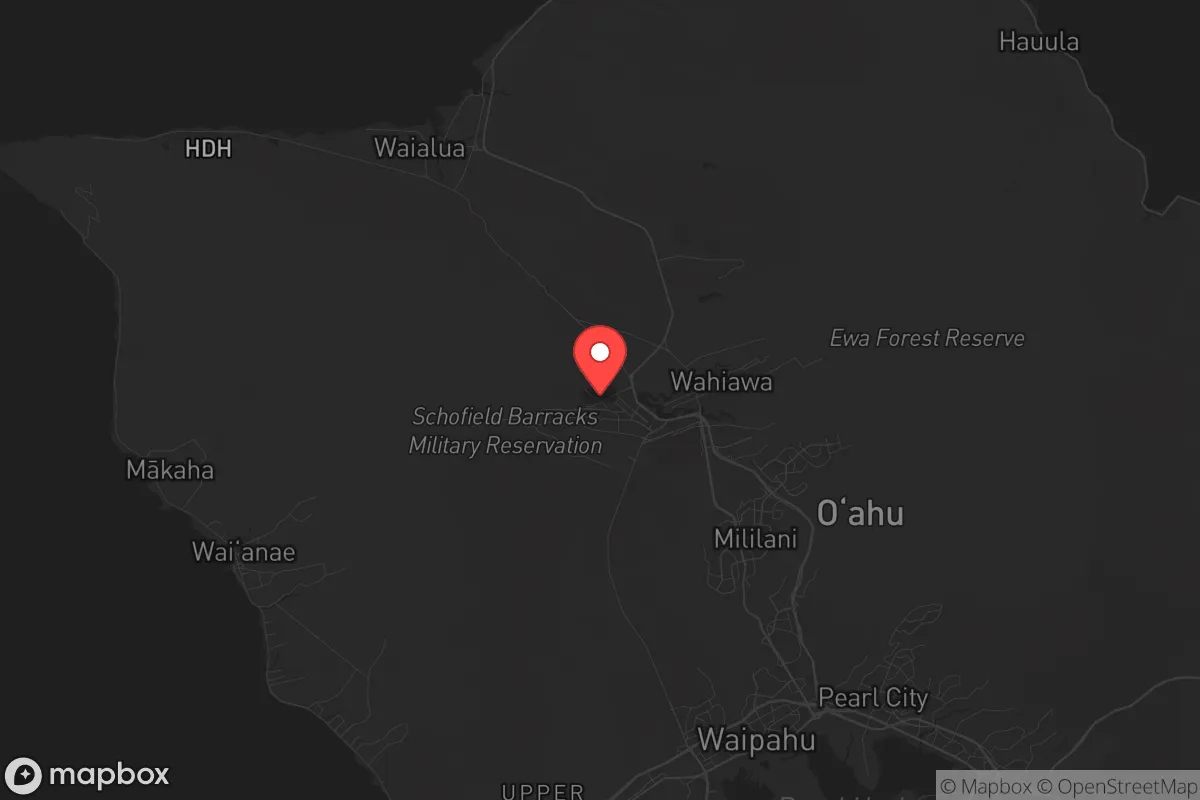
Schofield Barracks sits in central Oahu, roughly 20 miles northwest of Honolulu, but the terrain and layout create a natural buffer. The base is flanked by the Waianae Range to the west and the Koolau Range to the east, forming a valley that’s both sheltered and defensible. This positioning means that in the event of a major disaster—whether a hurricane, tsunami, or civil unrest—the base is less exposed to coastal storm surges and the chaos that would engulf Honolulu’s waterfront. The elevation, around 800 to 1,000 feet, also reduces flood risk and provides vantage points for monitoring the surrounding area. For a prepper mindset, this is a significant plus: you’re not in a low-lying floodplain or a dense urban grid where escape routes can be cut off. The base’s proximity to the North Shore (about 30 minutes) and the leeward coast (about 20 minutes) also gives you access to multiple evacuation routes via the H2 freeway and Kamehameha Highway, though these roads can choke quickly in a crisis. The natural advantages here are real: consistent trade winds moderate temperatures year-round, and the volcanic soil supports agriculture, which is a long-term food security consideration.
Risks, exposures, and proximity to fallout-relevant landmarks
No strategic assessment is honest without addressing the downsides, and Schofield has a few that should give a conservative prepper pause. The most obvious is its location on an island—Oahu is a small target in a big ocean, and any major event that disrupts shipping (a war in the South China Sea, a Pacific tsunami, or a pandemic that halts cargo) would hit this base hard within weeks. The base is also within 15 miles of Pearl Harbor and Hickam Air Force Base, which are prime targets in any peer-level conflict. If a conventional or nuclear exchange occurs, Schofield is close enough to feel the effects of a strike on those facilities—fallout patterns from a surface burst at Pearl could drift over central Oahu depending on wind direction. Additionally, the base is about 10 miles from the Waianae Coast, which has seen periodic civil unrest and gang activity, and while the base itself is secure, the surrounding communities (Wahiawa, Mililani, and Waipahu) could become flashpoints during a resource shortage. The biggest exposure is the single-point-of-failure nature of Oahu’s infrastructure: the H3 freeway and the main power grid are vulnerable to sabotage or natural disaster. For a relocator, this means you need to plan for at least 30 days of self-sufficiency, because resupply from the mainland could be delayed indefinitely.
Practical resilience for a relocator: food, water, energy, and defensibility
On the practical side, Schofield Barracks offers some of the best built-in resilience of any military base in the Pacific. The base has its own water supply from the Schofield Aquifer, which is one of the largest freshwater sources on Oahu, and the water treatment plant is hardened against most natural disasters. This is a massive advantage over civilian neighborhoods that rely on the Honolulu Board of Water Supply, which could be compromised in a major earthquake or cyberattack. For food, the base operates a commissary and exchange, but more importantly, the surrounding agricultural land (Dole Plantation, local farms in Wahiawa) provides a buffer—though you’d want to establish relationships with local growers before a crisis. Energy is a mixed bag: the base is connected to the Hawaiian Electric grid, which is notoriously fragile (rolling blackouts are common during peak demand), but Schofield also has backup diesel generators and a microgrid capability for critical facilities. For a family, this means you should invest in solar panels and battery storage, as the sun is reliable year-round. Defensibility is where Schofield shines: the base is gated, patrolled by military police, and has a layered security perimeter. In a scenario of civil unrest, the base would likely lock down and become a safe zone, but you’d need to be on the inside to benefit. For single individuals, the barracks offer communal living that can be a double-edged sword—good for pooling resources, bad for privacy during a breakdown. Parents should note that the on-base schools (Schofield Elementary, etc.) are well-run and would likely continue operations during a localized crisis, but a island-wide event would close them indefinitely.
The overall strategic picture for Schofield Barracks is one of calculated trade-offs. It’s not a bug-out location in the wilderness—it’s a fortified enclave in a fragile island ecosystem. For the conservative-minded relocator who values order, community, and preparedness, this base offers a rare combination of institutional support and natural advantages that most civilian areas lack. But the risks are real: isolation from the mainland, dependence on a single port, and proximity to high-value military targets. If you’re willing to invest in self-sufficiency—storing food, water, and medical supplies for 60 to 90 days, and building relationships with other prepared families on base—Schofield can be a viable long-term haven. If you’re looking for a place to ride out the coming storms, this is one of the better bets in the Pacific, but only if you treat it as a starting point, not a guarantee. The base gives you a solid foundation; the rest is up to you.

* Values derived from national, state, county, city and local statistics and may differ in a specific area. Last updated: 2026-04-24T07:19:23.000Z
Narrative content on this page is AI-generated and may contain mistakes. Verify any details that matter before acting on them.
ReloMaps may earn a commission from affiliate links at no extra cost to you.

