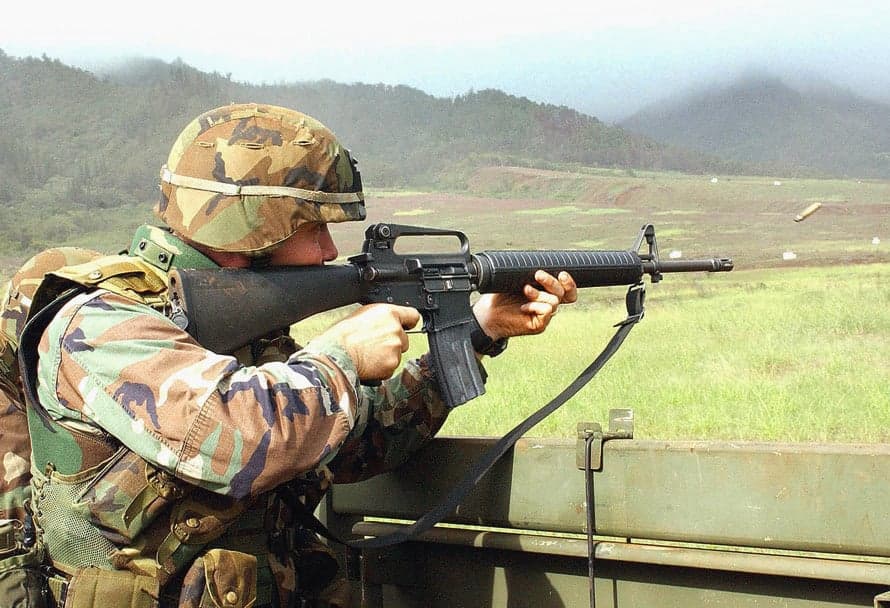
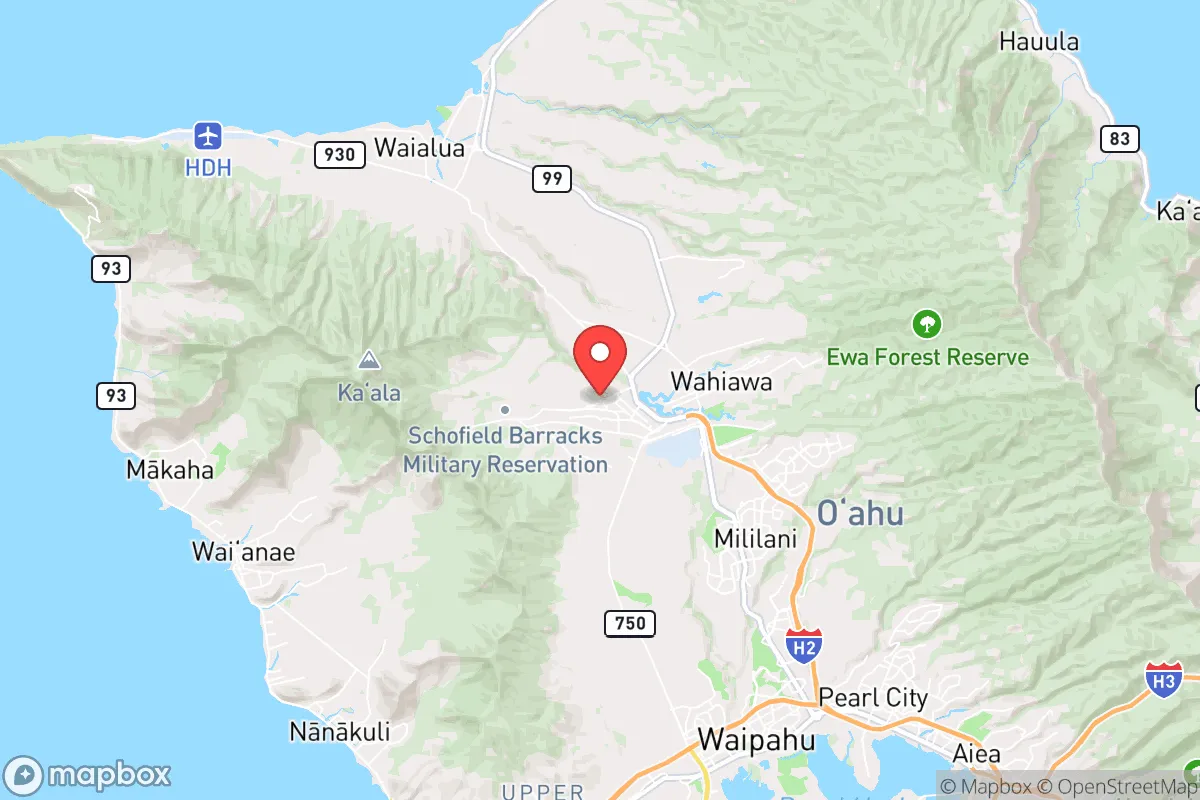
Photo: Wikipedia
Demographics of Schofield Barracks, HI
Affluence Level in Schofield Barracks, HI
An upper-middle-class area. Household wealth, education levels, and homeownership run ahead of national benchmarks.
People of Schofield Barracks, HI
The people of Schofield Barracks, Hawaii, today form a uniquely transient, military-anchored community of 16,755 residents, distinguished by its high racial diversity and low foreign-born rate of just 2.7%. The population is 48.5% White, 19.1% Hispanic, 18.0% Black, and 5.1% East/Southeast Asian, with a minuscule 0.1% Indian-subcontinent share, reflecting a base that draws heavily from mainland U.S. military families rather than immigrant streams. This is a place where the dominant identity is not ethnic but institutional—active-duty soldiers, their dependents, and civilian support staff—creating a dense, security-conscious, and family-oriented atmosphere with 30.5% holding college degrees. The population skews younger and more male than the surrounding Oahu average, with a character shaped by rotation cycles rather than generational roots.
How the city was settled and grew
Schofield Barracks was never a civilian settlement but a planned U.S. Army installation, established in 1908 on the central Oahu plain to defend Pearl Harbor and the island’s sugar plantations. The original population consisted entirely of enlisted soldiers and officers, predominantly White and Black, housed in the historic Quadrangle Barracks and the early wooden cottages of Lyman Field. The base expanded rapidly during World War II, when the 25th Infantry Division—the “Tropic Lightning”—was activated here in 1941, drawing tens of thousands of troops from across the mainland. Post-war, the Korean and Vietnam conflicts kept the base at high capacity, with the Kunia Road corridor and Foote Avenue neighborhoods filling with married quarters for career NCOs and officers. Unlike typical towns, Schofield’s growth was dictated by Pentagon force structure, not local industry or immigration.
Modern era (post-1965)
After the 1965 Hart-Cellar Act reshaped U.S. immigration, Schofield Barracks saw little direct effect—its foreign-born share remains just 2.7%, far below Oahu’s 18% average. Instead, the post-1965 era brought a dramatic diversification of the domestic military population. The all-volunteer force after 1973, combined with the 25th Infantry Division’s deployments to Iraq and Afghanistan, increased the share of Hispanic and Black service members. Today, the Kolekole Avenue housing area and the Hamilton Field duplexes are home to a mix of White, Black, and Hispanic families, with East/Southeast Asian residents (5.1%) largely consisting of military spouses from the Philippines and Japan. The Indian-subcontinent population remains negligible at 0.1%, reflecting the Army’s recruitment patterns rather than any local pull factor. The Wheeler Army Airfield annex, a separate sub-community within the base, has absorbed many aviation and logistics units, adding a distinct air-force flavor to the otherwise infantry-heavy population.
The future
The population of Schofield Barracks is heading toward continued racial diversification within a stable military footprint. The base’s total population has fluctuated between 15,000 and 18,000 over the past decade, and the 2024-2025 force structure reviews suggest no major expansion or contraction. The Hispanic share is likely to grow slowly, mirroring national military enlistment trends, while the White share may decline incrementally. The East/Southeast Asian population could increase slightly as the Army expands its Asia-Pacific partnerships, but the foreign-born rate will remain low because the base recruits overwhelmingly from U.S. citizens. The community is not tribalizing into ethnic enclaves—military housing assignments are rank-based, not ethnicity-based, so neighborhoods like Kunia Loop and Lyman Terrace remain integrated by design. The biggest demographic shift will be generational: as the 25th Infantry Division rotates units through Korea and the Pacific, the population will continue to be young, transient, and family-centric, with no deep local roots forming.
For someone moving in now, Schofield Barracks is becoming a more racially diverse but institutionally stable military town, where the population’s character is defined by the 25th Infantry Division’s deployment cycle rather than any local ethnic or economic trend. The low foreign-born share and high military concentration mean a community that is patriotic, security-focused, and accustomed to turnover—ideal for families seeking a structured, safe environment, but not for those looking for long-term civilian neighborhood ties or immigrant cultural enclaves.

* Values derived from national, state, county, city and local statistics and may differ in a specific area. Last updated: 2026-04-24T07:19:23.000Z
Narrative content on this page is AI-generated and may contain mistakes. Verify any details that matter before acting on them.
ReloMaps may earn a commission from affiliate links at no extra cost to you.

