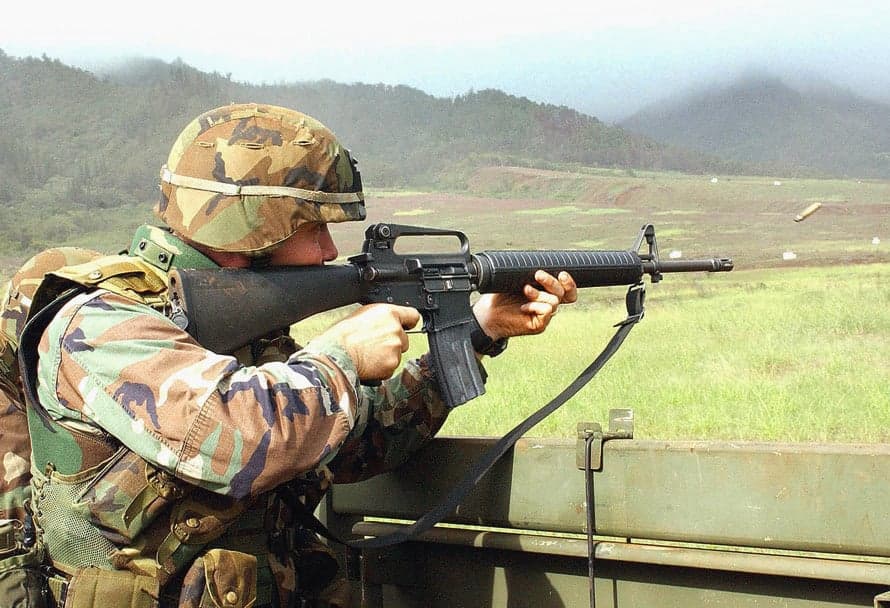
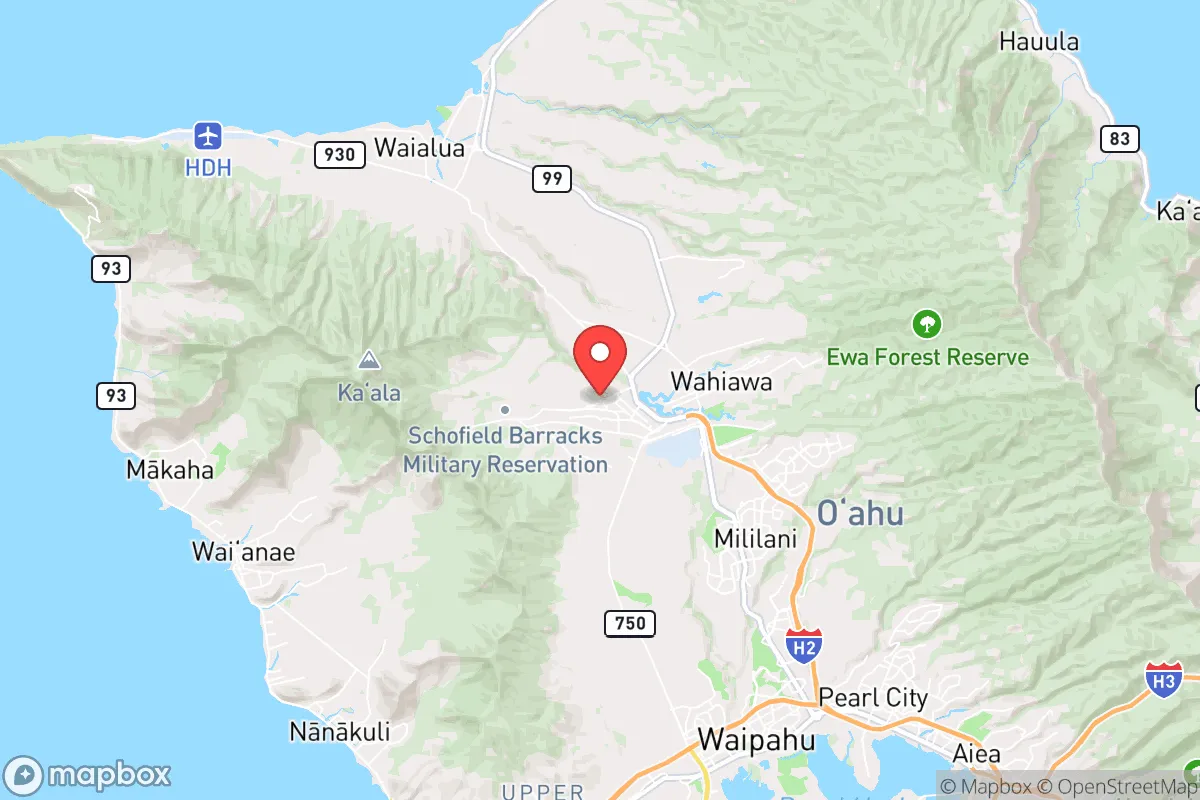
Photo: Wikipedia
Quality of Life in Schofield Barracks, HI
A high quality of life with strong walkability, manageable living costs, healthy neighborhood signals, and solid amenity access.
What does Quality of Life tell us?
Quality of Life blends cost of living, nearby amenities, socioeconomic signals, and neighborhood character. City-level scores represent the whole municipality; individual neighborhoods can differ.
What does this tell us?
Quality of Life blends cost of living, nearby amenities, socioeconomic signals, and neighborhood character. City-level scores represent the whole municipality; individual neighborhoods can differ.
Cost of Living
174% above national average
The Real Cost of Living in Schofield Barracks, HI for 2026
| Tier | Individual | Family (4) |
|---|---|---|
| Survival | $26k | $49k |
| Comfortable | $55k | $81k |
| Luxury | $107k+ | $165k+ |
| Elite (Top 5%) | $125k+ | $194k+ |
93%
The Area Signal
A metric tracking the socioeconomic signals of the area.
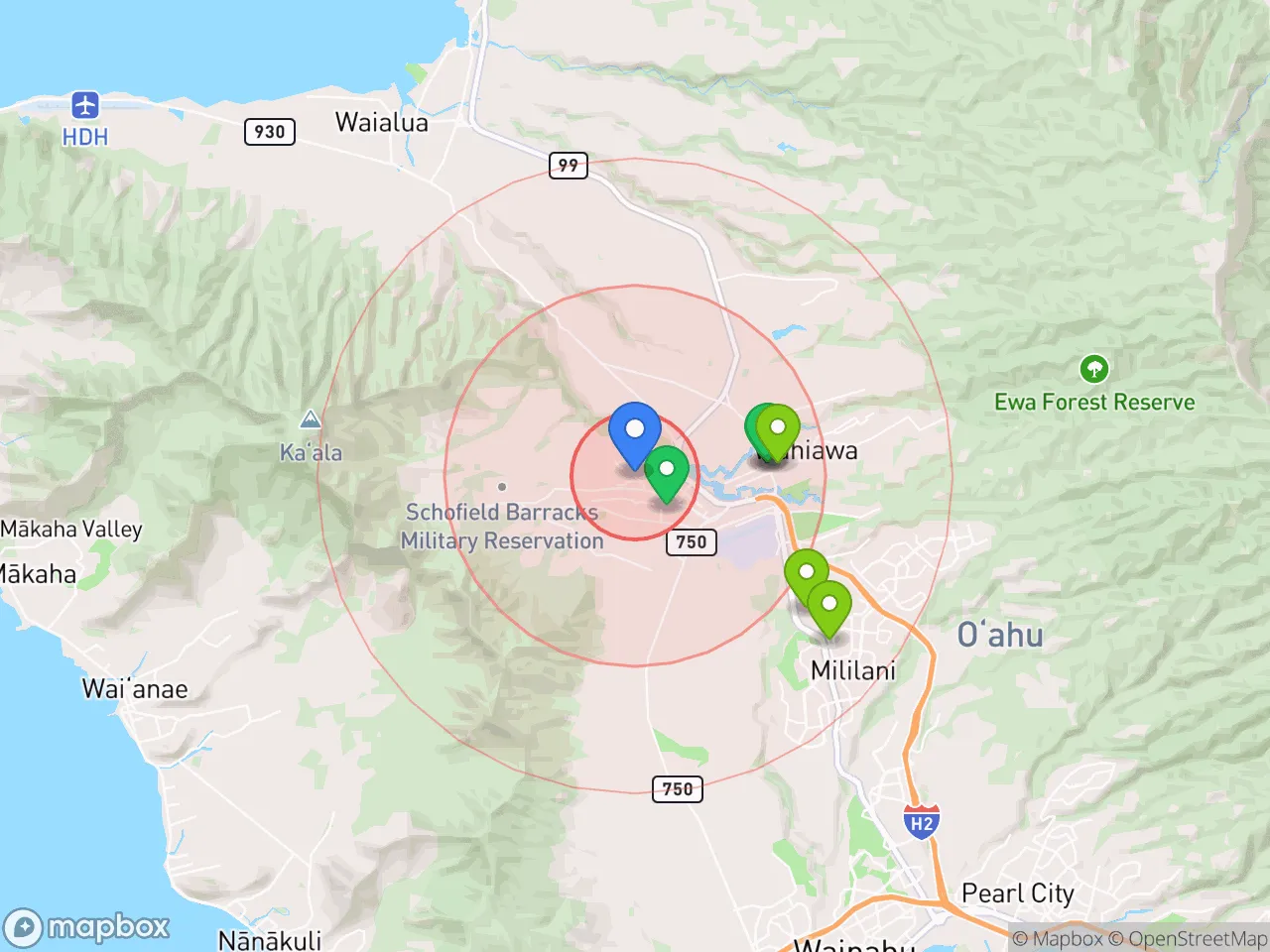
Hobbies
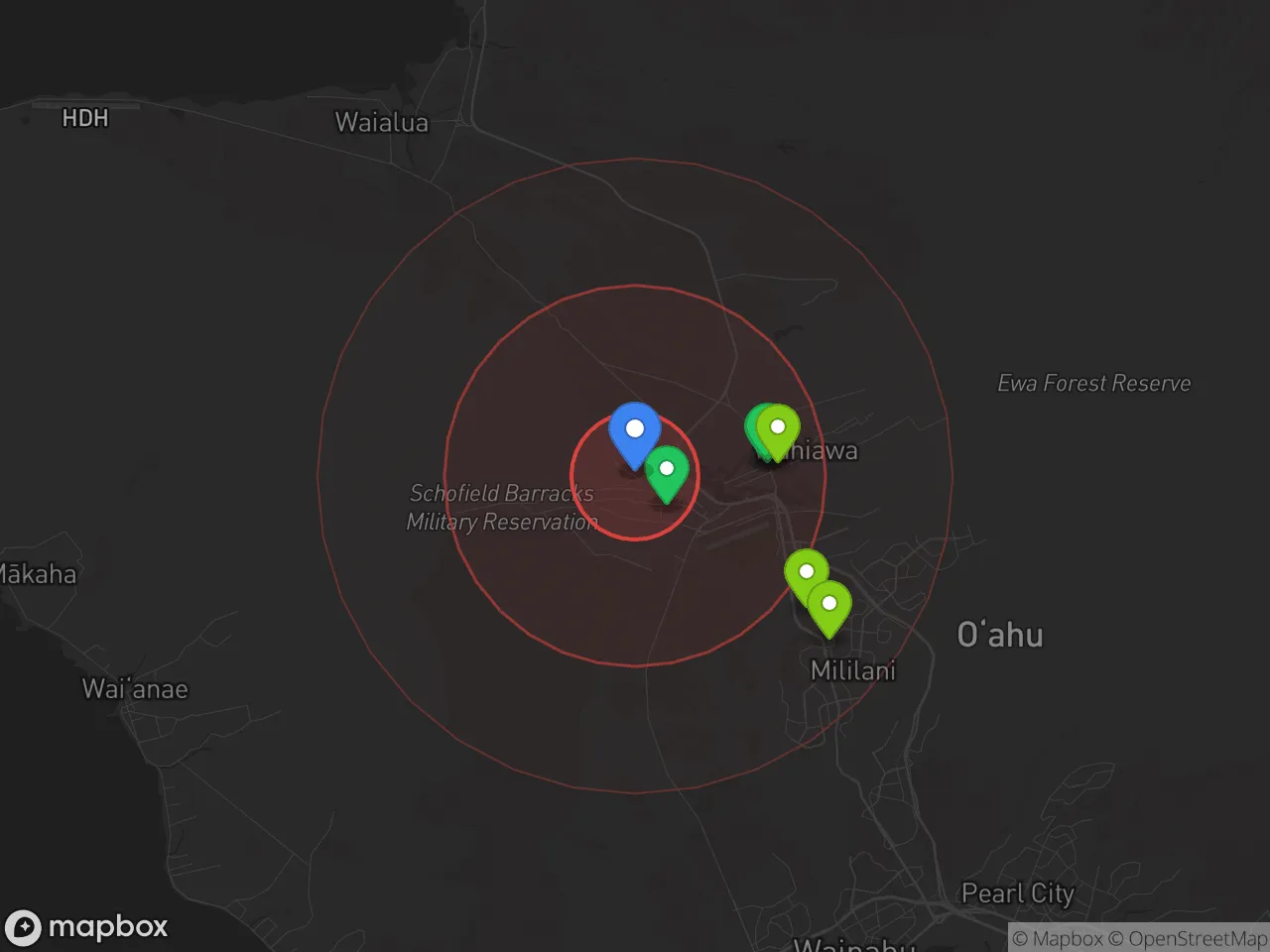
Explore the areaGroceries
4 within 10 miles
Gas
20 within 10 miles
Hospital
15 within 20 miles
Airport
Daniel K. Inouye International Airport
Post Office
USPS — Mililani, HI
Critical Amenities
Quality-of-Life Analysis
Schofield Barracks, a U.S. Army installation on Oahu’s central plateau, is a uniquely affluent and transient community where the vast majority of residents are active-duty military personnel and their families. With a cost of living index of 274—nearly three times the national average—the area reflects the premium of island life combined with the stability of a military base, creating a demographic that is highly educated, family-oriented, and accustomed to structured routines. The median household income is elevated by military pay scales and housing allowances, but the real story is how this affluence is channeled into a tight-knit, mission-focused environment rather than a typical suburban sprawl.
Cost of living, housing affordability, and how it compares to nearby Honolulu
Housing at Schofield Barracks is the dominant factor in its extreme cost-of-living index of 274, but the comparison to off-base options is stark. The median home value on the installation is $808,200, while median rent reaches $3,192—figures that are roughly 20% higher than in nearby Wahiawa and Mililani, but still below Honolulu’s core where median rents often exceed $3,500. For military families, the Basic Allowance for Housing (BAH) typically covers the full rent or mortgage, making the base’s housing market effectively subsidized and insulated from civilian price shocks. Off-base, a comparable three-bedroom home in Mililani might rent for $2,800–$3,000, but the commute to Schofield Barracks is only 10–15 minutes, versus 30–45 minutes from Honolulu. The average commute on base is just 10.7 minutes, a fraction of Oahu’s island-wide average of 28 minutes, which significantly reduces transportation costs and improves daily quality of life for residents.
Amenities, schools, and what daily life is like for military families
Daily life at Schofield Barracks revolves around the base’s self-contained amenities, which include multiple commissaries, exchanges, fitness centers, a golf course, and the Schofield Barracks Bowling Center. For families, the on-base schools—such as Schofield Barracks Elementary School and Aliamanu Middle School—are part of the Hawaii Department of Education but benefit from higher per-pupil funding and a stable military student population. Off-base, the nearby Mililani High School is consistently rated among Oahu’s top public schools, with a 94% graduation rate and strong STEM programs. The base’s location in central Oahu provides quick access to both the North Shore’s beaches (25 minutes) and Honolulu’s urban amenities (30 minutes), but most families find their rhythm in on-base activities: youth sports leagues, the library, and the weekly farmers’ market at the commissary. The area’s biggest drawback is the lack of off-base dining and entertainment within walking distance—Wahiawa’s main street offers a few local plate-lunch spots and a Walmart, but most residents drive to Mililani or Pearl City for shopping and restaurants.
Schofield Barracks is an ideal fit for active-duty military families who prioritize stability, short commutes, and a built-in community over urban nightlife or off-base housing equity. The subsidized housing and on-base amenities make the high cost-of-living index manageable, while the 10.7-minute average commute frees up time for family and recreation. Civilians or retirees without a military connection would find the area isolating and expensive, as the base’s social and economic life is tightly tied to the Army’s rotation cycles. For those who thrive on structure, shared purpose, and the convenience of a self-contained installation, Schofield Barracks offers a quality of life that few other Oahu neighborhoods can match.

Crime in Schofield Barracks, HI
Generally safer than 64% of comparable U.S. locations.
Violent CrimeViolent Crime Analysis
Property CrimeProperty Crime Analysis
Crime Analysis
Schofield Barracks, a major U.S. Army installation on Oahu’s central plateau, maintains a safety profile that differs sharply from the surrounding civilian communities. The on-post violent crime rate of 200.2 incidents per 100,000 residents is notably lower than the national average, while the property crime rate of 1,586.9 per 100,000 sits slightly above the national figure. These statistics reflect the controlled-access environment of a military base, where 24/7 military police patrols, gate security, and strict disciplinary codes create a layer of protection absent in most civilian neighborhoods.
Crime in context
When compared to the state of Hawaii, which recorded a violent crime rate of approximately 250 per 100,000 in recent years, Schofield Barracks is measurably safer. The installation’s property crime rate, however, is elevated relative to the statewide average of roughly 2,900 per 100,000, meaning property offenses are less frequent on base than in many off-post areas like Wahiawa or Mililani. The gap between violent and property crime rates is typical of military installations: barracks theft and vehicle break-ins are persistent issues, while assaults and robberies remain rare due to the military justice system’s swift consequences. Off-post, the broader Honolulu metro area—including nearby Wahiawa—faces challenges tied to Hawaii’s progressive prosecutorial policies, which prioritize diversion and reduced sentencing for non-violent offenders. This approach, while intended to reduce incarceration, has been linked to higher recidivism and a perception among residents that property crimes are treated leniently, emboldening repeat offenders in communities adjacent to the base.
What residents experience
Service members and their families living on Schofield Barracks report a daily environment where serious crime is uncommon but petty theft and vandalism require vigilance. The installation’s Army Community Service and Family Advocacy Program provide robust support for domestic violence prevention and victim assistance, a resource rarely available in civilian jurisdictions. Off-base housing in areas like Mililani or Waipio offers lower crime rates than Wahiawa, but residents must contend with the spillover effects of Honolulu County’s justice system, where progressive district attorneys often reduce felony charges to misdemeanors. This pattern means that a car break-in or package theft may result in minimal consequences for the offender, frustrating military families accustomed to the accountability enforced on base.
Neighborhood-level variation is significant. The base’s housing areas—such as Foote, Trimble, and Lyman—are patrolled uniformly, but the adjacent town of Wahiawa experiences higher rates of property crime and drug-related offenses. Families seeking the safest off-post options typically choose Mililani Mauka or Launani Valley, where homeowners’ associations and private security supplement police presence. For those living on Schofield Barracks itself, the primary safety concern is not violent crime but the occasional theft from unlocked vehicles or common-area laundry facilities, a risk mitigated by the base’s emphasis on community watch and reporting protocols.
* Values derived from national, state, county, city and local statistics and may differ in a specific area. Last updated: 2026-04-24T07:19:23.000Z
Narrative content on this page is AI-generated and may contain mistakes. Verify any details that matter before acting on them.
ReloMaps may earn a commission from affiliate links at no extra cost to you.

