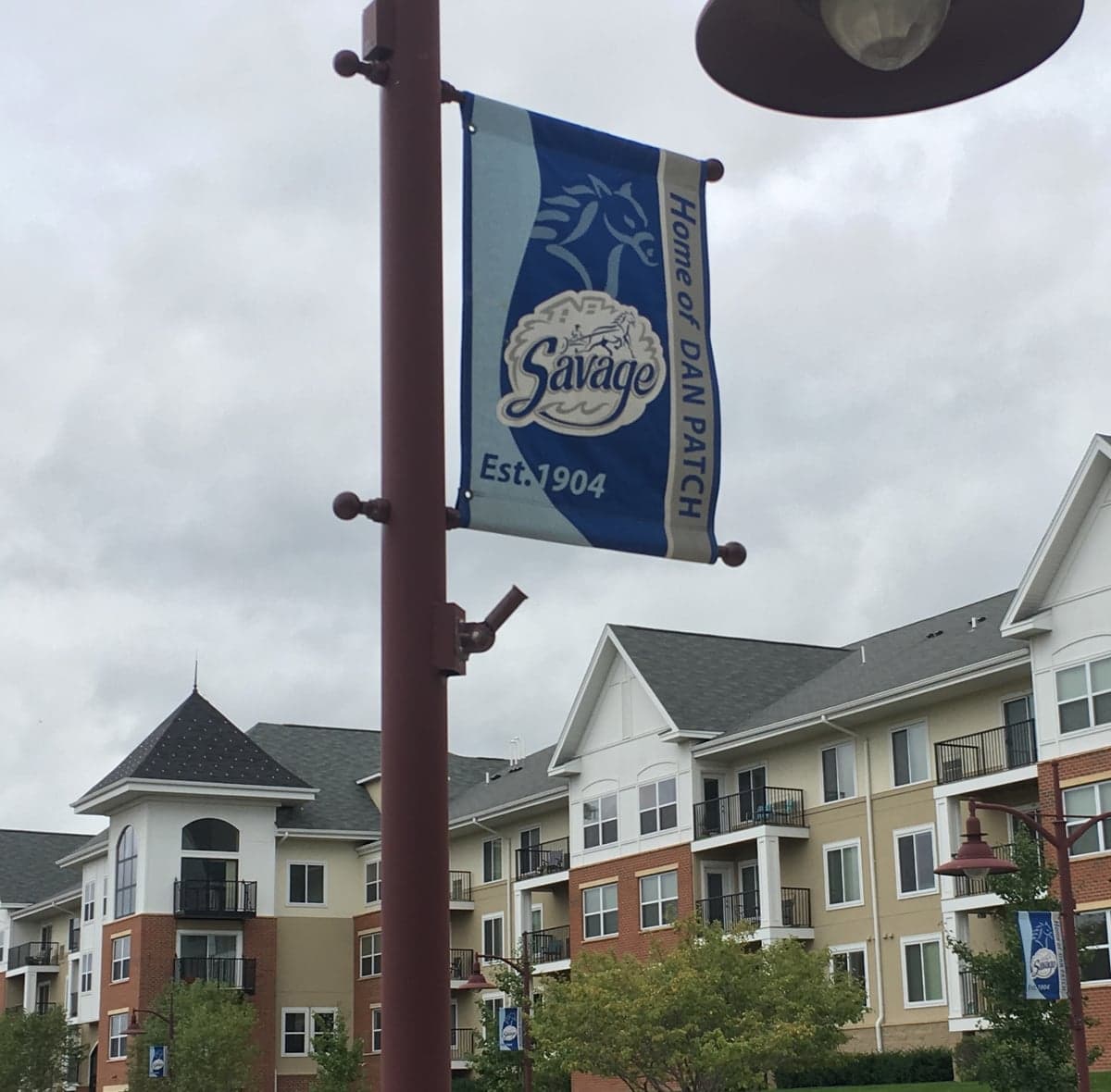
Photo: Wikipedia
Strategic Assessment of Savage, MN
Meaningful friction. Expect exposure to either population pressure, blast zones, or natural disaster risk. Consider buying a retreat property.
What does the Strategic Assessment tell us?
Our Strategic Assessment grades tactical survivability of an area. Major population centers, military targets, fallout zones, natural disasters, and border exposure all drive risk — lower exposure means a more defensible position in a crisis.
This is heavily inspired by Joel Skousen's Strategic Relocation book. Highly recommended you checkout the book ($)What does this tell us?
Our Strategic Assessment grades tactical survivability of an area. Major population centers, military targets, fallout zones, natural disasters, and border exposure all drive risk — lower exposure means a more defensible position in a crisis.
This is heavily inspired by Joel Skousen's Strategic Relocation book. Highly recommended you checkout the book ($)Strategic Pillars

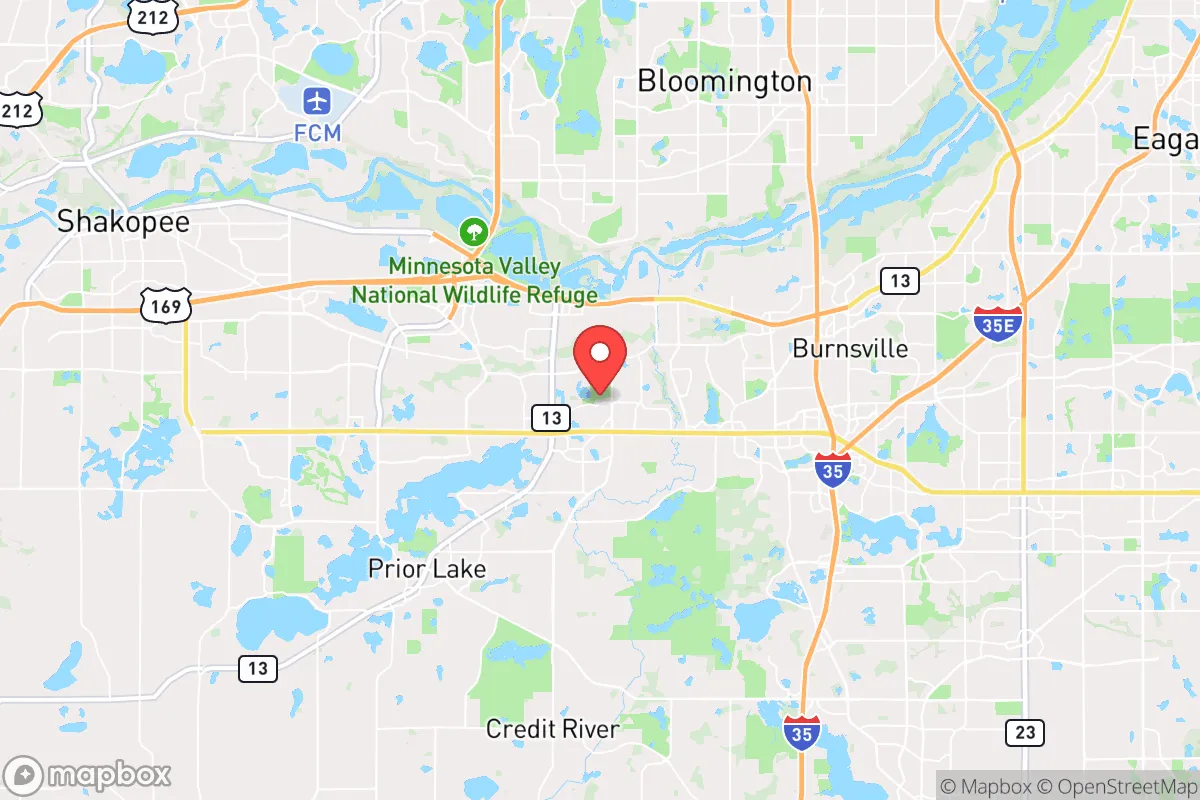
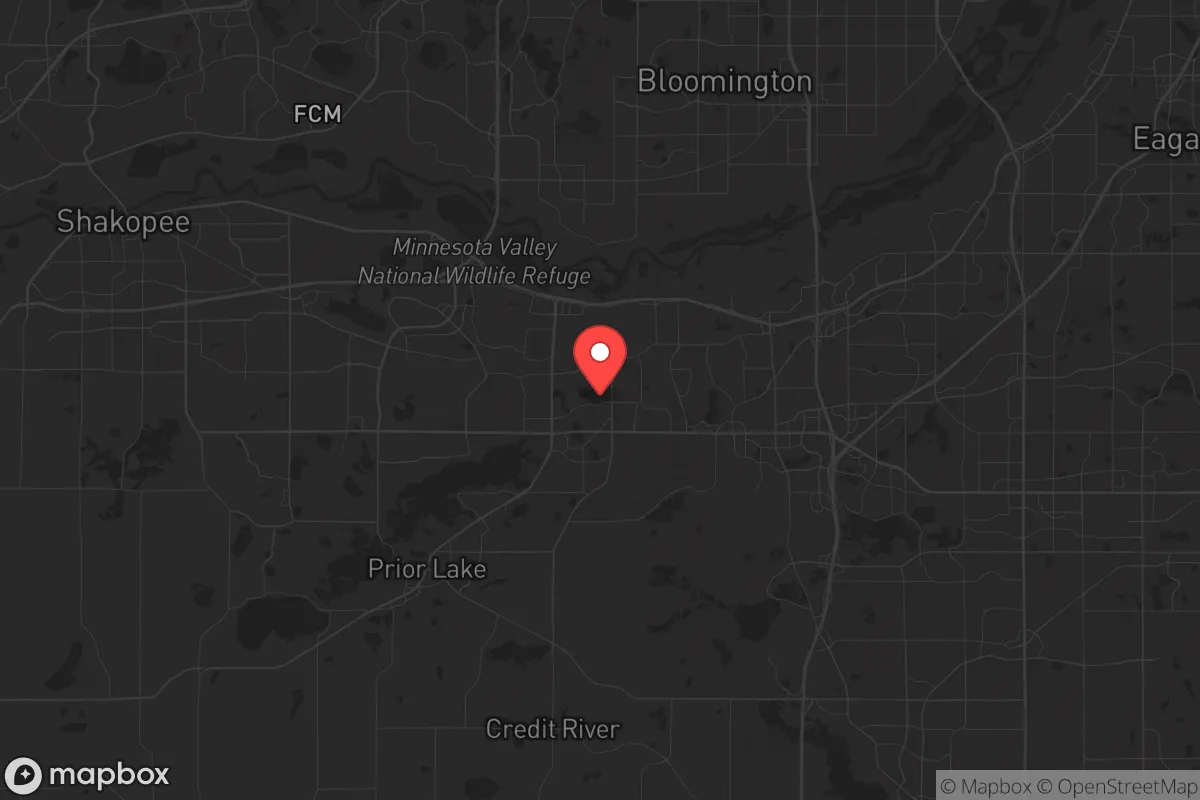
Key Distances
Regional Safe Places
Below is our recommended "safe zones" in Minnesota and the surrounding area based on our strategic heuristics. For most people, it's unrealistic to live in a “safe zone” full-time due to work, family or other personal reasons. They tend to be more rural. However, many of these areas are perfect for second homes and retreat properties that double as a vacation home or even a short-term rental.
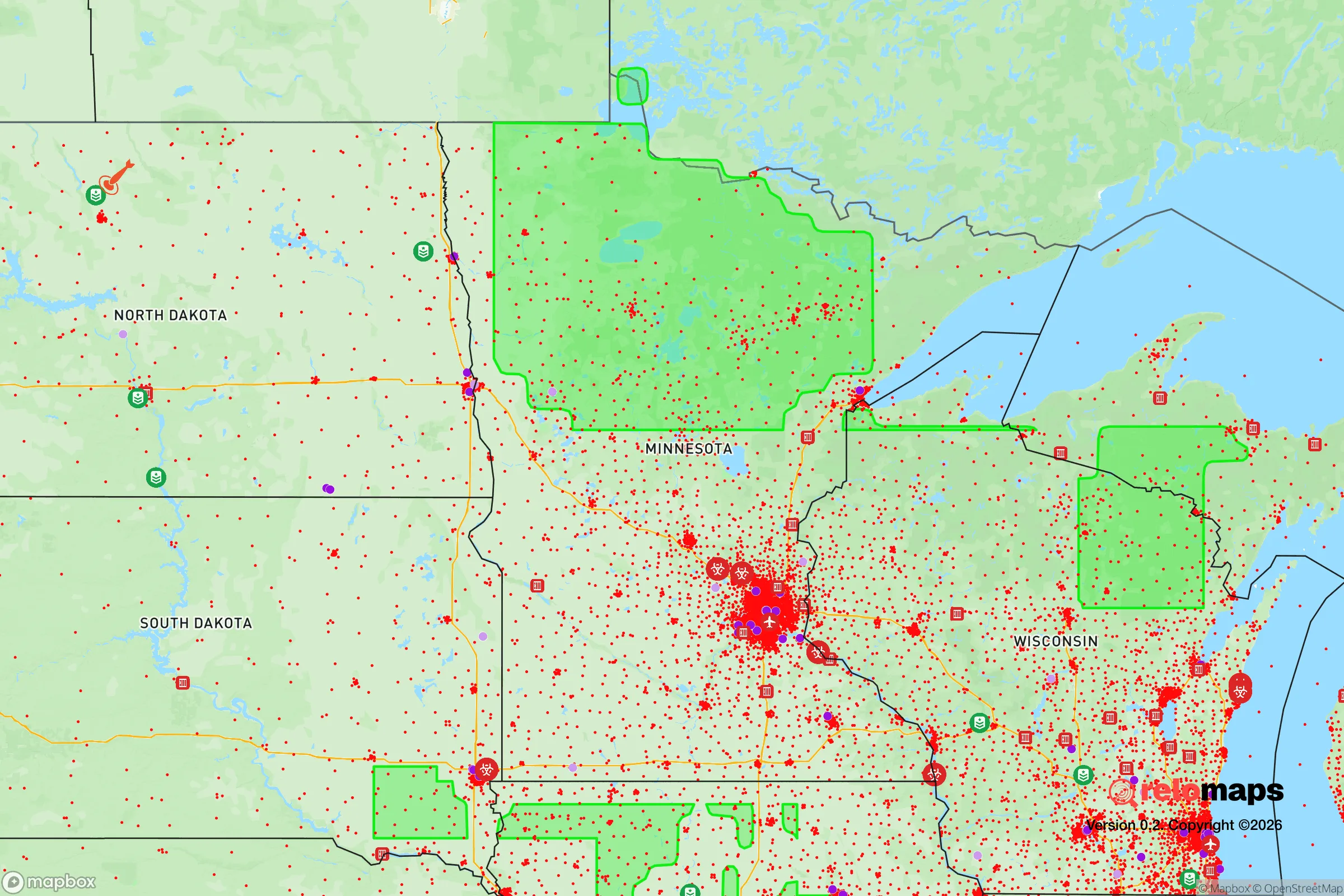
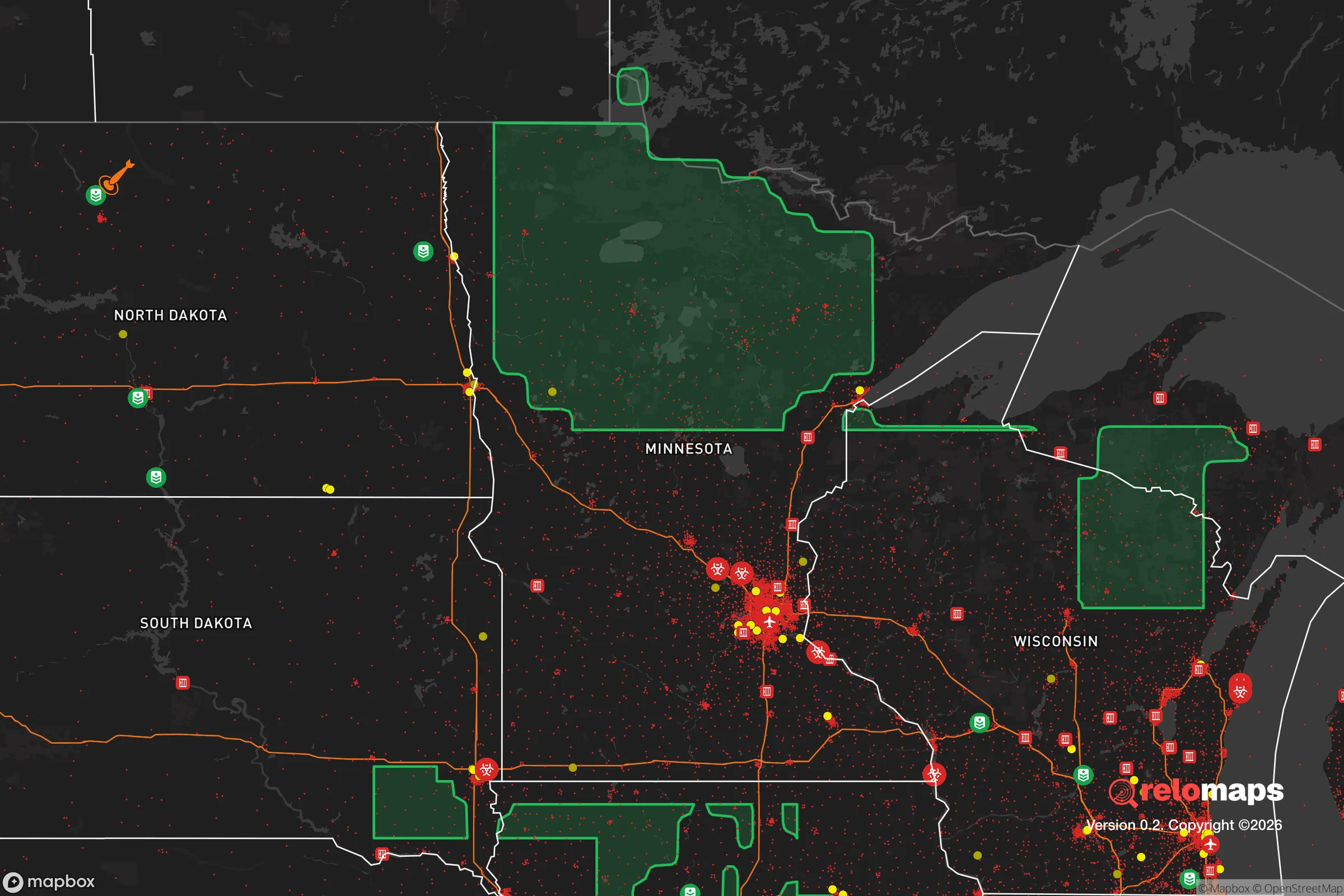


Important Note: For informational purposes only. This does not mean nothing bad ever happens in the green zones. Please use common sense. This is based on public data and modeled with AI. We tried to take a conservative approach but mistakes happen. We update this regularly as new information becomes available.
Solar Generator Recommendations
Backup power matters more here than in safer locations. We've picked three solar generators across budgets and capacity tiers — start with the budget unit if you only need a few essentials, or step up if you want to run a fridge and HVAC for days at a time.

Jackery Portable Power Station Explorer 300
Budget OptionPower on the Go: Weighing only 11 lbs, it's convenient to set up and store with book-sized foldable solar panels

BLUETTI Portable Power Station AC180
Designed for both indoor and outdoor scenarios, AC180 is highly capable as it has a robost capacity and continuous output power.

EF ECOFLOW DELTA Pro Ultra Power Station
Upgraded PickEcoFlow DELTA Pro Ultra is a whole-home energy system designed to grow with your family. Integrated with the Smart Home Panel 2, it scales to meet your evolving energy needs — keeping your home powered, intelligent, and secure through every stage of life.
We earn a commission, at no additional cost to you.
Strategic Assessment Analysis
Savage, Minnesota, presents a mixed bag for the strategic relocator operating from a prepper or survivalist mindset. While its position along the Minnesota River Valley offers some natural defensive and resource advantages, its proximity to the Twin Cities metropolitan area introduces significant vulnerabilities that cannot be ignored. For the conservative individual or family prioritizing long-term resilience, self-sufficiency, and a buffer from urban collapse, Savage is a location that demands careful, sober assessment rather than blind optimism.
Geographic position and natural advantages for long-term survival
Savage sits at a strategic junction where the Minnesota River meets the bluffs and wooded terrain of the southern metro. This river corridor provides a natural water source, which is a critical asset for any extended grid-down scenario. The surrounding topography—rolling hills, river valleys, and patches of hardwood forest—offers limited but real cover and concealment, as well as potential for small-scale hunting and foraging. The city itself is not a dense urban core; it’s a suburban community of roughly 30,000 people, with a mix of older homes on larger lots and newer subdivisions. For a relocator, the key advantage is the presence of the Minnesota River and the adjacent Minnesota Valley National Wildlife Refuge, which provides a buffer of undeveloped land to the south and west. This green space can serve as a potential escape corridor or a source of wild game and timber in a prolonged crisis. The area’s agricultural hinterland—Scott County is still partially rural—means that local food production is possible, though not guaranteed for a newcomer without land. The river also offers a potential transportation route for trade or movement, though it’s not navigable by large vessels in most stretches. Overall, the natural setting gives Savage a moderate defensive score: better than a flat, open suburb, but far from a mountain redoubt.
Risks, exposures, and proximity to fallout-relevant landmarks
Here is where the analysis turns sobering. Savage’s greatest liability is its location within the outer ring of the Twin Cities metropolitan area. In a scenario of civil unrest, economic collapse, or mass casualty events, the city would be directly in the path of any population displacement from Minneapolis and Saint Paul. Interstate 35W and Highway 13 run through or near Savage, making it a potential chokepoint for refugee flows or looters moving south. The city is also roughly 20 miles from the Minneapolis-St. Paul International Airport, a likely target in any coordinated attack or major disruption. Furthermore, the Monticello Nuclear Generating Plant is about 40 miles northwest—within the 50-mile ingestion exposure zone. While not an immediate blast danger, a meltdown or sabotage event would place Savage in the path of prevailing winds, potentially contaminating the river valley and local water supplies. The city itself has a police department and fire services, but in a widespread breakdown, these resources would be stretched thin. The presence of large retail centers like the Mystic Lake Casino (just east in Prior Lake) and the Burnsville Center mall nearby could become magnets for looting and violence. For the prepper, these are not theoretical concerns—they are concrete risk factors that degrade Savage’s strategic value. The area’s reliance on the regional power grid and centralized water treatment also means that a single point of failure could cascade quickly.
Practical resilience for a relocator: food, water, energy, and defensibility
For a relocator serious about self-sufficiency, Savage offers a few bright spots but many challenges. Water access is the strongest asset: the Minnesota River is a perennial source, though it requires filtration and treatment due to agricultural runoff and upstream industrial pollution. Private wells are common in older parts of the city, which is a major plus for those who can secure a property with one. Food production is possible but not easy. The growing season is short (roughly 150 frost-free days), and soil quality varies. Community gardens exist, but for a family aiming to produce a significant portion of its own calories, you’d need acreage—and that’s expensive in Scott County. The local farmers’ markets and co-ops are a sign of a food-conscious community, but they won’t help in a grid-down scenario. Energy resilience is weak. Savage is tied to Xcel Energy’s grid, and while solar panels are permitted, the region’s cloudy winters reduce their effectiveness. Wood heating is an option for those with a fireplace or stove, but local firewood supplies would be quickly exhausted in a crisis. Defensibility is the biggest concern. The city’s layout—a mix of cul-de-sacs, arterial roads, and river crossings—makes it hard to secure a perimeter. A single-family home on a standard lot offers little standoff distance from neighbors or roads. The best bet for a relocator would be a property on the bluffs overlooking the river, with a long driveway and natural barriers. But such properties are rare and expensive. For a single individual, a more defensible setup might be a rural homestead in a county like Sibley or Renville, where population density drops and land is cheaper. For a family, Savage could work if you have the resources to harden a home, stockpile supplies, and build a community network—but that requires capital and time most people don’t have.
In the final strategic picture, Savage, Minnesota, is a location of moderate resilience with high exposure. Its natural advantages—the river, the wildlife refuge, and some agricultural land—are real but offset by its proximity to a major metropolitan area and critical infrastructure targets. For the conservative prepper who values community and wants to stay within striking distance of the Twin Cities for work or family, Savage is a compromise. But for those whose primary goal is to be truly prepared for civic unrest, mass casualty events, or long-term disaster, the city falls short. The smart money is on a more remote location with better defensibility, more land, and fewer neighbors. Savage is a place to watch, not a place to bet your family’s future on. If you do choose it, come with a plan, a network, and a bug-out route that heads west or south—away from the fallout zone and the urban tide.

* Values derived from national, state, county, city and local statistics and may differ in a specific area. Last updated: 2026-04-30T03:26:22.000Z
Narrative content on this page is AI-generated and may contain mistakes. Verify any details that matter before acting on them.
ReloMaps may earn a commission from affiliate links at no extra cost to you.

