Photo: Wikipedia
Demographics of Savage, MN
Affluence Level in Savage, MN
A middle-class area roughly in line with national averages across income, home values, education, and employment.
People of Savage, MN
The people of Savage, Minnesota, today form a predominantly white, highly educated, and family-oriented suburban community of 32,706 residents. Characterized by a 72.3% white population and a 51.5% college-educated rate, the city has a distinctly professional and stable character, with a notably low foreign-born share of just 2.0%. Its identity is shaped by a blend of established families in older neighborhoods and newer arrivals drawn to its highly rated public schools and large-lot housing, creating a community that values order, safety, and local involvement.
How the city was settled and grew
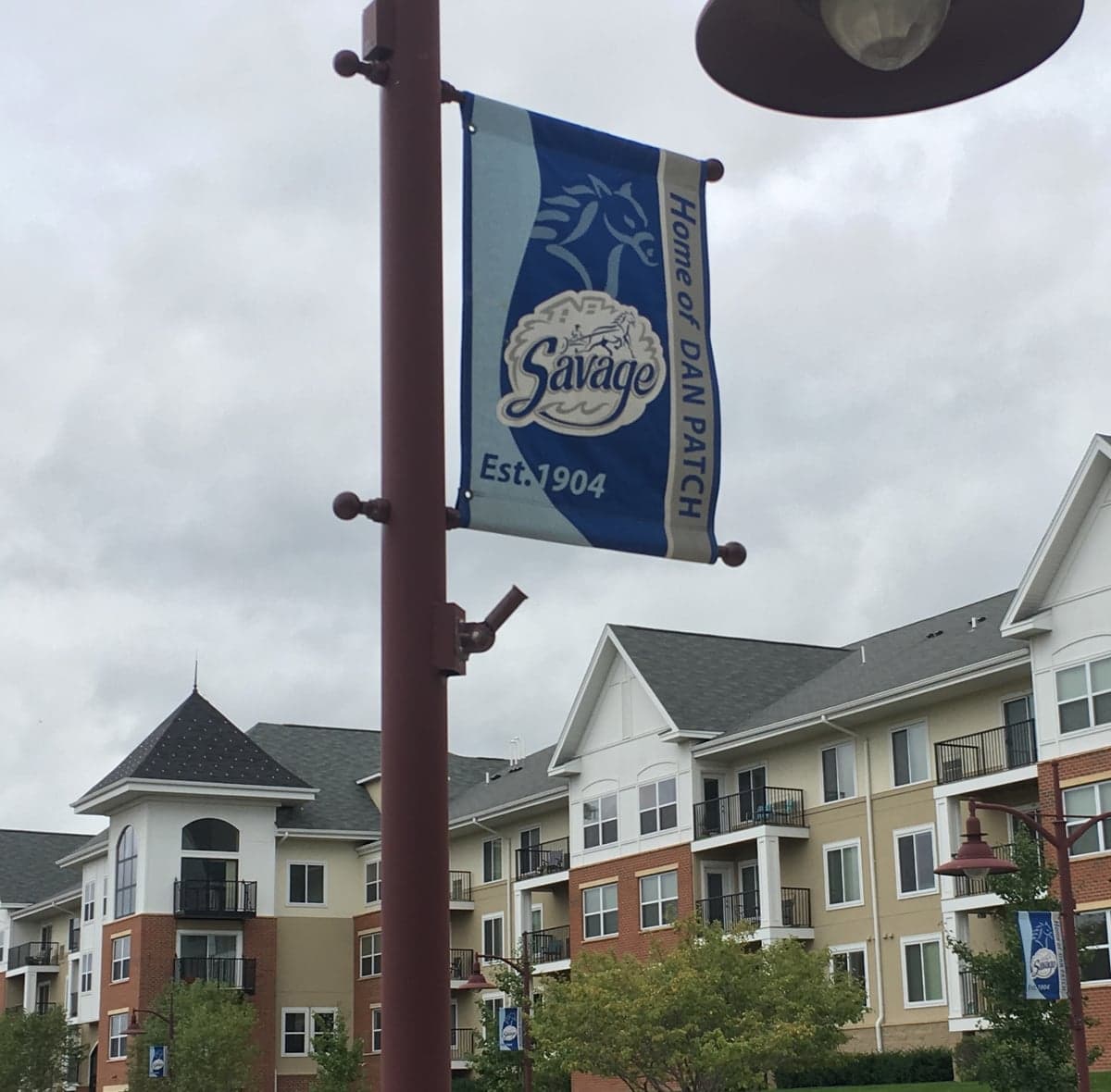
Savage’s human history begins not with colonial settlement but with the Dakota people, who used the Minnesota River valley as a seasonal hunting and gathering ground. The first permanent European-American settlers arrived in the 1850s, drawn by the fertile river-bottom land and the promise of the Minnesota River as a transportation route. The city’s original name, Hamilton, was changed to Savage in 1902 to honor Marion Savage, a local businessman who built a large horse-breeding farm and a racetrack. The early population was almost entirely of German, Irish, and Scandinavian stock, with families farming the land that now comprises the O'Connell and Hamilton neighborhoods. The arrival of the Minneapolis, Northfield and Southern Railway in the 1880s spurred a small industrial base, but Savage remained a quiet, rural hamlet of a few hundred people through the early 20th century. The first significant growth wave came after World War II, when returning veterans and their families built modest homes in the Downtown Savage area, near the old commercial core along 126th Street.
Modern era (post-1965)
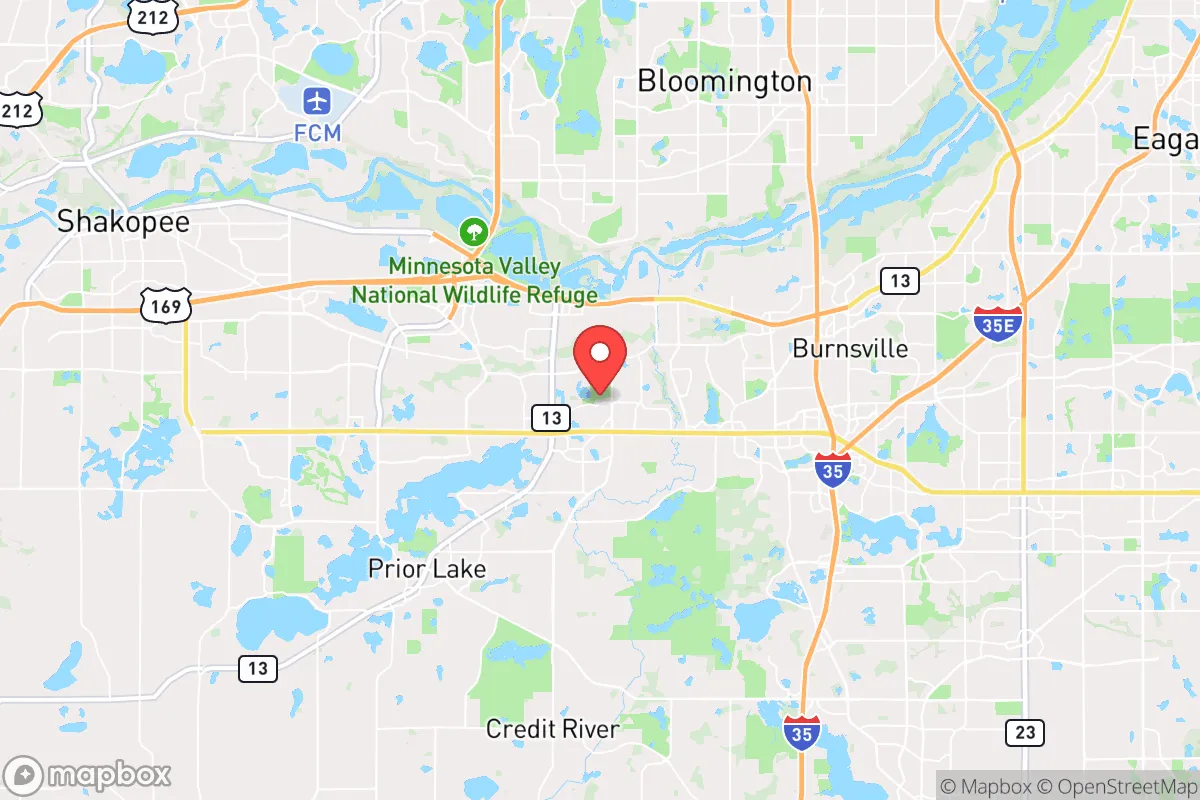
The post-1965 era transformed Savage from a sleepy village into a booming suburb. The 1965 federal immigration reforms had little direct effect here—the foreign-born population remains tiny—but the completion of Highway 13 and the expansion of Interstate 35W made the city a viable commuter option for workers in Bloomington, Minneapolis, and the growing southwest metro. The 1970s and 1980s saw a massive wave of domestic in-migration, primarily white families from Minneapolis and older inner-ring suburbs seeking newer, larger homes and better schools. This wave built out the Burnsville Parkway Corridor and the Hidden Valley neighborhood, which filled with split-level and rambler homes on half-acre lots. The 1990s and 2000s brought a second domestic wave, this time of more affluent professionals, who developed the Southbridge and Ridgeview neighborhoods with executive homes and cul-de-sacs. The city’s racial composition shifted modestly during this period: the Black population grew to 9.7%, and East/Southeast Asian communities (primarily Hmong and Vietnamese families) reached 6.6%, with many settling in the more affordable housing stock near Egan Drive and the Burnsville border. The Indian-subcontinent population remains very small at 0.4%, and the Hispanic share is 4.8%, concentrated among younger families in the city’s apartment complexes.
The future
Looking ahead, Savage’s population is likely to continue its gradual diversification, though at a slower pace than the broader Twin Cities metro. The city is not homogenizing into a single melting pot; rather, distinct enclaves are emerging. The older, established white population in the Hamilton and O'Connell neighborhoods is aging in place, while younger white families continue to fill new construction in Southbridge. The Black and East/Southeast Asian communities are concentrated in the Egan Drive corridor and the apartment complexes near Highway 13, and these groups are growing primarily through natural increase rather than new immigration. The foreign-born share, at just 2.0%, is plateauing, as the city lacks the rental stock and entry-level jobs that attract new international arrivals. The next 10-20 years will likely see the city become slightly more diverse, but it will remain a predominantly white, college-educated, and owner-occupied suburb. The biggest demographic shift may be generational: as the large cohort of 1970s-80s homeowners retires, their homes will turn over to a new wave of families, likely maintaining the city’s family-oriented character.
For someone moving in now, Savage is becoming a stable, mature suburb where demographic change is slow and incremental. The community’s low foreign-born share and high homeownership rate suggest a place where newcomers—especially those from other parts of Minnesota or the Upper Midwest—will find a familiar, orderly environment. The key trade-off is between the city’s strong schools and safe streets versus its limited ethnic and cultural diversity, a balance that appeals strongly to conservative-leaning families prioritizing stability and local control.

* Values derived from national, state, county, city and local statistics and may differ in a specific area. Last updated: 2026-04-30T03:26:22.000Z
Narrative content on this page is AI-generated and may contain mistakes. Verify any details that matter before acting on them.
ReloMaps may earn a commission from affiliate links at no extra cost to you.

