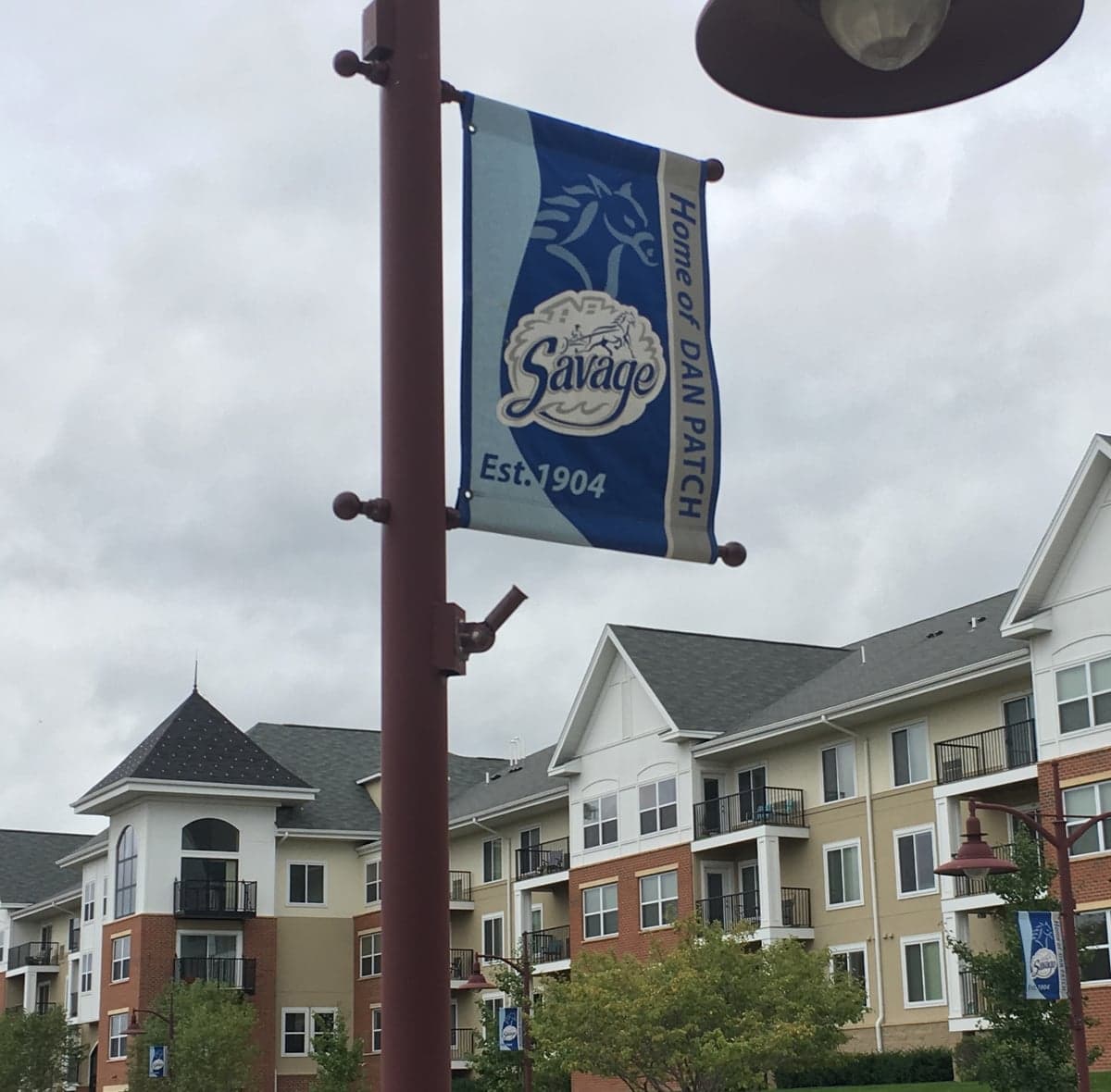
Photo: Wikipedia
Personal Sovereignty in Savage, MN
Viable for self-reliance. Generally workable, though some barriers may limit total independence.
What does Personal Sovereignty tell us?
Personal Sovereignty measures your capacity for self-reliance and independence with minimal government friction. Higher scores mean fewer barriers between you and the way you want to live... but it assumes you have the space you need and good neighbors.
What does this tell us?
Personal Sovereignty measures your capacity for self-reliance and independence with minimal government friction. Higher scores mean fewer barriers between you and the way you want to live... but it assumes you have the space you need and good neighbors.
State Policy
Energy independence: Importer (20% of energy produced in-state)
Personal Liberty
Homesteading

Personal Liberty Analysis
Savage, Minnesota, offers a mixed bag for those prioritizing personal sovereignty, with a local environment that balances suburban order against a state-level regulatory framework that can feel restrictive to survivalist and prepper-minded individuals. While the city itself maintains a relatively hands-off approach to daily life, residents must navigate Minnesota’s broader legal landscape, which imposes notable constraints on self-defense, property use, and medical autonomy. For a conservative-leaning single person or parent seeking maximum freedom from government overreach, Savage provides a stable base but requires strategic awareness of state-level policies that can encroach on personal liberties.
Tax burden and regulatory posture in Savage and Scott County
Minnesota’s tax burden ranks among the highest in the nation, and Savage residents feel that pressure directly. The state’s progressive income tax tops out at 9.85% for high earners, and combined state and local sales taxes in Scott County reach roughly 7.775%. Property taxes in Savage are moderate for the metro area, with effective rates around 1.1% of home value, but they still represent a significant annual cost. The regulatory posture at the city level is generally business-friendly, with streamlined permitting for home-based enterprises and reasonable zoning codes. However, state-level environmental regulations, particularly around shoreline and wetland protections along the Minnesota River, can complicate property modifications. For a prepper, the key takeaway is that while Savage’s local government isn’t aggressively intrusive, the state’s tax appetite and regulatory density create a baseline friction that eats into resources better spent on self-reliance investments.
Self-defense and gun law specifics in Savage and Minnesota
Minnesota is a “shall-issue” state for concealed carry permits, meaning Savage residents can obtain a permit with a clean background and completed training. Open carry is legal without a permit, though local ordinances in Savage do not restrict it further. However, the state imposes a permit-to-purchase requirement for handguns (a 30-day wait for those without a carry permit) and universal background checks for private sales. Magazine capacity is not restricted at the state level, but the political climate in the Twin Cities metro pushes for future bans. Stand-your-ground laws do not exist in Minnesota; instead, the state requires a duty to retreat in public spaces before using deadly force, except inside one’s home. For a survivalist, this is a significant limitation—self-defense outside the home is legally precarious. Savage itself has a low violent crime rate (roughly 1.5 incidents per 1,000 residents), but the legal framework means that preparing for worst-case scenarios requires careful study of Minnesota’s use-of-force statutes.
Self-reliance and homesteading viability in Savage
Savage’s suburban character limits large-scale homesteading. Typical residential lots range from one-quarter to one-half acre, with some larger parcels near the river. Zoning allows for backyard chickens in most single-family zones, but livestock like goats or pigs is prohibited on standard lots. The city enforces strict noise and nuisance ordinances that can restrict generators, wood-burning, or outdoor workshops. Off-grid living is effectively impossible within city limits—Savage requires connection to municipal water and sewer, and building codes mandate grid-tied electrical systems. For a prepper seeking true self-reliance, the surrounding Scott County townships offer more flexibility, with five-acre minimums in agricultural zones allowing for livestock, rainwater catchment, and alternative energy. The trade-off is longer commutes and fewer services. Savage works as a base for suburban prepping—stockpiling, gardening, and community networking—but not for full homesteading autonomy.
Personal liberties in Savage: parental rights, medical autonomy, speech, and property
Parental rights in Minnesota are generally strong, with a presumption of parental authority in education and healthcare decisions. Savage’s school district (Burnsville-Eagan-Savage Area Schools) has faced controversy over curriculum transparency, but state law allows parents to opt children out of specific lessons. Medical autonomy is more constrained: Minnesota mandates childhood vaccinations for school attendance (with medical and philosophical exemptions available but requiring paperwork), and the state has a robust public health apparatus that can issue emergency orders. During the COVID-19 pandemic, Savage did not impose its own mandates, but county and state orders applied. Free speech is protected under the First Amendment, and Savage has no local ordinances restricting political expression or assembly. Property rights are solid for existing homeowners, but the city’s zoning code limits what you can do with your land—no unpermitted structures, no commercial vehicles parked in driveways, and strict setback rules. For a conservative individual, the biggest sovereignty concern is the state’s willingness to override local autonomy during emergencies, as seen with Minnesota’s peacetime emergency powers used extensively in 2020.
Overall, personal sovereignty in Savage is a study in contrasts. The city itself offers a stable, low-crime environment with reasonable local governance, but it sits within a state that consistently ranks among the most regulated and taxed in the country. For a survivalist or prepper, Savage provides a decent suburban base for networking, stockpiling, and defensive preparation, but the legal constraints on self-defense, property use, and off-grid living mean that true autonomy requires looking beyond city limits. Compared to rural areas in the Dakotas or even western Wisconsin, Savage sacrifices a degree of personal freedom for proximity to jobs and services. For those willing to navigate Minnesota’s regulatory maze, it’s a livable compromise—but not a sanctuary from government overreach.

* Values derived from national, state, county, city and local statistics and may differ in a specific area. Last updated: 2026-04-30T03:26:22.000Z
Narrative content on this page is AI-generated and may contain mistakes. Verify any details that matter before acting on them.
ReloMaps may earn a commission from affiliate links at no extra cost to you.

