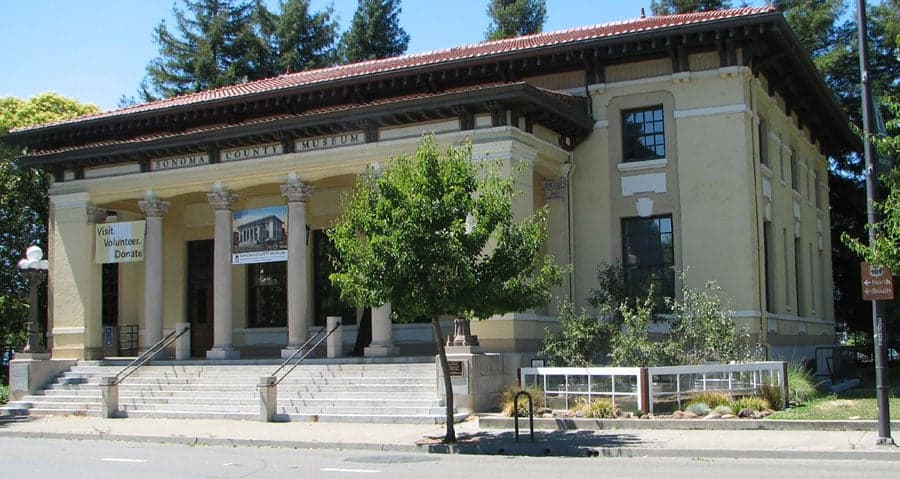
Photo: Wikipedia
Demographics of Santa Rosa, CA
Affluence Level in Santa Rosa, CA
An upper-middle-class area. Household wealth, education levels, and homeownership run ahead of national benchmarks.
People of Santa Rosa, CA
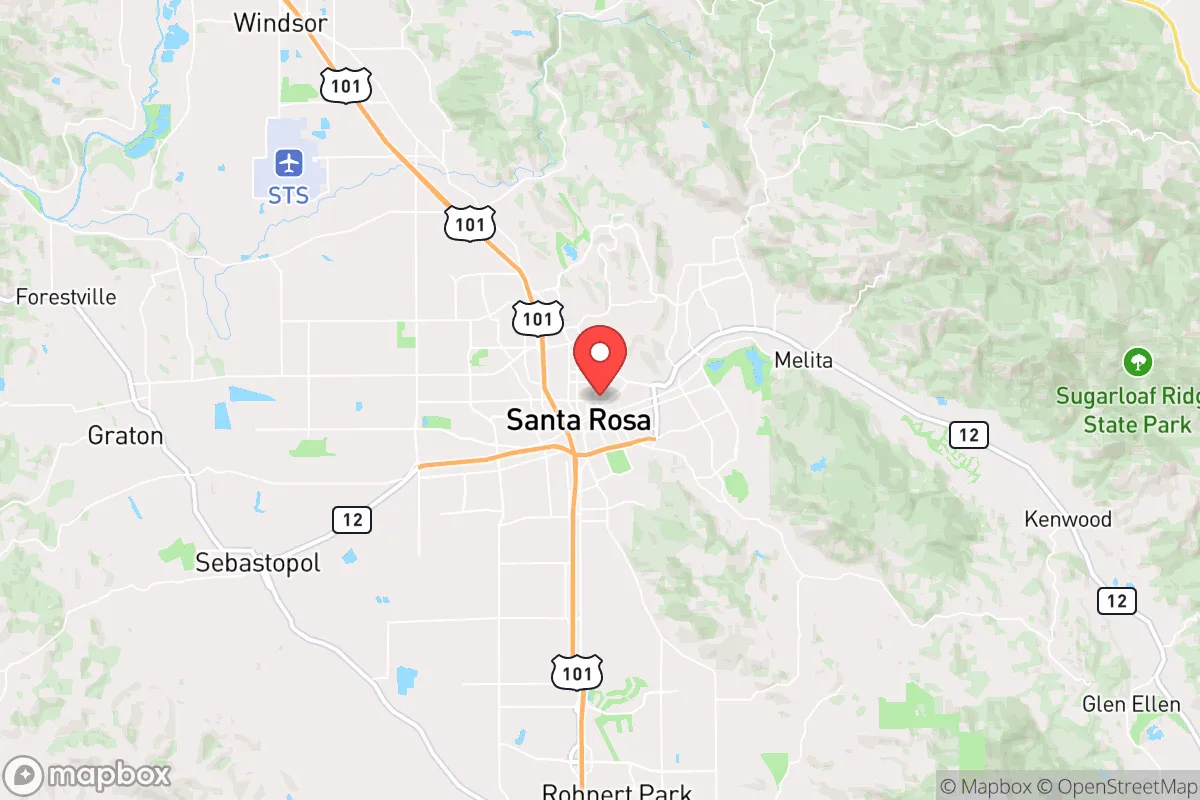
Santa Rosa, California, is a city of 177,216 residents defined by its role as the commercial and cultural hub of Sonoma County, blending a historic agricultural past with a growing suburban and professional character. The population is majority white (51.0%) with a substantial Hispanic minority (35.8%), a smaller East/Southeast Asian community (5.1%), and a modest Indian-subcontinent population (1.2%). With 34.8% of adults holding a college degree, the city attracts both long-established families and newer waves of professionals drawn to the wine country economy and relatively lower housing costs compared to the San Francisco Bay Area. The city’s identity is shaped by a tension between its historic Anglo and agricultural roots and its increasingly diverse, younger population.
How the city was settled and grew
Santa Rosa’s population history begins with the Pomo and Coast Miwok peoples, who inhabited the area for thousands of years before Spanish colonization. The city itself was founded in 1833 when Mexican land grants, notably the Rancho Cabeza de Santa Rosa, drew the first non-Native settlers—primarily Mexican and Spanish rancheros. After California statehood in 1850, Anglo-American settlers arrived in force, drawn by fertile soil for agriculture (especially hops, prunes, and grapes) and the 1870 arrival of the San Francisco and North Pacific Railroad. The original Anglo population built the Downtown core and the West End neighborhood, the latter becoming a working-class district of railroad laborers and small farmers. By the early 20th century, a small but established Italian immigrant community settled in the Santa Rosa Avenue corridor, working in vineyards and dairies. The city grew steadily through the mid-20th century, with a predominantly white, native-born population, reaching about 50,000 by 1960.
Modern era (post-1965)
The 1965 Hart-Cellar Act reshaped Santa Rosa’s demographics, though the effects were slower than in coastal cities. The most significant post-1965 shift was the surge of Hispanic immigration, primarily from Mexico and Central America, drawn by agricultural jobs in Sonoma County’s vineyards and nurseries. This community concentrated in the Roseland neighborhood (southwest Santa Rosa, an unincorporated area until 2017) and the Southwest Santa Rosa corridor, where Hispanic residents now form a majority. The East/Southeast Asian population (5.1%) grew more modestly, with Filipino and Vietnamese families settling in the Bennett Valley and Rincon Valley neighborhoods, often drawn by service-sector jobs and family networks. The Indian-subcontinent community (1.2%) is a smaller, more recent arrival, concentrated in professional households in Oakmont and newer subdivisions near the Sonoma County Airport. Domestic in-migration accelerated after 2000, with white-collar workers from the Bay Area moving to Santa Rosa for lower home prices, settling in Fountaingrove and Skyhawk—neighborhoods that remain predominantly white and affluent. The 2017 Tubbs Fire destroyed 5% of the city’s housing stock, disproportionately affecting Hispanic and lower-income households in the Coffey Park and Larkfield-Wikiup areas, accelerating displacement and reshaping neighborhood demographics.
The future
Santa Rosa’s population is trending toward greater diversity, but the pattern is one of distinct enclaves rather than full integration. The Hispanic share (35.8%) is projected to rise, driven by higher birth rates and continued immigration, with Roseland and Southwest Santa Rosa becoming even more heavily Hispanic. The white share (51.0%) is declining gradually, as older white residents age in place in Oakmont and Fountaingrove while younger white families are priced out and move to more affordable inland areas like Cloverdale or Healdsburg. The East/Southeast Asian and Indian communities are growing slowly, primarily through professional migration, and are likely to remain small but stable enclaves in Bennett Valley and newer developments. The city is not homogenizing; rather, it is tribalizing into distinct geographic and economic zones—affluent, white-majority hillside neighborhoods versus working-class, Hispanic-majority flatlands. The next 10-20 years will likely see continued Hispanic growth, a plateauing of the white population, and modest increases in Asian and Indian shares, with the city becoming more polarized by income and ethnicity.
For a conservative-leaning mover, Santa Rosa is becoming a city of clear demographic and economic divisions: the hillside neighborhoods (Fountaingrove, Oakmont) remain safe, affluent, and predominantly white, while the flatlands (Roseland, Southwest) are increasingly Hispanic and working-class. The city’s political character leans left—Sonoma County voted +45 Democratic in 2024—but the practical reality is a patchwork of distinct communities where a newcomer’s experience will depend heavily on which neighborhood they choose. The population is growing slowly (about 0.5% annually), and housing costs remain high relative to inland California, making this a place for those who value proximity to wine country and the North Bay economy over affordability or demographic uniformity.

* Values derived from national, state, county, city and local statistics and may differ in a specific area. Last updated: 2026-04-24T11:35:09.000Z
Narrative content on this page is AI-generated and may contain mistakes. Verify any details that matter before acting on them.
ReloMaps may earn a commission from affiliate links at no extra cost to you.

