 Popular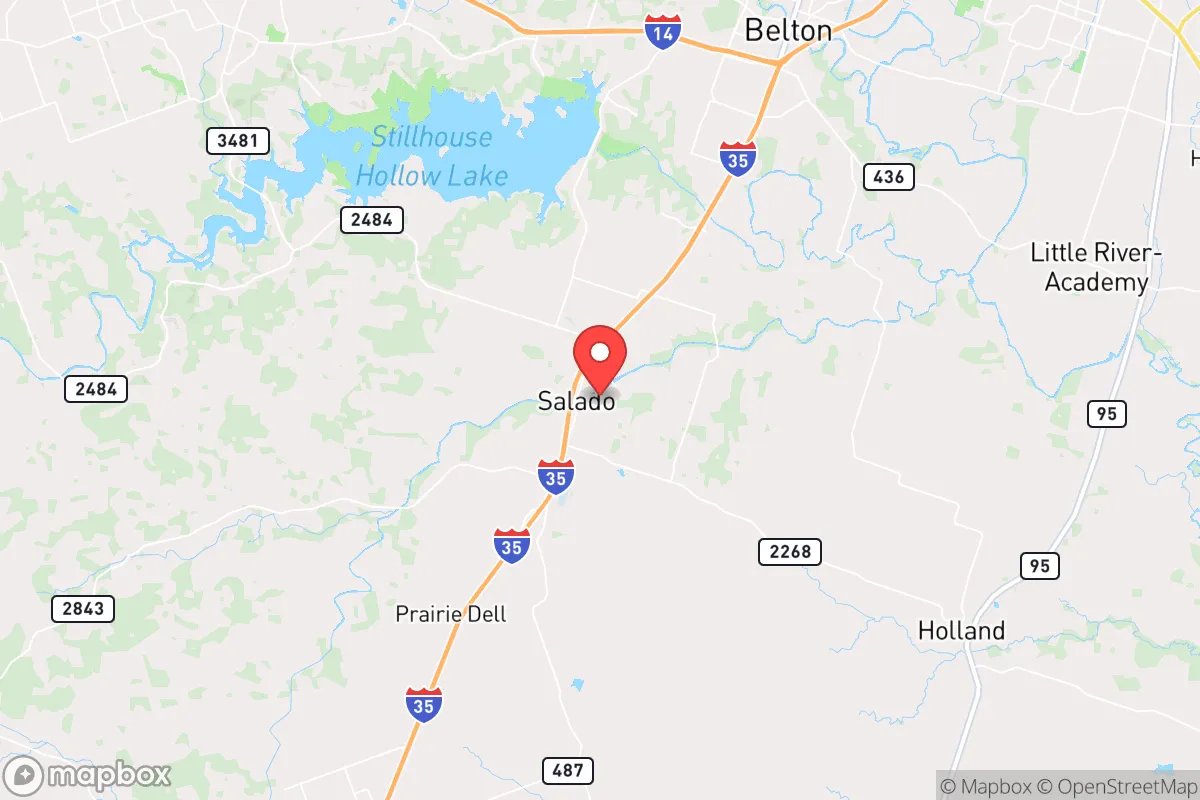
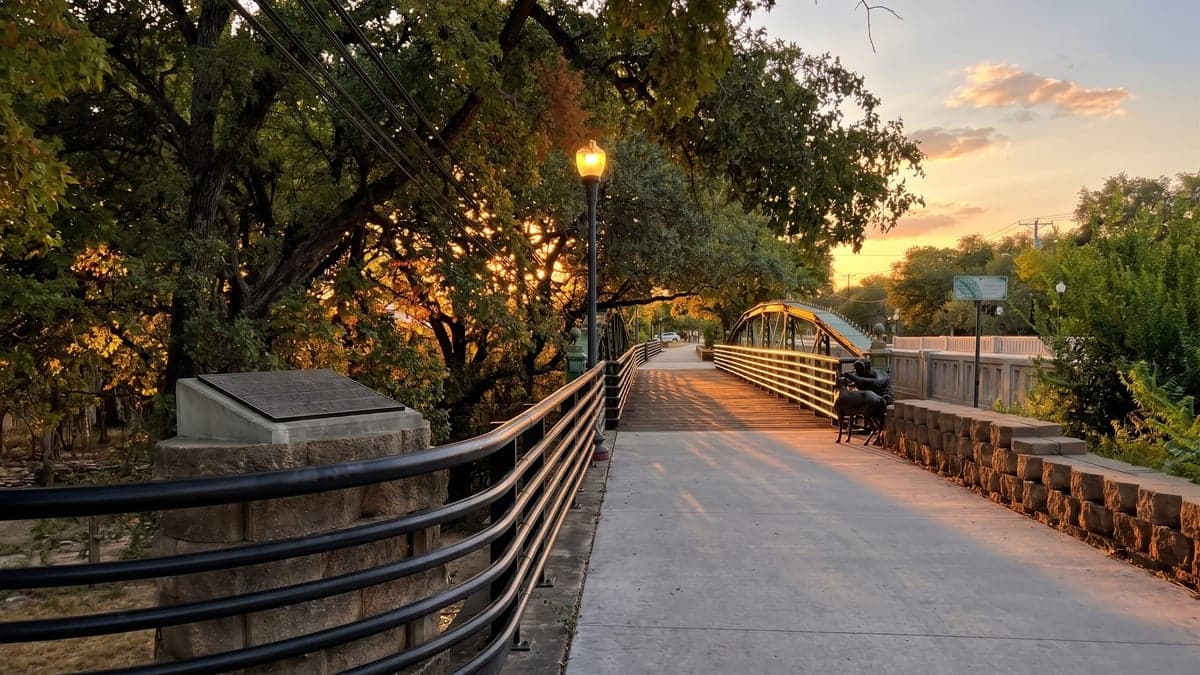
Strategic Assessment of Salado, TX
Meaningful friction. Expect exposure to either population pressure, blast zones, or natural disaster risk. Consider buying a retreat property.
What does the Strategic Assessment tell us?
Our Strategic Assessment grades tactical survivability of an area. Major population centers, military targets, fallout zones, natural disasters, and border exposure all drive risk — lower exposure means a more defensible position in a crisis.
This is heavily inspired by Joel Skousen's Strategic Relocation book. Highly recommended you checkout the book ($)What does this tell us?
Our Strategic Assessment grades tactical survivability of an area. Major population centers, military targets, fallout zones, natural disasters, and border exposure all drive risk — lower exposure means a more defensible position in a crisis.
This is heavily inspired by Joel Skousen's Strategic Relocation book. Highly recommended you checkout the book ($)Strategic Pillars

Key Distances
Regional Safe Places
Below is our recommended "safe zones" in Texas and the surrounding area based on our strategic heuristics. For most people, it's unrealistic to live in a “safe zone” full-time due to work, family or other personal reasons. They tend to be more rural. However, many of these areas are perfect for second homes and retreat properties that double as a vacation home or even a short-term rental.

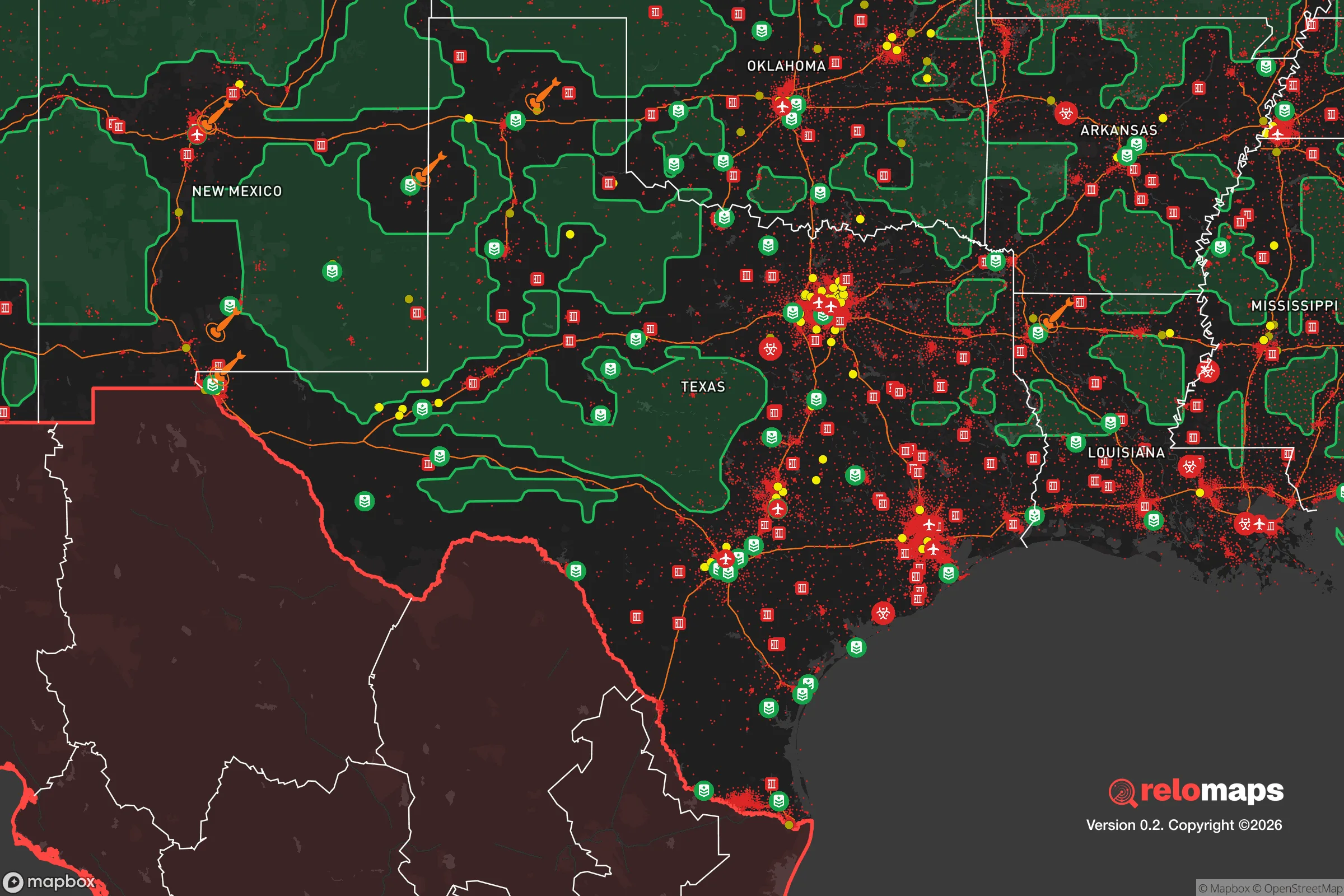


Important Note: For informational purposes only. This does not mean nothing bad ever happens in the green zones. Please use common sense. This is based on public data and modeled with AI. We tried to take a conservative approach but mistakes happen. We update this regularly as new information becomes available.
Solar Generator Recommendations
Backup power matters more here than in safer locations. We've picked three solar generators across budgets and capacity tiers — start with the budget unit if you only need a few essentials, or step up if you want to run a fridge and HVAC for days at a time.

Jackery Portable Power Station Explorer 300
Budget OptionPower on the Go: Weighing only 11 lbs, it's convenient to set up and store with book-sized foldable solar panels

BLUETTI Portable Power Station AC180
Designed for both indoor and outdoor scenarios, AC180 is highly capable as it has a robost capacity and continuous output power.

EF ECOFLOW DELTA Pro Ultra Power Station
Upgraded PickEcoFlow DELTA Pro Ultra is a whole-home energy system designed to grow with your family. Integrated with the Smart Home Panel 2, it scales to meet your evolving energy needs — keeping your home powered, intelligent, and secure through every stage of life.
We earn a commission, at no additional cost to you.
Strategic Assessment Analysis
Salado, Texas, occupies a strategic niche in Central Texas that balances accessibility with a degree of natural insulation, making it a location worth serious consideration for those prioritizing resilience and self-sufficiency. Its position roughly midway between Austin and Waco, just off Interstate 35, provides economic connectivity without the density and vulnerability of a major metropolitan core. The area’s underlying geology, water resources, and historical development patterns offer a mix of advantages and exposures that a relocator should weigh carefully before committing.
Geographic position and natural advantages for long-term stability
Salado sits on the eastern edge of the Edwards Plateau, where the rolling hills of the Hill Country begin to flatten into the Blackland Prairie. This transitional zone provides several natural advantages. The terrain is moderately elevated — roughly 600 to 800 feet above sea level — which reduces flood risk compared to low-lying areas closer to the Brazos River or the Colorado River. The underlying geology is predominantly limestone and clay, which offers decent drainage and a stable foundation for construction, though it can pose challenges for septic systems and deep foundations without proper engineering.
The area benefits from the Balcones Fault Zone, which creates natural springs and aquifer recharge zones. Salado Creek, a perennial stream fed by springs, runs through the village and provides a reliable surface water source. The Trinity Aquifer lies beneath the region, and while it is not as prolific as the Edwards Aquifer to the south, it can support domestic wells at depths of 200 to 400 feet in many areas. This groundwater availability is a significant resilience factor, as it reduces dependence on surface water reservoirs that are vulnerable to drought and contamination.
Salado’s position also places it within a reasonable distance of multiple ecological zones. To the west, the Hill Country offers rugged terrain, game habitat, and potential retreat areas. To the east, the Blackland Prairie provides fertile soil for small-scale agriculture. This diversity of nearby ecosystems gives a relocator options for food sourcing, foraging, and hunting if supply chains are disrupted. The local climate is humid subtropical, with hot summers and mild winters, allowing for year-round gardening and livestock management, though periodic droughts and extreme heat events are becoming more common.
Risk exposures, proximity to fallout-relevant landmarks, and man-made threats
While Salado’s natural setting offers genuine advantages, it is not immune to significant risks. The most immediate natural threat is wildfire. The combination of juniper and oak woodlands, seasonal drought, and strong southerly winds creates a high fire danger, particularly in the summer and early fall. The 2011 Bastrop County Complex fire, which destroyed over 1,600 homes, demonstrated how quickly a wildfire can spread in Central Texas. Salado’s rural character means many homes are surrounded by brush and grass, and emergency response times can be longer than in a dense suburb. Defensible space — clearing vegetation, using fire-resistant roofing, and maintaining access roads — is not optional here; it is a prerequisite for safe habitation.
Flooding is a secondary but real concern. While Salado itself is not in a FEMA-designated high-risk flood zone, the low-lying areas along Salado Creek and its tributaries can flood during intense rainfall events. The 2015 Memorial Day floods and the 2018 Halloween floods caused significant damage in nearby communities like Temple and Belton, and Salado experienced road closures and localized flooding. A relocator should check floodplain maps carefully before purchasing property, especially near creek beds.
From a man-made risk perspective, Salado’s proximity to Interstate 35 is a double-edged sword. The highway is a major north-south logistics corridor, which means it is a target for disruption during a national emergency — whether from cyberattacks on the power grid, fuel shortages, or civil unrest. A major incident on I-35 could effectively cut off Salado from both Austin and Waco, making it harder to evacuate or receive supplies. Additionally, the village is roughly 30 miles from Fort Cavazos (formerly Fort Hood), one of the largest military installations in the world. While the base provides economic stability, it also represents a potential target for strategic attacks, whether conventional or cyber. The presence of large-scale military logistics and munitions storage nearby is a factor that a resilience-minded relocator should acknowledge, even if the probability of a direct incident is low.
Salado is also within 100 miles of the South Texas Nuclear Generating Station near Bay City, a two-unit nuclear power plant. While the risk of a catastrophic release is low, the prevailing wind patterns in Central Texas generally blow from the south and southeast, meaning fallout from such an event could potentially reach the area. Similarly, the proximity to Austin — a major political and economic hub — means that Salado could experience secondary effects from unrest, supply chain disruptions, or infrastructure failures originating in the city. The village’s small population (roughly 2,500) and rural character provide some buffer, but it is not isolated enough to be considered a true retreat location.
Practical resilience for a relocator: food, water, energy, and defensibility
For a relocator serious about self-sufficiency, Salado offers a mixed but workable picture. Water is the most critical factor. While the Trinity Aquifer can support wells, the water quality varies — some areas have high levels of dissolved solids, iron, or sulfur, requiring filtration or treatment. Rainwater harvesting is a viable supplement, given the average annual rainfall of about 34 inches, but a relocator should plan for at least 5,000 to 10,000 gallons of storage to get through a typical dry spell. The village’s municipal water supply comes from groundwater wells, but during a prolonged drought or grid failure, private wells with backup power (solar or generator) are far more reliable.
Food production is feasible but requires effort. The growing season is long — roughly 240 days — and the soil, while not rich, can be amended with compost and organic matter. Small-scale vegetable gardening, fruit trees (peaches, figs, persimmons), and poultry are all practical. The area has a strong agricultural heritage, and local farmers’ markets and co-ops provide a backup for fresh food. However, large-scale grain production is not practical on most residential lots, so a relocator should plan for long-term storage of staples like wheat, rice, and beans. Hunting is available on public lands and through private leases, with white-tailed deer, wild hogs, and turkey being the primary game species. Wild hogs, in particular, are abundant and can be a reliable protein source, though they require proper processing.
Energy resilience is a significant concern. Salado is served by the Electric Reliability Council of Texas (ERCOT), which has a well-documented history of grid instability during extreme weather events. The 2021 Winter Storm Uri left much of the area without power for days, and similar events are likely in the future. Solar panels with battery storage are a practical investment, as the region receives an average of 5.5 peak sun hours per day. Natural gas is available in parts of the village, but propane is more common in rural areas. A backup generator — either whole-house or portable — is strongly recommended, along with a plan for fuel storage. Wood heating is an option, but firewood availability can be competitive during cold snaps.
Defensibility is a nuanced topic. Salado is not a gated community or a fortified compound, but its layout offers some advantages. The village is compact, with a few main roads and limited entry points, which could be monitored by a neighborhood watch or community group. The rural character means that most homes have some setback from the road, and the surrounding terrain provides natural cover. However, the proximity to I-35 and the lack of a unified community defense plan mean that a relocator should not rely on the area being a safe haven during a widespread breakdown of order. Personal security measures — reinforced doors, security cameras, a well-stocked first aid kit, and firearms training — are prudent, as they would be in any semi-rural area.
The overall strategic picture for Salado is one of moderate resilience with clear trade-offs. It offers genuine advantages in water availability, agricultural potential, and geographic positioning away from the most vulnerable urban centers. But it is not a remote bunker location. The risks from wildfire, grid instability, and proximity to major infrastructure and military targets are real and should be factored into any relocation decision. For a relocator who is willing to invest in well water, solar power, food storage, and defensible property management, Salado can serve as a solid base for a self-sufficient lifestyle. For someone seeking absolute isolation and minimal risk, the Texas Hill Country further west — places like Mason, Menard, or even the Trans-Pecos region — would offer a higher degree of separation. Salado is a compromise: connected enough to be practical, rural enough to be resilient, but not so remote that it escapes the vulnerabilities of modern Texas.

* Values derived from national, state, county, city and local statistics and may differ in a specific area. Last updated: 2026-07-20T01:51:44.000Z
Narrative content on this page is AI-generated and may contain mistakes. Verify any details that matter before acting on them.
ReloMaps may earn a commission from affiliate links at no extra cost to you.

