 Popular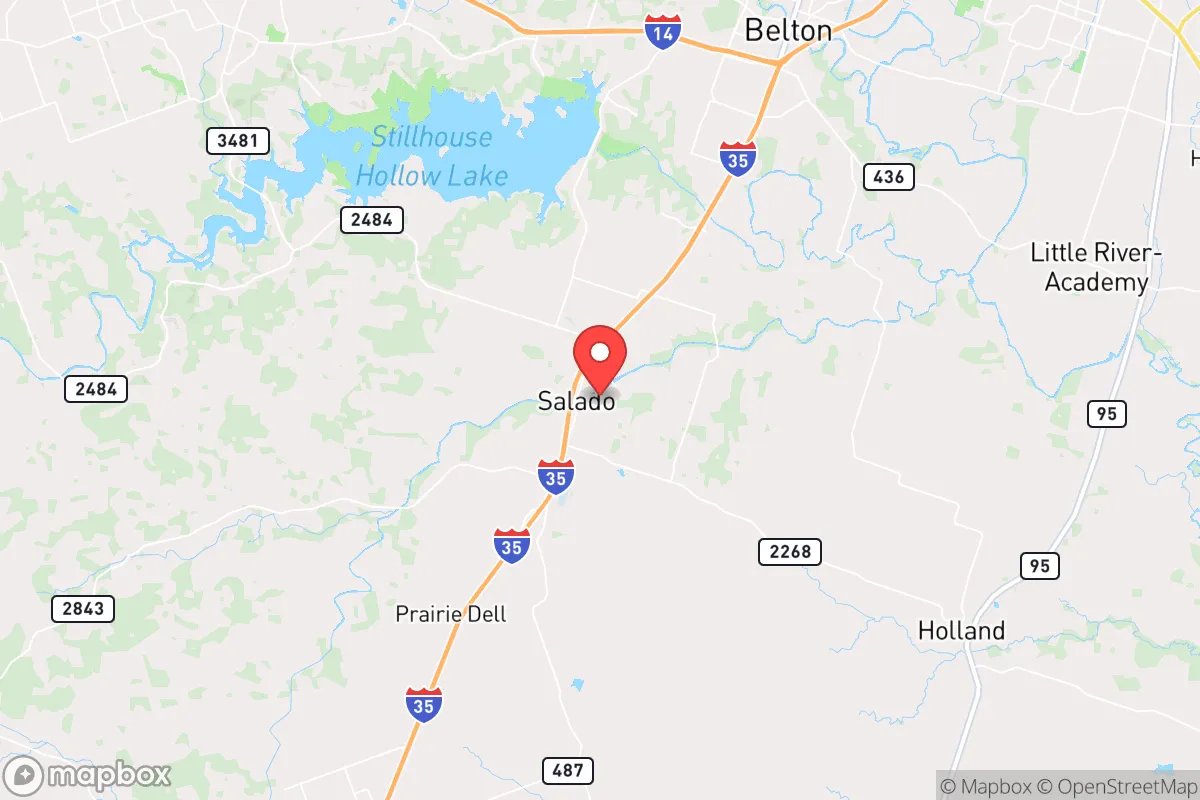
Demographics of Salado, TX
Affluence Level in Salado, TX
An upper-middle-class area. Household wealth, education levels, and homeownership run ahead of national benchmarks.
People of Salado, TX
The people of Salado, Texas today number 2,292, forming a small, highly educated community with a distinctly traditional character. The population is overwhelmingly White (81.7%) with a Hispanic share of 11.0%, and a remarkably low foreign-born rate of 0.6%. With 60.5% of adults holding a college degree, Salado’s identity is shaped by its historic village core, its role as a bedroom community for Fort Cavazos and Austin, and a strong preservationist ethos that resists rapid change.
How the city was settled and grew
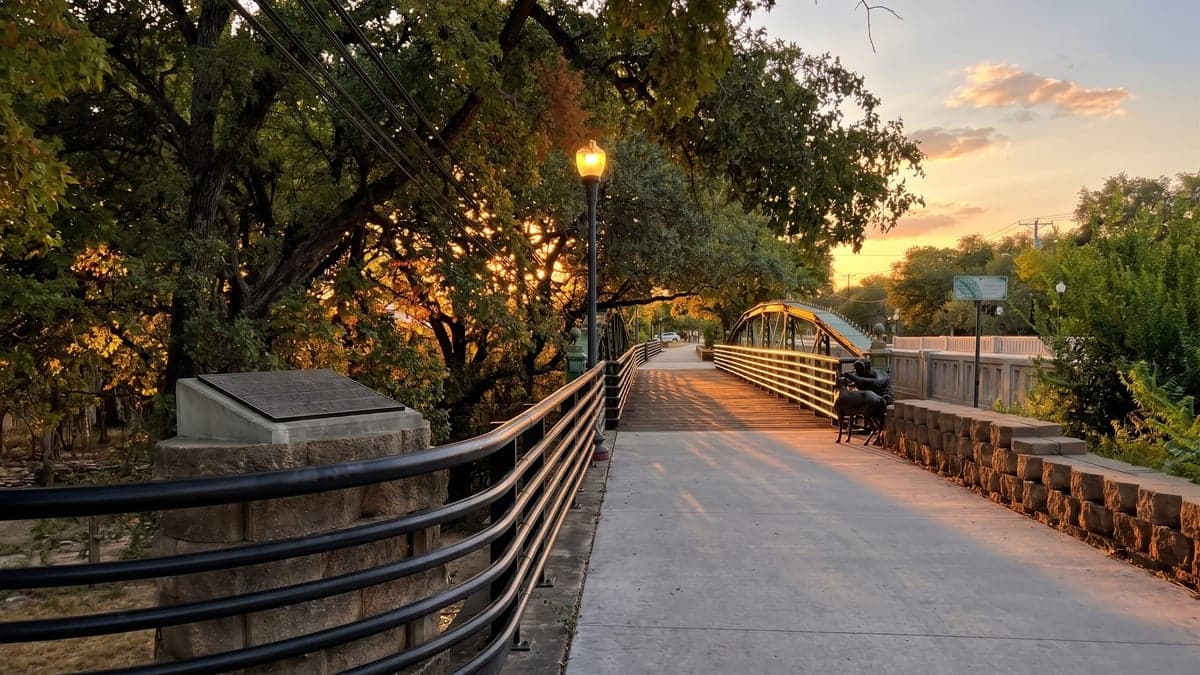
Salado’s human history begins with the Tonkawa and Comanche peoples, who used the clear-running Salado Creek as a campsite and crossing. Anglo-American settlement began in earnest after the 1840s, when the Republic of Texas granted land to veterans. The town was formally platted in 1859 along the stagecoach route from Austin to Waco. The arrival of the Gulf, Colorado and Santa Fe Railway in the 1880s turned Salado into a cotton-shipping and trading center, drawing merchants, farmers, and craftsmen. The historic Main Street district—centered on the Salado Creek bridge—was built by these early Anglo settlers, with stone and frame structures that still house shops and inns. A second wave arrived after 1900, when Salado College (founded 1860) drew families seeking education; the College Hill neighborhood around the old campus became home to teachers, ministers, and professionals. The town’s population remained small and almost entirely White through the mid-20th century, with a handful of Hispanic families working in cotton and ranching.
Modern era (post-1965)
After the 1965 Immigration Act, Salado saw virtually no new foreign-born influx—the foreign-born share today is just 0.6%, far below state and national averages. Instead, the modern era has been defined by domestic in-migration. The expansion of Fort Hood (now Fort Cavazos) in the 1970s and 1980s brought military retirees and civilian defense workers, many of whom settled in the Stagecoach Hills subdivision, a master-planned community of ranch-style homes on large lots. The 1990s and 2000s saw a wave of professionals from Austin (45 miles south) seeking lower taxes and a slower pace; they filled newer developments like Mill Creek, a golf-course community of custom homes that now anchors the town’s southern edge. The Hispanic population grew from roughly 5% in 1990 to 11.0% today, concentrated in the Salado West area, a modest neighborhood of older homes and rental properties near I-35. The Black population remains tiny at 0.3%, and East/Southeast Asian (0.4%) and Indian-subcontinent (0.3%) communities are negligible, reflecting the area’s limited draw for immigrant groups. The overall effect is a population that is whiter and more native-born than the surrounding region, with a strong military and professional-service character.
The future
Salado’s population is projected to grow modestly, likely reaching 2,800–3,000 by 2035, driven by continued spillover from the Austin metro and by Fort Cavazos expansion. The population is becoming slightly more diverse, but slowly: the Hispanic share may rise to 14–15% as families in Salado West grow and as service workers move in for tourism and construction jobs. New development is concentrated in the Salado Crossing area, a mixed-use district near the I-35 frontage road that will add townhomes and apartments—a shift from the large-lot subdivisions of the past. The White share will likely decline to the mid-70% range, but the town’s cultural identity will remain strongly Anglo-Texan, centered on the Salado Scottish Festival, the Stagecoach Inn, and a school system that draws families specifically for its small-classroom reputation. The foreign-born share is expected to stay below 2%, as Salado lacks the rental stock and job base that attract immigrants to larger cities.
For someone moving in now, Salado is becoming a more diverse but still overwhelmingly White, highly educated, and culturally traditional small town—a place where newcomers are expected to embrace local history and where demographic change arrives in single-digit increments, not waves. It suits families and retirees who want a quiet, safe, school-focused community with easy highway access to Austin and Fort Cavazos, and who are comfortable in a population that remains, by design and by market forces, largely homogeneous.

* Values derived from national, state, county, city and local statistics and may differ in a specific area. Last updated: 2026-07-20T01:51:44.000Z
Narrative content on this page is AI-generated and may contain mistakes. Verify any details that matter before acting on them.
ReloMaps may earn a commission from affiliate links at no extra cost to you.

