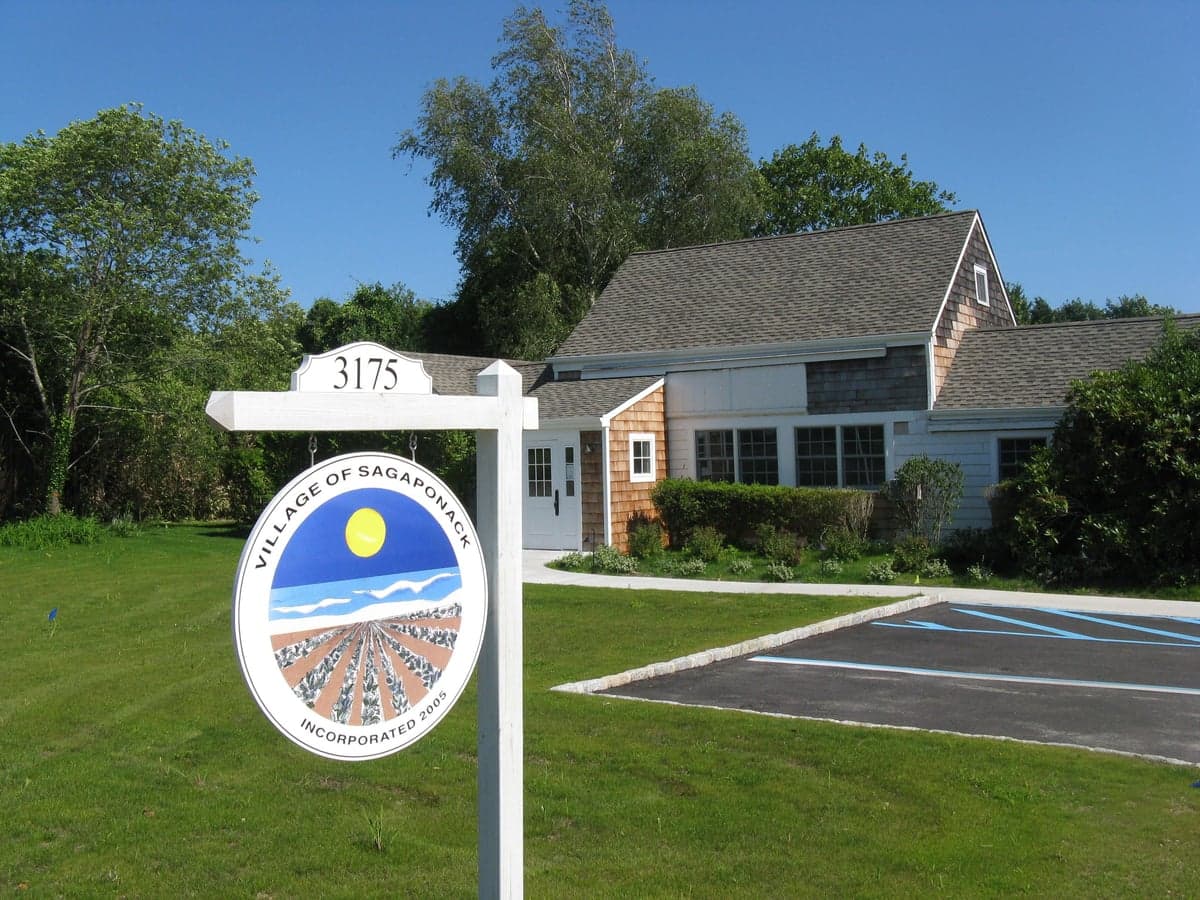
Photo: Wikipedia
Political ClimatePolitical Climate in Sagaponack, NY
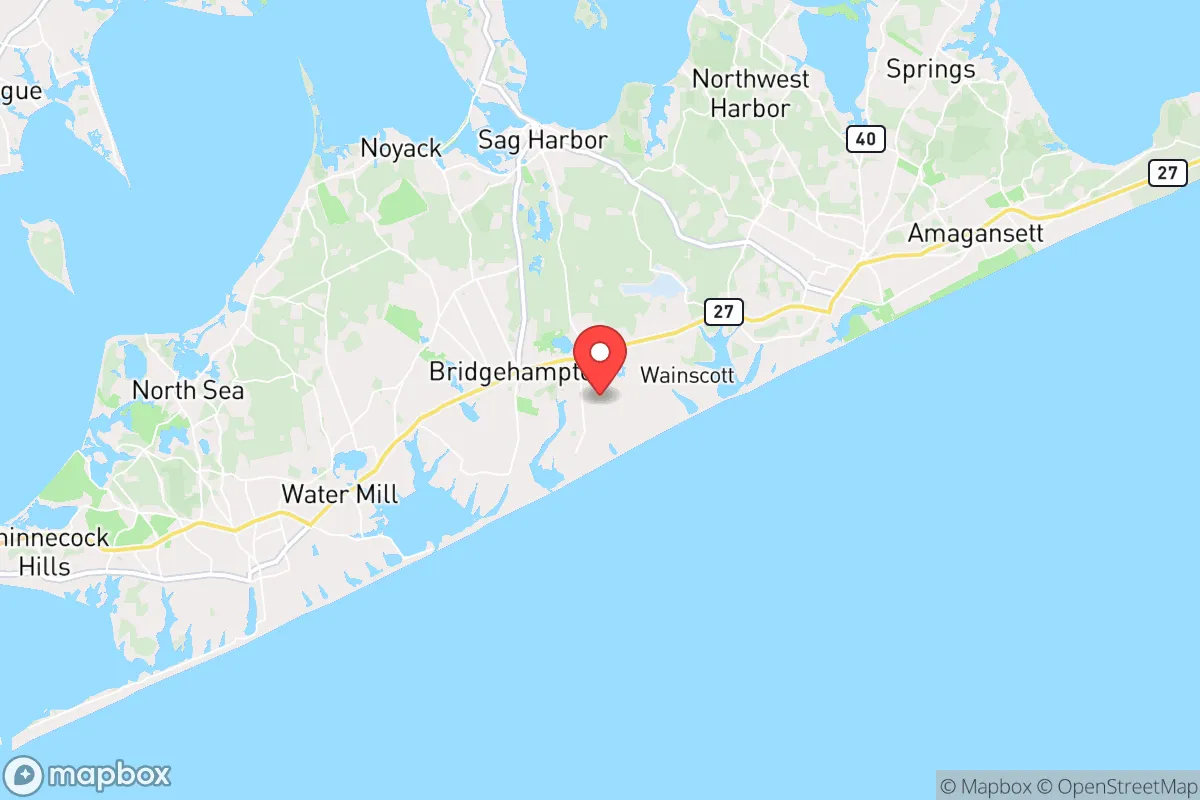
District shown is the primary district for this city’s centroid. Cities may span multiple districts.
Local Political AnalysisPolitical Analysis of Sagaponack, NY
Sagaponack, New York, has long been a quiet stronghold of traditional conservative values, with a Cook PVI of R+4 that reflects its steady Republican lean in a region that has shifted leftward in recent years. This isn't a place that swings wildly with national trends; it's a community where folks have voted their conscience for generations, and that conscience tends to favor limited government, personal responsibility, and keeping the tax man at a respectful distance. The political trajectory here is one of cautious resistance—residents have watched nearby towns like East Hampton and Southampton drift toward progressive policies, and they've largely said, "No thanks, we'll keep things the way they are."
How it compares
To understand Sagaponack's political climate, you have to look at the map. Head east into East Hampton, and you're in a place where the Cook PVI flips to D+12 or worse—a world of plastic bag bans, strict short-term rental regulations, and town boards that seem eager to regulate everything from lawn heights to solar panel angles. Sagaponack, by contrast, sits in the Town of Southampton, but it's a different animal. The village government here is minimal by design; there's no overbearing zoning board breathing down your neck about a fence that's six inches too tall. Compare it to Bridgehampton, just to the west, which has seen a creeping wave of progressive activism in local elections—Sagaponack's voters have consistently rejected that trend. The R+4 rating isn't just a number; it's a reflection of a community that values its autonomy and isn't shy about voting against what they see as government overreach into personal freedoms, whether that's property rights, school curriculum, or the right to live without a dozen new regulations every year.
What this means for residents
For the people who actually live here year-round—not just the summer crowd—this political stability means a few concrete things. First, property taxes, while still high by national standards, are kept in check by a local government that doesn't see every problem as an excuse for a new tax or fee. Second, there's a palpable sense of freedom: you can build a barn, keep a few chickens, or run a small business from your home without needing a lawyer to navigate a thicket of permits. Third, and maybe most importantly, the schools and local services reflect a community that prioritizes common sense over ideology. That said, there's a growing concern among long-time residents that the progressive tide from the Hamptons' more liberal enclaves is lapping at Sagaponack's edges. The recent push for "affordable housing" mandates and climate action plans in Southampton Town Hall has raised eyebrows—folks worry these are Trojan horses for more government control over private property and personal choices. The near-term future likely sees Sagaponack holding the line, but it's a fight that requires staying vigilant at every village board meeting.
Culturally, Sagaponack is a place where the old farming families still have a seat at the table, and that matters. There's a distinct distrust of the kind of top-down, one-size-fits-all policy that comes out of Albany or Washington. The village has resisted the urge to ban gas-powered leaf blowers or impose strict noise ordinances, recognizing that people should be able to live their lives without a bureaucrat's permission slip. The biggest policy distinction? Sagaponack has no village police force—it relies on the Suffolk County Sheriff, which keeps local law enforcement lean and focused on real issues rather than revenue-generating traffic stings. If you're looking for a place where the government stays out of your way and lets you live as you see fit, Sagaponack is one of the last holdouts in the Hamptons. But keep an eye on those town elections—the fight to keep it that way is never truly over.

State Political ClimatePolitical Climate in New York
State Political AnalysisPolitical Environment in the State
New York State has long been a Democratic stronghold, but the real story is how dramatically it has shifted leftward over the past two decades. While it hasn't flipped in a presidential race since 1984, the state's political center of gravity has moved from a moderate, business-friendly Democratic establishment to a progressive, government-expanding machine. The 2020 and 2022 cycles saw the party consolidate power, with Democrats now holding supermajorities in both legislative chambers and every statewide office. For a conservative or libertarian-leaning individual, the state's trajectory is unmistakably toward higher taxes, more regulation, and a shrinking sphere of personal autonomy.
Urban vs. rural divide
The political map of New York is a tale of two worlds. New York City, with its 8.5 million residents, is the engine of the state's Democratic dominance, delivering margins of 70-80% in presidential elections. The five boroughs—Manhattan, Brooklyn, Queens, the Bronx, and Staten Island (the lone Republican holdout)—are supplemented by the inner-ring suburbs of Westchester County, Nassau County, and Suffolk County on Long Island, which have trended blue in recent cycles. Upstate, the picture is starkly different. The vast majority of counties north of the Hudson Valley—places like Oneida County (Utica), Steuben County (Corning), and Chautauqua County (Jamestown)—vote Republican by double digits. The divide is so sharp that in 2020, Joe Biden won just 16 of New York's 62 counties, yet carried the state by 23 points. The real battlegrounds are the "collar counties" like Dutchess and Ulster, which have flipped from purple to light blue as New York City exurbs fill with remote workers fleeing the city but bringing its politics with them. The rural-urban split is not just electoral—it's cultural, with upstate residents feeling increasingly alienated from Albany's one-size-fits-all mandates.
Policy environment
New York's policy environment is among the most interventionist in the nation. The state has the highest combined state and local tax burden in the country, with income tax rates topping 10.9% for top earners and property taxes among the highest nationally. The regulatory posture is aggressive: the state has enacted a sweeping climate law (the Climate Leadership and Community Protection Act) that mandates a 100% zero-emission electricity grid by 2040, effectively banning natural gas in new construction. In education, New York has some of the most restrictive homeschooling regulations in the Northeast, requiring annual assessments and detailed curriculum submissions. Healthcare is dominated by the state's Medicaid program, which covers over 7 million residents and consumes roughly a third of the state budget. Election laws have been progressively loosened: no-excuse absentee voting, early voting, and automatic voter registration are now law, and in 2021, the state legalized mobile sports betting. For conservatives, the policy environment feels like a slow-motion takeover of daily life by Albany bureaucrats.
Trajectory & freedom
Over the past five years, New York has become demonstrably less free across multiple dimensions. The 2019 Reproductive Health Act codified abortion up to birth, removing any restrictions on late-term procedures. The 2022 SAFE Act follow-up (the "Concealed Carry Improvement Act") effectively gutted the Supreme Court's Bruen decision by banning firearms in "sensitive locations" like Times Square and requiring applicants to prove "good moral character"—a standard that gives local sheriffs enormous discretion. Parental rights took a hit with the 2021 repeal of the state's parental notification law for minors seeking abortions. On the economic freedom front, the state's 2021 rent stabilization laws expanded tenant protections so aggressively that many small landlords have simply sold their properties, reducing housing supply. The 2023 "Clean Slate Act" automatically seals many criminal records after a waiting period, which supporters call restorative but critics argue weakens public safety. The trajectory is clear: every legislative session brings new restrictions on property rights, gun ownership, and parental authority, while expanding government's role in healthcare and education.
Civil unrest & political movements
New York has been a flashpoint for political activism on both sides. The 2020 George Floyd protests in New York City were among the largest and most destructive in the nation, with over 300 businesses damaged and the city eventually settling a $13 million lawsuit over police misconduct. The state's sanctuary policies are among the strongest in the country: the 2017 "New York is a Sanctuary State" executive order (later codified) prohibits state agencies from cooperating with federal immigration enforcement, and the 2023 "Green Light Law" allows undocumented immigrants to obtain driver's licenses. This has created visible tension in upstate cities like Rochester and Buffalo, where migrant busing from the city has strained local resources. On the right, the "Second Amendment Sanctuary" movement has gained traction in rural counties like Allegany and Lewis, where local sheriffs have declared they will not enforce certain gun laws. The 2022 election saw a brief Republican resurgence in the Hudson Valley and Long Island, with candidates like Lee Zeldin coming within 6 points of the governorship—a sign that the progressive agenda may have limits. But the Democratic supermajority in Albany has repeatedly overridden local resistance, as seen when the state banned local governments from opting out of the new housing mandates in 2023.
Projection
Looking ahead 5-10 years, the trend lines are not encouraging for conservatives. The state's population is projected to continue its slow decline—New York lost over 600,000 residents between 2020 and 2024, the largest loss of any state—but the people leaving are disproportionately upstate Republicans and middle-class families, while the newcomers are younger, more diverse, and more progressive. The Democratic supermajority is likely to persist, and the next wave of legislation will probably include a single-payer healthcare system (the "New York Health Act") and a public option for health insurance, both of which have been introduced repeatedly. The state's fiscal situation is precarious: the budget deficit is projected to hit $10 billion by 2027, which will almost certainly mean higher taxes or cuts to services. The housing crisis in the downstate region will intensify, driving more New York City residents into the Hudson Valley and further shifting those counties blue. For a conservative moving in now, the realistic expectation is that the state will become more expensive, more regulated, and less accommodating to traditional values over the next decade.
For a new resident—especially a conservative or libertarian—the bottom line is that New York offers world-class career opportunities, cultural amenities, and natural beauty, but at the cost of constant political friction. You will pay more in taxes, navigate more regulations, and watch your personal freedoms erode incrementally each legislative session. If you can afford the financial and psychological toll, the Hudson Valley or the Finger Lakes region offer beautiful communities with like-minded neighbors. But if you value low taxes, gun rights, and parental autonomy above all else, you may find yourself joining the hundreds of thousands who have already left for Florida, Texas, or the Carolinas.
* Values derived from national, state, county, city and local statistics and may differ in a specific area. Last updated: 2026-04-24T01:50:22.000Z
Narrative content on this page is AI-generated and may contain mistakes. Verify any details that matter before acting on them.
ReloMaps may earn a commission from affiliate links at no extra cost to you.

