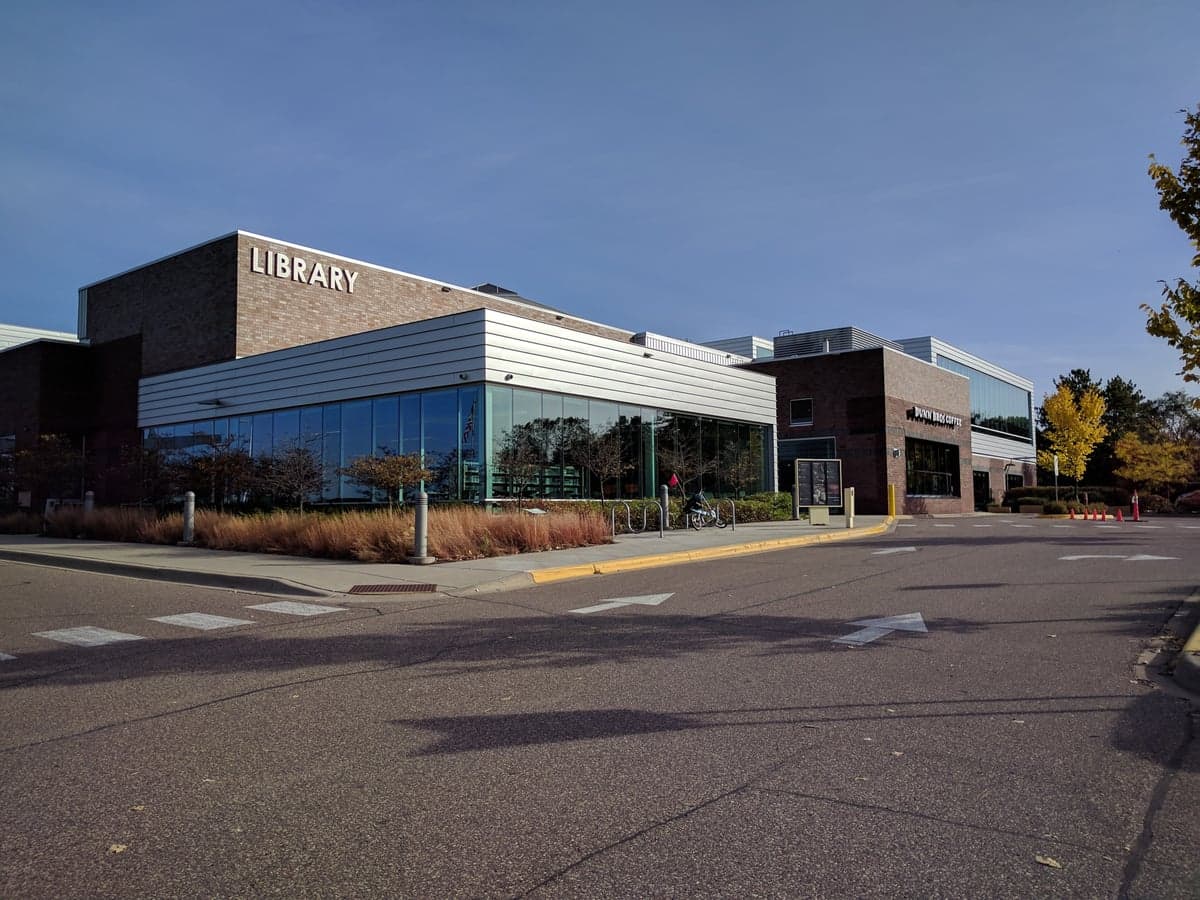
Photo: Wikipedia
Political ClimatePolitical Climate in Roseville, MN
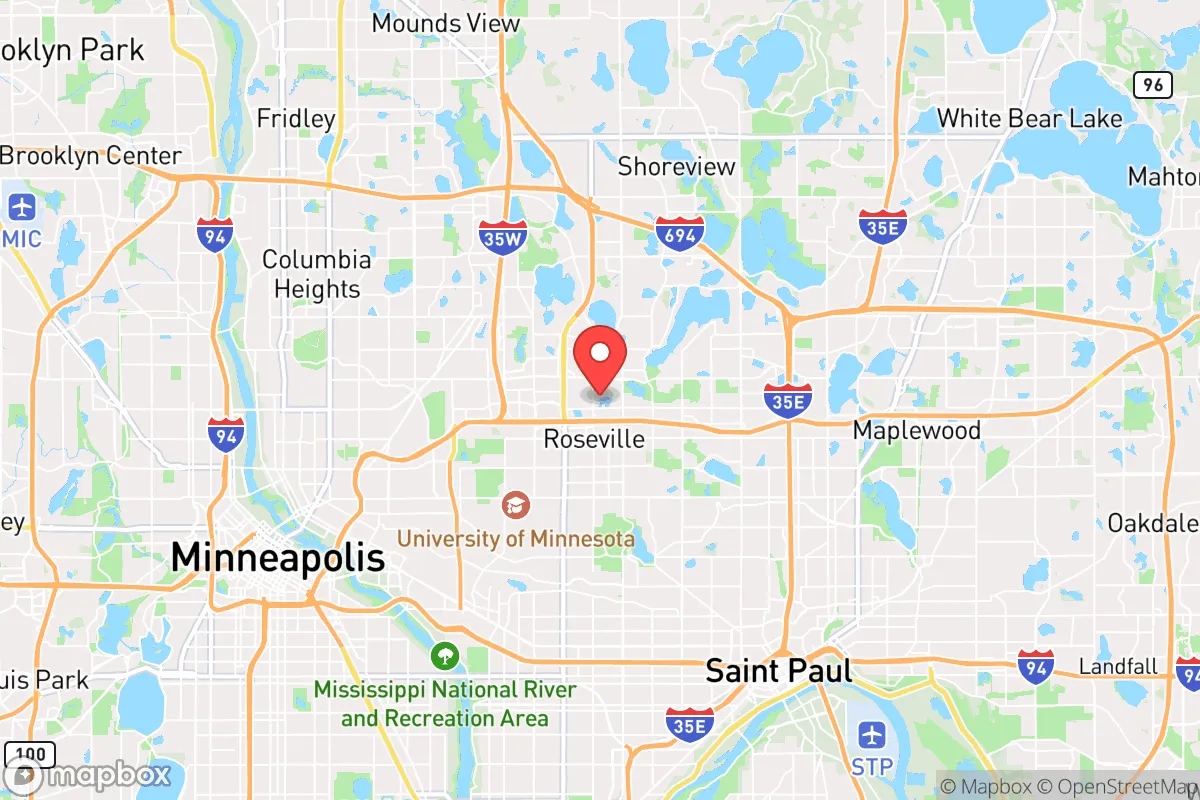
District shown is the primary district for this city’s centroid. Cities may span multiple districts.
Local Political AnalysisPolitical Analysis of Roseville, MN
Roseville, Minnesota, leans heavily to the left, with a Cook Partisan Voting Index of D+18, meaning it votes about 18 points more Democratic than the national average. This isn't a recent shift; it's been a reliably blue stronghold for decades, and the trajectory has only gotten more pronounced in the last few election cycles. If you're looking for a place where traditional, small-government values still hold sway, you'll find yourself in the minority here, and frankly, that's a trend that shows no signs of reversing.
How it compares
To understand Roseville's political climate, you have to look at its neighbors. Drive ten minutes north to Shoreview or White Bear Lake, and you'll find a more balanced mix—still left-leaning, but with a noticeable conservative presence, especially in local school board and city council races. Head west to New Brighton or Arden Hills, and the politics are similar, though a bit more moderate. But the real contrast is just a few miles south: St. Paul is even more progressive, and Minneapolis is a whole different beast. Roseville sits in that suburban ring where the progressive agenda is fully embraced, but without the urban chaos. The surrounding Ramsey County board is dominated by Democrats, and state representatives from this area are reliably among the most liberal in the Minnesota House. It's a bubble, and it's getting thicker.
What this means for residents
For a conservative-leaning resident, daily life here means constantly bumping up against policies that feel like government overreach. The city council and school board are almost entirely progressive, so you can expect higher property taxes to fund initiatives you might not agree with—expanded public programs, equity-focused curriculum in schools, and zoning changes that prioritize density over single-family neighborhoods. The local government is quick to regulate, from rental licensing to plastic bag bans to restrictions on short-term rentals. If you value personal freedom—like the right to use your property as you see fit or to opt out of certain mandates—you'll feel the squeeze. The political culture here is one of active, vocal participation, but it's almost entirely one-sided. You won't find many "Don't Tread on Me" flags in driveways, but you'll see plenty of yard signs for progressive candidates. It can feel isolating if you hold traditional views, and the social pressure to conform is real, especially in neighborhood associations and local civic groups.
One cultural distinction worth noting: Roseville has a strong sense of community, but it's a community defined by its politics. The city's identity is wrapped up in being "inclusive" and "progressive," which sounds nice, but in practice means that dissenting opinions are often dismissed or shouted down. The local paper, the Roseville Review, leans heavily left in its coverage. If you're considering a move here, know that you're not just buying a house; you're buying into a political ecosystem that will touch everything from your kids' education to your property rights. It's a comfortable, safe suburb in many ways, but the long-term trend is toward more government involvement in your daily life, not less. For those who value individual liberty and fiscal restraint, that's a hard pill to swallow.

State Political ClimatePolitical Climate in Minnesota
State Political AnalysisPolitical Environment in the State
Minnesota has shifted from a reliably purple battleground to a solidly blue state over the past two decades, with Democrats holding every statewide office and both legislative chambers since 2023. The state voted for Hillary Clinton by 1.5 points in 2016, Joe Biden by 7 points in 2020, and Kamala Harris by 4 points in 2024, while Republicans haven’t won a statewide race since Tim Pawlenty’s 2006 gubernatorial re-election. The real story is the metro-rural chasm: the Twin Cities metro now drives roughly 55% of the state’s vote, and its Democratic margins have grown so large that rural GOP landslides in Greater Minnesota can no longer overcome them.
Urban vs. rural divide
The political map of Minnesota is essentially two states. The seven-county Twin Cities metro—Hennepin, Ramsey, Dakota, Washington, Anoka, Carver, and Scott—delivers a net Democratic margin of roughly 400,000 votes, enough to cancel out every rural county in the state. Hennepin County alone (Minneapolis) gave Biden 71% in 2020, while rural counties like Mahnomen, Red Lake, and Koochiching in the northwest and north-central regions voted 65-75% Republican. The Iron Range, once a Democratic stronghold, has flipped hard: St. Louis County (Duluth) still leans blue, but Itasca, Lake, and Cook counties have trended red since 2016. The suburbs tell a nuanced story: Anoka County (north metro) voted for Trump in 2016 and 2020 but flipped to Biden in 2024 by 2 points, while Carver County (southwest exurbs) remains reliably red, voting +12 R in 2024. Olmsted County (Rochester) is a swing county that has trended blue since 2016, driven by Mayo Clinic’s professional workforce.
Policy environment
Minnesota’s policy environment has shifted dramatically left since Democrats took full control in 2023. The state now has a progressive income tax with a top rate of 9.85% on income over $200,000 (single), plus a new 1% surcharge on income over $1 million, making it one of the highest-tax states in the Midwest. Property taxes are locally set but average about 1.05% of home value, with no statewide cap. The 2023 session passed a slew of new mandates: a paid family and medical leave program funded by a 0.7% payroll tax, a 15% corporate tax rate on large businesses, and a new 50-cent-per-ounce tax on e-cigarettes. Education spending per pupil is among the highest nationally at $16,000+, but the state also passed a law requiring all public schools to provide “gender-inclusive” curricula and materials, overriding local school board control. Election laws have been loosened: automatic voter registration, same-day registration, and no-excuse absentee voting are all in place, and the state restored felon voting rights upon release from prison in 2023. Gun laws tightened significantly: universal background checks, a “red flag” law (extreme risk protection orders), and a 30-day waiting period for handgun purchases were all signed by Governor Tim Walz in 2023.
Trajectory & freedom
On the freedom index, Minnesota is clearly trending downward for conservatives. The 2023 legislative session was the most aggressive in decades: the paid leave mandate, the new gun restrictions, and the elimination of the “parental notice” requirement for minors seeking abortions (now codified as a “fundamental right” in state law) all represent expansions of government power. Property rights took a hit with a new law allowing local governments to impose rent control without a voter referendum, though no city has yet done so. Medical autonomy is constrained: the state now mandates that health insurers cover gender transition procedures, including for minors, and prohibits “conversion therapy” for minors. On the plus side, Minnesota has no state-level occupational licensing for many trades, and the state’s right-to-work status remains intact (no forced union dues), though Democrats have tried to repeal it. The 2024 session saw a failed attempt to pass a carbon-free electricity mandate by 2040, but the state did adopt California’s vehicle emissions standards, effectively banning new gas-powered car sales by 2035. For a conservative, the trajectory is clear: more taxes, more mandates, and less local control.
Civil unrest & political movements
Minnesota has been a flashpoint for civil unrest since the 2020 George Floyd protests, which caused $500 million in property damage in Minneapolis and St. Paul. The state’s “sanctuary” policies—the 2023 Minnesota Freedom to Drive Act prohibits law enforcement from asking about immigration status during traffic stops—have made it a magnet for illegal immigration, with the state’s foreign-born population growing 30% since 2020. The “Minneapolis Uprising” spawned a national movement, and the city’s 2021 “defund the police” ballot measure (which failed) still led to a 40% reduction in the police force, contributing to a 60% rise in carjackings from 2020-2023. On the right, the “Minnesota Freedom Fund” and “Moms for Liberty” chapters have grown, but the state’s political infrastructure for conservatives is weak—the GOP hasn’t held a statewide office since 2010. Election integrity remains a concern: the 2020 election saw a 7% increase in mail-in ballots, and the 2023 law allowing felons to vote while on probation added an estimated 55,000 new voters, most of whom lean Democratic. The “Walz administration” has been criticized for using emergency powers during COVID for 15 months without legislative approval, a precedent that worries civil libertarians.
Projection
Over the next 5-10 years, Minnesota will likely become more Democratic and more progressive. The Twin Cities metro is growing faster than Greater Minnesota, and in-migration from blue states like California and Illinois is accelerating—the state gained 40,000 new residents from California alone between 2020 and 2024. The rural exodus continues: 60 of Minnesota’s 87 counties lost population in the 2020 census, and those that remain are aging and shrinking. The 2024 election showed that Democrats can win statewide with just 45% of the rural vote, as long as they carry the metro by 60-70%. The state’s political future is essentially a smaller version of Illinois: a blue metro dominating a red hinterland. For a conservative moving in now, expect higher taxes, more regulation, and a political environment where your vote in statewide races will be increasingly irrelevant. The only bright spot is local control: many exurban and rural counties are passing “Second Amendment sanctuary” resolutions and pushing back on state mandates, but these are symbolic—the state preempts local gun laws, and the attorney general has sued several counties for noncompliance.
For a new resident, the bottom line is this: Minnesota offers excellent schools, clean air, and a strong economy, but you’ll pay for it with high taxes and a government that increasingly micromanages your life. If you’re a conservative, you’ll find your political voice most effective at the city council and county board level, not in St. Paul. The state is not going to flip red anytime soon, so come for the lakes and the jobs, but be prepared to fight for your freedoms at the local level.
* Values derived from national, state, county, city and local statistics and may differ in a specific area. Last updated: 2026-04-29T23:18:15.000Z
Narrative content on this page is AI-generated and may contain mistakes. Verify any details that matter before acting on them.
ReloMaps may earn a commission from affiliate links at no extra cost to you.

