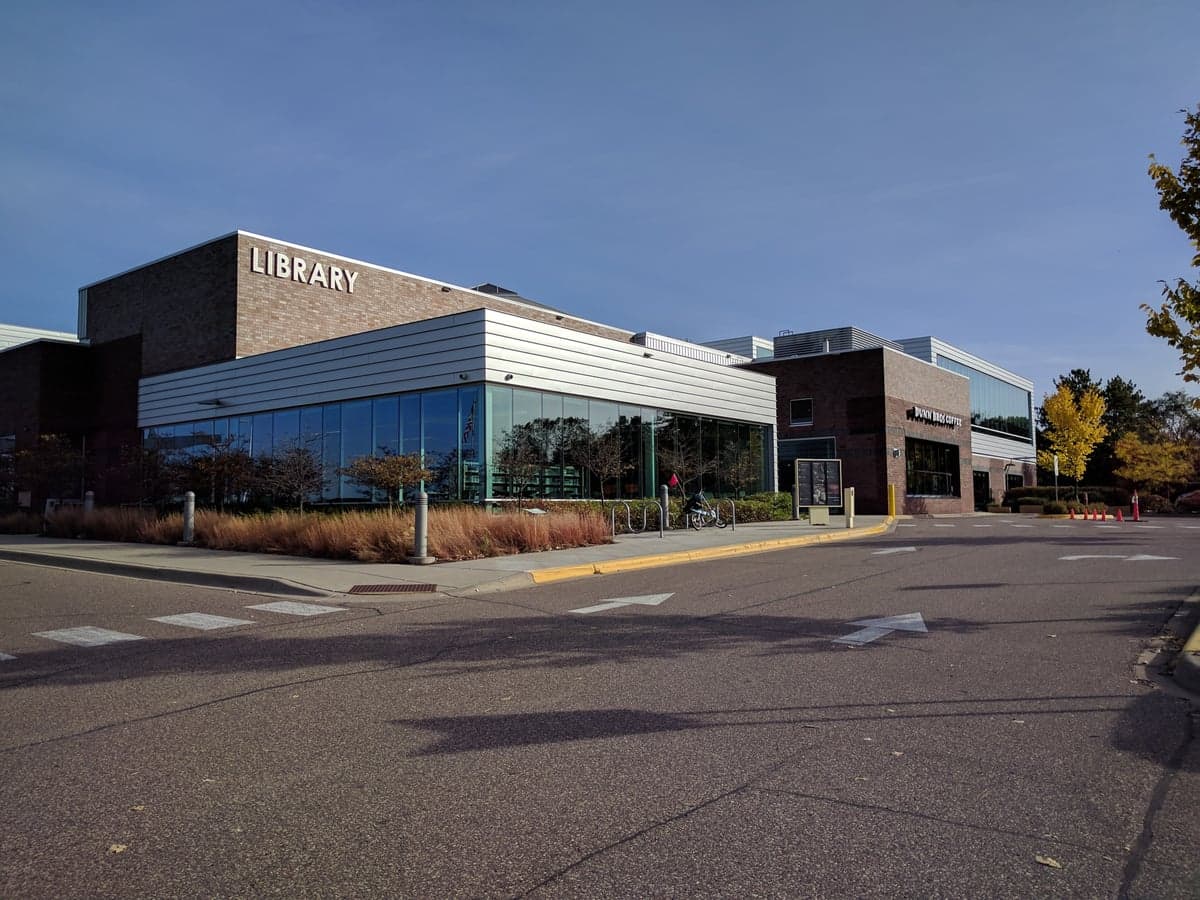
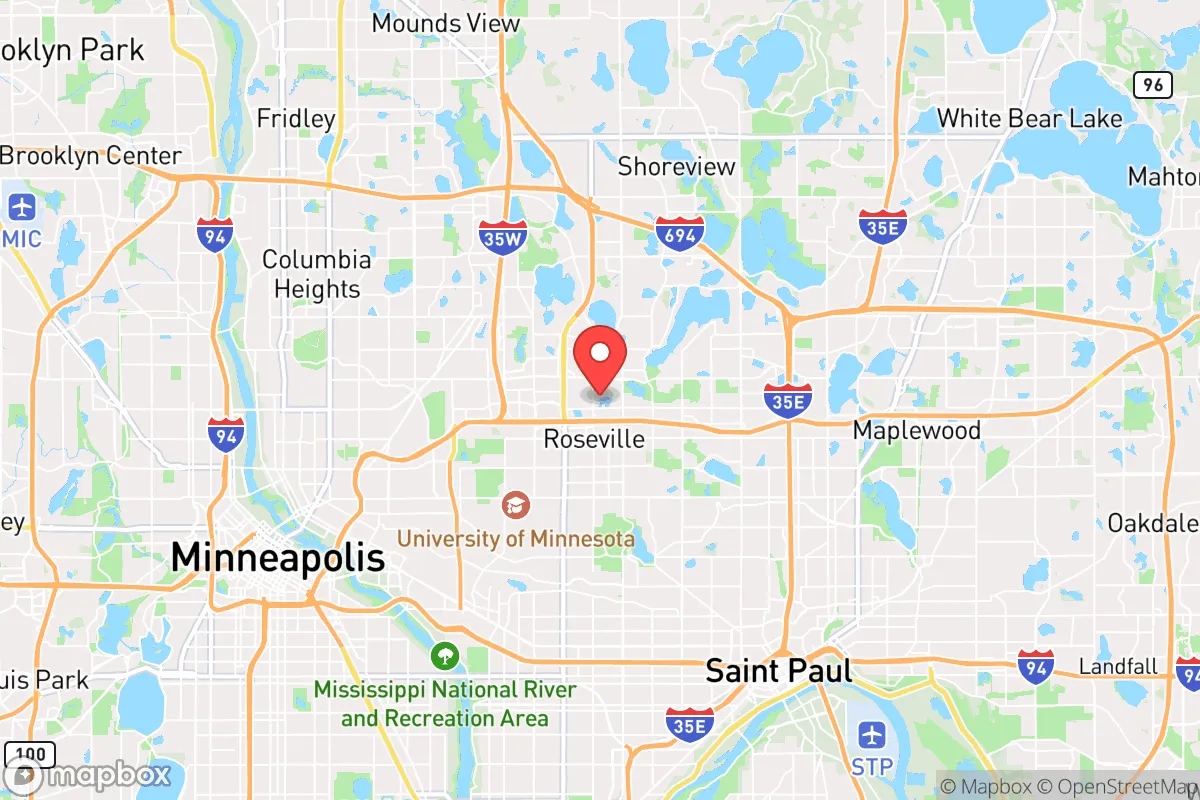
Photo: Wikipedia
Demographics of Roseville, MN
Affluence Level in Roseville, MN
A middle-class area roughly in line with national averages across income, home values, education, and employment.
People of Roseville, MN
Roseville, Minnesota, today is a mature, inner-ring suburb of 35,905 residents with a distinctly professional-class character — 54.4% of adults hold a college degree, well above the national average. The city is predominantly White (70.4%) but has become notably diverse in recent decades, with significant Black (8.4%), East/Southeast Asian (6.1%), Hispanic (6.4%), and Indian-subcontinent (2.0%) communities. Its population density and built-out status give it a stable, established feel, with few new subdivisions and a housing stock dominated by mid-century ranches and 1970s townhomes.
How the city was settled and grew
Roseville's original population was almost entirely White and of Northern European descent, drawn by the area's fertile farmland and proximity to St. Paul. The land was originally part of the Fort Snelling military reservation, and after the 1850s land cessions by the Dakota people, it was opened to Yankee and German homesteaders. The village of Roseville was formally organized in 1948, but its real growth came in the 1950s and 1960s as a classic post-war suburb. The Lexington Avenue corridor and County Road B area filled with young White families moving out of St. Paul, building the ranch-style homes that still dominate neighborhoods like Fairview Addition and Roselawn. These were overwhelmingly native-born, Protestant and Catholic families employed in St. Paul's manufacturing and government sectors. The city's first major non-White influx came in the 1970s, when a small number of Hmong refugees from Laos settled in the Har-Mar Mall area, though their numbers remained modest compared to St. Paul's larger Hmong enclave.
Modern era (post-1965)
The post-1965 Immigration and Nationality Act had a delayed but real effect on Roseville. Through the 1980s and 1990s, the city saw gradual diversification as second-ring suburbs became affordable alternatives to Minneapolis and St. Paul. The Larpenteur Avenue corridor and the area around Rosedale Center mall became a landing point for East/Southeast Asian families — particularly Hmong and Vietnamese — who were drawn to the good public schools and safe streets. The Black population, now 8.4%, grew primarily through domestic migration from Chicago and Detroit, settling in the apartment complexes along Snelling Avenue and the Dale Street corridor. The Indian-subcontinent community (2.0%) is a more recent arrival, concentrated among tech and medical professionals working at nearby employers like 3M, Medtronic, and the University of Minnesota; many have bought homes in the Bush Lake and Owen Park neighborhoods. The Hispanic population (6.4%) is largely Mexican and Central American, with families living throughout the city but with a visible cluster of businesses and churches along Rice Street. Notably, Roseville's foreign-born share (4.6%) is modest compared to the Twin Cities average, reflecting the city's status as a suburb where assimilation and English proficiency are high.
The future
Roseville's population is likely to continue its slow diversification, but the pace will be constrained by the city's built-out geography and high housing costs. The White share (70.4%) is declining gradually as older residents age in place and younger, more diverse families move in. The East/Southeast Asian and Indian-subcontinent communities are growing steadily, driven by professional-class immigration and high educational attainment among second-generation residents. The Black population appears stable, with little new domestic migration from outside Minnesota. The Hispanic share is growing slowly, primarily through natural increase rather than new immigration. Roseville is not tribalizing into distinct ethnic enclaves — the city's small size and good schools encourage integration — but subtle concentration persists: Fairview Addition remains overwhelmingly White and older, while the Snelling-Dale apartment corridor is the most diverse area. The next decade will likely see Roseville become slightly more Asian and Indian, slightly less White, and remain a stable, middle-to-upper-middle-class suburb with strong schools and low crime.
For someone moving in now, Roseville is a settled, low-drama suburb where demographic change is gradual and assimilation is the norm. The city offers strong public schools, safe neighborhoods, and proximity to both St. Paul and Minneapolis, but it lacks the rapid growth or ethnic vibrancy of newer immigrant gateway suburbs. It is a place for families and professionals who value stability, education, and a quiet, well-maintained community over urban energy or rapid appreciation.

* Values derived from national, state, county, city and local statistics and may differ in a specific area. Last updated: 2026-04-29T23:18:15.000Z
Narrative content on this page is AI-generated and may contain mistakes. Verify any details that matter before acting on them.
ReloMaps may earn a commission from affiliate links at no extra cost to you.

