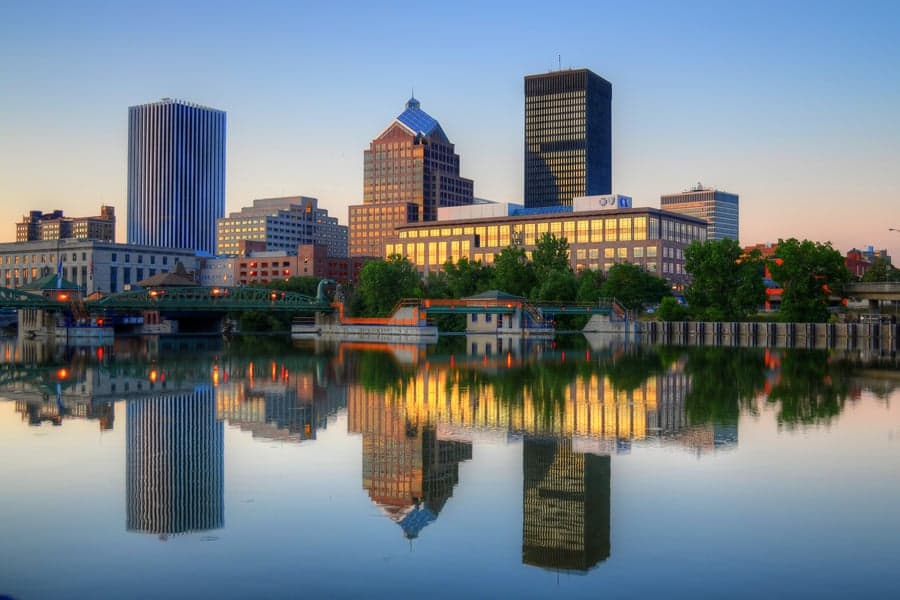
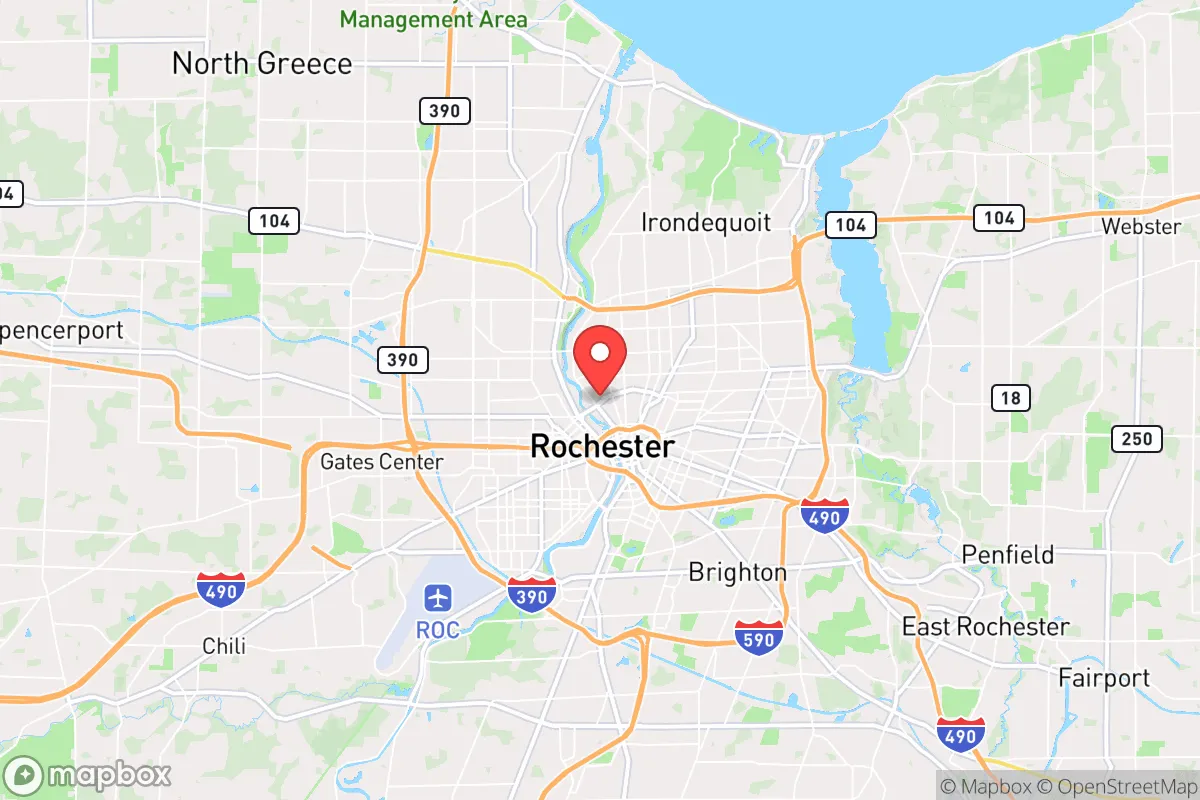
Photo: Wikipedia
Strategic Assessment of Rochester, NY
Multiple tactical vulnerabilities. Population density, target proximity, or disaster risk are likely compounding. A retreat property and exit planning is required.
What does the Strategic Assessment tell us?
Our Strategic Assessment grades tactical survivability of an area. Major population centers, military targets, fallout zones, natural disasters, and border exposure all drive risk — lower exposure means a more defensible position in a crisis.
This is heavily inspired by Joel Skousen's Strategic Relocation book. Highly recommended you checkout the book ($)What does this tell us?
Our Strategic Assessment grades tactical survivability of an area. Major population centers, military targets, fallout zones, natural disasters, and border exposure all drive risk — lower exposure means a more defensible position in a crisis.
This is heavily inspired by Joel Skousen's Strategic Relocation book. Highly recommended you checkout the book ($)Strategic Pillars

Key Distances
Regional Safe Places
Below is our recommended "safe zones" in New York and the surrounding area based on our strategic heuristics. For most people, it's unrealistic to live in a “safe zone” full-time due to work, family or other personal reasons. They tend to be more rural. However, many of these areas are perfect for second homes and retreat properties that double as a vacation home or even a short-term rental.
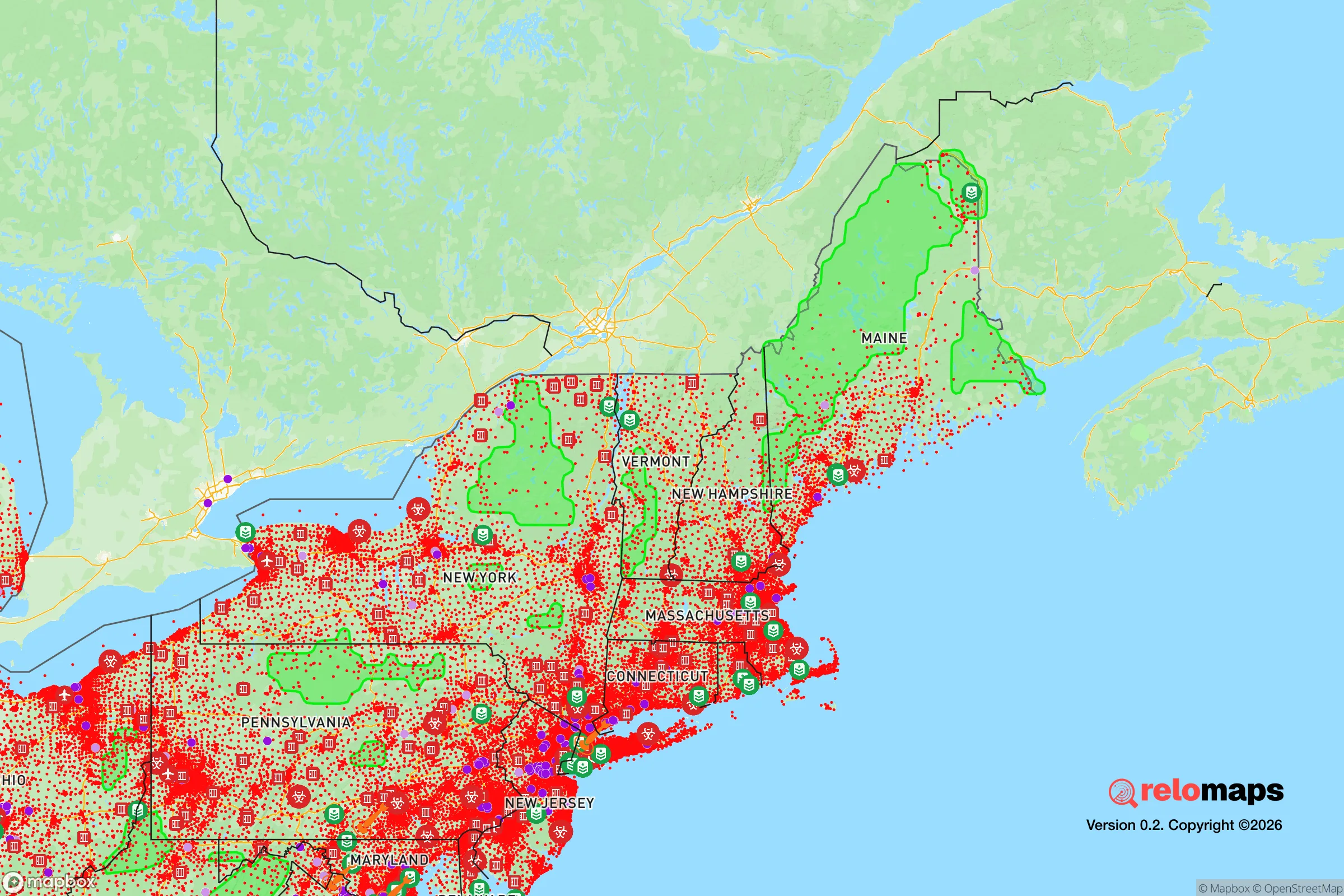
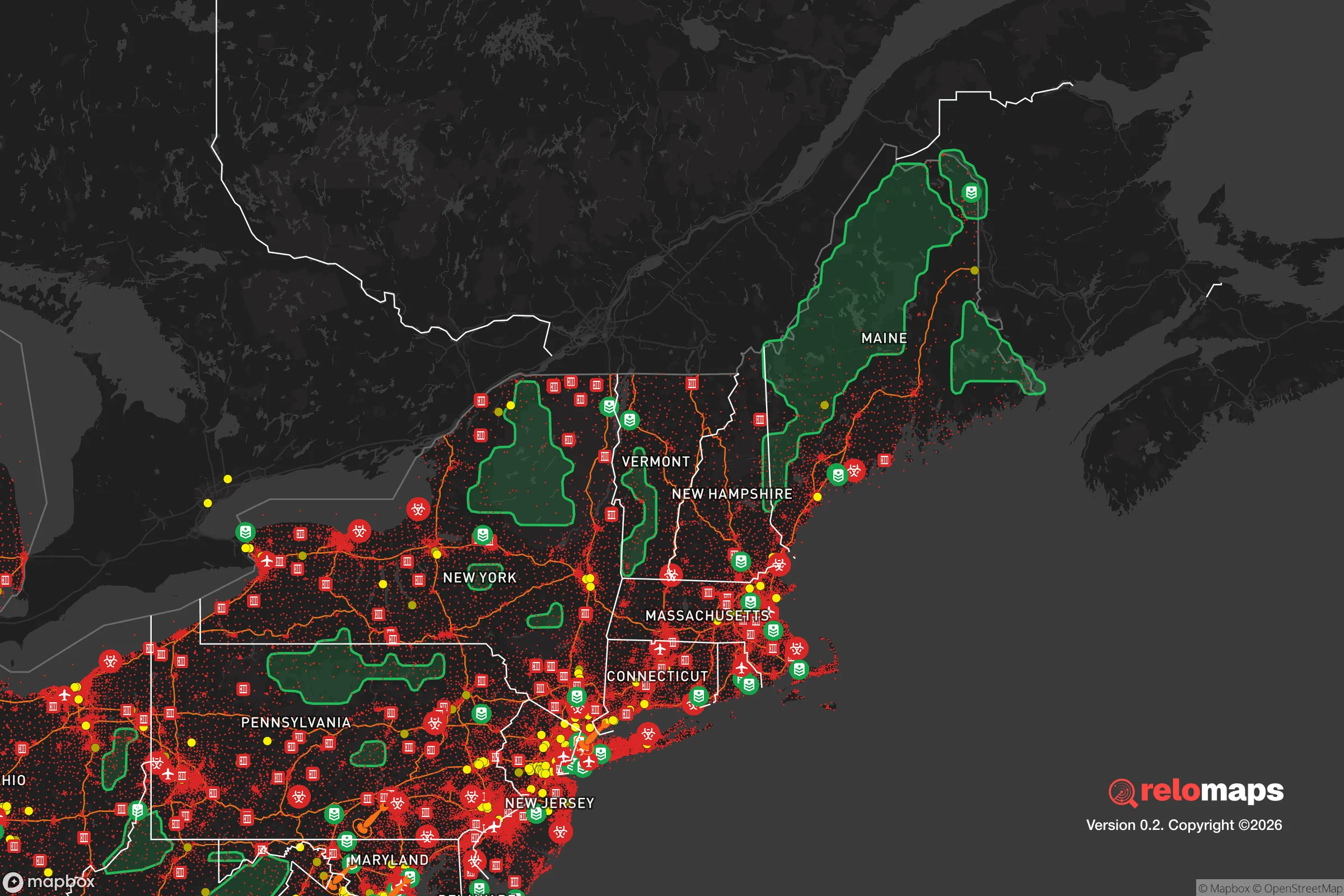


Important Note: For informational purposes only. This does not mean nothing bad ever happens in the green zones. Please use common sense. This is based on public data and modeled with AI. We tried to take a conservative approach but mistakes happen. We update this regularly as new information becomes available.
Solar Generator Recommendations
Backup power matters more here than in safer locations. We've picked three solar generators across budgets and capacity tiers — start with the budget unit if you only need a few essentials, or step up if you want to run a fridge and HVAC for days at a time.

Jackery Portable Power Station Explorer 300
Budget OptionPower on the Go: Weighing only 11 lbs, it's convenient to set up and store with book-sized foldable solar panels

BLUETTI Portable Power Station AC180
Designed for both indoor and outdoor scenarios, AC180 is highly capable as it has a robost capacity and continuous output power.

EF ECOFLOW DELTA Pro Ultra Power Station
Upgraded PickEcoFlow DELTA Pro Ultra is a whole-home energy system designed to grow with your family. Integrated with the Smart Home Panel 2, it scales to meet your evolving energy needs — keeping your home powered, intelligent, and secure through every stage of life.
We earn a commission, at no additional cost to you.
Strategic Assessment Analysis
Rochester, New York, offers a surprisingly resilient strategic position for those prioritizing self-reliance and distance from the most volatile corridors of the Northeast, though it is not without significant trade-offs. Situated on the southern shore of Lake Ontario, the city sits roughly 70 miles east of Buffalo and 90 miles west of Syracuse, placing it within a zone that is both geographically insulated from the immediate blast radius of major metropolitan targets yet close enough to critical freshwater resources and agricultural land. For a relocator with a prepper mindset, Rochester’s primary advantage is its access to the Great Lakes watershed and its position within the relatively stable Finger Lakes region, but its proximity to the I-90 corridor and the potential for secondary fallout from a strike on New York City or Buffalo demands careful consideration.
Geographic position and natural advantages for long-term survival
Rochester’s location is defined by its access to the largest surface freshwater system in North America. Lake Ontario provides an essentially inexhaustible water source, and the surrounding Genesee River valley offers fertile soil and moderate rainfall—critical for any long-term food production scenario. The region sits in USDA hardiness zones 5b to 6a, which supports a growing season long enough for staple crops like corn, beans, and squash, as well as cold-hardy fruits like apples and pears. The Finger Lakes, just south of the city, add another layer of redundancy for water and agriculture. For a relocator, the natural advantages are clear: you are not dependent on a single aquifer or a fragile municipal supply. The area’s topography is mostly rolling hills and flat lake plains, which means defensible terrain is limited, but the abundance of small towns and rural pockets—like Mendon, Honeoye Falls, or the hamlets along the Erie Canal—offers options for low-visibility living. The lake itself also moderates temperatures, reducing the risk of extreme cold snaps compared to inland Upstate locations, though lake-effect snow is a real and persistent challenge, dumping 80 to 100 inches annually in the southern suburbs. That snow, however, can be managed with proper equipment and is a minor inconvenience compared to the water security it implies.
Risks, exposures, and proximity to fallout-relevant landmarks
The most serious risk for a Rochester-based relocator is its position relative to high-value targets in the Northeast. Rochester is roughly 330 miles from New York City, 70 miles from Buffalo (which hosts the Niagara Falls hydroelectric plants and the Peace Bridge border crossing), and 90 miles from Syracuse (a transportation and logistics hub). While these distances provide some buffer against a direct ground burst, the prevailing winds in the region typically blow from the west and southwest, meaning fallout from a strike on Buffalo or even the industrial corridor along Lake Erie could drift over Monroe County within hours. The city itself is not a primary target—no major military bases, no strategic nuclear command centers, no major ports—but it does host the Rochester Institute of Technology, the University of Rochester, and several high-tech manufacturing facilities (like those in the Eastman Business Park), which could be considered secondary targets in a prolonged conflict. Additionally, the I-90 corridor, which runs just south of the city, is a major east-west artery that would become a chokepoint during any evacuation or civil unrest scenario. For a prepper, the key takeaway is that Rochester is not a safe zone in the sense of being remote; it is a moderate-risk area where the primary danger is not a direct hit but the cascading effects of a regional collapse—refugee flows, supply chain disruptions, and potential contamination from upwind fallout. The proximity to the Lake Ontario shoreline also introduces a tsunami risk from a seiche (a lake oscillation) triggered by a seismic event, though this is a low-probability, high-consequence scenario.
Practical resilience for a relocator: food, water, energy, and defensibility
For a relocator focused on practical self-sufficiency, Rochester’s strengths are in water and food, but its weaknesses are in energy and defensibility. The lake provides an unlimited water source, but treatment and storage are your responsibility—municipal systems are vulnerable to contamination and grid failure. The surrounding farmland is some of the most productive in the state, with Monroe County and adjacent counties like Ontario and Wayne producing significant amounts of dairy, vegetables, and grains. Land prices in the rural fringe are still reasonable compared to the Northeast average, with undeveloped parcels available for under $5,000 per acre in places like Orleans County or the southern parts of Livingston County. Energy is a mixed bag: the grid is aging and prone to outages during lake-effect storms, but natural gas is abundant, and the region has growing solar potential (though winter cloud cover is a factor). For off-grid setups, wood heating is viable given the extensive forests in the southern part of the region. Defensibility is the weakest link. The terrain is not mountainous or rugged; it is mostly open farmland and suburban sprawl, making it difficult to secure a perimeter or establish a hidden retreat. The city itself is a dense urban core with the typical vulnerabilities of any post-industrial city—aging infrastructure, concentrated populations, and a history of economic decline that has left some neighborhoods with high vacancy rates. For a single individual or a family, the best strategy is to locate in a small town or rural homestead 15 to 30 miles south of the city, where you can leverage the lake’s water access while maintaining a low profile and a buffer from the urban population center. The presence of the Erie Canal and the Genesee River also offers alternative transportation routes if roads become impassable.
Overall, Rochester presents a calculated trade-off for the strategic relocator. It is not a bunker location or a remote mountain redoubt, but it offers a rare combination of abundant freshwater, productive farmland, and a moderate climate that supports year-round subsistence. The risks are real—proximity to the I-90 corridor, potential fallout from upwind targets, and a defensibility profile that requires careful site selection—but they are manageable with proper planning. For a conservative-leaning individual or family who values self-reliance and is willing to invest in off-grid infrastructure, the Rochester region provides a viable base of operations that balances access to resources with a reasonable distance from the most dangerous population centers. The key is to avoid the city itself and instead focus on the rural and semi-rural areas to the south and east, where you can build a resilient lifestyle without being a target. In a world where the Northeast corridor is a powder keg, Rochester is not a safe house—it is a staging ground, and that is a distinction worth understanding before you move.

* Values derived from national, state, county, city and local statistics and may differ in a specific area. Last updated: 2026-05-01T23:58:20.000Z
Narrative content on this page is AI-generated and may contain mistakes. Verify any details that matter before acting on them.
ReloMaps may earn a commission from affiliate links at no extra cost to you.

