
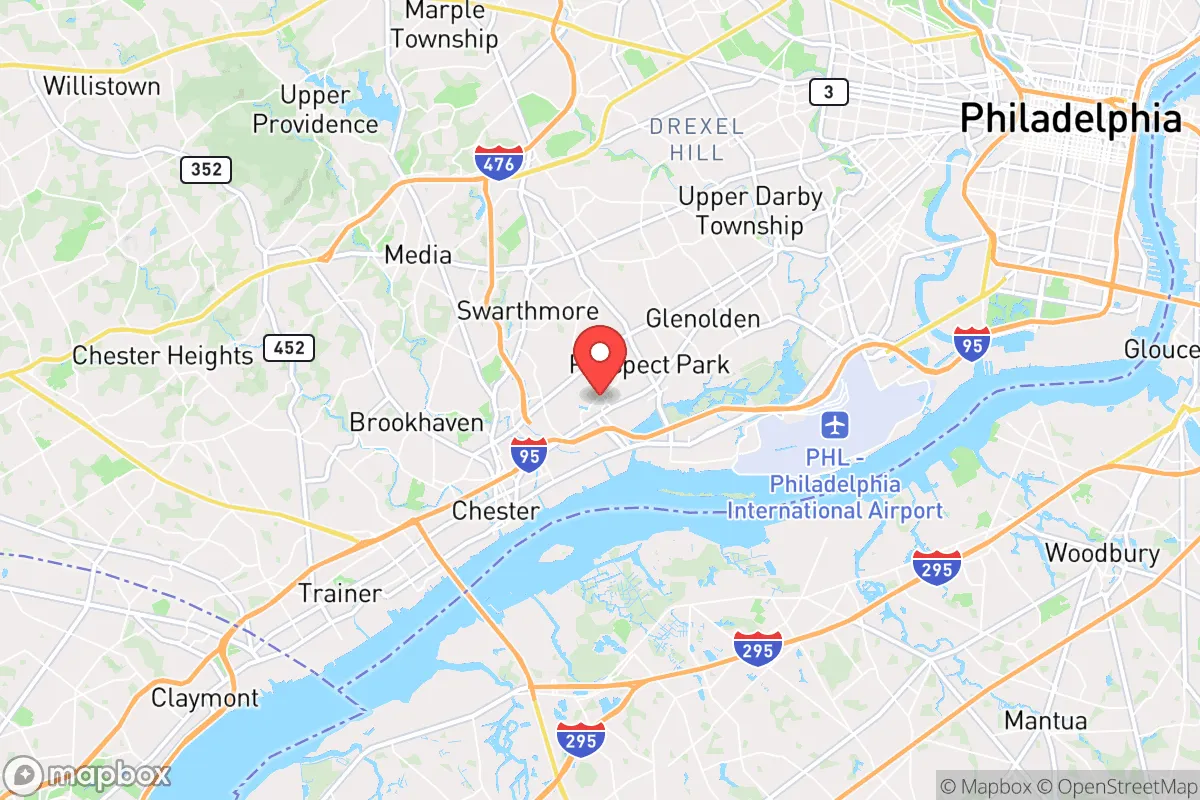
Photo: Wikipedia
Strategic Assessment of Ridley Park, PA
Multiple tactical vulnerabilities. Population density, target proximity, or disaster risk are likely compounding. A retreat property and exit planning is required.
What does the Strategic Assessment tell us?
Our Strategic Assessment grades tactical survivability of an area. Major population centers, military targets, fallout zones, natural disasters, and border exposure all drive risk — lower exposure means a more defensible position in a crisis.
This is heavily inspired by Joel Skousen's Strategic Relocation book. Highly recommended you checkout the book ($)What does this tell us?
Our Strategic Assessment grades tactical survivability of an area. Major population centers, military targets, fallout zones, natural disasters, and border exposure all drive risk — lower exposure means a more defensible position in a crisis.
This is heavily inspired by Joel Skousen's Strategic Relocation book. Highly recommended you checkout the book ($)Strategic Pillars
Key Distances
Regional Safe Places
Below is our recommended "safe zones" in Pennsylvania and the surrounding area based on our strategic heuristics. For most people, it's unrealistic to live in a “safe zone” full-time due to work, family or other personal reasons. They tend to be more rural. However, many of these areas are perfect for second homes and retreat properties that double as a vacation home or even a short-term rental.
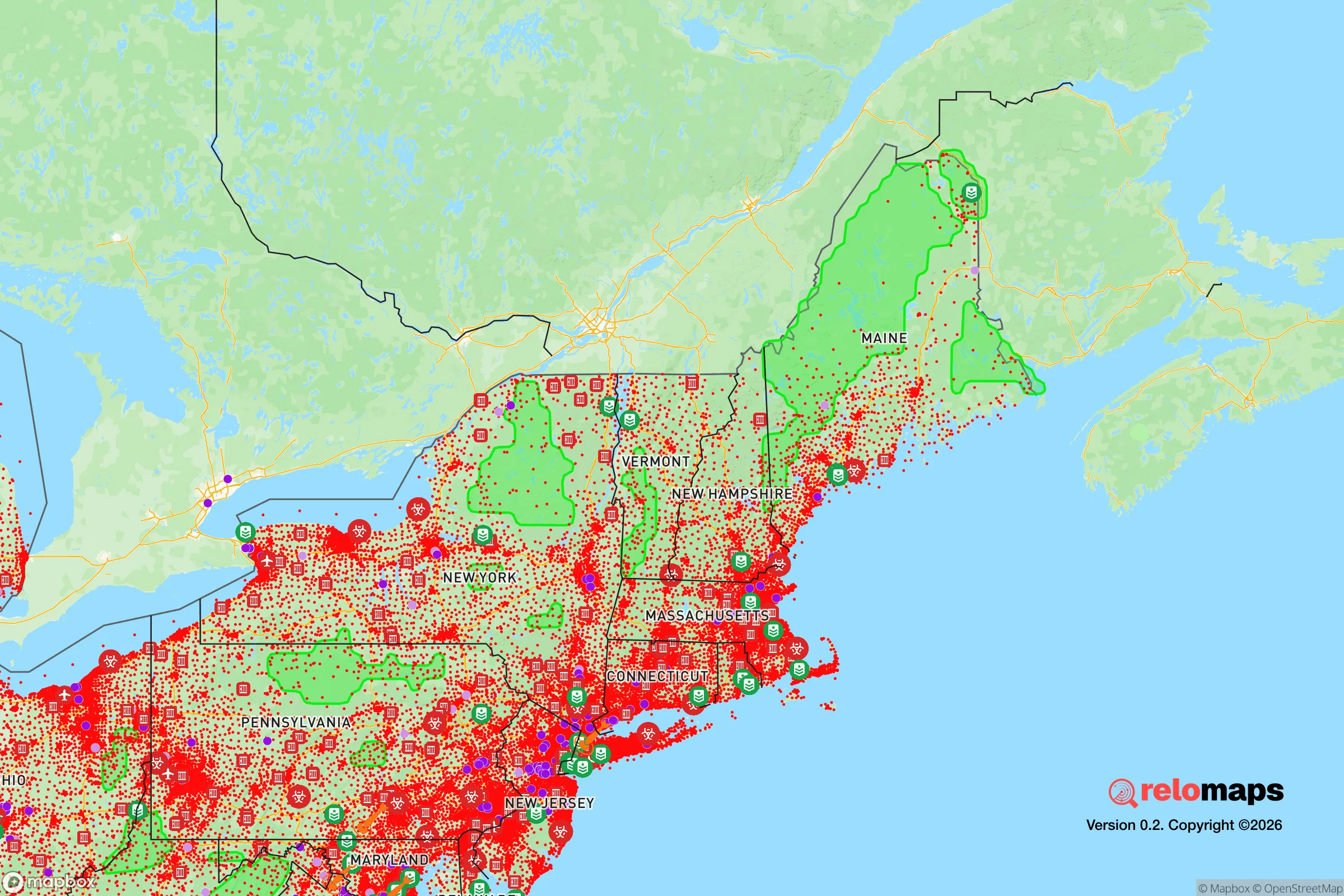
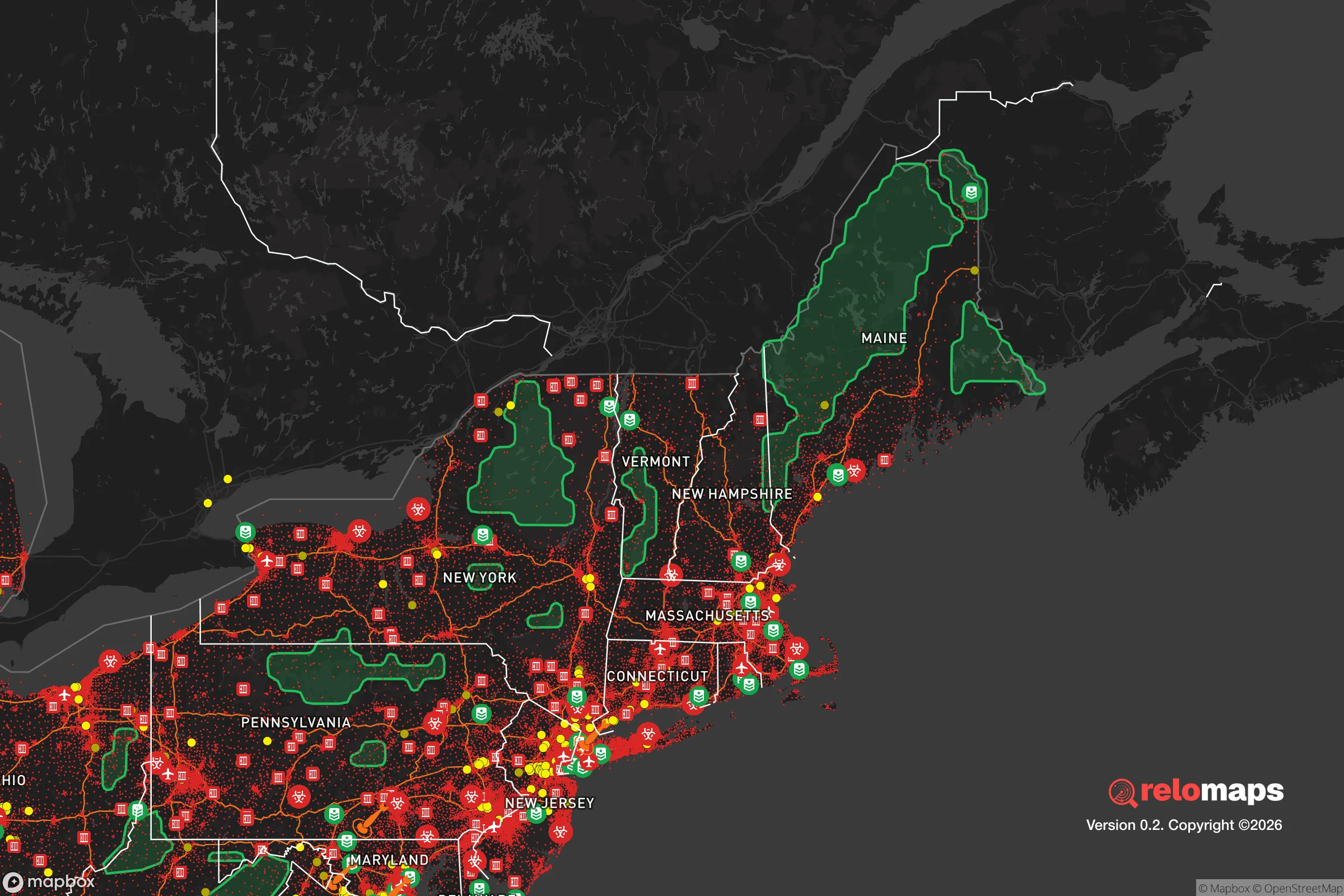


Important Note: For informational purposes only. This does not mean nothing bad ever happens in the green zones. Please use common sense. This is based on public data and modeled with AI. We tried to take a conservative approach but mistakes happen. We update this regularly as new information becomes available.
Solar Generator Recommendations
Backup power matters more here than in safer locations. We've picked three solar generators across budgets and capacity tiers — start with the budget unit if you only need a few essentials, or step up if you want to run a fridge and HVAC for days at a time.
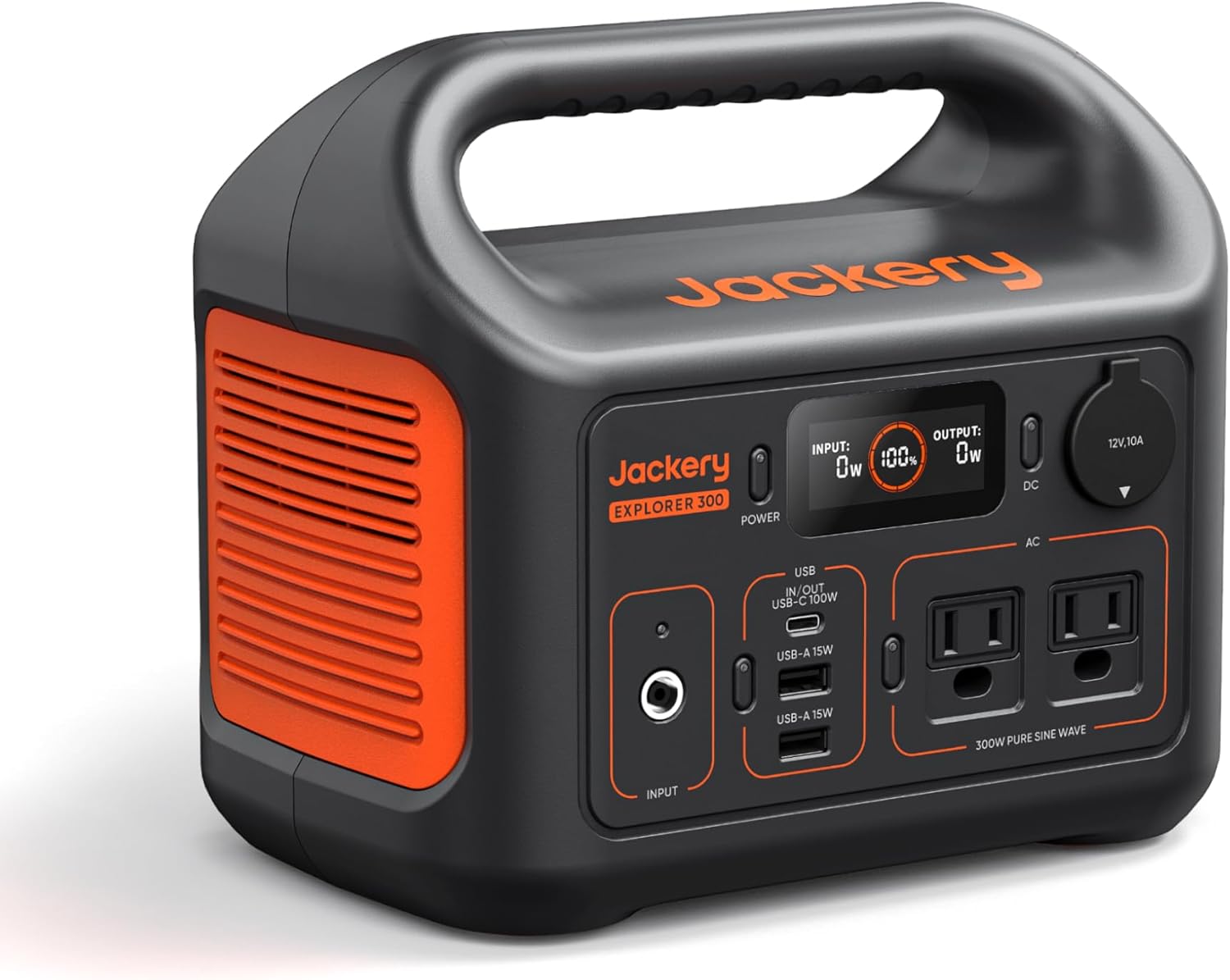
Jackery Portable Power Station Explorer 300
Budget OptionPower on the Go: Weighing only 11 lbs, it's convenient to set up and store with book-sized foldable solar panels

BLUETTI Portable Power Station AC180
Designed for both indoor and outdoor scenarios, AC180 is highly capable as it has a robost capacity and continuous output power.

EF ECOFLOW DELTA Pro Ultra Power Station
Upgraded PickEcoFlow DELTA Pro Ultra is a whole-home energy system designed to grow with your family. Integrated with the Smart Home Panel 2, it scales to meet your evolving energy needs — keeping your home powered, intelligent, and secure through every stage of life.
We earn a commission, at no additional cost to you.
Strategic Assessment Analysis
Ridley Park, Pennsylvania, sits in a position that demands a clear-eyed strategic assessment for anyone prioritizing disaster readiness and self-sufficiency. Located just southwest of Philadelphia in Delaware County, this borough of roughly 7,000 people offers a mix of suburban convenience and proximity to major infrastructure, but that same location introduces significant vulnerabilities for a relocator focused on resilience. The area’s advantages—access to the Delaware River, established rail lines, and a dense network of roads—are double-edged, providing both supply routes and exposure to the risks that come with being near a major metropolitan hub and high-value targets.
Geographic position and natural advantages for resilience
Ridley Park’s geography is defined by its position within the Delaware Valley, roughly 12 miles from downtown Philadelphia and a few miles from the Delaware River. The borough itself sits on relatively flat, low-lying terrain typical of the Piedmont region, with the Crum Creek running along its western edge. For a relocator, the natural advantages here are modest but real. The area is not prone to wildfires, earthquakes, or tornadoes in the same way the Plains or West Coast are—severe thunderstorms and occasional nor’easters are the primary weather threats. The Crum Creek and nearby Ridley Creek provide a local water source, though both are small and subject to contamination from upstream development. The region’s temperate climate allows for year-round gardening, with a growing season from April to October, and the surrounding farmland in Chester and Lancaster counties offers a buffer of agricultural land within a 30- to 45-minute drive. However, the borough is not remote—it’s embedded in a suburban corridor that connects Philadelphia to Wilmington, Delaware, meaning any major disruption affecting the I-95 corridor will directly impact Ridley Park. The lack of significant elevation or natural barriers (mountains, dense forests) means the area offers little inherent defensibility or isolation.
Risks, exposures, and proximity to fallout-relevant landmarks
The most significant strategic drawback for Ridley Park is its proximity to high-value targets and infrastructure that could be affected by man-made disasters, including nuclear or electromagnetic pulse (EMP) events. Philadelphia, with its population of 1.6 million, major port facilities on the Delaware River, and the Philadelphia Naval Shipyard (now a commercial and industrial complex), is a clear target in any conflict scenario. The borough lies within the likely fallout plume zone for a ground burst targeting the city’s core or the nearby refineries and chemical plants along the Delaware River—facilities like the Monroe Energy refinery in Trainer, just 5 miles south, and the Marcus Hook Industrial Complex, 7 miles away. These are not hypothetical risks; they are active industrial sites that handle hazardous materials. Additionally, the Philadelphia International Airport is 6 miles northeast, and the region’s power grid is heavily interconnected, with multiple substations and transmission lines running through Delaware County. For a relocator, the density of population and infrastructure means that any major event—whether natural (a hurricane-driven storm surge up the Delaware) or man-made—would create cascading failures in transportation, supply chains, and communications. The borough’s location on the East Coast rail corridor (Amtrak’s Northeast Corridor runs through nearby Chester) adds another layer of exposure: a disruption here would strand residents and complicate evacuation. In short, Ridley Park is not a bug-out location; it’s a place where you would be sheltering in place amid a dense, interconnected region.
Practical resilience for a relocator: food, water, energy, and defensibility
For a relocator serious about self-sufficiency, Ridley Park presents a mixed picture. Water access is the strongest point: the borough draws from the Delaware River via the Philadelphia Water Department’s Baxter Treatment Plant, but a private well is not feasible in this densely built-up area. Rainwater collection is possible, though local ordinances may restrict large-scale systems. The Crum Creek and Ridley Creek are backup sources, but both require filtration and boiling due to upstream runoff and industrial activity. Food resilience is moderate: the borough has a few small grocery stores and is within 10 minutes of larger chains in Springfield and Media, but these would be depleted quickly in a crisis. Community gardens exist but are limited; the real agricultural resource is the farmland in Chester County, 20 minutes west, where you could establish relationships with local farmers. For long-term food storage, a typical suburban home here has a basement, which is useful for stockpiling, but space is at a premium in the borough’s older, smaller houses. Energy resilience is a weak point: the grid is reliable day-to-day but vulnerable to storms and cascading failures. Solar panels are feasible on many roofs, but the area’s tree cover and older housing stock can complicate installation. Natural gas is common for heating, which is a plus for winter resilience, but a gas shutoff would leave homes without heat. Backup generators are common in the area, but fuel supply would be a problem during a prolonged outage—gas stations run out quickly in a regional event. Defensibility is poor: Ridley Park is a compact, walkable borough with grid-like streets and no natural chokepoints. It’s surrounded by other dense suburbs (Ridley Township, Swarthmore, Prospect Park), meaning any security concern would involve neighbors and passersby. The borough’s police force is small (around 15 officers), and in a prolonged crisis, law enforcement would be stretched thin. For a family, the best defensive strategy here is low-profile integration—blending in, maintaining good relations with neighbors, and avoiding drawing attention to supplies. This is not a place for a fortified homestead; it’s a place for community-based resilience, which requires trust and cooperation.
The overall strategic picture for Ridley Park is one of calculated trade-offs. For a relocator who must stay near Philadelphia for work or family, it offers a stable, middle-ground option with decent access to water and farmland, but it demands serious preparation for the risks that come with being in a dense, target-rich corridor. The borough’s resilience is not in its isolation or natural defenses—it has neither—but in its ability to function as part of a larger network if that network holds. For someone prioritizing self-sufficiency and long-term survival, the better bet is farther west, into the Pennsylvania Appalachians or the rural parts of Chester and Lancaster counties. But if you’re committed to the Delaware Valley, Ridley Park requires a plan that accounts for its exposure: stockpile for at least 30 days, invest in water filtration and a generator, build relationships with neighbors, and have a clear evacuation route west on Route 3 or I-476. It’s a location that rewards preparation but punishes complacency.

* Values derived from national, state, county, city and local statistics and may differ in a specific area. Last updated: 2026-11-23T01:25:16.000Z
Narrative content on this page is AI-generated and may contain mistakes. Verify any details that matter before acting on them.
ReloMaps may earn a commission from affiliate links at no extra cost to you.

