
Photo: Wikipedia
Demographics of Ridley Park, PA
Affluence Level in Ridley Park, PA
A middle-class area roughly in line with national averages across income, home values, education, and employment.
People of Ridley Park, PA
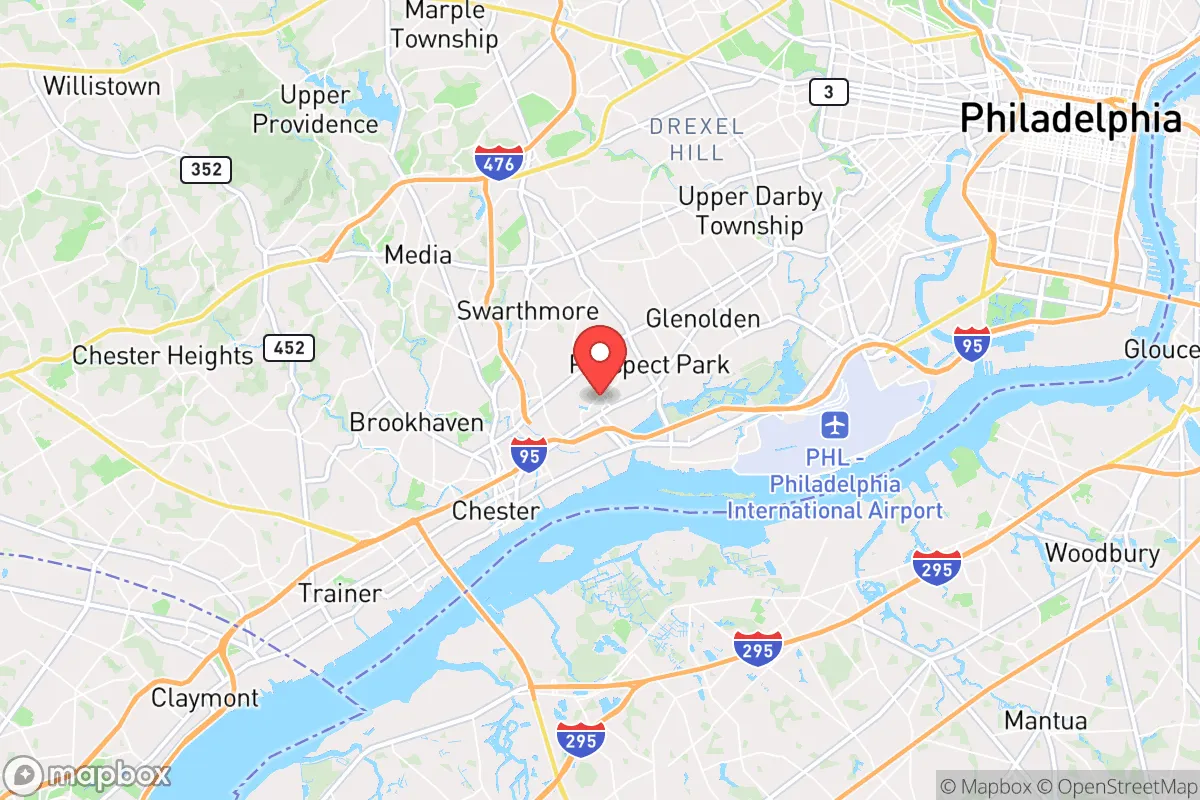
Ridley Park, Pennsylvania, is a small, tight-knit borough of 7,245 residents that remains predominantly white (84.3%) and native-born (98.5% U.S.-born), with a modest but growing Hispanic (3.7%) and Black (7.6%) presence. Its character is defined by a strong sense of local identity, a high rate of homeownership, and a population that is slightly older than the national median, with 30.5% holding a college degree. The people here are largely rooted in the area's industrial and railroad past, with many families tracing their lineage back several generations, giving the borough a stable, family-oriented feel that appeals to those seeking a quiet, established community within commuting distance of Philadelphia.
How the city was settled and grew
Ridley Park was not a colonial settlement but a planned Victorian-era suburb, founded in 1870 by the Ridley Park Company as a summer resort and commuter haven for Philadelphia's elite. The original population was drawn by the Philadelphia, Wilmington and Baltimore Railroad, which made the 30-minute trip to Center City feasible. The first wave of residents were wealthy industrialists and professionals who built large, ornate homes in the Ridley Park Historic District, centered around the borough's namesake park and lake. By the early 20th century, the opening of the Baldwin Locomotive Works and other heavy manufacturing plants in nearby Eddystone and Chester drew a second wave of skilled Irish, German, and Italian immigrants and their families. These working-class groups settled in the more modest rowhomes and twin houses of South Ridley Park and the area around Swarthmore Avenue, creating a distinct blue-collar character that balanced the original upper-class enclave. The borough's population peaked at around 8,000 in the 1950s, reflecting the post-war industrial boom and the expansion of suburban housing in neighborhoods like North Ridley Park, which filled with returning veterans and their families.
Modern era (post-1965)
After the 1965 Hart-Cellar Act, Ridley Park saw only a modest demographic shift, as its established housing stock and lack of new large-scale development limited in-migration. The borough's foreign-born population remains very low at 1.5%, and the East/Southeast Asian community is a small 0.8%, with no Indian-subcontinent population recorded. The most significant change has been a gradual increase in the Black and Hispanic populations, who have primarily settled in the more affordable housing stock of South Ridley Park and along the Chester Pike corridor, areas with a mix of older single-family homes and small apartment buildings. White flight from nearby Chester in the 1970s and 1980s did not dramatically alter Ridley Park, as the borough's stable, middle-class character and strong local schools (Ridley School District) retained most of its existing white families. The population has been slowly declining from its mid-century peak, dropping from 7,406 in 2000 to 7,245 today, as younger families have been priced out of the tight housing market or drawn to newer suburbs farther out.
The future
The population of Ridley Park is likely to continue its slow decline or stagnate, as the borough is essentially built out with little room for new housing development. The demographic trend points toward a gradual increase in diversity, with the Hispanic and Black shares expected to rise modestly as older white residents age in place and their homes are sold to a more diverse pool of buyers. The Chester Pike corridor and the area around Ridley Park Lake are the most likely zones for this turnover, as they offer the most affordable entry points. However, the borough's cultural identity will remain strongly rooted in its historic, family-oriented character, as the lack of new construction and the high cost of existing homes will limit rapid demographic change. The next 10-20 years will likely see Ridley Park become a slightly more diverse, but still predominantly white, stable suburb, attractive to families and retirees who value its historic charm, low crime, and proximity to Philadelphia without the rapid churn of a growing exurb.
For someone moving in now, Ridley Park offers a predictable, established community where neighbors know each other and local traditions run deep. It is becoming a slightly more diverse place, but at a very slow pace, and its future is one of gentle aging and stability rather than explosive growth or dramatic cultural change. This is a good fit for those who want a quiet, safe, and historically rooted home base within easy reach of a major city, and who are comfortable in a community where most residents have deep local ties.

* Values derived from national, state, county, city and local statistics and may differ in a specific area. Last updated: 2026-11-23T01:25:16.000Z
Narrative content on this page is AI-generated and may contain mistakes. Verify any details that matter before acting on them.
ReloMaps may earn a commission from affiliate links at no extra cost to you.

