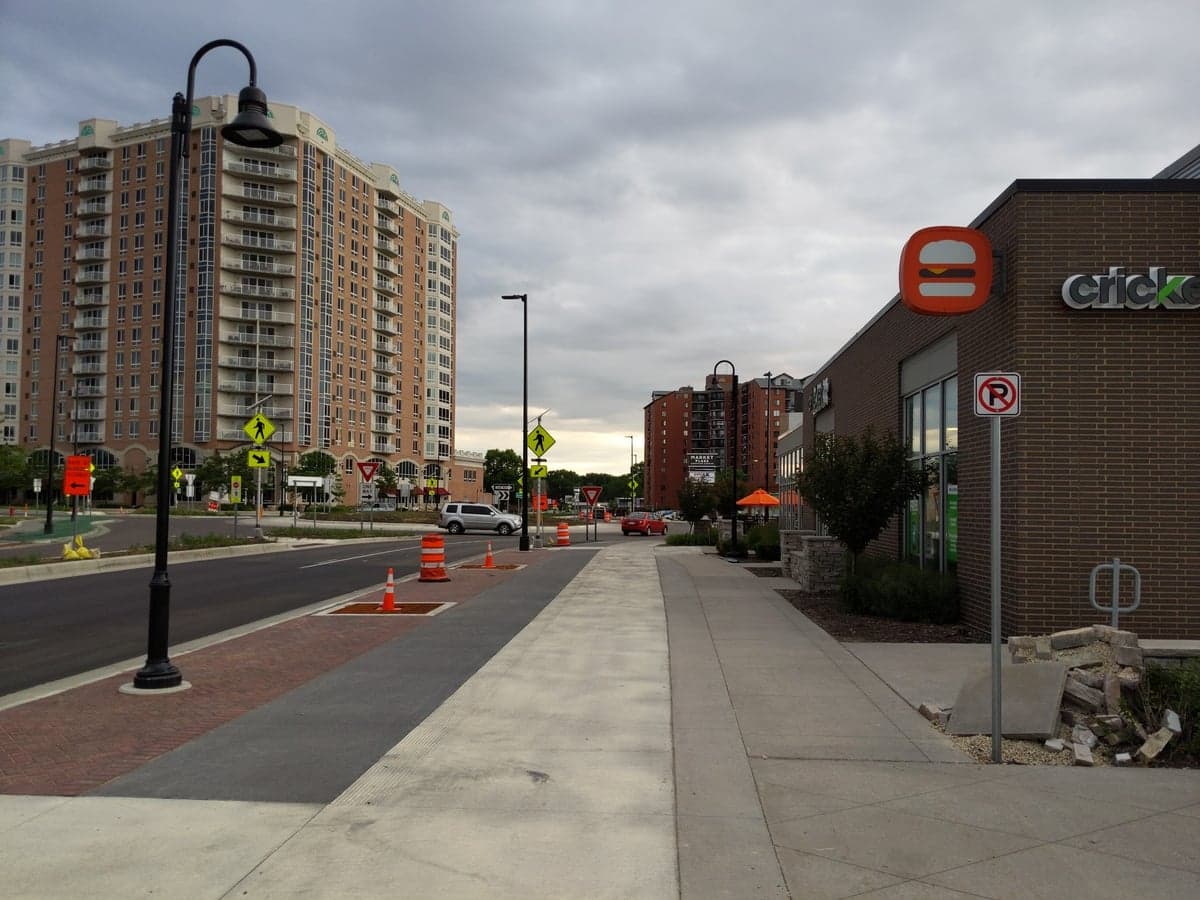
Photo: Wikipedia
Strategic Assessment of Richfield, MN
Multiple tactical vulnerabilities. Population density, target proximity, or disaster risk are likely compounding. A retreat property and exit planning is required.
What does the Strategic Assessment tell us?
Our Strategic Assessment grades tactical survivability of an area. Major population centers, military targets, fallout zones, natural disasters, and border exposure all drive risk — lower exposure means a more defensible position in a crisis.
This is heavily inspired by Joel Skousen's Strategic Relocation book. Highly recommended you checkout the book ($)What does this tell us?
Our Strategic Assessment grades tactical survivability of an area. Major population centers, military targets, fallout zones, natural disasters, and border exposure all drive risk — lower exposure means a more defensible position in a crisis.
This is heavily inspired by Joel Skousen's Strategic Relocation book. Highly recommended you checkout the book ($)Strategic Pillars

Key Distances
Regional Safe Places
Below is our recommended "safe zones" in Minnesota and the surrounding area based on our strategic heuristics. For most people, it's unrealistic to live in a “safe zone” full-time due to work, family or other personal reasons. They tend to be more rural. However, many of these areas are perfect for second homes and retreat properties that double as a vacation home or even a short-term rental.
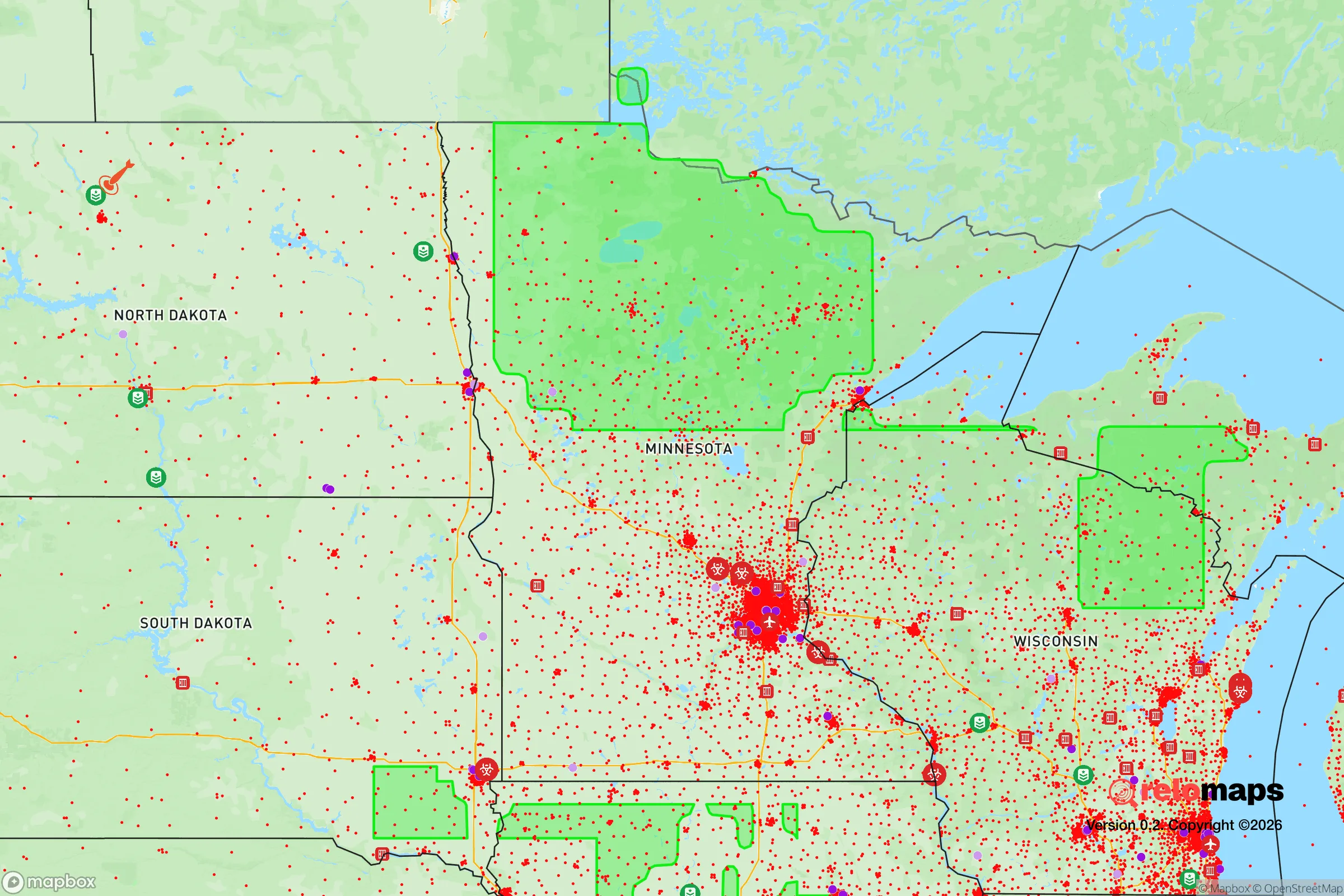
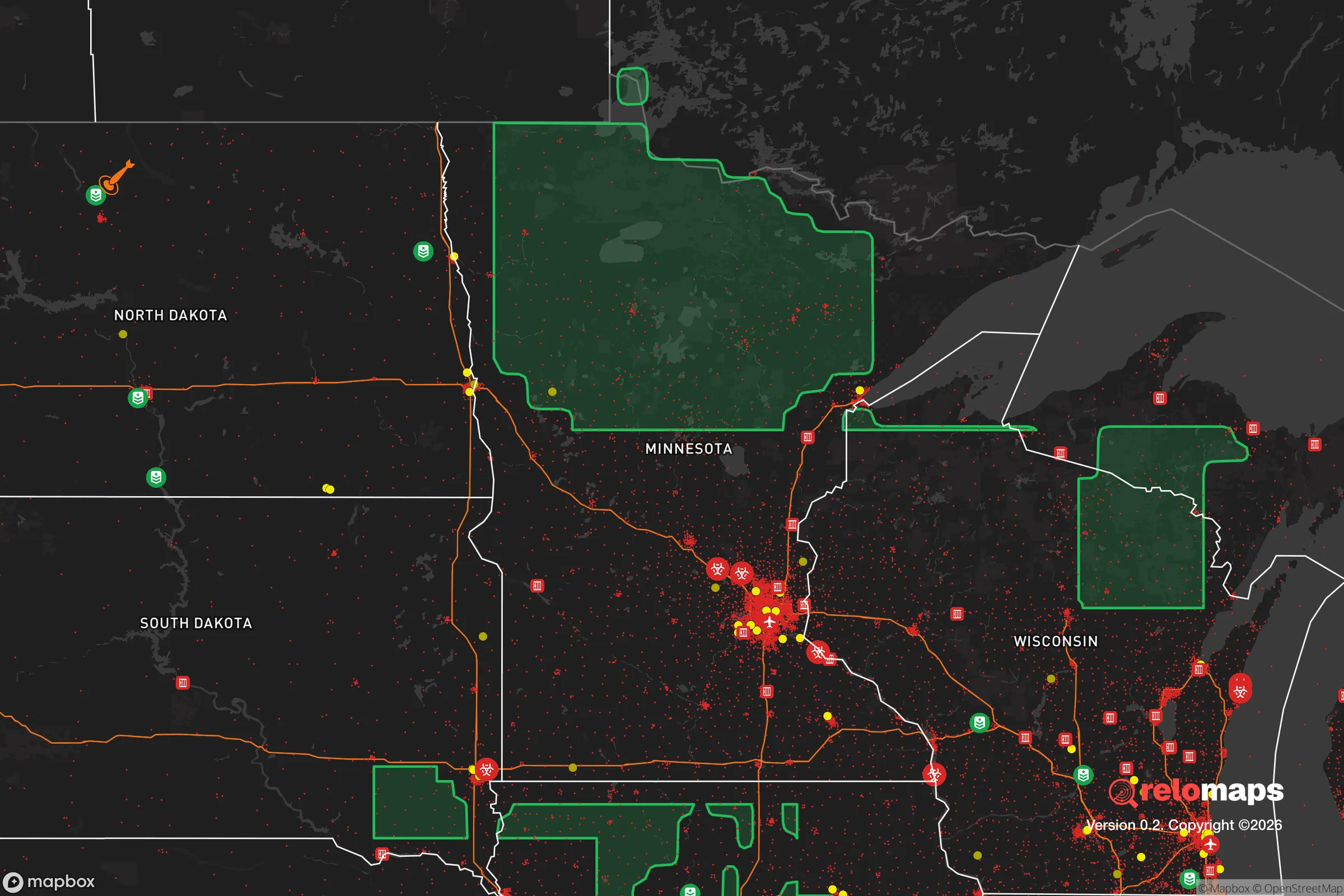


Important Note: For informational purposes only. This does not mean nothing bad ever happens in the green zones. Please use common sense. This is based on public data and modeled with AI. We tried to take a conservative approach but mistakes happen. We update this regularly as new information becomes available.
Solar Generator Recommendations
Backup power matters more here than in safer locations. We've picked three solar generators across budgets and capacity tiers — start with the budget unit if you only need a few essentials, or step up if you want to run a fridge and HVAC for days at a time.

Jackery Portable Power Station Explorer 300
Budget OptionPower on the Go: Weighing only 11 lbs, it's convenient to set up and store with book-sized foldable solar panels

BLUETTI Portable Power Station AC180
Designed for both indoor and outdoor scenarios, AC180 is highly capable as it has a robost capacity and continuous output power.

EF ECOFLOW DELTA Pro Ultra Power Station
Upgraded PickEcoFlow DELTA Pro Ultra is a whole-home energy system designed to grow with your family. Integrated with the Smart Home Panel 2, it scales to meet your evolving energy needs — keeping your home powered, intelligent, and secure through every stage of life.
We earn a commission, at no additional cost to you.
Strategic Assessment Analysis
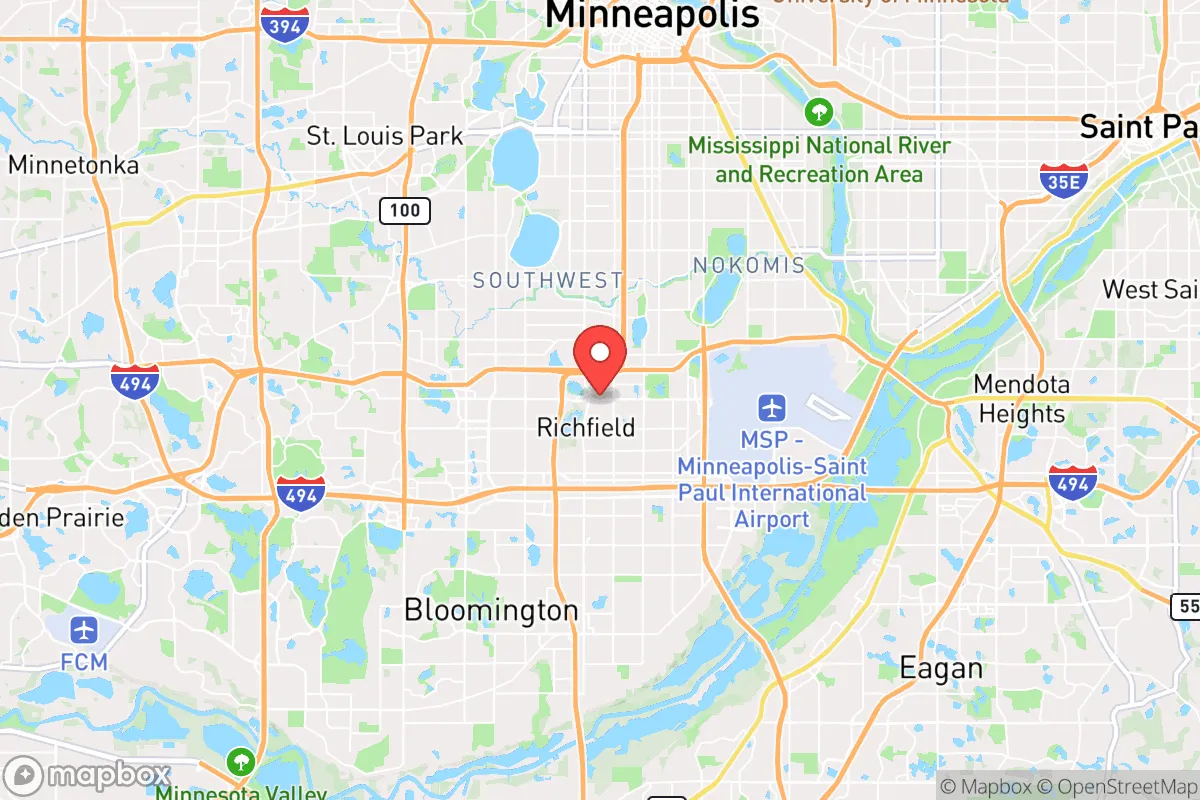
Richfield, Minnesota, sits in a precarious but potentially strategic position for a relocator with a survivalist mindset. Its location immediately south of Minneapolis and abutting the Minneapolis–Saint Paul International Airport (MSP) creates a double-edged sword: you get the logistical advantages of a major metro hub, but you also inherit the fallout risks of a dense urban core and a high-value terrorist target. For a conservative-leaning prepper, the key question is whether Richfield’s resilience advantages—its established infrastructure, water access, and relatively stable suburban grid—outweigh the obvious exposure to civil unrest and mass-casualty scenarios that come with being a stone’s throw from a city of 430,000. The answer depends heavily on your specific threat model, but the area demands a hard-eyed, defensive posture from day one.
Geographic position and natural advantages for a strategic relocation
Richfield’s geography is a study in contradictions. On the plus side, the city is anchored by the Minnesota River to the west and south, providing a natural water source for filtration and a modest barrier against ground-level movement from those directions. The land itself is flat to gently rolling, typical of the Mississippi River Valley, which means good drainage and minimal flood risk in most neighborhoods—though the river bottoms can flood during heavy spring thaws. The city’s position at the junction of Interstate 35W and Highway 62 gives you rapid egress options north toward Duluth and Lake Superior, or west toward the open prairies of South Dakota. For a relocator, that’s a critical escape corridor if things go sideways in the metro. The climate is a double-edged sword: cold winters (average January lows around 10°F) can be a natural deterrent to mass migration during a crisis, but they also demand serious cold-weather gear, fuel reserves, and a robust heating plan. The growing season is short (roughly 150 days), so any serious food production would require greenhouse investment. The area’s natural advantages are real but modest—this is not a remote mountain redoubt; it’s a suburban buffer zone with decent water access and a few good roads out.
Risks, exposures, and proximity to fallout-relevant landmarks
Here’s where the prepper calculus gets uncomfortable. Richfield is less than three miles from MSP Airport, a major international hub and a high-probability target for any coordinated attack—whether a dirty bomb, a drone swarm, or a conventional strike. The airport also hosts the 133rd Airlift Wing of the Minnesota Air National Guard, which makes it a military-adjacent asset. In a mass-casualty event or civil unrest scenario, that proximity means you’re in the blast radius of any airport-focused incident, and you’ll be competing with tens of thousands of panicked evacuees on I-35W and Highway 62. The city is also within five miles of the Mall of America in Bloomington, a soft target that would draw chaos in any breakdown of order. On the industrial side, the Minnesota River corridor hosts chemical storage and rail lines carrying hazardous materials—a derailment or sabotage event could contaminate the water table or create a toxic plume. Politically, Richfield leans left (Hennepin County voted +30 Democratic in 2024), which means local governance may not prioritize the kind of self-reliance and Second Amendment culture that many conservative preppers value. In a crisis, expect the city’s emergency response to be stretched thin by the sheer density of the metro—Richfield’s population density is roughly 3,800 people per square mile, which is suburban but still high enough to create crowd dynamics during evacuations.
Practical resilience for a relocator: food, water, energy, and defensibility
For a relocator serious about self-sufficiency, Richfield offers a mixed bag. Water is the strongest asset: the city draws from the Mississippi River via Minneapolis waterworks, but you can also tap the Minnesota River or install a deep well (the Prairie du Chien aquifer is accessible at around 200–300 feet). A hand pump or solar-powered well pump is a must. Food resilience is weak—the typical suburban lot is 0.15–0.25 acres, too small for meaningful agriculture. You’d need to rely on community gardens (there are a few, like the Richfield Community Garden) or convert front yards to raised beds, but that’s a long-term play. Local grocery stores (Cub Foods, Aldi) are fine for normal times but will empty within hours of a crisis. Energy is a vulnerability: Xcel Energy runs the grid, and it’s aging. A solar panel setup with battery storage is feasible (roofs are generally south-facing), but winter snow cover reduces output significantly. Natural gas is the primary heating fuel, so a backup propane tank or wood stove is non-negotiable. Defensibility is poor—Richfield is a grid of suburban streets with no natural chokepoints. Your best bet is a home on a corner lot with clear sightlines, reinforced doors, and a basement that can serve as a safe room. The city’s police force (about 50 sworn officers) is professional but will be overwhelmed in a widespread event. For a single individual or a family, the practical takeaway is that Richfield is a “bug-in or bug-out” location: you can hunker down for a few weeks if you’ve prepped, but you need a secondary location in rural Minnesota or Wisconsin for a long-term collapse scenario.
The overall strategic picture for Richfield is one of calculated risk. It’s not a survivalist paradise—far from it. But for a conservative relocator who needs to stay close to a metro area for work or family obligations, it offers a middle ground: decent water access, multiple egress routes, and a suburban buffer that’s not as exposed as downtown Minneapolis. The downsides are real—proximity to a major airport, a left-leaning local government, and limited land for self-sufficiency. If your threat model is primarily economic collapse or localized civil unrest, Richfield can work with serious preparation. If you’re worried about nuclear war, EMP attacks, or a complete breakdown of the national grid, you’d be better off 100 miles north in the Iron Range or west in the prairie counties. In short: Richfield is a viable staging ground, not a final redoubt. Prep accordingly, keep your vehicle gassed up, and have a bug-out plan that points away from the metro.

* Values derived from national, state, county, city and local statistics and may differ in a specific area. Last updated: 2026-04-19T04:24:13.000Z
Narrative content on this page is AI-generated and may contain mistakes. Verify any details that matter before acting on them.
ReloMaps may earn a commission from affiliate links at no extra cost to you.

