Photo: Wikipedia
Political ClimatePolitical Climate in Rexburg, ID
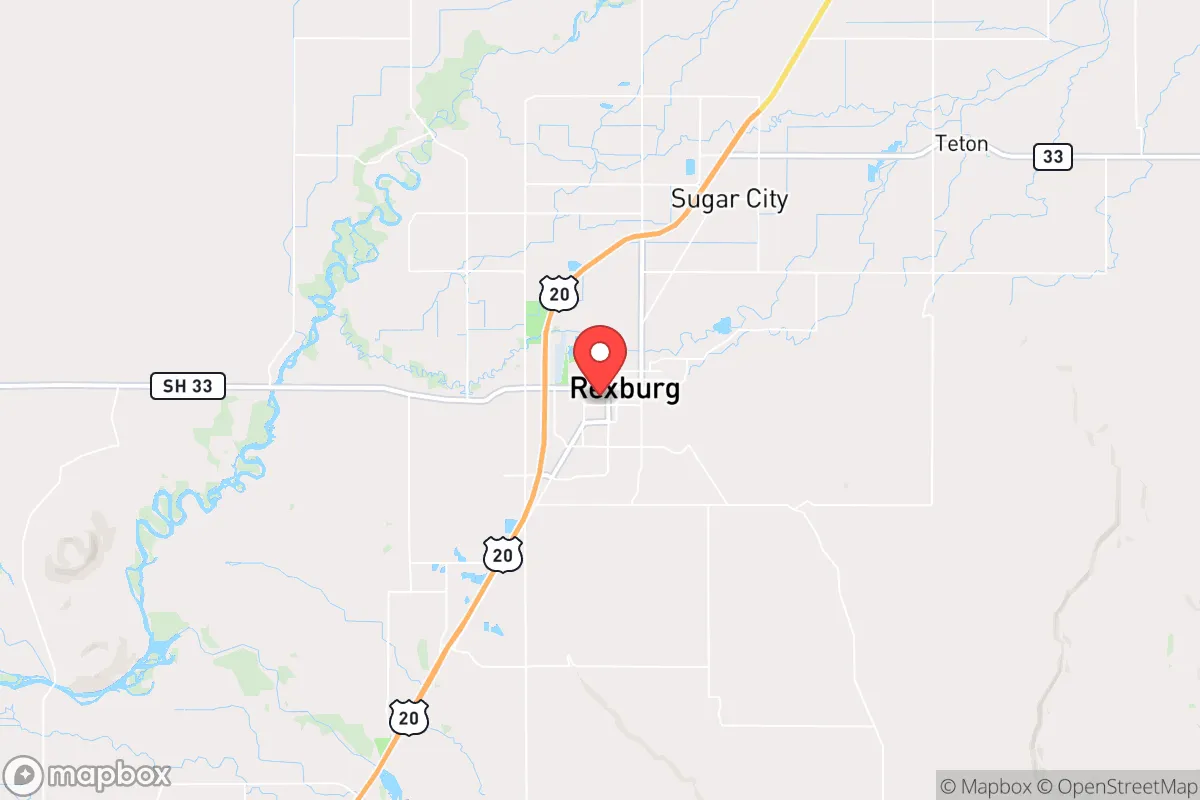
District shown is the primary district for this city’s centroid. Cities may span multiple districts.
Local Political AnalysisPolitical Analysis of Rexburg, ID
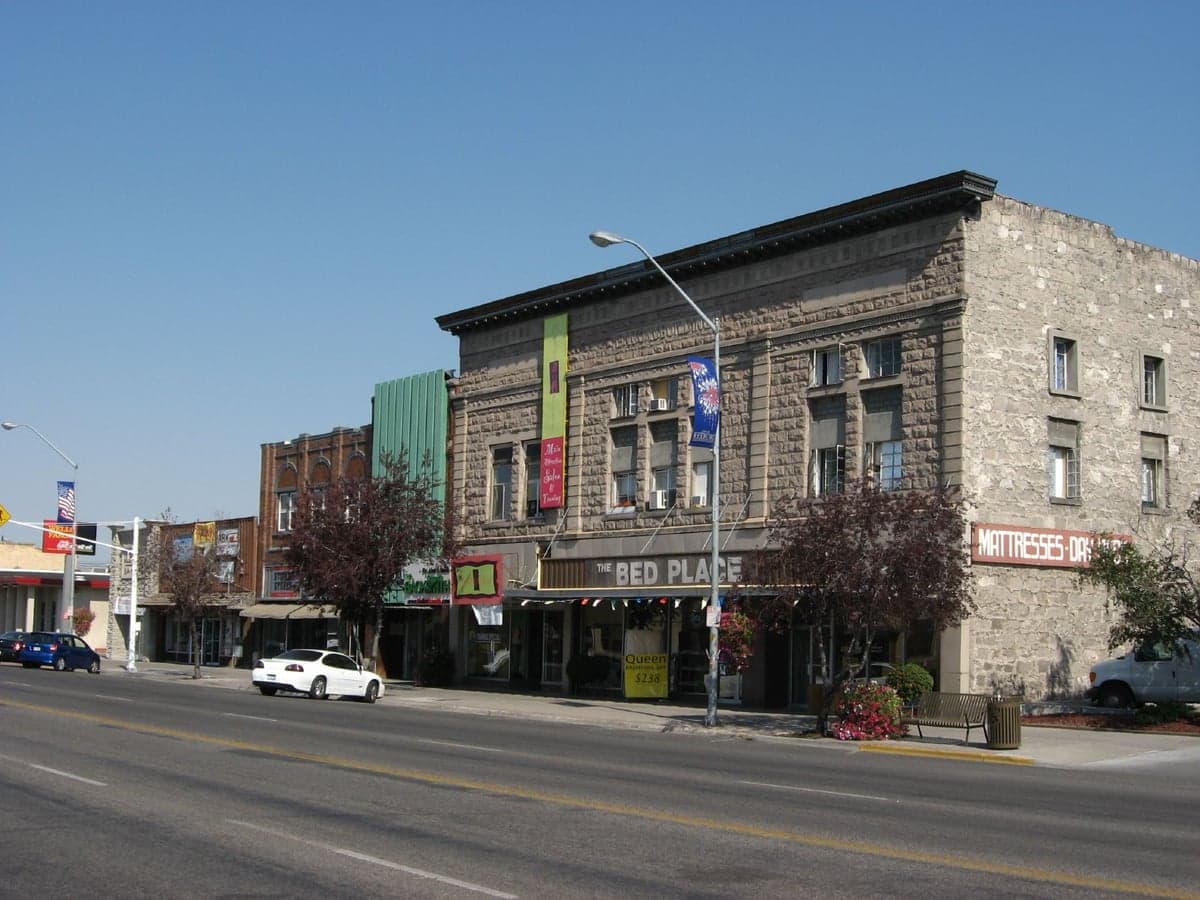
Rexburg leans heavily Republican, with a Cook PVI of R+13, though it’s actually a bit less conservative than the state of Idaho as a whole, which sits at R+18. That might surprise folks who know the area, because Rexburg’s political identity is deeply shaped by Brigham Young University-Idaho and the LDS Church’s strong local presence, making it a place where conservative values aren’t just common—they’re the baseline. Over the last decade, the city has gotten even more reliably red, driven by an influx of families and retirees who prioritize low taxes and traditional social policies, but it’s still a notch more moderate than rural pockets like St. Anthony or Driggs to the east.
How it compares
Compared to Idaho’s statewide R+18 rating, Rexburg’s R+13 means it’s slightly less conservative than places like Boise’s Ada County (R+17) or the deeply red Magic Valley. The difference comes down to the student population at BYU-Idaho, which brings in younger voters from across the country—some from more moderate or even blue states—who can shift local elections by a few points. Surrounding towns like Sugar City and Ashton are even more conservative, often voting 80%+ Republican in local races, while Rexburg’s city council and mayoral races occasionally see closer margins, though still dominated by GOP candidates. In 2024, Madison County (which includes Rexburg) voted about 75% Republican, while Idaho overall hit 66%—so Rexburg is red, but not the reddest spot in the state.
What this means for residents
For conservative residents, Rexburg is a comfortable fit: local policies reflect their values on issues like gun rights, school choice, and limited government, and they’ll find plenty of like-minded neighbors at church or community events. Liberal residents, however, face a more challenging reality. They’re a small minority, and while they won’t face open hostility, they’ll often feel out of step on topics like LGBTQ+ rights or environmental regulations—there’s no local Democratic party infrastructure to speak of, and progressive candidates rarely get traction. In practice, this means conservative residents can take for granted that their views align with city hall, while liberals might need to drive to Idaho Falls (about 30 minutes south) for more diverse political company or events. The local economy, dominated by BYU-Idaho and agriculture, reinforces this dynamic, as most employers and landlords share the dominant cultural values.
Culturally, Rexburg stands apart from Idaho’s more libertarian-leaning areas like Coeur d’Alene or Sandpoint, where there’s a stronger mix of independent and moderate voters. Here, the LDS Church’s influence means Sunday closures are strictly observed, alcohol sales are limited to state-run stores, and social norms around family and community are deeply woven into daily life. Policy-wise, the city has been slower to embrace marijuana decriminalization or expanded gambling compared to other parts of Idaho, and local schools emphasize traditional curricula. Looking ahead, I’d expect Rexburg to stay solidly red, but with a slight drift toward the center as more remote workers and retirees from outside the region move in—though that shift will be gradual, not dramatic. For now, it’s a place where the political climate is as predictable as the weather: reliably conservative, with occasional gusts of moderation from the student body.

State Political ClimatePolitical Climate in Idaho
State Political AnalysisPolitical Environment in the State
Idaho is one of the most reliably Republican states in the country, with a Cook Partisan Voting Index of R+18, meaning it votes about 18 points more Republican than the national average. The state has shifted sharply rightward over the past two decades, driven by a combination of native conservative sentiment and a massive influx of out-of-state transplants, many from deep-blue states like California and Washington, who are themselves often conservative-leaning or libertarian. The dominant coalition is a mix of traditional Western libertarians, evangelical Christians, and newer arrivals seeking lower taxes and less regulation, creating a political environment that is broadly conservative but with distinct internal tensions.
Urban vs. rural divide
The political map of Idaho is a study in contrasts. The Boise metro area (Ada County) has been the state's most competitive region, flipping from reliably red to a purple battleground in the 2010s and early 2020s, before swinging back to the right in 2024. Canyon County, just west of Boise and home to Nampa and Caldwell, is deeply conservative and growing fast, often offsetting any liberal gains in Ada. The Idaho Falls and Rexburg area in the east is a conservative stronghold, heavily influenced by the LDS Church and Brigham Young University-Idaho. The Panhandle, including Coeur d'Alene and Post Falls, has seen an influx of conservative transplants from Washington and California, turning what was once a swing region into solid red territory. The only reliably blue pockets are the university towns of Moscow (University of Idaho) and Boise State University's immediate vicinity, plus a few precincts in downtown Boise. The rural counties—Lemhi, Custer, Butte, and Clark—routinely vote 80-90% Republican, making the state's overall lean deeply entrenched.
Policy environment
Idaho's policy environment is defined by low taxes, minimal regulation, and a strong emphasis on local control. The state has a flat income tax of 5.8% (down from 6.5% in 2022), a low property tax burden relative to the national average, and no estate or inheritance tax. The regulatory posture is business-friendly, with few zoning restrictions outside of Boise and a right-to-work law that limits union power. Education policy is a flashpoint: the state has one of the nation's most robust school choice programs, including a $50 million education savings account (ESA) program signed in 2023, but public school funding per pupil remains among the lowest in the country. Healthcare policy is limited, with no state-run exchange and a Medicaid expansion passed by ballot initiative in 2018 that the legislature has repeatedly tried to restrict. Election laws are strict: voter ID is required, same-day registration is not available, and absentee voting requires an excuse. The state also has a constitutional carry law (permitless concealed carry, passed in 2016) and a strong stand-your-ground statute.
Recent policy direction
Idaho's recent legislative sessions have pushed the state further right on nearly every front. In 2023, the legislature passed a near-total abortion ban (trigger law) with no exceptions for rape or incest, only for the life of the mother. The same year saw the passage of HB 71, which prohibits gender-affirming care for minors, and HB 314, which restricts library materials deemed "harmful" to minors. On gun rights, the state enacted a Second Amendment Preservation Act in 2021, which purports to nullify federal firearms laws—a move that has drawn legal challenges. Property rights were strengthened with a 2023 law limiting the use of eminent domain for private economic development. On voting, the legislature passed HB 124 in 2023, which bans ballot drop boxes and restricts absentee ballot return to the voter's own hands. The state also enacted a parental rights bill (HB 93) in 2022, requiring schools to notify parents of any curriculum involving sexuality or gender identity. The overall direction is toward maximizing individual liberty in the traditional conservative sense—gun rights, property rights, and parental control—while restricting bodily autonomy and local government flexibility.
Civil unrest & political movements
Idaho has a history of fringe political movements, but the mainstream has absorbed much of that energy. The People's Rights organization, founded by Ammon Bundy, has a significant presence in the Treasure Valley, though Bundy's influence has waned after a 2023 legal settlement. The Constitutional Sheriffs and Peace Officers Association is active in rural counties, promoting the idea that sheriffs can refuse to enforce state or federal laws they deem unconstitutional. Immigration politics are tense: the state has no sanctuary cities, and in 2024, the legislature passed a bill allowing local law enforcement to enforce federal immigration law, though it was vetoed by Governor Brad Little. The Idaho Freedom Foundation, a powerful conservative think tank, drives much of the legislative agenda, often pushing for further tax cuts and school choice expansion. On the left, the Idaho Democratic Party is weak but has seen small gains in Boise and Moscow, with protests over abortion rights and LGBTQ issues drawing hundreds, not thousands. The 2020 election integrity controversy was muted compared to other states, but a 2022 audit of the 2020 election found no significant irregularities, which has not stopped ongoing legislative efforts to tighten voting laws.
Projection
Over the next 5-10 years, Idaho's political trajectory is likely to remain deeply conservative, but with increasing internal friction. The in-migration wave—Idaho grew 18% between 2010 and 2020, the fastest in the nation—is bringing in a mix of conservative families and libertarian-leaning remote workers, but also a smaller number of liberal-leaning professionals who will continue to make Boise more competitive. The suburbanization of Canyon County and the Panhandle will reinforce the state's red lean, as new arrivals tend to be conservative. However, the education funding crisis is a ticking time bomb: as more families move in, the pressure to raise teacher salaries and increase per-pupil spending will clash with the anti-tax orthodoxy. The water rights issue in the Eastern Snake Plain Aquifer is another looming conflict, pitting agricultural interests against growing municipalities. Expect the legislature to continue pushing on school choice, gun rights, and abortion restrictions, but with more moderate Republicans in the Boise suburbs beginning to push back on the most extreme measures. A new resident moving in now should expect a state that is solidly red but not monolithic, with a growing libertarian streak that values personal freedom over government intervention, but also a willingness to use state power to enforce social conservatism.
For a new resident, the bottom line is this: Idaho offers a political environment where conservative values are the default, taxes are low, and government is generally hands-off on economic matters. If you're a conservative, you'll find a welcoming atmosphere and a legislature that actively pursues your priorities. If you're a liberal, you'll be in a clear minority, but you'll find like-minded communities in Boise, Moscow, and Sandpoint, and you'll have the ability to influence local elections in those pockets. The state's rapid growth is creating growing pains—traffic, housing costs, and school overcrowding—that are beginning to test the anti-tax, anti-regulation consensus. Pay attention to local races in Ada County and the Panhandle, as those will determine whether Idaho stays on its current hard-right trajectory or moderates slightly over the next decade.
* Values derived from national, state, county, city and local statistics and may differ in a specific area. Last updated: 2026-07-13T09:59:13.000Z
Narrative content on this page is AI-generated and may contain mistakes. Verify any details that matter before acting on them.
ReloMaps may earn a commission from affiliate links at no extra cost to you.

