Photo: Wikipedia
Strategic Assessment of Red Wing, MN
Workable tactical position. Some exposure to population density or targets, but generally defensible in a crisis.
What does the Strategic Assessment tell us?
Our Strategic Assessment grades tactical survivability of an area. Major population centers, military targets, fallout zones, natural disasters, and border exposure all drive risk — lower exposure means a more defensible position in a crisis.
This is heavily inspired by Joel Skousen's Strategic Relocation book. Highly recommended you checkout the book ($)What does this tell us?
Our Strategic Assessment grades tactical survivability of an area. Major population centers, military targets, fallout zones, natural disasters, and border exposure all drive risk — lower exposure means a more defensible position in a crisis.
This is heavily inspired by Joel Skousen's Strategic Relocation book. Highly recommended you checkout the book ($)Strategic Pillars
Key Distances
Regional Safe Places
Below is our recommended "safe zones" in Minnesota and the surrounding area based on our strategic heuristics. For most people, it's unrealistic to live in a “safe zone” full-time due to work, family or other personal reasons. They tend to be more rural. However, many of these areas are perfect for second homes and retreat properties that double as a vacation home or even a short-term rental.
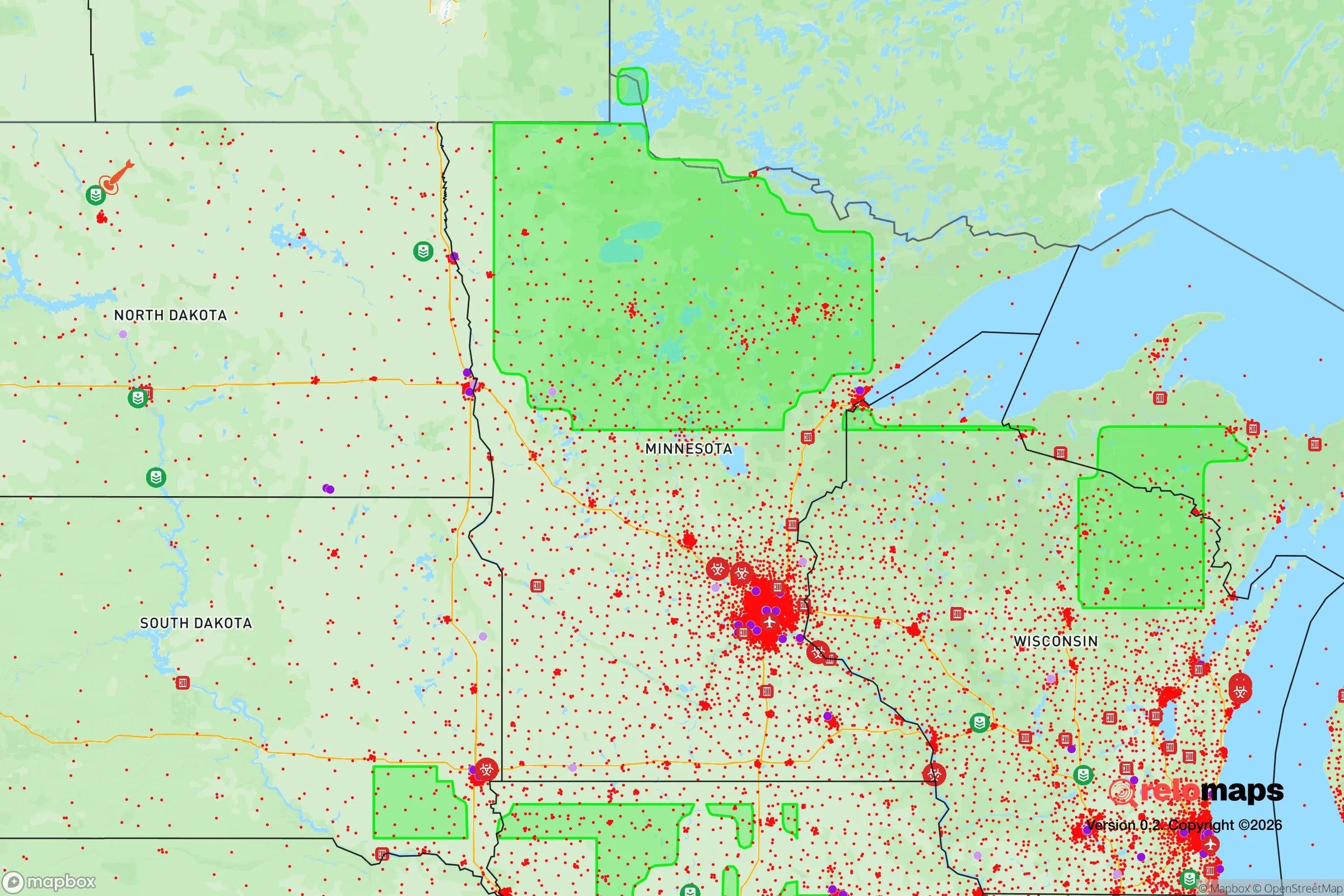
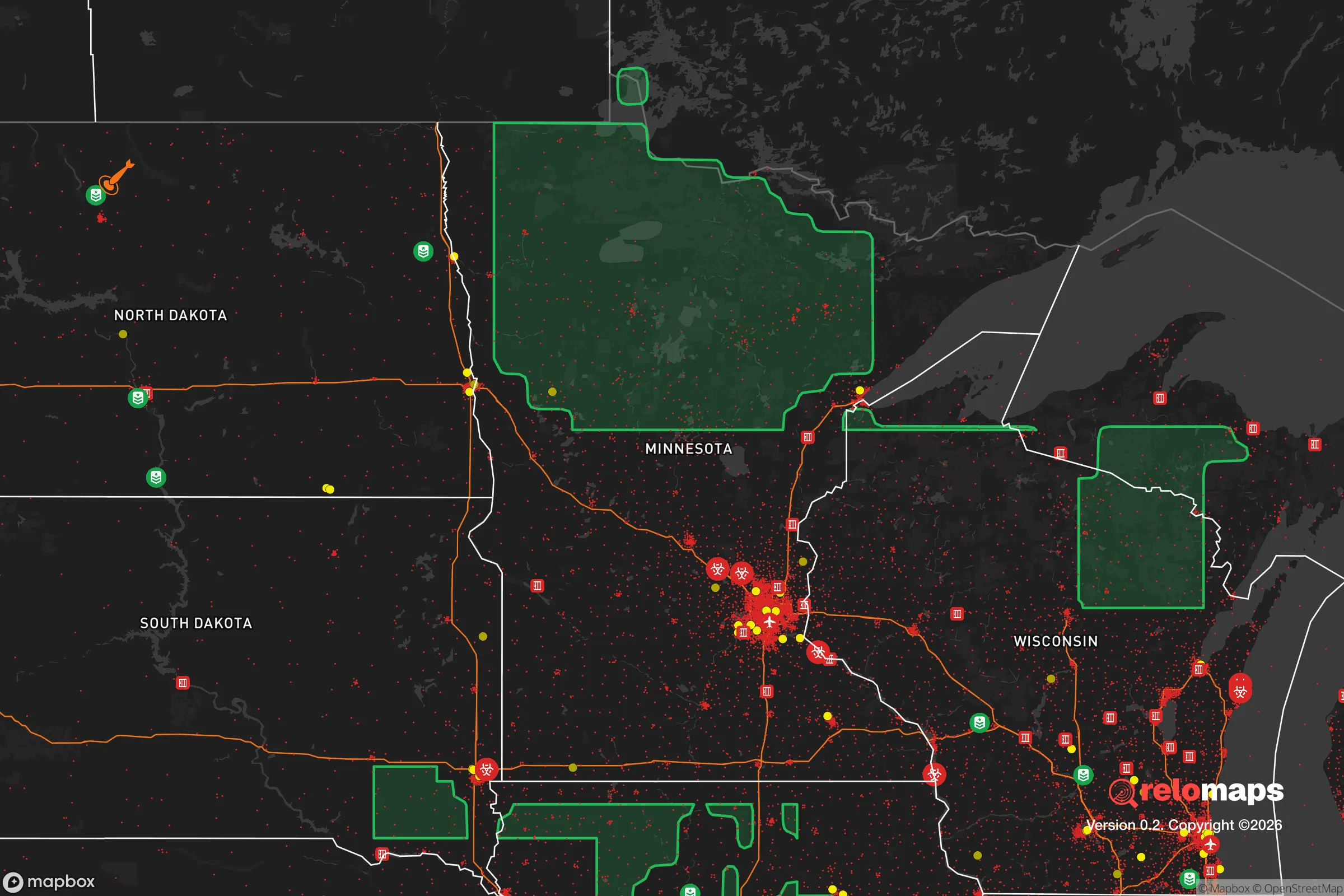


Important Note: For informational purposes only. This does not mean nothing bad ever happens in the green zones. Please use common sense. This is based on public data and modeled with AI. We tried to take a conservative approach but mistakes happen. We update this regularly as new information becomes available.
Solar Generator Recommendations
Backup power matters more here than in safer locations. We've picked three solar generators across budgets and capacity tiers — start with the budget unit if you only need a few essentials, or step up if you want to run a fridge and HVAC for days at a time.
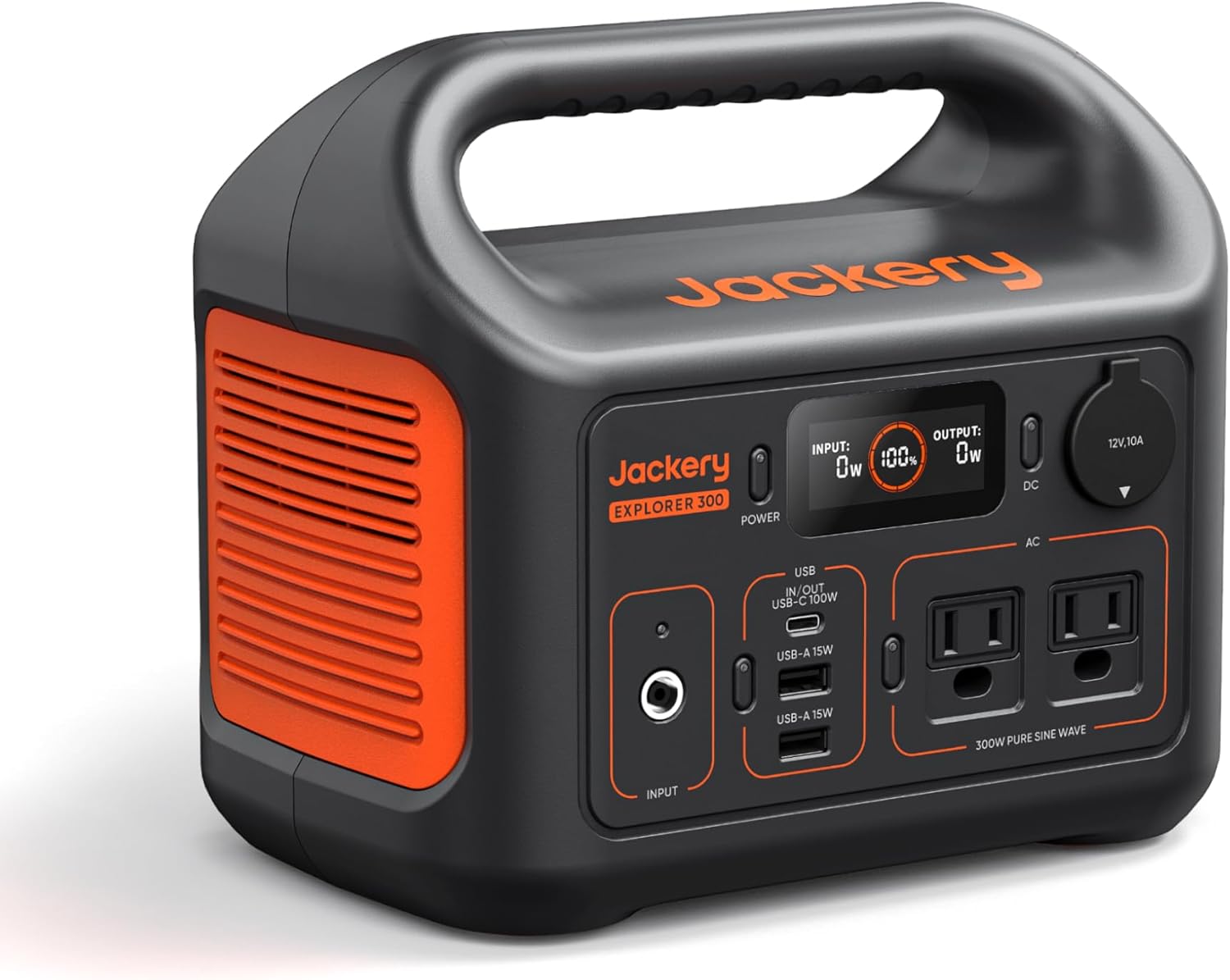
Jackery Portable Power Station Explorer 300
Budget OptionPower on the Go: Weighing only 11 lbs, it's convenient to set up and store with book-sized foldable solar panels

BLUETTI Portable Power Station AC180
Designed for both indoor and outdoor scenarios, AC180 is highly capable as it has a robost capacity and continuous output power.

EF ECOFLOW DELTA Pro Ultra Power Station
Upgraded PickEcoFlow DELTA Pro Ultra is a whole-home energy system designed to grow with your family. Integrated with the Smart Home Panel 2, it scales to meet your evolving energy needs — keeping your home powered, intelligent, and secure through every stage of life.
We earn a commission, at no additional cost to you.
Strategic Assessment Analysis
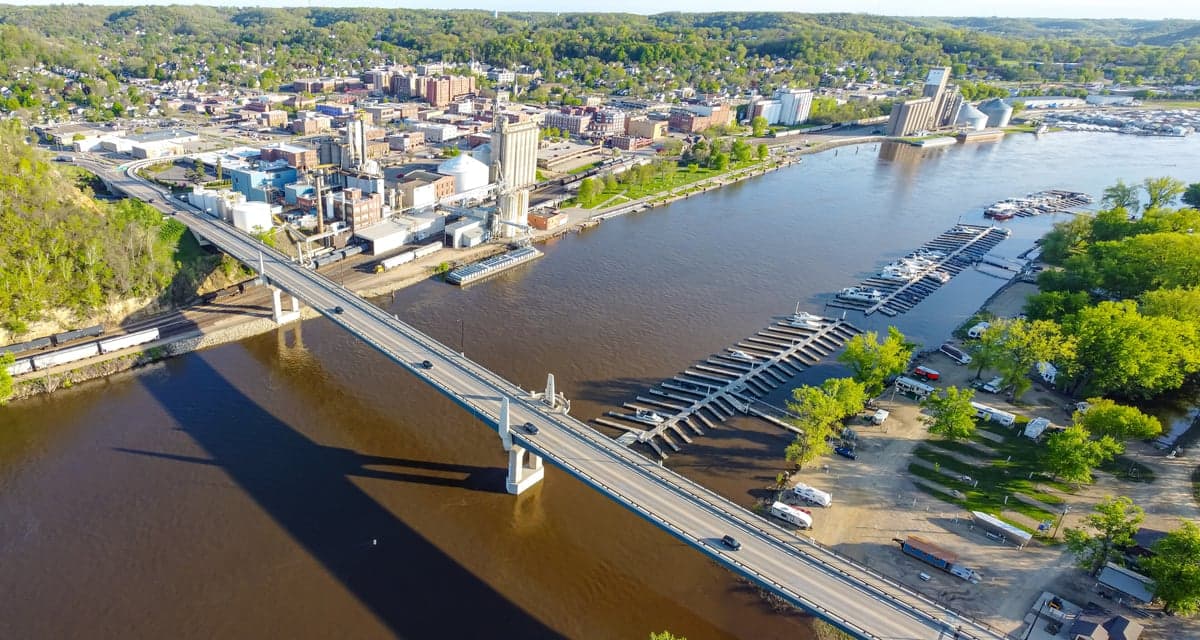
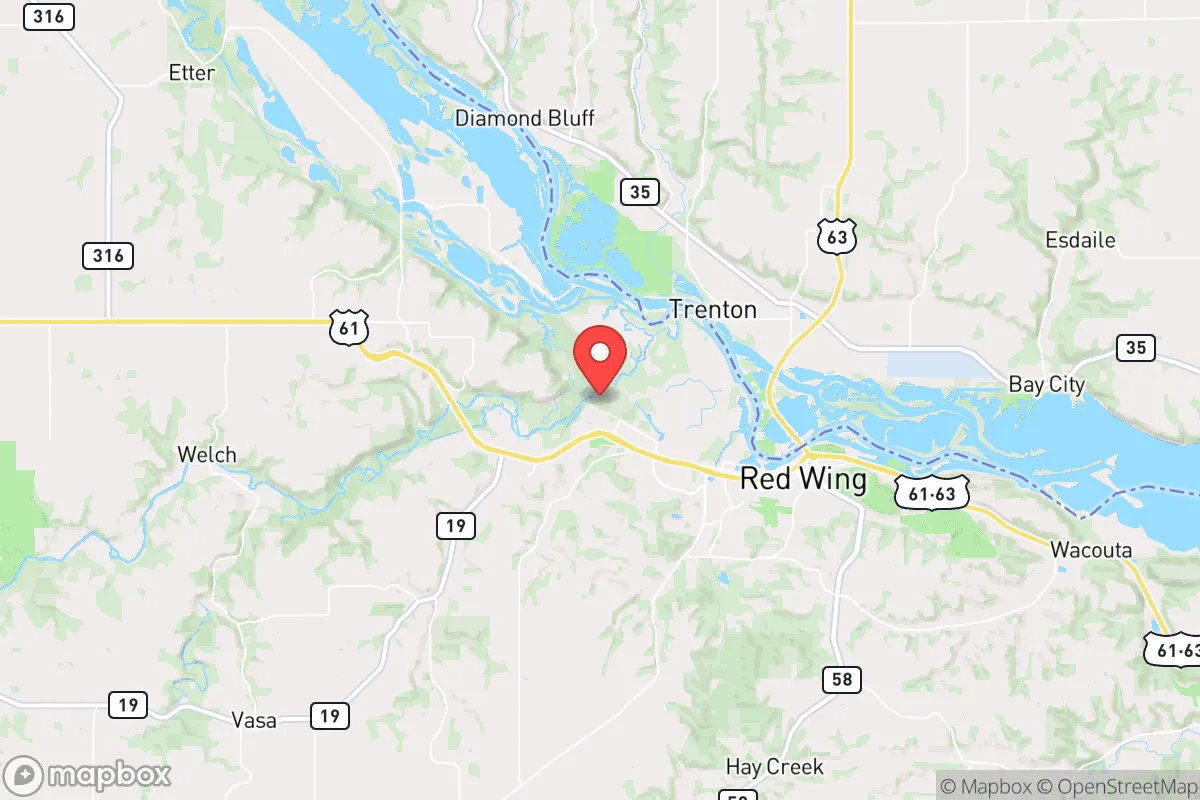
Red Wing, Minnesota, offers a compelling mix of strategic resilience and manageable risk for those prioritizing disaster readiness and self-sufficiency, particularly for individuals and families who value a degree of separation from major metropolitan vulnerabilities. Situated on the Mississippi River roughly 50 miles southeast of the Twin Cities, the city benefits from a strong local economy, a defensible geography, and a community that has historically weathered economic and environmental shifts. For the relocator thinking in terms of long-term security, Red Wing presents a balanced picture: it is close enough to urban resources to be practical, yet far enough to avoid the worst-case fallout scenarios associated with a major metro area.
Geographic position and natural advantages for long-term security
Red Wing’s location is its primary strategic asset. The city sits in a valley carved by the Mississippi River, flanked by the steep bluffs of the Driftless Area—a region that escaped the flattening effects of the last glacial period. This topography provides natural defensibility: the bluffs create chokepoints on major roads (US-61 and MN-58) and offer elevated vantage points for monitoring the surrounding countryside. The river itself is a double-edged sword—it provides a reliable water source and a transportation corridor, but also a potential avenue for unwanted traffic. However, the narrow valley and limited bridge crossings (only two major bridges within the city) make it easier to control access than a sprawling floodplain community. The Driftless Area’s rugged terrain also means less intensive agriculture and fewer large-scale industrial farms, which can be a vulnerability in a grid-down scenario; instead, the region supports smaller, diversified farms and abundant wildlife, including deer, turkey, and small game. The local climate is continental, with cold winters that naturally slow the spread of certain diseases and pests, and a growing season long enough for serious gardening (roughly 150 frost-free days). For a relocator, the key takeaway is that Red Wing’s geography offers a rare combination of natural barriers, water access, and productive land that is hard to find in the flat, open expanses of the Midwest.
Risks, exposures, and proximity to fallout-relevant landmarks
No location is without risk, and Red Wing has specific vulnerabilities that a serious relocator must weigh. The most obvious is the Mississippi River itself: the city has a history of flooding, most notably in 1965, 2001, and 2019, though modern levees and floodwalls have mitigated the worst impacts. The flood risk is concentrated in the downtown and riverfront areas; higher elevations on the bluffs are largely immune. Beyond natural hazards, the proximity to the Twin Cities (about an hour’s drive) is a double-edged sword. While it provides access to medical centers, supply chains, and employment, it also places Red Wing within the potential fallout zone of a major metropolitan target. In a nuclear or large-scale conventional attack scenario, prevailing winds from the west would carry fallout from Minneapolis-St. Paul directly toward Red Wing. The city is also within 100 miles of the Prairie Island Indian Community’s nuclear generating plant (about 30 miles upstream), which, while well-regulated, represents a fixed-site risk. Additionally, the Mississippi River corridor is a major transportation artery for hazardous materials—barges carrying chemicals, oil, and fertilizer pass daily. For the conservative-leaning relocator, the presence of a significant Hmong and Somali refugee population in the broader region (including Red Wing itself) is not a security risk per se, but it does mean the area has a more diverse and potentially less cohesive social fabric than some rural enclaves. The practical assessment: Red Wing is not a remote bunker location, but its risks are manageable with proper preparation—elevated property, a good water filtration system, and a plan for self-sufficiency during a prolonged power outage.
Practical resilience for a relocator: food, water, energy, and defensibility
For the individual or family serious about self-sufficiency, Red Wing offers a solid foundation. Water is abundant—the Mississippi is a massive, year-round source, but it requires treatment. The city’s municipal water comes from the river and is treated at the Red Wing Water Treatment Plant, which has backup generators. For off-grid resilience, shallow wells in the valley are feasible, but the bluffs are underlain by fractured limestone and sandstone, making well depth and yield variable. A rainwater catchment system is a more reliable bet for those on higher ground. Food production is viable: the surrounding county (Goodhue) is agricultural, with corn, soybeans, and dairy operations, but the Driftless Area’s topography limits industrial-scale monoculture. Small-scale livestock (chickens, goats, pigs) are common, and the city’s zoning allows for backyard chickens and bees. The local farmers’ market (May–October) and co-ops (like the Red Wing Farmers Market and the Goodhue County Co-op) provide access to local produce and meat. For long-term storage, the area has several Amish and Mennonite communities within a 30-mile radius that produce bulk grains, seeds, and tools. Energy resilience is moderate: the grid is served by Xcel Energy, which has a mix of coal, natural gas, and renewables. Solar potential is decent (about 4.5 peak sun hours per day), and the city’s building codes are not hostile to off-grid systems, though permits are required. Wood heating is practical given the surrounding forests (oak, maple, hickory), and many homes already have wood stoves or fireplaces. Defensibility is where Red Wing shines relative to flatland communities. The bluffs provide natural observation points, and the limited road access (US-61 along the river, MN-58 up the valley) means a small group could effectively monitor and control entry points. The local law enforcement (Red Wing Police Department, Goodhue County Sheriff) is professional and well-funded, but in a prolonged crisis, the community’s social capital—churches, the local VFW, and the strong Scandinavian heritage of mutual aid—would be more important than official response. The presence of a small but active gun culture (several local gun shops and a shooting range) suggests a baseline of armed preparedness among residents.
The overall strategic picture for Red Wing is that of a well-positioned secondary hub: it has the resources to support a self-sufficient lifestyle without the extreme isolation that can make daily life difficult. The city’s population of roughly 16,500 is large enough to maintain a functional economy and social services, but small enough that a relocator can quickly become known and integrated. The key trade-off is between proximity to the Twin Cities (which brings economic opportunity and medical access) and the associated risks of being within a fallout and supply-chain disruption zone. For the conservative-leaning relocator who values community, preparedness, and a slower pace, Red Wing offers a realistic middle ground—not a bug-out location, but a place where a well-prepared family can thrive in both normal times and during disruptions. The prudent move is to buy on the bluffs, invest in a good well or rainwater system, and build relationships with local farmers and tradespeople before you need them. Red Wing won’t save you from a direct hit on the Twin Cities, but it gives you a fighting chance in most other scenarios.

* Values derived from national, state, county, city and local statistics and may differ in a specific area. Last updated: 2026-11-23T04:54:22.000Z
Narrative content on this page is AI-generated and may contain mistakes. Verify any details that matter before acting on them.
ReloMaps may earn a commission from affiliate links at no extra cost to you.

