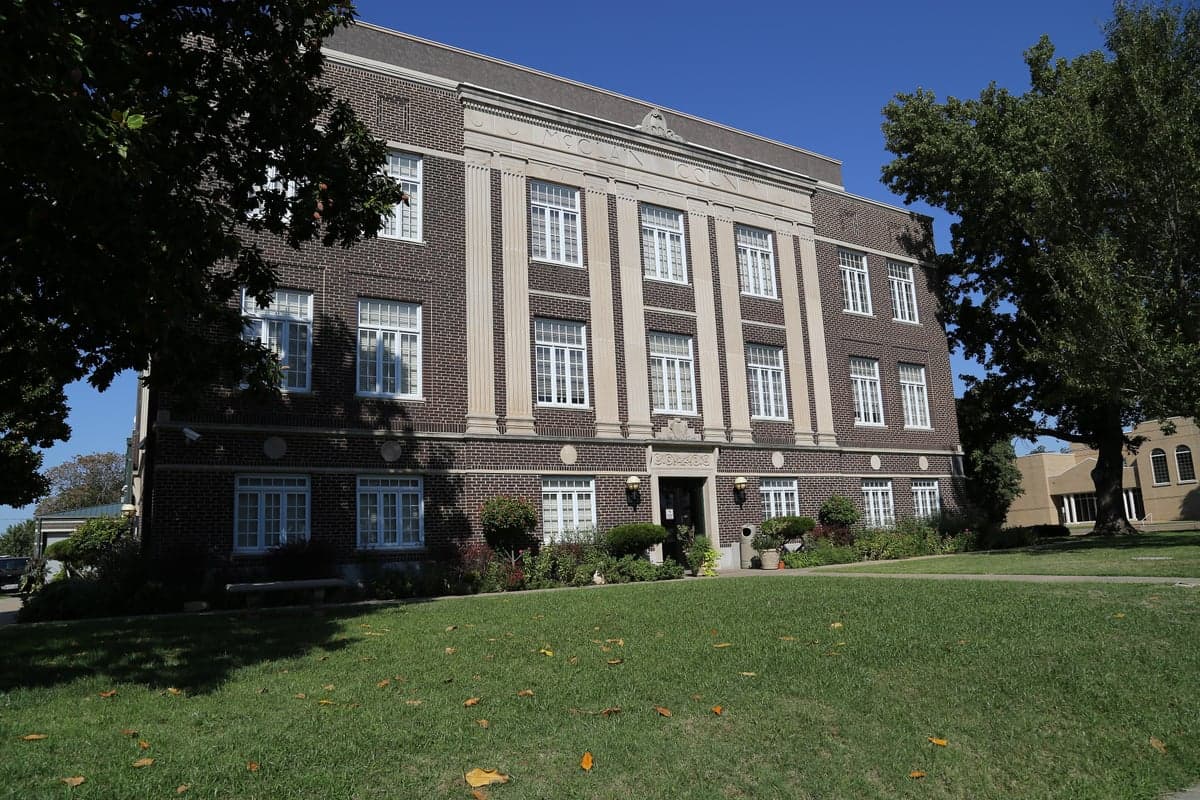
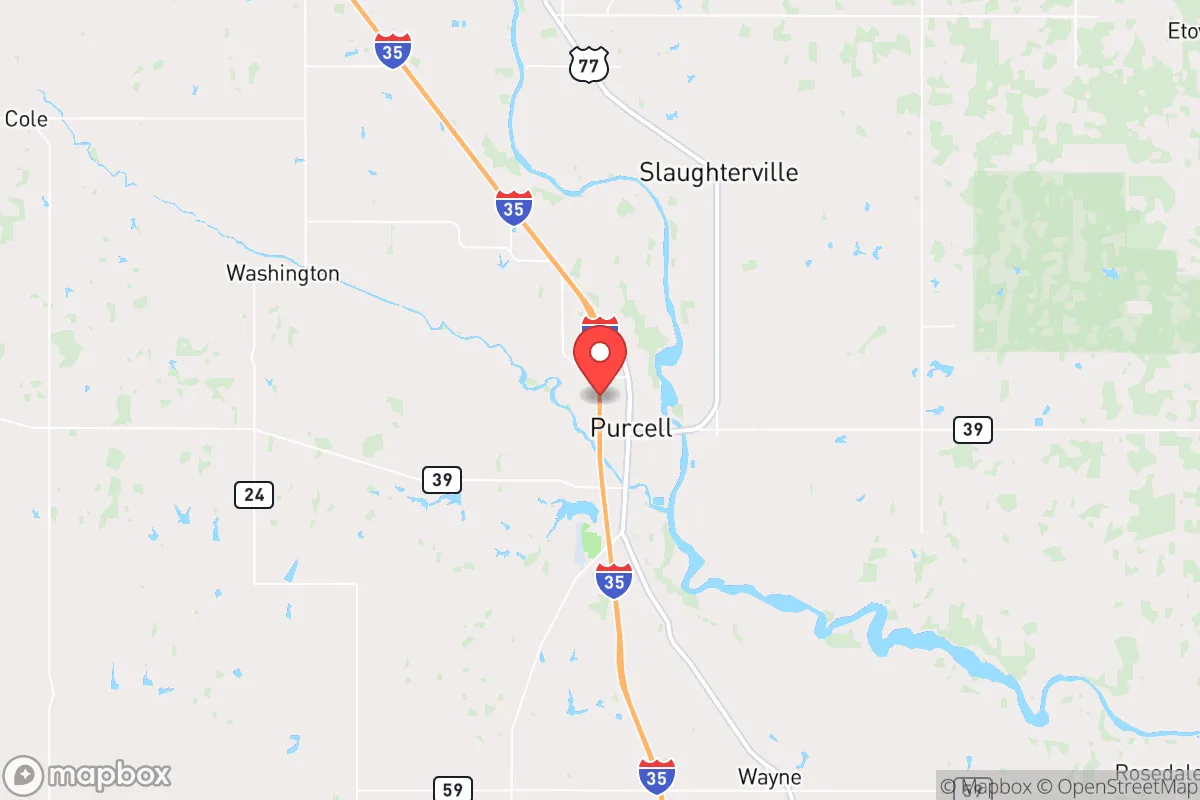

Photo: Wikipedia
Demographics of Purcell, OK
Affluence Level in Purcell, OK
A below-average socioeconomic profile. Incomes, home values, and educational attainment trail the U.S., with higher poverty and unemployment.
People of Purcell, OK
The people of Purcell, Oklahoma today form a small, predominantly white and Hispanic community of 6,716 residents, with a notably low foreign-born share of 3.0% and a college attainment rate of 19.9%. The city’s identity is rooted in its railroad and agricultural heritage, with a population that is 68.2% white and 17.0% Hispanic, reflecting a slow but steady diversification over recent decades. Purcell remains a family-oriented, working-class town where many residents have deep generational ties, and newcomers are often drawn by affordable housing and a quieter pace of life compared to the nearby Oklahoma City metro.
How the city was settled and grew
Purcell was founded in 1887 as a railroad town on the south bank of the Canadian River, directly across from the future site of Lexington. The original population was overwhelmingly white, drawn by jobs with the Atchison, Topeka and Santa Fe Railway and the promise of land in the Unassigned Lands opened by the Land Run of 1889. The earliest settlers clustered in what is now Old Town Purcell, the historic core along Main Street and the railroad tracks, where wooden storefronts and modest homes housed railroad workers, merchants, and farmers. A second wave arrived in the early 1900s, including a small number of Black families who settled in the South Purcell area, near the railroad yards, forming a tight-knit community centered around churches and local businesses. By 1910, Purcell’s population had reached roughly 2,000, and the city’s economy diversified into cotton ginning and livestock trading. The North Purcell neighborhood, developed in the 1920s and 1930s, became home to middle-class white families employed by the railroad and local government. The city’s growth slowed after World War II, as the railroad industry declined and younger residents began commuting to jobs in Norman and Oklahoma City.
Modern era (post-1965)
After the 1965 Immigration and Nationality Act, Purcell saw little direct international immigration, with the foreign-born share remaining at just 3.0% today. The most significant demographic shift has been the growth of the Hispanic population, which rose from a negligible share in 1980 to 17.0% by the 2020s. This growth came primarily through domestic migration from Texas and other parts of Oklahoma, as Hispanic families were drawn to agricultural work, construction, and service jobs in the expanding I-35 corridor. These new residents concentrated in the East Purcell area, east of the railroad tracks, where older, more affordable housing stock and rental properties offered entry points. The West Purcell neighborhood, developed in the 1990s and 2000s, attracted white families moving from older parts of town, seeking newer homes on larger lots. The Black population, historically small, declined from about 3% in 1970 to 1.4% today, as many families moved to larger cities for better economic opportunities. The Asian and Indian populations remain negligible at 0.0% each, reflecting Purcell’s limited draw for high-skilled immigrants. The city’s college attainment rate of 19.9% is well below the state average of 26%, underscoring its working-class character.
The future
Purcell’s population is projected to grow modestly, driven by spillover from the Oklahoma City metro area, which is expanding south along the I-35 corridor. The Hispanic share is likely to continue rising, potentially reaching 22-25% by 2040, as younger families seek affordable housing in the Purcell Lakes development and newer subdivisions near the high school. The white population, while still the majority, will likely shrink as a share of the total, due to an aging demographic and outmigration of younger white residents to college towns and larger cities. The city’s cultural identity is evolving from a historically homogeneous railroad town into a more bilingual, binational community, with Spanish-language signage appearing in local businesses and increasing participation in city government by Hispanic residents. The foreign-born share is expected to remain low, as Purcell lacks the job base and housing stock to attract significant international migration. The Black and Asian populations are unlikely to grow substantially, given the city’s limited professional opportunities and distance from major employment centers.
For someone moving in now, Purcell offers a stable, affordable, and increasingly diverse small-town environment, where the cost of living is roughly 15% below the national average and the commute to Norman or Oklahoma City is under 30 minutes. The city is becoming more Hispanic and more family-oriented, but remains a place where long-time white residents still dominate civic life and local politics. Newcomers should expect a community that values tradition, neighborliness, and a slower pace, with limited cultural amenities but strong schools and a low crime rate relative to the metro area.

* Values derived from national, state, county, city and local statistics and may differ in a specific area. Last updated: 2026-07-13T01:05:56.000Z
Narrative content on this page is AI-generated and may contain mistakes. Verify any details that matter before acting on them.
ReloMaps may earn a commission from affiliate links at no extra cost to you.

