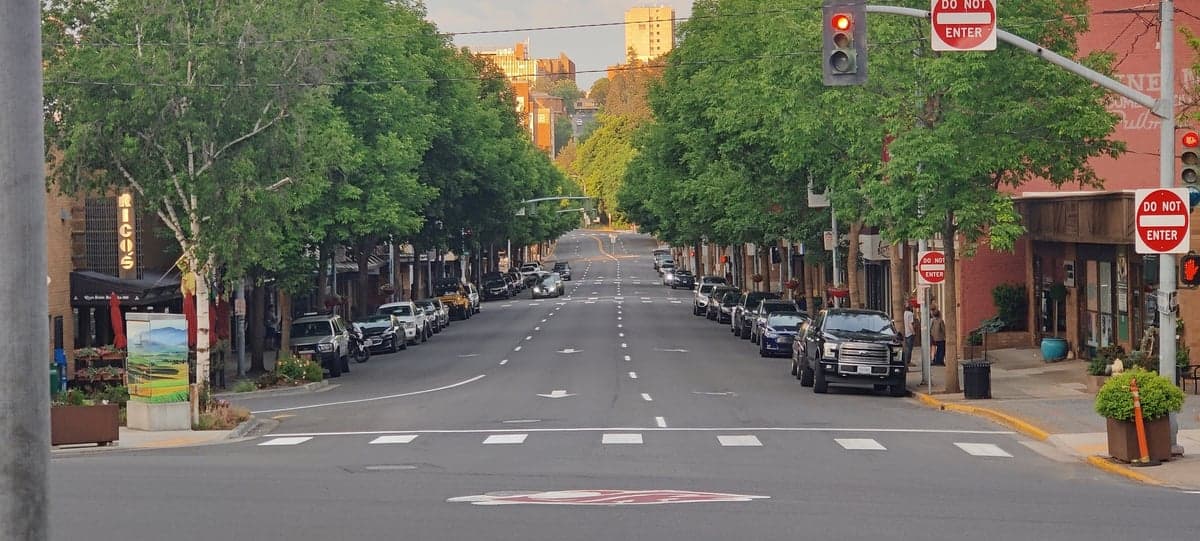
Photo: Wikipedia
Quality of Life in Pullman, WA
A high quality of life with strong walkability, manageable living costs, healthy neighborhood signals, and solid amenity access.
What does Quality of Life tell us?
Quality of Life blends cost of living, nearby amenities, socioeconomic signals, and neighborhood character. City-level scores represent the whole municipality; individual neighborhoods can differ.
What does this tell us?
Quality of Life blends cost of living, nearby amenities, socioeconomic signals, and neighborhood character. City-level scores represent the whole municipality; individual neighborhoods can differ.
Cost of Living
9% above national average
The Real Cost of Living in Pullman, WA for 2026
| Tier | Individual | Family (4) |
|---|---|---|
| Survival | $16k | $30k |
| Comfortable | $77k | $113k |
| Luxury | $81k+ | $126k+ |
| Elite (Top 5%) | $133k+ | $206k+ |
40%
The Area Signal
A metric tracking the socioeconomic signals of the area.
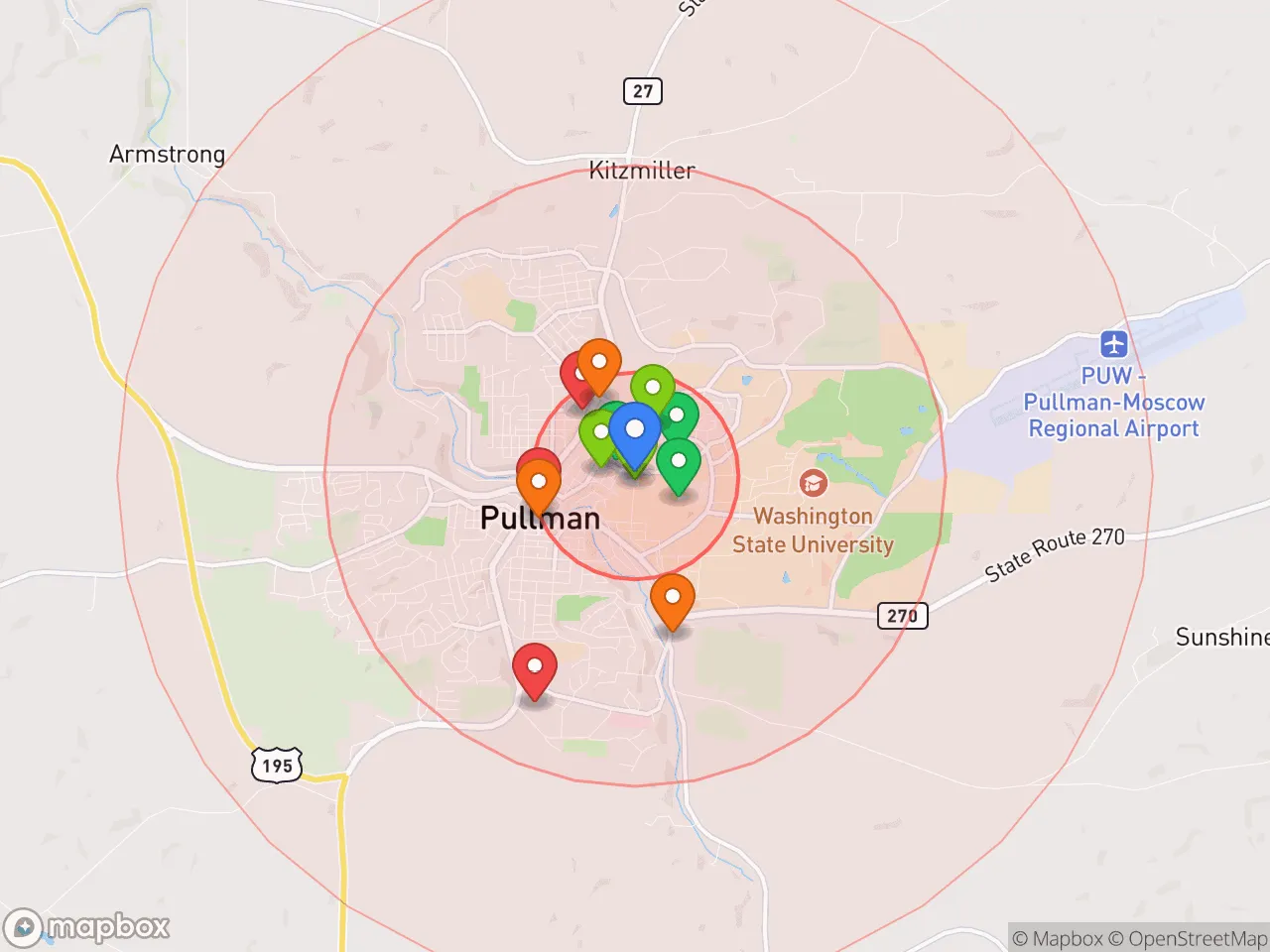
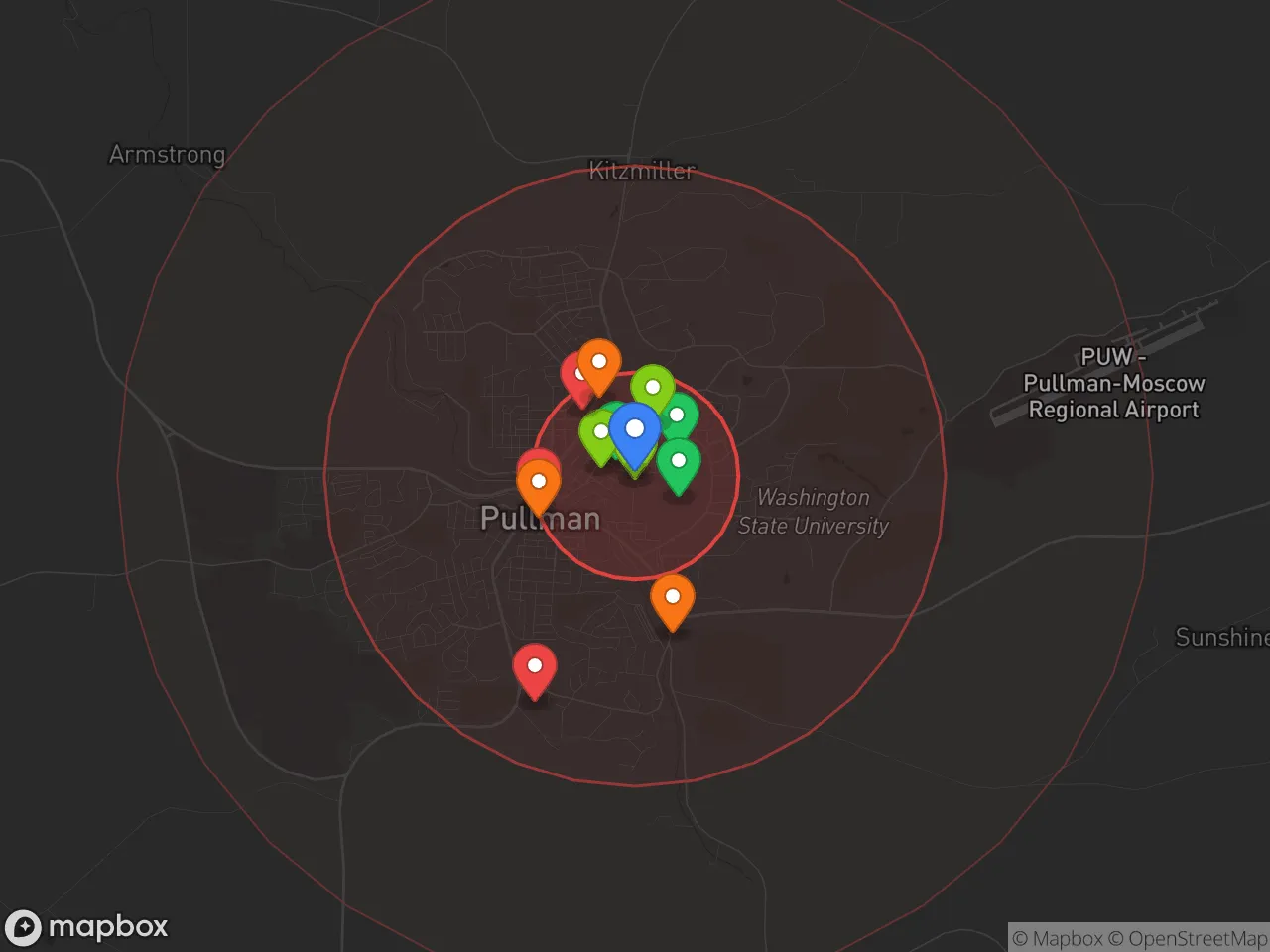
Hobbies
Explore the areaGroceries
5 within 10 miles
Gas
7 within 10 miles
Hospital
3 within 20 miles
Airport
SEA — Seattle–Tacoma International
Post Office
USPS — Pullman, WA
Critical Amenities
Quality-of-Life Analysis
Pullman, Washington, presents a distinctive quality-of-life profile shaped by its role as a college town and regional economic hub. With a cost-of-living index of 109 (9% above the national average), the city is more expensive than the U.S. norm but remains notably affordable compared to the broader Seattle metropolitan area, where the index often exceeds 150. The population is a mix of Washington State University (WSU) students, faculty, and professionals employed by the university, Schweitzer Engineering Laboratories (SEL), and regional healthcare systems, creating a highly educated, transient, and relatively affluent community.
Cost of living, housing, and affordability compared to nearby areas
Pullman’s housing market reflects its dual identity as a small city and a university anchor. The median home value is $401,700, which is significantly lower than the Washington state median of roughly $600,000 but higher than in neighboring rural towns like Colfax (median ~$280,000) or Moscow, Idaho, just eight miles away (median ~$350,000). Renters benefit from a median rent of $1,010, well below the national average of $1,200, though competition for units spikes during the academic year. The average commute is a remarkably short 14.3 minutes, far below the national average of 26 minutes, meaning residents save both time and transportation costs. Property taxes in Whitman County are moderate, around 0.9% of assessed value, and Washington’s lack of a state income tax further offsets the slightly elevated COL index for working professionals.
Local amenities, schools, and what daily life is like
Daily life in Pullman revolves around the WSU campus, which anchors cultural and recreational amenities including the Beasley Coliseum for concerts, the Jordan Schnitzer Museum of Art, and Pac-12 athletics. The Pullman School District is well-regarded, with Pullman High School consistently ranking among the top 15% of Washington high schools and a graduation rate above 90%. For families, the city offers multiple parks (Sunnyside Park, Kruegel Park) and a robust youth sports scene. Retail and dining are concentrated along Bishop Boulevard and Grand Avenue, with national chains supplemented by local staples like the Black Cypress restaurant and the Moscow Food Co-op (a short drive away). The rhythm of life is distinctly seasonal: quiet summers give way to bustling fall semesters, and winter snow (averaging 44 inches annually) supports skiing at nearby Moscow Mountain or sledding at Bill Chipman Palouse Trail. Healthcare is served by Pullman Regional Hospital, a 25-bed critical access facility, with specialized care requiring a 75-minute drive to Spokane.
Who will thrive in Pullman’s environment
Pullman is best suited for individuals and families who value a tight-knit, walkable community with strong educational infrastructure and a predictable, low-stress commute. The city works well for WSU faculty, staff, and graduate students who want to live within minutes of campus, as well as remote workers seeking a lower-cost alternative to the West Side while still having access to university amenities. Families with school-age children benefit from the high-performing public schools and safe neighborhoods, while retirees may appreciate the slower pace and proximity to outdoor recreation. Those seeking vibrant nightlife, diverse dining, or major metropolitan job markets will find Pullman limiting; the nearest city of comparable size and cultural density is Spokane, 75 miles north. Overall, Pullman offers a stable, affordable, and education-focused quality of life that rewards those who embrace its academic and rural character.

Crime in Pullman, WA
Lower crime rates than 84% of comparable U.S. locations.
Violent CrimeViolent Crime Analysis
Property CrimeProperty Crime Analysis
Crime Analysis
Pullman, Washington, reports a violent crime rate of 153.5 incidents per 100,000 residents and a property crime rate of 782.1 per 100,000, placing it well below national averages for both categories. While the city benefits from its status as a college town anchored by Washington State University, residents should be aware that local crime statistics can be influenced by the broader judicial and political environment of Whitman County. The presence of progressive policies in the justice system, including lenient sentencing and reduced prosecution for certain offenses, may contribute to a higher tolerance for property crime and recidivism, which directly impacts public safety and victim rights.
Crime in context
Pullman’s violent crime rate of 153.5 per 100,000 is roughly 60% lower than the national average of 380 per 100,000 and significantly below Washington state’s rate of approximately 320 per 100,000. Property crime in Pullman, at 782.1 per 100,000, is also below the national figure of 1,954 per 100,000 and the state average of 2,400 per 100,000. However, these figures mask a concerning trend: property crime, particularly theft and burglary, is concentrated in areas near campus and downtown, where transient populations and reduced consequences for low-level offenses create a cycle of repeat offending. The progressive approach to criminal justice in Whitman County, which emphasizes diversion programs and reduced incarceration for non-violent crimes, has been criticized for failing to deter property crime and for leaving victims without adequate restitution or protection.
What residents experience
For most Pullman residents, daily life feels safe, especially in established residential neighborhoods like Sunnyside and Military Hill, where violent crime is rare. However, vehicle break-ins and bicycle theft are common complaints, particularly near the WSU campus and in apartment complexes near Stadium Way. Residents report that police response times can be slow for property crimes, and that repeat offenders are often released quickly due to county-level policies prioritizing rehabilitation over punishment. This creates a sense of frustration among victims, who feel the justice system prioritizes offender outcomes over public safety. The progressive district attorney’s office has also been associated with reduced prosecution rates for drug-related theft, which some residents link to a rise in petty crime around commercial corridors like Bishop Boulevard.
Neighborhood-level variation is notable: the College Hill area, with its high student turnover and rental density, sees the most property crime, while the quiet, family-oriented neighborhoods west of Grand Avenue report very low incident rates. Pullman’s overall safety profile is favorable compared to larger metro areas, but the local justice system’s ideological leanings mean that residents should take proactive steps—such as securing vehicles, using home security systems, and participating in neighborhood watch programs—to mitigate the risks that progressive policies may fail to address. For those considering relocation, understanding this trade-off between low baseline crime and a lenient judicial environment is essential for making an informed decision.
* Values derived from national, state, county, city and local statistics and may differ in a specific area. Last updated: 2026-09-21T19:02:15.000Z
Narrative content on this page is AI-generated and may contain mistakes. Verify any details that matter before acting on them.
ReloMaps may earn a commission from affiliate links at no extra cost to you.

