Political ClimatePolitical Climate in Prichard, ID
District shown is the primary district for this city’s centroid. Cities may span multiple districts.
Inherited from parent county — no local data available.
* Lean and PVI are calculated from the surrounding county’s 2020 and 2024 presidential results, Cook-style — a finer measure here than its congressional district (ID-1).
Political rankings in Idaho
- Most Conservative Cities in Idaho
- Most Liberal Cities in Idaho
- Best Liberal-Leaning Towns in the Mountain West
- Safest Liberal-Leaning Towns in the Mountain West
- Safest Conservative-Leaning Cities in the Mountain West
- Affordable Small Towns for Conservatives
- Most Affordable Liberal-Leaning Small Towns in the U.S.
- Safest Conservative-Leaning Cities in the U.S.
- Most Conservative Counties in Idaho
- Most Liberal Counties in Idaho
Local Political AnalysisPolitical Analysis of Prichard, ID
Prichard, Idaho, sits deep in the Silver Valley, and politically, it’s about as red as the surrounding cedar bark. The area’s Cook Partisan Voting Index (PVI) of R+24 means it votes Republican by a margin nearly a third wider than the rest of Idaho, which itself sits at R+18. That’s not a subtle difference—it’s a real, lived-in reality that shapes everything from local zoning meetings to the stickers you see on truck bumpers. If you’ve been here a while, you’ve watched the national trends harden local ones; the area hasn’t drifted leftward in decades, and the trajectory points even deeper into conservative territory as new arrivals from California and Washington seek out the region’s low taxes and loose regulations.
How it compares
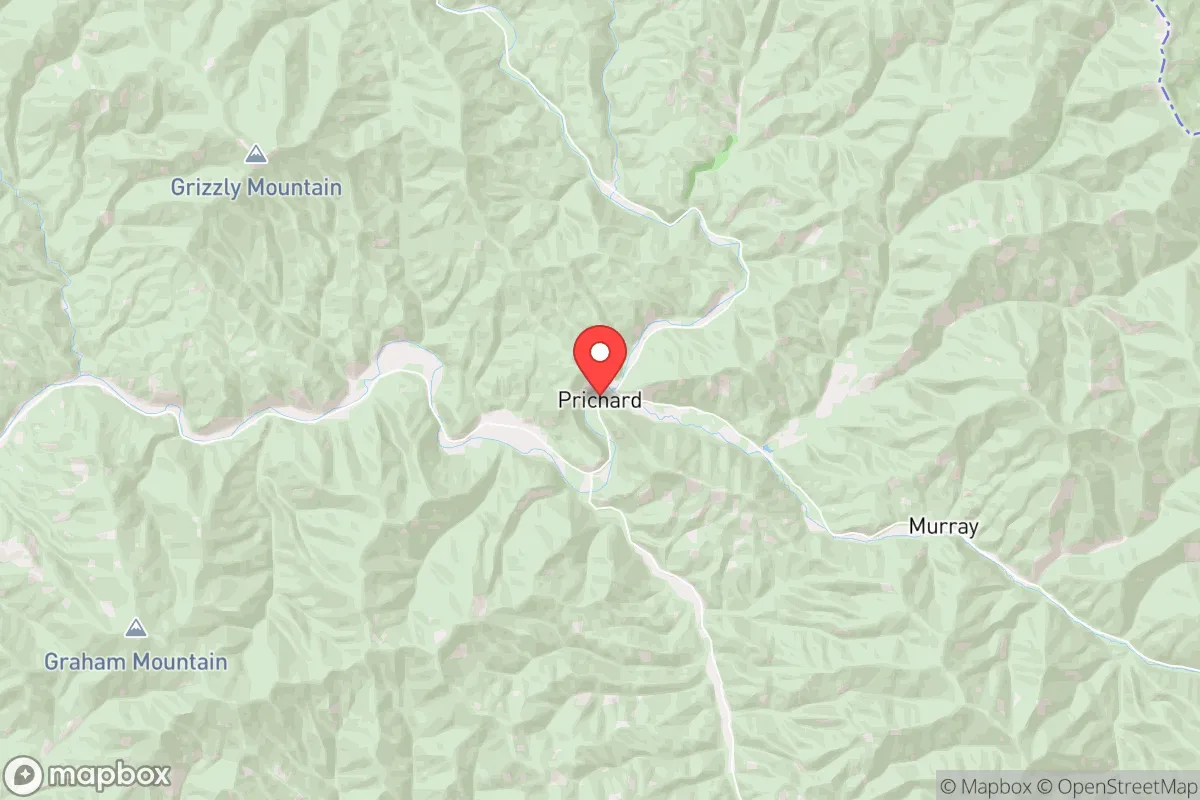
To understand Prichard’s politics, you have to look at the map. The town sits in Shoshone County, which is reliably conservative but not uniformly so. Drive 20 minutes west to Kellogg, and you’ll find a slightly more moderate vibe—still deeply red, but with a smattering of union-friendly Democrats who remember the mining heyday. Head east toward Wallace, and the historic district’s tourism economy brings in a handful of libertarian-leaning independents. Prichard, by contrast, is more isolated and more homogeneous. The R+24 PVI reflects a place where registered Republicans outnumber Democrats by roughly four to one, and where third-party registrations are almost nonexistent. Compared to Idaho as a whole, Prichard is about 6 points more conservative on the PVI scale—a gap that shows up in local election results, where statewide GOP candidates routinely clear 75% of the vote here while winning closer to 65% in Boise or Coeur d’Alene.
What this means for residents
For conservative residents, the political climate is a comfortable fit. Local government tends to be small, low-tax, and hands-off. Property taxes in Shoshone County are among the lowest in the state, and there’s little appetite for new zoning or land-use restrictions. Gun rights are broadly supported, and the local sheriff’s office is known for a light-touch approach to enforcement. For liberal residents, the reality is more isolating. There’s no active Democratic Party presence in Prichard itself; the nearest organized group meets in Kellogg, and even there, turnout is sparse. Socially, it’s a place where political conversations are often assumed to be conservative, and progressive viewpoints can feel like a minority of one. That said, most locals are neighborly in practice—political disagreements rarely escalate into personal feuds, and the area’s strong sense of self-reliance means people tend to mind their own business.
The cultural and policy distinctions between Prichard and the rest of Idaho are subtle but real. The Silver Valley has a distinct mining heritage that fosters a kind of pragmatic conservatism—less focused on culture-war issues than on economic independence and distrust of federal land management. The nearby Coeur d’Alene National Forest is a constant source of tension, with locals pushing for more logging and motorized access while environmental groups advocate for wilderness designations. That’s a fight that unites most residents across party lines, and it gives Prichard’s politics a practical, ground-level flavor that differs from the suburban conservatism of Boise or the resort-town libertarianism of Sandpoint. Looking ahead, the trajectory is toward even deeper red: as more retirees and remote workers move in, they tend to reinforce the existing political culture rather than challenge it.

State Political ClimatePolitical Climate in Idaho
State Political AnalysisPolitical Environment in the State
Idaho is one of the most reliably Republican states in the nation, with a Cook Partisan Voting Index of R+18, meaning it votes about 18 points more Republican than the country as a whole. The dominant coalition is a mix of rural conservatives, Mormon cultural conservatives in the southeast, and a growing wave of out-of-state transplants—many from California and the Pacific Northwest—who are often fiscally conservative but bring a more libertarian, anti-establishment streak. Over the last 10-20 years, the state has shifted from a moderate, almost sleepy Republicanism to a harder-edge, more ideologically driven conservatism, driven by rapid population growth and the collapse of the old Democratic foothold in the Panhandle and the Magic Valley.
Urban vs. rural divide
The political map of Idaho is starkly divided between a handful of blue-leaning urban islands and a deep-red rural expanse. Boise and its immediate suburbs in Ada County have become the state's only real Democratic stronghold, with the city itself voting blue by double digits in recent presidential elections. However, the surrounding suburbs—places like Meridian, Eagle, and Star—are heavily Republican, though often of a more suburban, business-friendly variety than the rural counties. The other notable blue spot is Blaine County, home to the resort town of Ketchum and Sun Valley, which votes reliably Democratic due to its wealthy, outdoorsy, and transplant-heavy population. The rest of the state is overwhelmingly Republican, with counties like Madison (Rexburg), Franklin (Preston), and Jefferson routinely delivering 80-90% of the vote to GOP candidates. The Panhandle, including Coeur d'Alene and Post Falls, has seen a surge of conservative migration from Washington and California, pushing what was once a swing region firmly into the red column. The Magic Valley, anchored by Twin Falls, is reliably conservative but has a growing Latino population that is beginning to shift local dynamics, though not yet at the statewide level.
Policy environment
Idaho's policy environment is defined by low taxes, limited regulation, and a strong cultural conservatism. The state has a flat income tax rate of 5.8% (recently cut from 6%), no corporate income tax on pass-through entities, and a relatively low property tax burden compared to the national average. The regulatory posture is business-friendly, with few zoning or environmental hurdles for development, especially outside of Boise. Education policy is a flashpoint: the state has one of the lowest per-pupil spending levels in the country, and recent years have seen a push for school choice, including a controversial education savings account (ESA) program that was struck down by the Idaho Supreme Court in 2024 but is expected to return in some form. Healthcare policy is limited; the state did not expand Medicaid until 2020 via ballot initiative, and there is ongoing legislative resistance to abortion access, with a near-total ban in effect since the Dobbs decision. Election laws are moderately restrictive: voter ID is required, same-day registration is not available, and mail-in voting is allowed but not automatic. The state has no ballot initiative process for constitutional amendments, which has frustrated both left-leaning and libertarian groups.
Recent policy direction
The last five years have seen Idaho move decisively toward a more assertive, culturally conservative policy agenda. In 2023, the legislature passed a near-total abortion ban with narrow exceptions for rape, incest, and the life of the mother. Gun laws have been loosened: permitless carry was enacted in 2016, and the state has a strong preemption law that prevents local governments from enacting their own firearm restrictions. On education, the state passed a "Parents' Bill of Rights" in 2023, requiring schools to notify parents of any curriculum related to sexuality or gender identity, and banning instruction on gender identity in grades K-3. Property rights remain strong, with no statewide rent control and a relatively straightforward eminent domain process. On privacy and surveillance, Idaho has a biometric privacy law but no comprehensive data privacy statute. Voting access has been tightened: the legislature passed a law in 2023 requiring proof of citizenship to register, though it is currently tied up in court. The overall direction is toward maximizing individual liberty in economic and self-defense matters while restricting it on social and medical issues, particularly around abortion and transgender care.
Civil unrest & political movements
Idaho has a long history of anti-government and militia movements, dating back to the Ruby Ridge standoff in 1992 in Boundary County. In recent years, the state has seen a resurgence of far-right activism, particularly in the Panhandle and around North Idaho, where groups like the Proud Boys and various "constitutionalist" organizations have held rallies and protests. The city of Coeur d'Alene has been a particular flashpoint, with clashes between white nationalist groups and counter-protesters, including a notable incident in 2022 where a planned Pride event was disrupted. On the left, the main organized movements are around abortion rights and LGBTQ+ protections, with groups like the Idaho Women's March and the ACLU of Idaho maintaining a visible presence in Boise. Immigration politics are relatively low-key compared to border states, but there is a growing tension in the Magic Valley, where agricultural labor relies heavily on immigrant workers, while the legislature has passed laws targeting sanctuary cities (though none exist in practice). Election integrity controversies have been minimal, with no major fraud cases and a generally smooth voting process, though the 2020 election saw some local Republican officials question results without evidence. A new resident would notice the political polarization most in the Panhandle and around Boise, where yard signs, bumper stickers, and local news coverage reflect a deeply divided electorate.
Projection
Over the next 5-10 years, Idaho is likely to remain deeply Republican, but the character of that Republicanism is shifting. The influx of out-of-state transplants—many from California, Washington, and Oregon—is bringing a more libertarian, less culturally Mormon flavor to the party, which could create friction with the traditional conservative base. The Boise metro area will continue to grow and become more politically competitive, but the rural counties will remain overwhelmingly red, ensuring the state's overall lean stays solid. The biggest wildcard is the Latino population, which is growing rapidly in the Magic Valley and could eventually shift the balance in a few legislative districts, though not at the statewide level for at least a decade. On policy, expect continued battles over education funding, school choice, and abortion access, with the legislature likely to push further on cultural issues while maintaining a low-tax, low-regulation economic environment. A new resident moving in now should expect a state that is politically stable but increasingly polarized, where the urban-rural divide will only deepen as Boise becomes more diverse and the rest of the state remains overwhelmingly conservative.
For a new resident, the bottom line is that Idaho offers a deeply conservative policy environment with low taxes, strong gun rights, and a culturally traditionalist tilt, but with a growing libertarian and urban liberal minority that is most visible in Boise and Sun Valley. If you are a conservative, you will find a state that largely aligns with your values, though the internal debates between establishment and anti-establishment factions can be intense. If you are a liberal, you will find a small but active community in the cities, but you should expect to be in the political minority in most of the state, with limited policy influence. The practical takeaway is that Idaho is a place where your political experience will vary dramatically depending on where you live—choose Boise for a more moderate, diverse environment, or the rural counties for a deeply conservative, traditional lifestyle. Either way, the state's rapid growth means that the political landscape is evolving, and the Idaho of 2035 will look different from the Idaho of today.
* Values derived from national, state, county, city and local statistics and may differ in a specific area. Last updated: 2026-11-18T21:18:25.000Z
Narrative content on this page is AI-generated and may contain mistakes. Verify any details that matter before acting on them.
ReloMaps may earn a commission from affiliate links at no extra cost to you.

