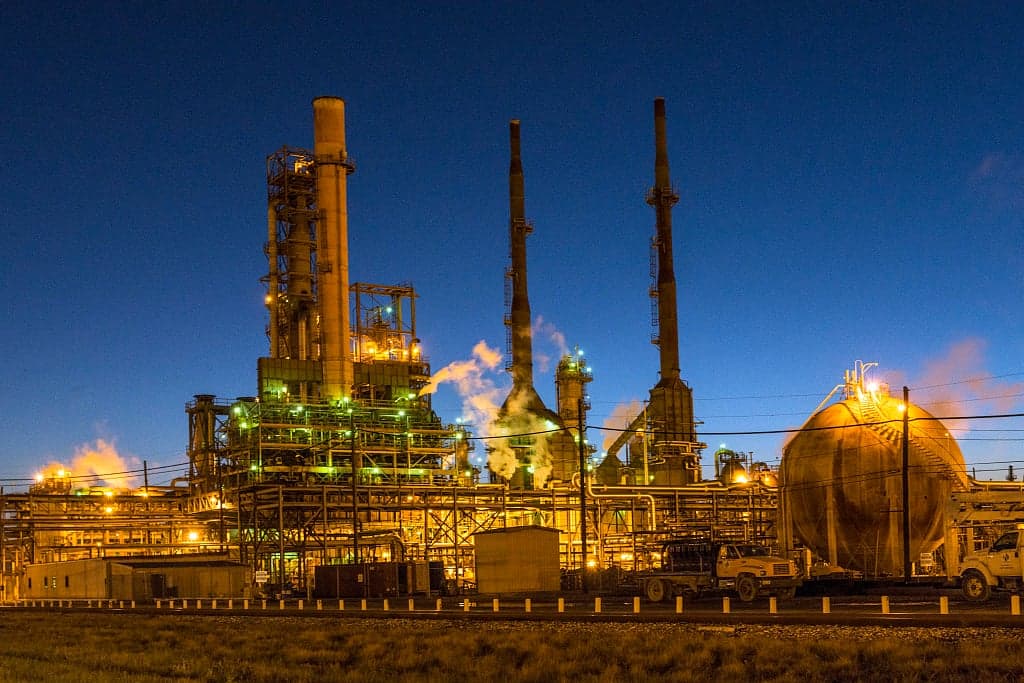
Photo: Wikipedia
Personal Sovereignty in Port Arthur, TX
Strong independent fundamentals that actively favor personal liberty and low regulation.
What does Personal Sovereignty tell us?
Personal Sovereignty measures your capacity for self-reliance and independence with minimal government friction. Higher scores mean fewer barriers between you and the way you want to live... but it assumes you have the space you need and good neighbors.
What does this tell us?
Personal Sovereignty measures your capacity for self-reliance and independence with minimal government friction. Higher scores mean fewer barriers between you and the way you want to live... but it assumes you have the space you need and good neighbors.
State Policy
Energy independence: Net exporter (220% of energy produced in-state)
Personal Liberty
Homesteading

Personal Liberty Analysis
Port Arthur, Texas, offers a personal sovereignty environment that is heavily shaped by Texas state law, which generally favors individual autonomy over government intrusion, but is tempered by local municipal codes and the economic realities of a Gulf Coast industrial city. For a survivalist or prepper mindset, the key trade-off here is between the state's strong protections for gun rights and property and the local government's more interventionist approach to land use and taxation. While you won't find the same level of off-grid freedom as in rural West Texas, Port Arthur provides a strategic foothold with access to the Gulf and a legal framework that, at the state level, still respects the individual as the primary unit of sovereignty.
Tax burden and regulatory posture for the self-reliant individual
Texas's lack of a state income tax is a major win for personal sovereignty, as it means the state does not directly tax your labor or investments. However, Port Arthur's local tax burden is significant. The combined state and local sales tax rate is 8.25%, and property taxes in Jefferson County are among the highest in the state, often exceeding 2.5% of assessed value annually. This is a direct claim on your property and income that funds local government services, many of which you may not use if you are self-reliant. The regulatory posture at the city level is typical for a mid-sized industrial town: building permits are required for most structural changes, and the city enforces standard health and safety codes. For a prepper, this means you cannot simply build a bunker or alter your property without municipal oversight. The silver lining is that Texas has relatively weak homeowners' association (HOA) enabling laws compared to states like Florida or California, so if you buy outside a platted subdivision, you can largely avoid HOA overreach. Still, the property tax burden is the primary ongoing infringement on your financial sovereignty here.
Self-defense and gun law specifics in Port Arthur and Texas
This is where Port Arthur and Texas shine for the sovereignty-minded individual. Texas is a constitutional carry state as of 2021, meaning you can carry a handgun openly or concealed without a permit. Port Arthur has no local ordinances that override this. The state also has strong "stand your ground" and "castle doctrine" laws, meaning there is no duty to retreat before using deadly force in your home, vehicle, or workplace, and you are legally presumed to have a reasonable fear of imminent harm if someone unlawfully enters your occupied dwelling. For a prepper, this legal framework is critical: your home is your castle, and the law backs your right to defend it. Additionally, Texas law prohibits local governments from banning the carrying of firearms in public parks, churches (unless posted), and most other public spaces. The only significant local restriction is that Port Arthur's city buildings and schools are gun-free zones by state law. For those building a survival armory, Texas also has no state-level magazine capacity restrictions or bans on "assault weapons." The legal environment here is about as favorable as it gets in the continental US for the armed citizen.
Self-reliance and homesteading viability: lot sizes, zoning, and off-grid feasibility
Port Arthur's zoning code is a mixed bag for the homesteader. The city is largely built out on small lots, with typical residential lots ranging from 5,000 to 8,000 square feet in older neighborhoods. This limits large-scale gardening, livestock, and water catchment. However, the city does allow for backyard chickens (hens only, no roosters) on lots over 6,000 square feet, and beekeeping is permitted with registration. For serious homesteading, you need to look outside the city limits into unincorporated Jefferson County, where lot sizes can be 1 to 5 acres and zoning is minimal. Off-grid feasibility is moderate: Texas has no state law prohibiting rainwater collection, and you can install solar panels without state-level interference, though local permitting applies. The biggest challenge is water—Port Arthur sits on a high water table, but well drilling requires a permit and testing. Sewage is a major issue; the city requires connection to municipal sewer where available, and septic systems in unincorporated areas require county health department approval. For a full off-grid setup, you would need to buy at least 5-10 acres in the rural parts of the county, where you can legally compost toilets, use solar, and drill a well without significant pushback from local authorities.
Personal liberties: parental rights, medical autonomy, speech, and property
Texas has been a battleground for parental rights, and the state legislature has passed laws that strengthen parents' authority over their children's education and medical decisions. In Port Arthur, this means you have the legal right to opt your child out of any curriculum or school activity you find objectionable, and the state's "Parental Bill of Rights" (Texas Education Code) gives you broad authority to direct your child's upbringing. Medical autonomy is strong at the state level: Texas does not have a state-level vaccine mandate for adults, and it has banned COVID-19 vaccine mandates by private employers in most cases. However, local hospitals in Port Arthur follow standard medical protocols, and there is no "right to try" experimental treatments outside of state law. Free speech is robustly protected under the Texas Constitution, which is even more protective than the First Amendment in some areas, and Port Arthur has no local "hate speech" ordinances that would chill political or religious expression. Property rights are generally strong, but the city's code enforcement can be aggressive on issues like tall grass, inoperable vehicles, and junk accumulation—a direct infringement on your right to use your land as you see fit. For a prepper, this means you cannot stockpile materials or let your property appear "unkempt" without risking fines. The key is to buy in unincorporated county land where such enforcement is lax or nonexistent.
Overall, Port Arthur offers a solid baseline of personal sovereignty thanks to Texas state law, particularly in the areas of self-defense, gun rights, and parental authority. The local government's higher tax burden and more active code enforcement are the main drags on autonomy, making it less ideal than rural Texas counties for the hardcore survivalist. However, for someone who wants the strategic advantages of Gulf Coast access, a lower cost of living, and a legal framework that still respects the individual as sovereign, Port Arthur is a viable option—provided you are willing to navigate the municipal bureaucracy or buy land just outside the city limits. Compared to cities in California, New York, or Illinois, Port Arthur is a fortress of liberty; compared to rural Montana or Idaho, it is a compromise. For the prepper who values community resilience and maritime access over total isolation, it is a reasonable base of operations.

* Values derived from national, state, county, city and local statistics and may differ in a specific area. Last updated: 2026-05-14T18:47:59.000Z
Narrative content on this page is AI-generated and may contain mistakes. Verify any details that matter before acting on them.
ReloMaps may earn a commission from affiliate links at no extra cost to you.

