Photo: Wikipedia
Demographics of Port Arthur, TX
Affluence Level in Port Arthur, TX
A low-income area with significant economic hardship. Household wealth and educational attainment are well below national averages.
People of Port Arthur, TX
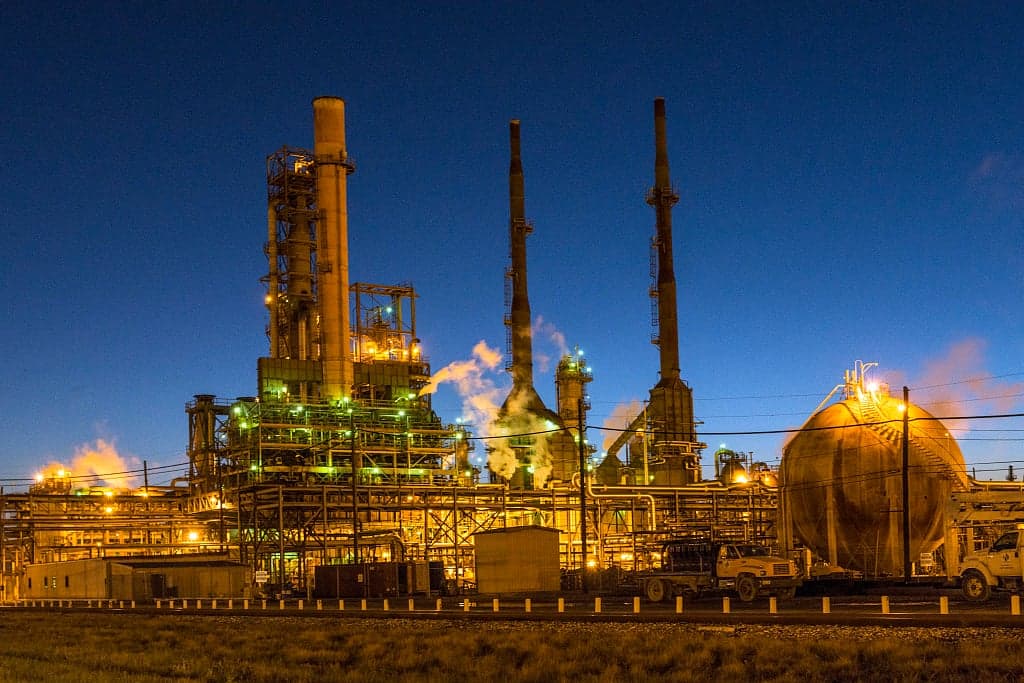
Port Arthur today is a majority-minority, working-class industrial city of 55,779 residents, shaped by oil refining, a deepwater port, and successive waves of domestic and international migration. The population is 42.1% Black, 35.5% Hispanic, 15.6% White, 4.2% East/Southeast Asian, and 1.3% Indian, with 13.1% foreign-born and only 11.2% holding a college degree. The city's identity is rooted in its refinery labor, Cajun-Creole heritage, and aole heritage, and a strong Vietnamese community, all layered over a historically segregated landscape of distinct neighborhoods.
How the city was settled and grew
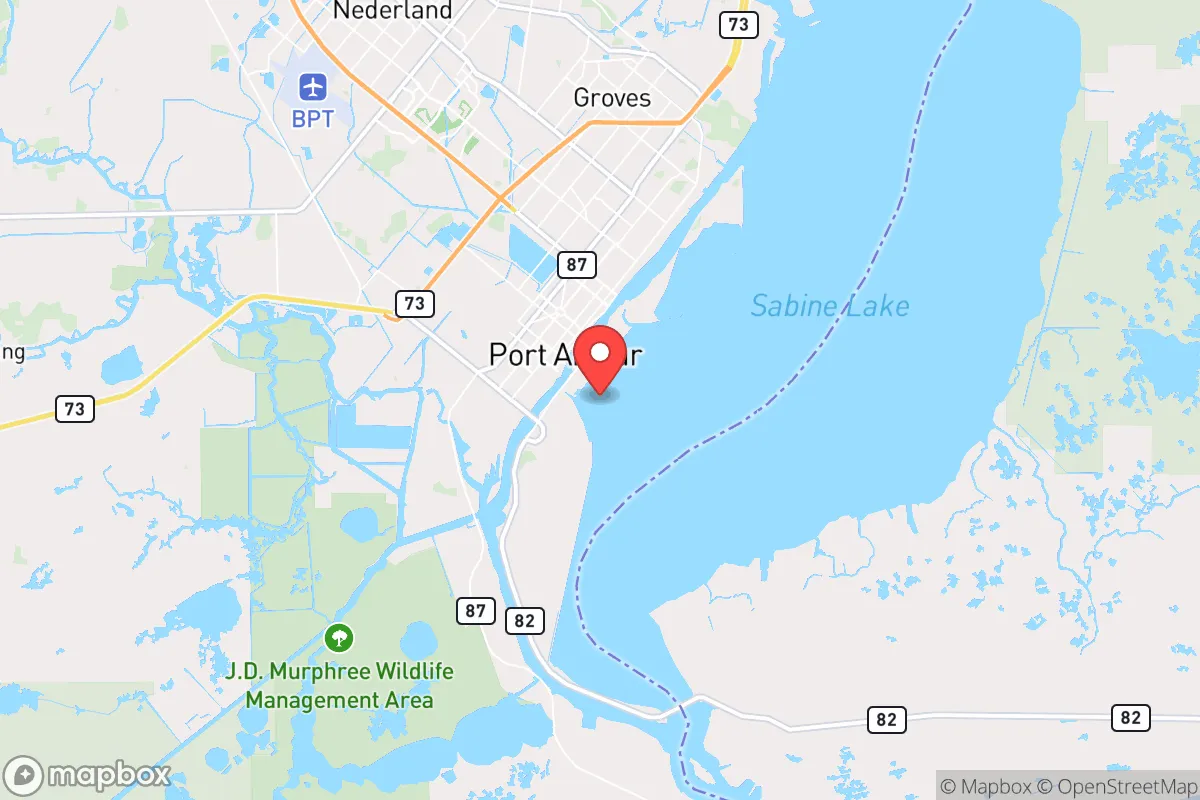
Port Arthur was founded in 1898 by railroad magnate Arthur Stilwell as a planned port city on Sabine Lake, with the Kansas City Southern Railway and the port driving force. The 1901 Spindletop oil boom near Beaumont transformed it into a refinery hub, drawing white settlers from the U.S. South and European immigrants—primarily Irish, Italian, and Lebanese—who built the West Side neighborhoods around the Gulf Oil and Texaco plants. African Americans arrived in large numbers during the Great Migration (1910–1940) from Louisiana and East Texas for refinery and dock work, settling in the East Side and Pleasantville areas, where they built their own schools, churches, and businesses under Jim Crow segregation. By The city peaked at around 66,000 in the 1960s, with the refinery workforce at its height.Griffing Park and Lakeview developed as white middle-class suburbs within the city limits, while the East Side remained overwhelmingly Black.
Modern era (post-1965)
The 1965 Hart-Cellar Act and the end of national-origin quotas opened the door to new immigration, but the most dramatic shift came after the Fall of Saigon in 1975. Port Arthur received one of the largest Vietnamese refugee resettlements in Texas, with families sponsored by Catholic Charities and local churches. They concentrated in the West Side and around Downtown, opening restaurants, grocery stores, and fishing businesses along the port. Today, the Vietnamese community remains the largest East/Southeast Asian group, with many second-generation residents moving into nursing and technical trades. Hispanic migration accelerated in the 1980s and 1990s, driven by refinery construction and service jobs, with Mexican and Central American families settling in West Port Arthur and the South SideSouth Side. The Black population, which peaked at around 50% in the 1970s, has declined slightly as younger families left for Houston and Dallas, but the East Side and Pleasantville remain culturally anchor neighborhoods. White flight to suburban Beaumont and Nederland accelerated after desegregation in the 1970s, leaving the West Side more diverse but older. The Indian subcontinent population (1.3%) is small and recent, largely professionals in healthcare and engineering, with no single concentrated neighborhood.
The future
Port Arthur's population has declined from its 1970 peak and is projected to stabilize near 55,000 over the next decade. The Hispanic share is growing fastest-growing fastest, driven by both immigration and higher birth rates, and is expected to approach 40–45% of the city by 2035. The East/Southeast Asian community is plateauing as younger Vietnamese move to Houston suburbs, but a small Cambodian and Lao presence is emerging. The Black share is slowly shrinking as out-migration continues, while the White population is aging and declining. The city is not homogenizing; rather, it is tribalizing into distinct enclaves: the East Side remains predominantly Black, the West Side is increasingly Hispanic and Vietnamese, and Vietnamese, and Griffing Park and Lakeview are older and whiter. The foreign-born share (13.1%) is high for a city this size, but new immigration is slowing. The next 10–20 years will likely see a continued Hispanicization of the West Side and a stabilization of the Black population in the East Side, with little new white in-migration.
Port Arthur is becoming a poorer, more Hispanic, and more working-class city, with a strong neighborhood identities but limited economic mobility. For someone moving in now, Port Arthur offers affordable housing and a tight-knit community feel, but job growth is concentrated in refining and healthcare, and the low college attainment rate (11.2%) signals limited white-collar opportunities are scarce. The city's diversity is real but lived largely in parallel enclaves, not integrated spaces.

* Values derived from national, state, county, city and local statistics and may differ in a specific area. Last updated: 2026-05-14T18:47:59.000Z
Narrative content on this page is AI-generated and may contain mistakes. Verify any details that matter before acting on them.
ReloMaps may earn a commission from affiliate links at no extra cost to you.

