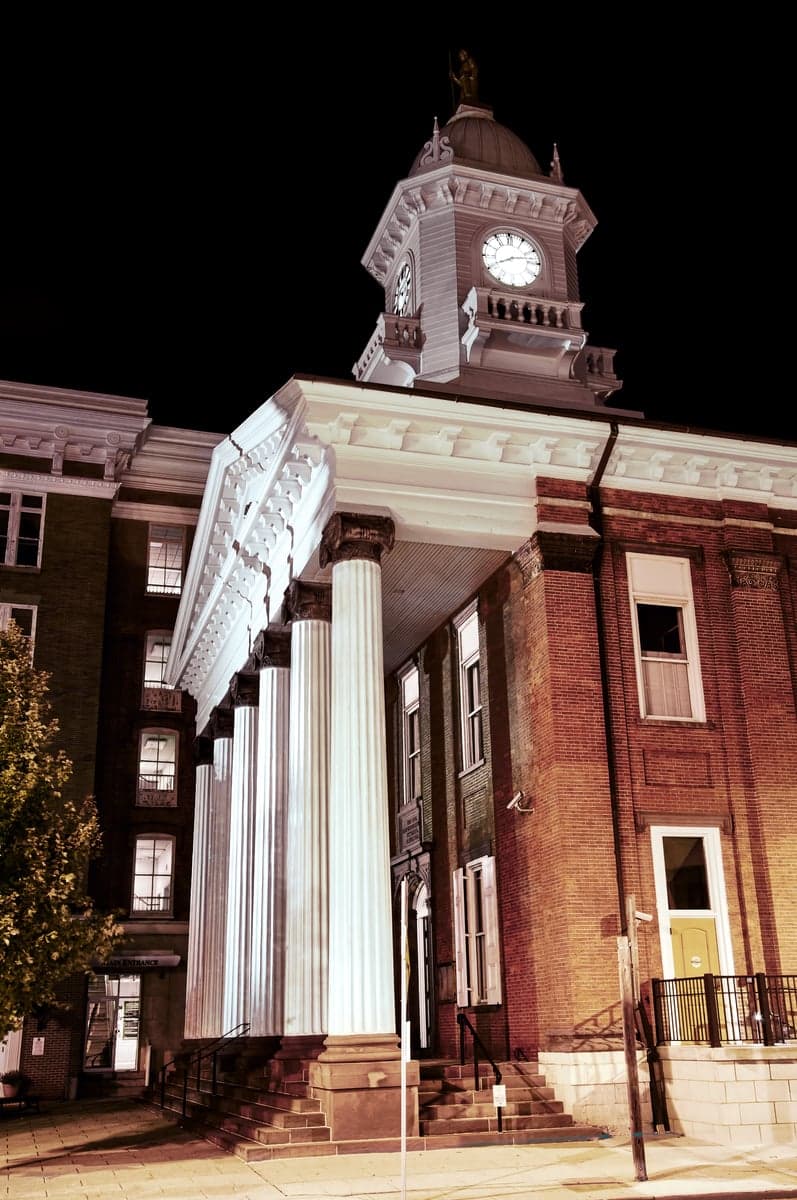
Photo: Wikipedia
Political ClimatePolitical Climate in Franklin County
Showing district-level results — no local-only data available.
Local Political AnalysisPolitical Analysis of Franklin County
Franklin County is one of the most reliably Republican areas in Pennsylvania, carrying a Cook PVI of R+23 — a stark contrast to the state’s overall EVEN rating. That means the county votes about 23 points more Republican than the national average, while the state as a whole is a pure toss-up. This isn’t a recent shift; the county has been solidly red for decades, but the margin has actually widened since 2020 as rural areas across the commonwealth have moved further right. In 2024, Donald Trump carried Franklin County by roughly 40 points, while Pennsylvania as a whole was decided by less than two. The political center of gravity here is unmistakably conservative, but there are meaningful pockets of blue and a growing independent streak worth knowing about.
How it compares
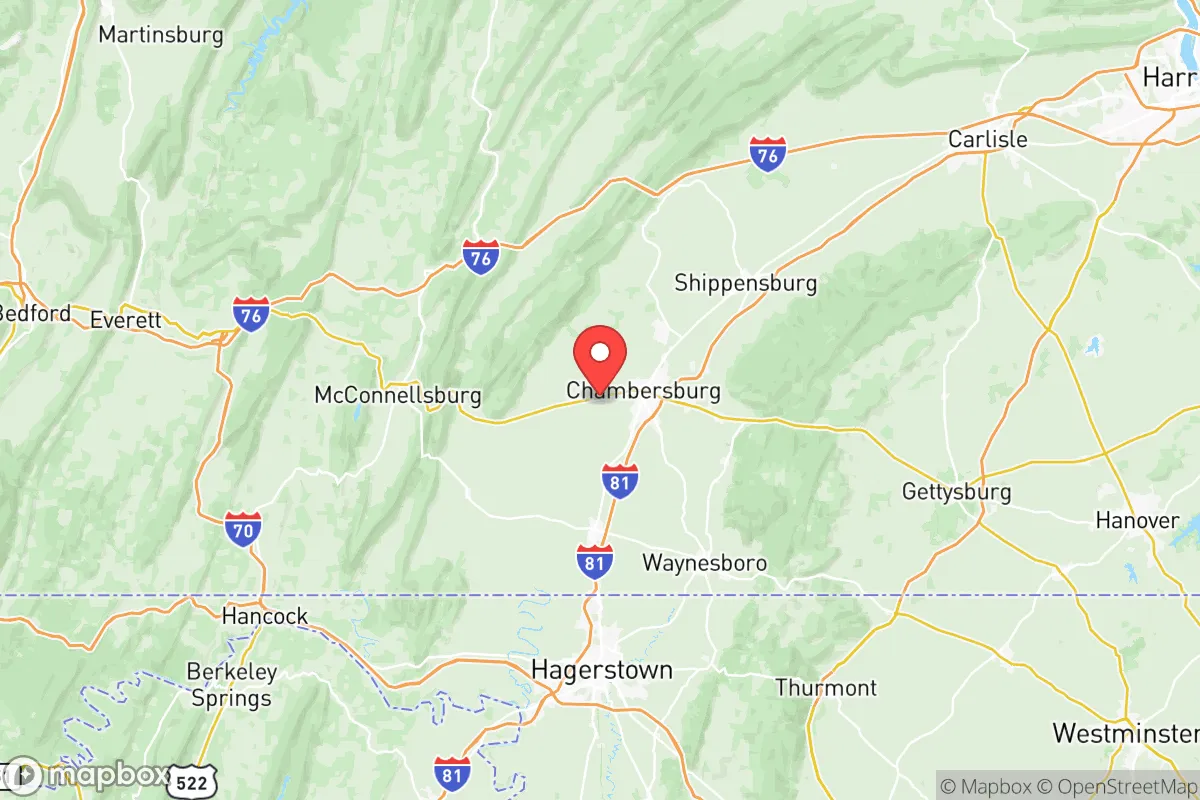
The gap between Franklin County and Pennsylvania’s statewide lean is enormous — a 23-point spread that puts the county in the same league as deep-red strongholds like Bedford or Fulton counties. But within Franklin itself, the politics aren’t monolithic. Chambersburg, the county seat and largest town, is the most competitive area: its downtown and college-adjacent wards have trended blue in recent cycles, with precincts near Wilson College and the central business district occasionally voting Democratic in close races. Waynesboro leans red but has a small but persistent Democratic base, especially around the Renfrew Park area. Greencastle and Mercersburg are reliably conservative, with Greencastle’s newer subdivisions pulling in families from the D.C. exurbs who tend to be moderate-to-conservative on fiscal issues. The rural townships — Antrim, Guilford, Hamilton — are the bedrock of the county’s Republican margins, often delivering 70-80% of their votes to GOP candidates. The swing precincts, if you can call them that, are in Chambersburg’s 1st and 2nd wards, where a mix of longtime residents, newer transplants, and Wilson College students can make a local race competitive.
What this means for residents
For conservative residents, Franklin County is a comfortable place to live politically. Local offices — county commissioners, row officers, school boards — are overwhelmingly held by Republicans, and policy tends to reflect that: lower taxes, limited government, and a strong emphasis on Second Amendment rights and religious liberty. The county’s Republican committee is well-organized and active, and conservative voters here have real influence in state-level primaries. For liberal residents, the picture is more mixed. You’re not going to find a lot of overt hostility, but you’ll be in the minority in most public forums. That said, Chambersburg offers a small but visible progressive community, particularly around Wilson College and the arts scene. The local Democratic committee is active but outmatched in fundraising and turnout. Most residents, regardless of party, describe the political climate as civil in day-to-day life — neighbors don’t usually argue politics at the grocery store — but the divide shows up in local Facebook groups and school board meetings, where cultural issues like library books and curriculum have become flashpoints since 2021.
One cultural distinction worth noting: Franklin County sits in the Cumberland Valley, a region with deep German and Scots-Irish roots, and its politics reflect a kind of pragmatic conservatism that’s less about national culture wars and more about local control, low taxes, and personal responsibility. You don’t see a lot of yard signs for national candidates outside election season, but you’ll see plenty for local races and school board candidates. The county’s proximity to the Maryland line — and the D.C. exurbs — has brought in some new residents who lean moderate, but not enough to shift the overall balance. Looking ahead, the county’s Republican lean is likely to hold or even strengthen as rural areas continue to polarize, but the growing independent vote — now about 15% of registered voters — could make local races more interesting if turnout patterns shift. For now, Franklin County remains what it’s been for a generation: a reliably red anchor in a purple state.

State Political ClimatePolitical Climate in Pennsylvania
State Political AnalysisPolitical Environment in the State
Pennsylvania is the ultimate swing state, holding a Cook PVI of EVEN and having voted for the winning presidential candidate in every election since 2008, but the state’s political reality is far more complex than its purple reputation suggests. Over the last 20 years, the commonwealth has undergone a dramatic realignment: the old industrial strongholds in the west and northeast have shifted rightward, while the southeastern suburbs have become reliably blue. The result is a state that feels like two different countries stitched together, where a few thousand votes in places like Erie or Northampton County can decide the entire national election.
Urban vs. rural divide
The political map of Pennsylvania is a textbook study in geographic polarization. Philadelphia and its collar counties—Montgomery, Delaware, Chester, and Bucks—now drive the Democratic vote, with the city itself delivering margins of 80% or higher. Pittsburgh, while still Democratic, has seen its influence shrink relative to the exploding suburbs of the southeast. The rural spine of the state, stretching from the northern tier down through the center and into the southwest, is deeply Republican; counties like Tioga, Potter, and Bedford routinely vote 70-75% for GOP candidates. The real battlegrounds are the "collar counties" around Philadelphia and the old industrial towns of the Lehigh Valley and the northwest. Erie County flipped from Obama to Trump to Biden and back to Trump in 2024, making it the single best bellwether in the state. Northampton County, home to Bethlehem and Easton, has become a perennial swing county where both parties pour resources. The Pittsburgh suburbs, particularly Washington and Westmoreland counties, have shifted hard right over the past decade, while the Philly suburbs have moved in the opposite direction. Lancaster County, once a Republican lock, is now showing signs of competitiveness at the local level as the city of Lancaster grows younger and more diverse.
Policy environment
Pennsylvania’s policy landscape reflects its divided government. The state has a flat income tax rate of 3.07%, one of the lowest in the nation, and a sales tax of 6% that exempts food and clothing. Property taxes are high and locally determined, which is a perennial complaint for homeowners in high-cost areas like the Philly suburbs. The state has no right-to-work law, and union density remains significant, particularly in the public sector and the building trades. On education, Pennsylvania has a patchwork system: wealthy suburban districts in the southeast are among the best-funded in the country, while rural and urban districts struggle with underfunding and aging infrastructure. The state has a school choice program that includes charter schools and a limited tax credit scholarship program, but no universal voucher system. Healthcare policy is dominated by the state’s Medicaid expansion under the Affordable Care Act, which covers roughly 3 million Pennsylvanians. Election laws are relatively moderate: no-excuse mail-in voting was enacted with bipartisan support in 2019, though it has become a flashpoint, with some Republican legislators pushing to repeal or restrict it. Voter ID is required for first-time voters but not for established voters, which places Pennsylvania in the middle of the national spectrum on ballot access.
Recent policy direction
The last five years have seen Pennsylvania lurch in contradictory directions depending on which party controls the governor’s mansion and the legislature. On gun rights, the state has remained relatively permissive: it is a shall-issue state for concealed carry, has preemption laws that prevent local municipalities from enacting their own restrictions, and does not require universal background checks for private sales. However, in 2023, Governor Josh Shapiro signed an executive order requiring background checks for gun purchases at the state’s 1,200 licensed dealers, a move that drew sharp criticism from gun rights groups. On education and parental rights, the state has been a battleground: in 2022, the legislature passed a bill requiring schools to post curriculum materials online and notify parents of instructional materials involving sexuality, but it was vetoed by Governor Tom Wolf. The issue remains alive, with conservative groups pushing for a "Parents Bill of Rights." On medical and bodily autonomy, Pennsylvania has protected abortion access up to 24 weeks, and the current governor has pledged to veto any further restrictions. On property rights, the state has no statewide rent control, but Philadelphia and Pittsburgh have enacted their own local ordinances. On privacy and surveillance, Pennsylvania has no comprehensive data privacy law, though a bill modeled on the Virginia Consumer Data Protection Act is under consideration. On voting and ballot access, the state has seen a tug-of-war: Act 77 of 2019 expanded mail-in voting, but subsequent litigation has created confusion over signature verification and ballot dating requirements. The state supreme court, with a 5-2 Democratic majority, has generally ruled to expand access, while the Republican-controlled legislature has sought to tighten rules.
Civil unrest & political movements
Pennsylvania has been a focal point for national political movements on both sides. The 2020 election aftermath saw massive protests in Philadelphia and Harrisburg, with both "Stop the Steal" rallies and counter-protests drawing thousands. The state was ground zero for election integrity controversies, with the Trump campaign filing dozens of lawsuits challenging procedures in Philadelphia and Allegheny counties. In 2023, a series of school board meetings in Bucks and York counties became flashpoints over library books and transgender policies, reflecting the national culture war. Immigration politics are less visible than in border states, but sanctuary city debates have flared in Philadelphia, which has a "Welcoming City" ordinance limiting cooperation with federal immigration enforcement. The state has seen a rise in organized activist groups on both sides: the Pennsylvania Freedom Coalition on the right and Indivisible chapters on the left. There have been scattered secession and nullification proposals from rural counties frustrated with Philadelphia-dominated state government, but none have gained serious traction. The most visible flashpoint for a new resident would likely be the intensity of local political organizing: door-knocking, yard signs, and community meetings are far more common here than in solidly red or blue states.
Projection
Over the next 5-10 years, Pennsylvania is likely to remain a competitive swing state, but the demographic trends favor a slow shift toward the Democratic column. The southeastern suburbs are growing faster than the rest of the state, and they are becoming more diverse and more liberal. Philadelphia’s population has stabilized after decades of decline, and the city’s growing professional class is solidifying its Democratic lean. Meanwhile, the rural counties are aging and losing population, which will gradually reduce their electoral weight. However, the trend is not a straight line: the exurbs of Philadelphia, places like Berks and Lebanon counties, are becoming more Republican as conservative-leaning families move outward from the city. The wild card is in-migration: Pennsylvania is seeing an influx of remote workers from New York and New Jersey, many of whom are bringing their progressive politics with them to places like the Poconos and the Lehigh Valley. A relocator moving in now should expect to find a state that will remain politically divided for the foreseeable future, with control of the legislature and governor’s mansion likely to flip back and forth. The practical implication is that policy stability is low: major changes in tax, education, or gun policy are unlikely to last more than a few years before the next election reverses them.
For a new resident, the bottom line is that Pennsylvania offers a genuine swing-state experience: your vote actually matters here, but you will also live in a state where half your neighbors disagree with you on fundamental issues. If you are conservative, you will find welcoming communities in the rural counties and exurbs, but you will be frustrated by the policy direction when Democrats control Harrisburg. If you are liberal, you will find your people in the cities and inner suburbs, but you will have to contend with a legislature that often blocks your priorities. The state’s political climate is not for the faint of heart, but for those who enjoy being in the middle of the action, there is no place quite like it.
* Values derived from national, state, county, city and local statistics and may differ in a specific area. Last updated: 2026-08-09T13:49:47.000Z
Narrative content on this page is AI-generated and may contain mistakes. Verify any details that matter before acting on them.
ReloMaps may earn a commission from affiliate links at no extra cost to you.

