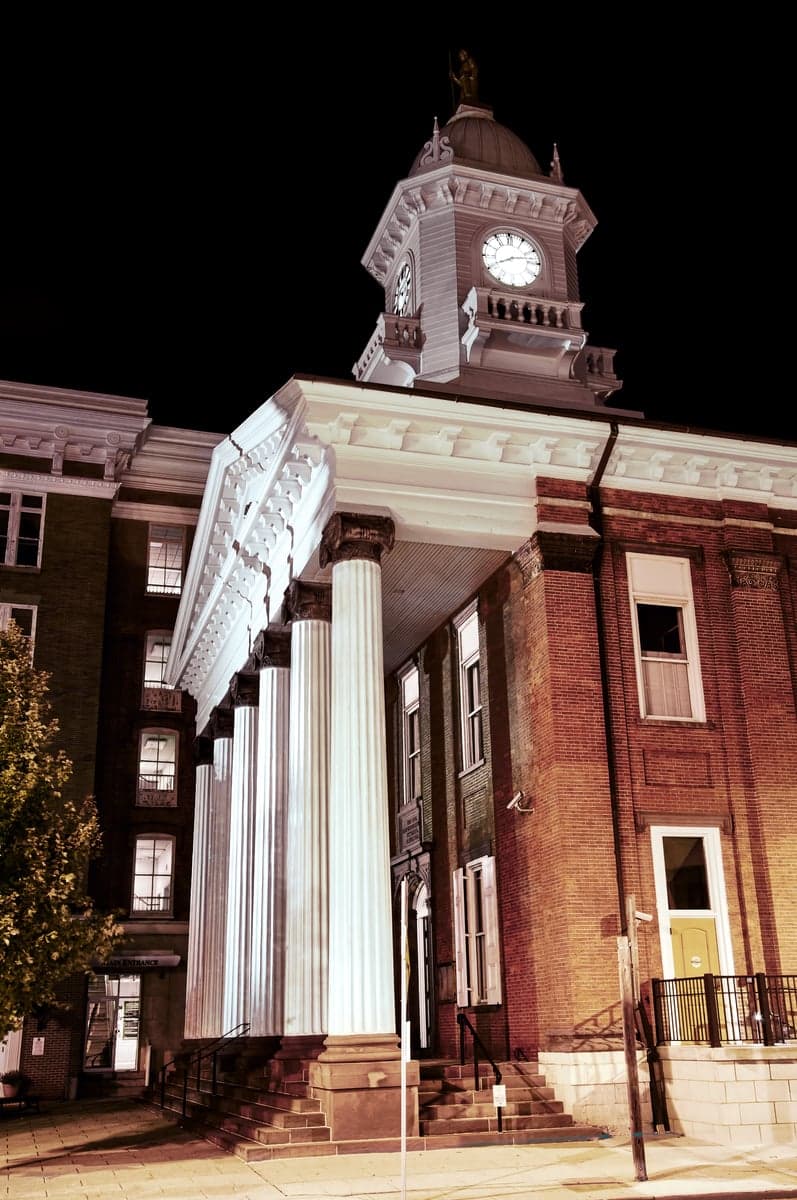
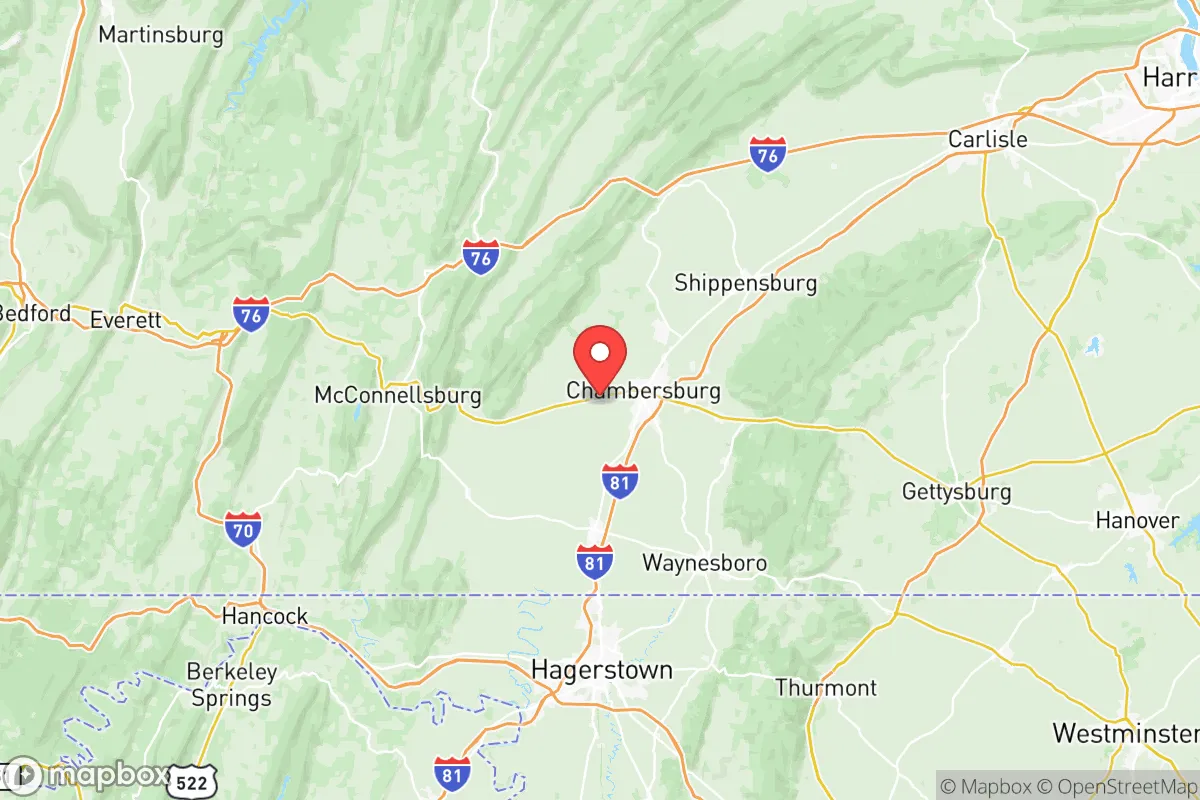
Photo: Wikipedia
Personal Sovereignty in Franklin County
Strong independent fundamentals that actively favor personal liberty and low regulation.
What does Personal Sovereignty tell us?
Personal Sovereignty measures your capacity for self-reliance and independence with minimal government friction. Higher scores mean fewer barriers between you and the way you want to live... but it assumes you have the space you need and good neighbors.
What does this tell us?
Personal Sovereignty measures your capacity for self-reliance and independence with minimal government friction. Higher scores mean fewer barriers between you and the way you want to live... but it assumes you have the space you need and good neighbors.
State Policy
Energy independence: Net exporter (150% of energy produced in-state)
Personal Liberty
Homesteading

Personal Liberty Analysis
Franklin County, Pennsylvania offers a notably high degree of personal sovereignty, grounded in Pennsylvania’s status as a commonwealth with strong preemption laws and a deeply rooted culture of self-reliance. The county’s regulatory environment is generally light-touch, particularly outside its boroughs, and its tax burden is moderate compared to neighboring states like Maryland and New Jersey. For individuals and families prioritizing autonomy in daily life—from self-defense to homesteading—Franklin County presents a practical balance of rural freedom and access to regional infrastructure, with distinct differences between communities like Chambersburg, Waynesboro, Greencastle, Mercersburg, and the more rural townships surrounding them.
Tax burden and regulatory posture in Franklin County
Franklin County’s overall tax burden is competitive for the Mid-Atlantic region. Pennsylvania’s flat state income tax rate of 3.07% is among the lowest in the nation, and the state does not tax retirement income, including Social Security, pensions, and 401(k) withdrawals—a significant advantage for retirees and those seeking financial independence. Local property taxes vary by municipality: Chambersburg Area School District levies a millage rate around 14.5 mills, while Waynesboro Area School District is slightly lower at roughly 13.2 mills. The county’s sales tax is the standard 6% state rate, with no additional local sales tax. Regulatory posture is generally permissive, especially in unincorporated townships like Guilford Township and Antrim Township, where zoning is minimal and business licensing is straightforward. The boroughs—Chambersburg, Waynesboro, Greencastle, and Mercersburg—have more structured zoning and building codes, but still maintain a relatively business-friendly environment compared to urban centers in Pennsylvania or the Northeast corridor.
Self-defense and gun law specifics in Franklin County
Pennsylvania is a shall-issue state for concealed carry permits, meaning Franklin County’s sheriff must issue a License to Carry Firearms (LTCF) to any qualified applicant—no discretion, no waiting period beyond processing. The county sheriff’s office in Chambersburg processes applications efficiently, typically within a few weeks. Open carry is legal without a permit, though a permit is required to carry a concealed firearm in a vehicle. Franklin County is a strong Second Amendment community, with multiple gun shops, ranges, and training facilities located in and around Chambersburg, Waynesboro, and Greencastle. The county has no local ordinances restricting firearm possession beyond state law, and there are no magazine capacity bans or assault weapon restrictions at the county level. Stand-your-ground law applies in Pennsylvania, and Castle Doctrine protections are robust—no duty to retreat in one’s home or vehicle. For residents of rural townships like Lurgan Township or Fannett Township, firearm ownership is a routine part of daily life, and the culture is markedly more permissive than in nearby Maryland or New Jersey.
Self-reliance and homesteading viability in Franklin County
Homesteading and off-grid living are feasible in Franklin County, particularly in its rural townships. Minimum lot sizes vary: Antrim Township requires one-acre minimums for residential development, while Guilford Township allows half-acre lots in some zones. In more remote areas like Fannett Township and Metal Township, five- to ten-acre parcels are common, and zoning is minimal—often no building permits are required for agricultural structures. Off-grid feasibility is high: wells and septic systems are standard, and solar panel installation is unrestricted in unincorporated areas. The county does not impose specific bans on rainwater collection, and backyard chickens and small livestock are permitted in most townships, though boroughs like Chambersburg and Waynesboro have more restrictive ordinances on farm animals. Mercersburg, a smaller borough, allows chickens with a permit and has a more rural character than the larger towns. For those seeking true self-reliance, the townships west of the Tuscarora Mountain—such as Lurgan Township and Fannett Township—offer the most freedom, with minimal government oversight and abundant land.
Personal liberties in Franklin County
Parental rights in Pennsylvania are generally strong, with no state-level mandates for comprehensive sex education or critical race theory in K-12 curricula. Franklin County’s school districts—Chambersburg Area, Waynesboro Area, Greencastle-Antrim, and Tuscarora—each have locally elected school boards that set curriculum and policy, giving parents direct influence. Medical autonomy is protected under state law: Pennsylvania does not have a vaccine passport mandate, and while childhood vaccination requirements exist for school entry, medical and religious exemptions are available. Speech and assembly rights are fully protected, and the county has a robust culture of public meetings and civic engagement. Property rights are well-defined, with no county-level rent control or landlord licensing schemes. Eminent domain is rarely exercised outside of infrastructure projects, and property taxes are predictable. The overall legal environment in Franklin County leans toward individual discretion rather than government prescription, particularly in the rural townships where local ordinances are minimal.
Compared to neighboring states like Maryland and New Jersey, Franklin County offers a substantially lighter regulatory touch, lower taxes, and stronger protections for gun rights and property autonomy. Within Pennsylvania, it is more permissive than urbanized counties like Allegheny or Philadelphia, but comparable to other rural counties in the south-central region. For a reader prioritizing personal sovereignty—whether through self-defense, homesteading, or simply living with minimal government interference—Franklin County ranks favorably, with the caveat that borough living involves more rules than township living. The county’s mix of small-town infrastructure and rural openness makes it a practical choice for those seeking independence without complete isolation.

* Values derived from national, state, county, city and local statistics and may differ in a specific area. Last updated: 2026-08-09T13:49:47.000Z
Narrative content on this page is AI-generated and may contain mistakes. Verify any details that matter before acting on them.
ReloMaps may earn a commission from affiliate links at no extra cost to you.

