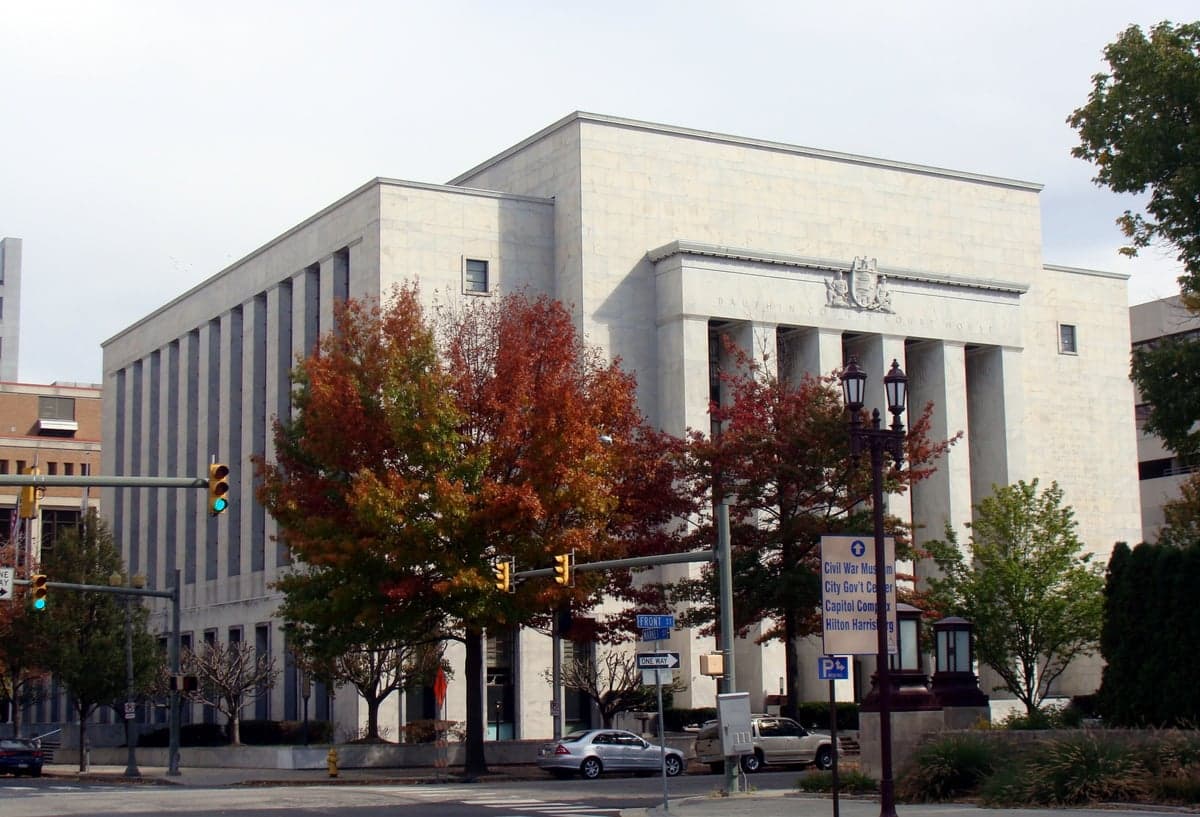
Photo: Wikipedia
Quality of Life in Dauphin County
A livable area that tracks near national norms for affordability, walkability, and neighborhood health.
What does Quality of Life tell us?
Quality of Life measures an area by evaluating factors like cost of living, nearby amenities, country club access, airport proximity, socioeconomic signals and neighborhood character. For large states, this is a general average — quality of life can vary dramatically between metro areas, suburbs, and rural communities within the same state.
What does this tell us?
Quality of Life measures an area by evaluating factors like cost of living, nearby amenities, country club access, airport proximity, socioeconomic signals and neighborhood character. For large states, this is a general average — quality of life can vary dramatically between metro areas, suburbs, and rural communities within the same state.
Cost of Living
9% below national average
117%
The Real Cost of Living in Dauphin County for 2026
| Tier | Individual | Family (4) |
|---|---|---|
| Survival | $18k | $35k |
| Comfortable | $43k | $63k |
| Luxury | $132k+ | $205k+ |
| Elite (Top 5%) | $156k+ | $241k+ |
Quality-of-Life Analysis
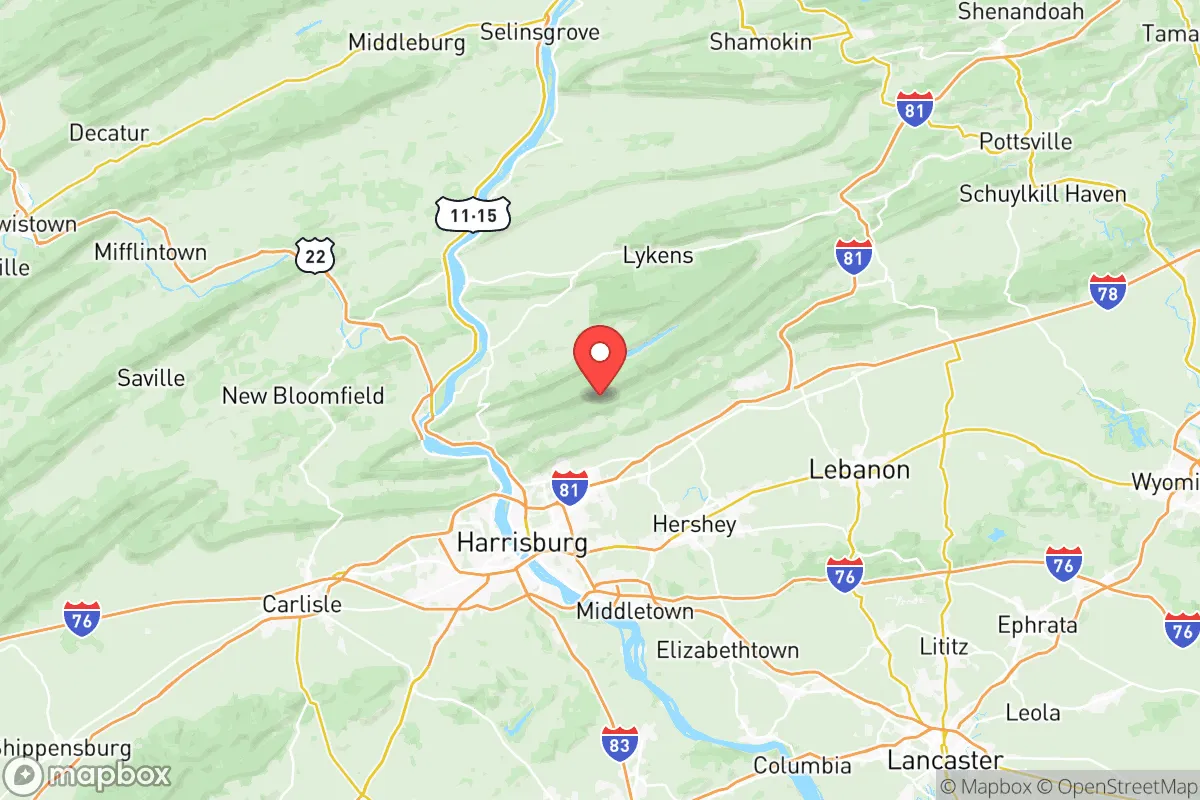
Dauphin County offers one of the most complete quality-of-life spectrums in central Pennsylvania, ranging from the dense, walkable urban core of Harrisburg to quiet, unincorporated farming hamlets like Gratz and Berrysburg. The county’s character shifts dramatically over its 558 square miles, attracting state government professionals and urbanites to the Susquehanna riverfront, suburban families to the sprawling bedroom communities of Lower Paxton and Derry Townships, and rural homesteaders to the agricultural valleys of the northern tier. With a cost of living index of 91 — nine points below the national average — and a median commute of just 21.9 minutes, the county delivers affordability and accessibility that few metro areas can match.
Largest town(s) & population centers
Harrisburg, the state capital and the county’s largest city (pop. ~50,000), anchors the urban end of the spectrum. Daily life here revolves around the Capitol Complex, the Broad Street Market, and a growing restaurant scene along Second Street. Residents walk to work in state government or commute short distances to employers like UPMC Pinnacle and the Harrisburg Area Community College. The city’s historic districts — Midtown, Shipoke, and Allison Hill — offer rowhomes and Victorian houses at prices far below Philadelphia or Pittsburgh, with median home values countywide at $222,300. Hershey (pop. ~14,000) is the county’s second major population center, dominated by the Hershey Company, Hersheypark, and Penn State Health Milton S. Hershey Medical Center, the region’s largest employer. Life in Hershey is more manicured and tourist-oriented, with higher home prices and a dense concentration of restaurants, hotels, and entertainment venues. Steelton (pop. ~6,000) and Middletown (pop. ~9,000) are older industrial boroughs along the Susquehanna, offering more modest housing stock and a blue-collar rhythm, with Middletown also hosting the Harrisburg International Airport and a growing logistics sector.
Smaller towns & rural pockets
Beyond the population centers, Dauphin County contains a network of small boroughs and unincorporated villages that define its quieter side. Hummelstown (pop. ~4,500) is a walkable historic borough just south of Hershey, with a compact downtown, a popular farmers market, and easy access to the Swatara Creek. Palmyra (pop. ~7,500), though partially in Lebanon County, has a Dauphin County portion that feels like a classic small town with a central square and independent shops. Linglestown (unincorporated) and Colonial Park (CDP) are suburban crossroads in the central part of the county, offering mid-century ranches and split-levels on quiet streets. The northern tier of the county — Halifax (pop. ~800), Millersburg (pop. ~2,500), and Elizabethville (pop. ~1,500) — transitions into true rural territory. These towns sit along the Susquehanna’s west bank or in the Appalachian foothills, with economies tied to agriculture, small manufacturing, and tourism from the nearby Appalachian Trail and State Game Lands 211. Gratz and Berrysburg, both in the far north, are unincorporated hamlets where the nearest grocery store may be a 15-minute drive and where residents value privacy and land over convenience.
Cost & lifestyle range
The cost of living in Dauphin County varies significantly by location, though the countywide index of 91 keeps even the priciest areas below national averages. At the high end, Hershey and the western parts of Lower Paxton Township (near the Colonial Park Mall corridor) command median home values above $300,000, with rents often exceeding $1,400 for a two-bedroom. These areas offer the shortest commutes to the medical center and state government jobs, plus top-rated schools in the Derry Township and Central Dauphin districts. At the low end, Steelton and Harrisburg’s Allison Hill and Uptown neighborhoods have median home values under $100,000 and rents as low as $800 for a one-bedroom. The countywide median rent of $1,153 is well below the national median, making Dauphin County one of the more affordable metro areas in the Northeast for renters. Rural areas like Halifax and Elizabethville sit in the middle: home values around $150,000–$200,000, but with higher transportation costs due to longer drives to shopping and employment centers. The average commute of 21.9 minutes masks a wide spread — a Harrisburg resident might walk five minutes to the Capitol, while a Gratz resident may drive 35 minutes to a job in the city.
Dauphin County works best for people who want a genuine choice between urban, suburban, and rural living without leaving a single county. State workers, medical professionals, and remote professionals find the most options in the Harrisburg–Hershey corridor, while retirees and outdoor enthusiasts gravitate toward the northern river towns and farm country. Families seeking good schools and short commutes typically land in the suburban townships around Hershey and Linglestown, while those on tighter budgets or seeking urban grit find opportunity in Harrisburg’s older neighborhoods. The county’s compact geography — you can drive from Gratz to the Capitol in under 45 minutes — means that no resident is ever far from the amenities of the state capital or the quiet of the Appalachian foothills.

Crime in Dauphin County
WARNING: The crime statistics are unreliable for this jurisdiction. Local authorities have either not reported or under reported their data to the FBI. This could be due to bad intentions, incompetence or technical issues. Regardless, we suggest skepticism.
Higher crime rates than 62% of comparable U.S. locations.
Violent CrimeViolent Crime Analysis
Property CrimeProperty Crime Analysis
Crime Analysis
Dauphin County, anchored by the state capital of Harrisburg, presents a mixed safety picture where violent crime rates sit below the national average but property crime exceeds it, creating distinct risk profiles across its urban, suburban, and rural communities. The county's 2024 violent crime rate of 226.5 per 100,000 residents is roughly 35% lower than the U.S. average of 380 per 100,000, while its property crime rate of 1,346.4 per 100,000 runs about 10% above the national figure of 1,220 per 100,000. These countywide averages, however, mask sharp disparities between Harrisburg's concentrated crime and the relative safety of suburbs like Lower Paxton Township, Susquehanna Township, and Derry Township.
Crime in context
Dauphin County's violent crime rate is notably lower than Pennsylvania's statewide average of roughly 300 per 100,000, placing it among the safer mid-sized counties in the commonwealth. Property crime, however, is a more persistent concern: the county's rate exceeds both the state average of approximately 1,200 per 100,000 and the national benchmark. The gap is driven largely by theft and vehicle break-ins in Harrisburg and along the I-83 and I-81 corridors, where transient populations and commercial density create opportunities for property offenses. By comparison, neighboring Cumberland County to the west reports a property crime rate near 1,100 per 100,000, while Perry County to the north sits below 800 per 100,000. Dauphin County's position as a regional transit and government hub—with the Capitol Complex, Penn State Health facilities, and major retail centers—contributes to its elevated property crime numbers, as does the presence of a mid-sized urban core with concentrated socioeconomic challenges.
What residents experience
For most Dauphin County residents, the risk of violent victimization is low, but property crime is a tangible daily concern, particularly in Harrisburg's Allison Hill and Uptown neighborhoods, where burglary and auto theft rates run 2-3 times the county average. Suburban communities like Lower Paxton Township (population ~50,000) report violent crime rates below 100 per 100,000, while Susquehanna Township and Derry Township (home to Hershey) maintain property crime rates under 1,000 per 100,000. The county's District Attorney's office, under a progressive-leaning administration since 2020, has emphasized diversion programs and reduced incarceration for nonviolent offenders—a policy approach that critics argue has contributed to repeat property crime offenders cycling through the system without meaningful deterrence. Residents in Harrisburg's midtown and downtown districts report frequent car break-ins and package thefts, while suburban homeowners in Swatara Township and Colonial Park cite garage burglaries and mail theft as persistent nuisances. The county's 2024 clearance rate for property crime hovers around 18%, well below the national average of 30%, reflecting resource constraints and investigative challenges in a jurisdiction where property crime is often treated as a low-priority offense.
Neighborhood-level variation is pronounced: Harrisburg's violent crime rate of approximately 800 per 100,000—more than triple the county average—concentrates in a handful of census tracts along the Market Street corridor and in the Allison Hill section, while the boroughs of Steelton and Highspire report rates near 400 per 100,000. Conversely, Hershey (Derry Township) and Hummelstown consistently rank among the safest communities in the county, with violent crime rates below 50 per 100,000. For prospective residents, the choice between urban convenience and suburban safety is stark: a home in Harrisburg's Capitol District offers walkability but carries a 1-in-125 annual chance of property crime, while a home in Lower Paxton Township reduces that risk to roughly 1-in-250. The county's progressive judicial philosophy, while well-intentioned, has created a two-tiered safety experience where property crime victims in Harrisburg often see little follow-through, while suburban residents benefit from more responsive policing and lower baseline crime rates.
* Values derived from national, state, county, city and local statistics and may differ in a specific area. Last updated: 2026-06-27T15:24:27.000Z
Narrative content on this page is AI-generated and may contain mistakes. Verify any details that matter before acting on them.
ReloMaps may earn a commission from affiliate links at no extra cost to you.

