Photo: Wikipedia
Political ClimatePolitical Climate in Centre County
Showing district-level results — no local-only data available.
Local Political AnalysisPolitical Analysis of Centre County
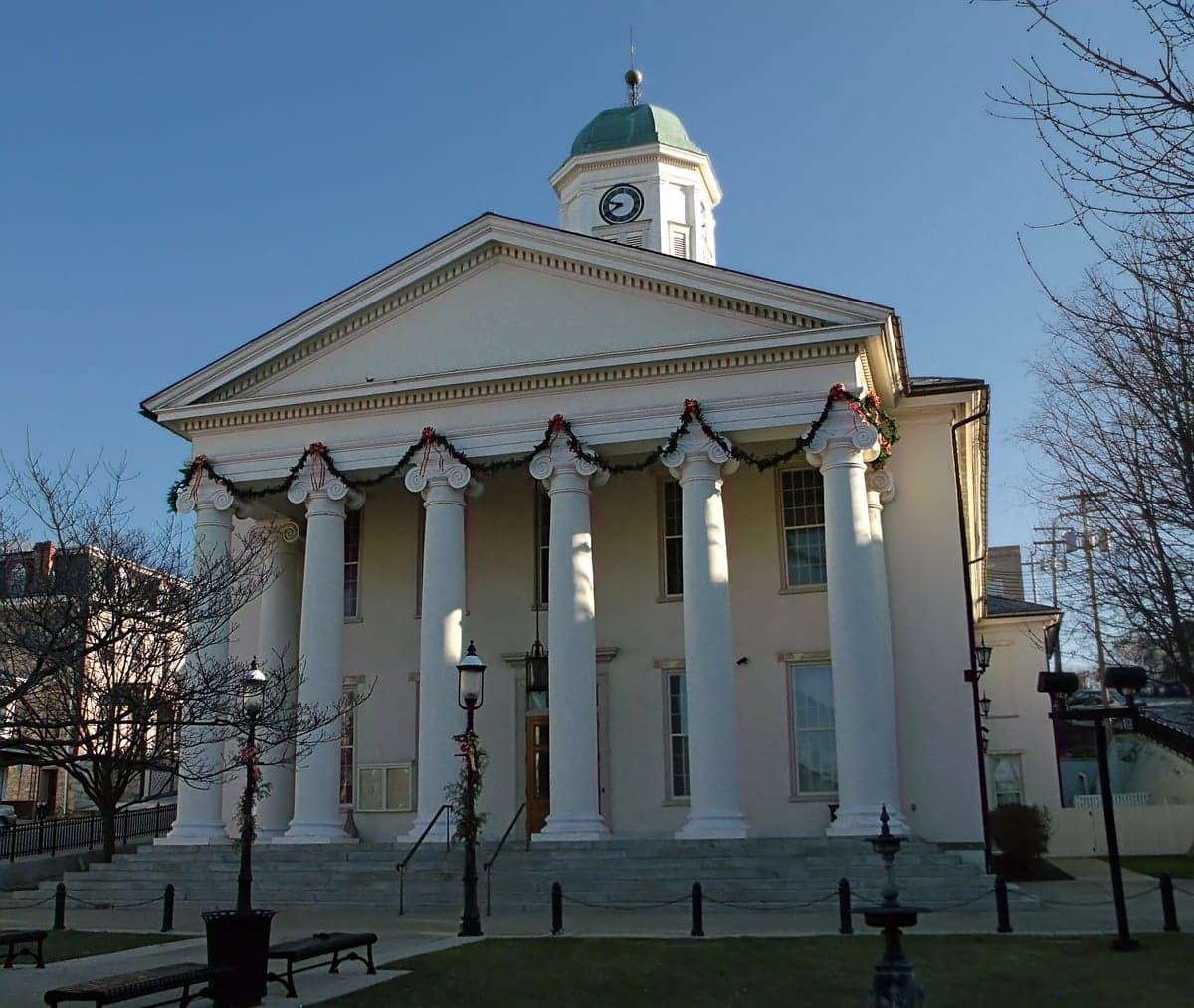
Centre County, Pennsylvania, is a classic political battleground where a deep-red rural base clashes with a deep-blue college town, making its overall Cook PVI of R+19 a bit misleading. The county is dominated by two vastly different worlds: the sprawling, conservative farmland and small towns that reliably vote Republican, and the borough of State College, home to Penn State University, which is one of the most liberal enclaves in the entire state. This split means the county's political trajectory isn't a simple march in one direction; it's a tug-of-war that gets more intense with every election cycle, with the growing student population and the steady, older rural population pulling in opposite directions.
How it compares
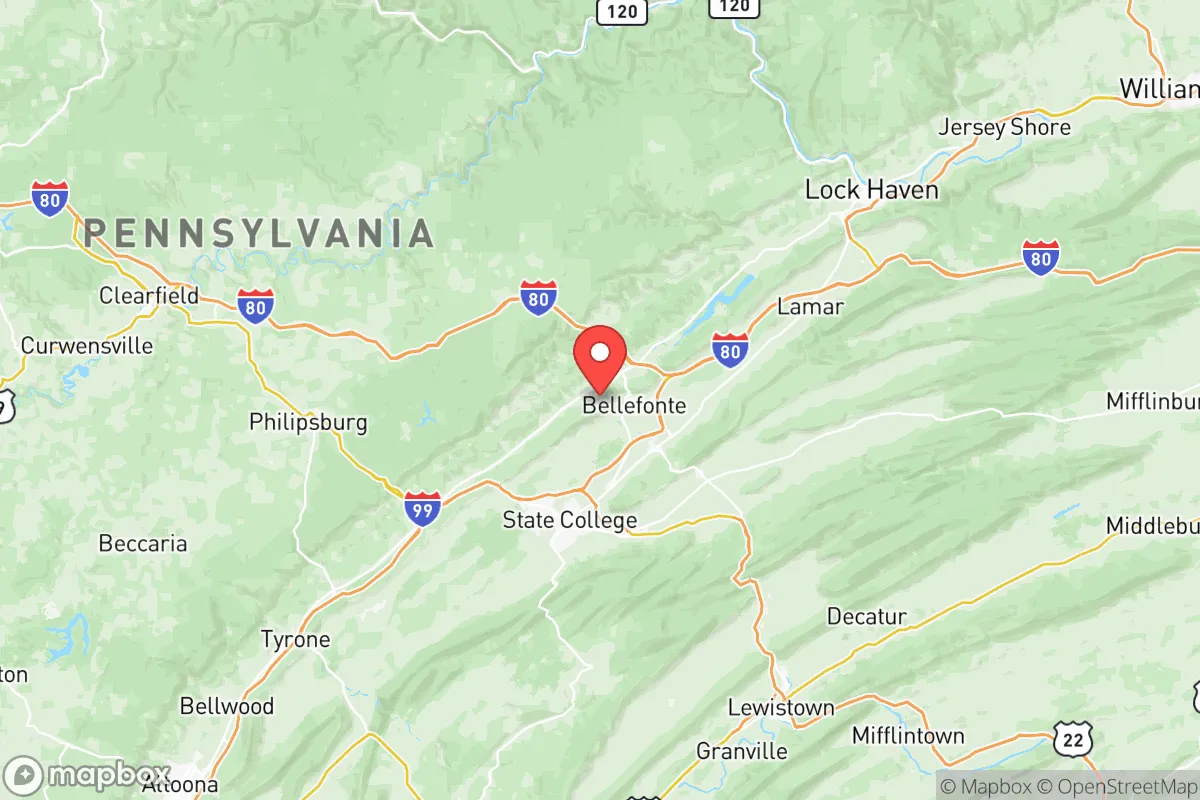
While Pennsylvania as a whole is a perfect toss-up with a Cook PVI of EVEN, Centre County is a far more polarized place. The state's swing-voter dynamic is largely driven by the Philadelphia and Pittsburgh suburbs, but Centre County's politics are a microcosm of the urban-rural divide itself. In State College, you'll find precincts that vote over 80% Democratic, mirroring the bluest parts of Philadelphia. Drive 15 minutes in almost any direction, however, and you hit towns like Bellefonte, Boalsburg, or Pleasant Gap, where the vote flips to 65-70% Republican. The swing precincts aren't really in the middle; they're in the rapidly developing townships immediately surrounding State College, like Patton Township and Ferguson Township, where new housing developments are bringing in a mix of university-affiliated families and local professionals, creating the county's only true competitive races. The county's R+19 rating is a mathematical average that hides the reality that there is almost no political middle ground here—you're either in a deep-blue island or a deep-red sea.
What this means for residents
For a conservative resident in Bellefonte or Millheim, the county feels reliably red for local races, with the county commission and row offices typically held by Republicans. However, they live with the constant knowledge that the state-level political power is often decided by the very different electorate in State College. For a liberal resident in State College, the experience is the opposite: you live in a progressive bubble where local politics are fiercely contested, but you are acutely aware that your vote is often canceled out by the surrounding townships in county-wide and state-level races. This creates a unique dynamic where both sides feel like a political minority in different contexts. The practical effect is that local policy debates—over land use, school funding, and infrastructure—are often proxies for this larger cultural clash, with the university's growth and its impact on the rural character of the county being the perennial hot-button issue.
Culturally, this split is visible in everything from the local news coverage to the restaurant scene. State College is a transient, globally-minded community where the university's calendar dictates the rhythm of life, while the rest of the county is deeply rooted in Pennsylvania's agricultural and small-town traditions. This isn't a place where you'll find a unified "Centre County identity" in a political sense. Instead, residents navigate a daily reality of two distinct communities sharing a ZIP code, a dynamic that makes the area politically fascinating but also, at times, genuinely contentious. The long-term trajectory will likely hinge on whether the university's growth continues to spill over into the surrounding townships, slowly turning those swing precincts blue, or whether the rural areas manage to maintain their political and cultural dominance through sheer geographic size and consistent turnout.

State Political ClimatePolitical Climate in Pennsylvania
State Political AnalysisPolitical Environment in the State
Pennsylvania is the ultimate swing state, with a Cook PVI of EVEN that perfectly captures its 50-50 split. Over the last 20 years, it has shifted from a reliably blue-leaning state in presidential races to a true battleground, flipping from Obama (2008, 2012) to Trump (2016) to Biden (2020) and back to a razor-thin margin in 2024. The state’s political soul is defined by the collision of the deindustrialized, union-heavy west (Pittsburgh), the sprawling, liberal-leaning southeast (Philadelphia and its suburbs), and a vast, conservative rural and exurban middle that has grown increasingly Republican. For a relocator, this means your experience of Pennsylvania’s politics will depend almost entirely on which of the state’s distinct regions you land in.
Urban vs. rural divide
The political map of Pennsylvania is a story of three distinct regions. Philadelphia and its collar counties (Montgomery, Chester, Delaware, Bucks) are the Democratic engine, delivering massive margins that the rest of the state must overcome. Pittsburgh and its immediate suburbs (Allegheny County) are similarly blue, though with a more working-class, union flavor. The vast middle of the state — from Erie down through Centre County (home to Penn State) and across the Susquehanna Valley to the northern tier — is deeply red. Lancaster County, once a Republican stronghold, has become a bellwether, shifting rightward as its Amish and Mennonite populations vote in higher numbers, while the city of Lancaster itself has grown more liberal. The real action is in the "collar counties" around Philadelphia, which have been trending left for a decade, while the rural north and west have swung hard right. A relocator moving to State College will find a blue island in a red sea, while someone settling in York or Lebanon will experience a more conservative, exurban environment.
Policy environment
Pennsylvania’s policy landscape is a patchwork. The state has a flat income tax rate of 3.07%, which is relatively low and attractive to conservatives, but property taxes are among the highest in the nation, varying wildly by school district. There is no state sales tax on most clothing and groceries, but the base rate is 6%. The regulatory posture is moderate; Pennsylvania is not a "right-to-work" state, meaning unions retain significant power, particularly in the public sector and construction trades. Education policy is highly localized, with school funding a perennial battleground; the state was recently ordered by a court to overhaul its funding system, which could lead to higher taxes in wealthier districts. Election laws are a flashpoint: the state has no-excuse mail-in voting (passed in 2019 with bipartisan support), but it remains controversial, and voter ID laws are relatively weak (first-time voters must show ID, but regular voters do not). For a conservative relocator, the lack of a right-to-work law and high property taxes are notable drawbacks, while the flat income tax and absence of a state-level estate tax are positives.
Recent policy direction
The last five years have seen Pennsylvania lurch in both directions. On gun rights, the state is a mixed bag: it has preemption laws that prevent local municipalities from enacting their own gun bans, a win for conservatives, but it also has universal background checks for handguns and a "red flag" law (Act 18 of 2023) that allows courts to temporarily remove firearms from individuals deemed a threat. On education, the state expanded school choice through the Educational Improvement Tax Credit (EITC) program, but a full school voucher bill failed in 2023. Parental rights have become a major issue, with several school boards in conservative areas like Central Bucks County adopting policies on library books and transgender student participation in sports. On medical and bodily autonomy, abortion remains legal up to 24 weeks, and the state has not followed the post-Dobbs trend of restrictive bans, though the governor (Josh Shapiro, a Democrat) has vetoed Republican attempts to limit it. Property rights are generally strong, but the state’s Marcellus Shale gas boom has created tension between mineral rights owners and environmental regulations. Voting access has been a seesaw: the 2020 election saw massive use of mail-in ballots, leading to Republican calls for repeal, but the law remains in place. For a relocator, the key takeaway is that Pennsylvania is a state where your rights can vary dramatically depending on your county and municipality, especially on issues like firearms and school curriculum.
Civil unrest & political movements
Pennsylvania has been a focal point for national political movements. The 2020 election aftermath saw massive protests in Philadelphia and Harrisburg, with both left-wing (Black Lives Matter) and right-wing (Stop the Steal) demonstrations. The state was ground zero for election integrity controversies, with Republican-led audits in counties like Lycoming and Berks drawing national attention. Immigration politics are less intense than in border states, but sanctuary city policies in Philadelphia have been a flashpoint, with the state legislature passing bills to withhold funding from such cities (vetoed by the governor). The fracking debate is a constant undercurrent, with environmental activists in Pittsburgh and Philadelphia clashing with industry supporters in the western and northern counties. Secession or nullification rhetoric is minimal, but there is a strong "state's rights" sentiment in rural areas, particularly around gun laws and pandemic mandates. A new resident in Erie or Scranton will see a more muted version of these tensions, while someone in Philadelphia’s suburbs will encounter active school board and local government debates on a near-weekly basis.
Projection
Over the next 5-10 years, Pennsylvania is likely to remain a toss-up, but the demographic trends favor a slow leftward drift in the suburbs and a hardening of the rural right. The Philadelphia collar counties are growing and diversifying, while the rural north and west are aging and shrinking. In-migration from blue states like New York and New Jersey is accelerating in the Lehigh Valley (Allentown, Bethlehem) and the Pocono region, which could shift those areas leftward. However, the conservative exurbs of Harrisburg and York are also growing, driven by families seeking lower costs and more space. The wild card is the state’s energy policy: if natural gas prices remain high, the western counties could see an economic revival that slows their political drift. For a relocator, the realistic expectation is that Pennsylvania will remain a purple state with a conservative-leaning legislature and a Democratic governor for the foreseeable future, meaning gridlock on major policy changes. The practical effect is that your day-to-day life will be shaped more by your local school board and county commissioners than by Harrisburg.
For a new resident, the bottom line is that Pennsylvania offers a genuine choice: you can live in a deep-blue city like Philadelphia or a deep-red rural county like Bedford, and your political experience will be entirely different. The state’s even split means that neither side gets everything it wants, but both sides have real power. If you value local control and are willing to engage in school board and municipal politics, you can have a significant impact. If you prefer a state where one party dominates, Pennsylvania will frustrate you. It is a state of constant negotiation, and that is both its strength and its weakness.
* Values derived from national, state, county, city and local statistics and may differ in a specific area. Last updated: 2026-08-09T14:23:24.000Z
Narrative content on this page is AI-generated and may contain mistakes. Verify any details that matter before acting on them.
ReloMaps may earn a commission from affiliate links at no extra cost to you.

