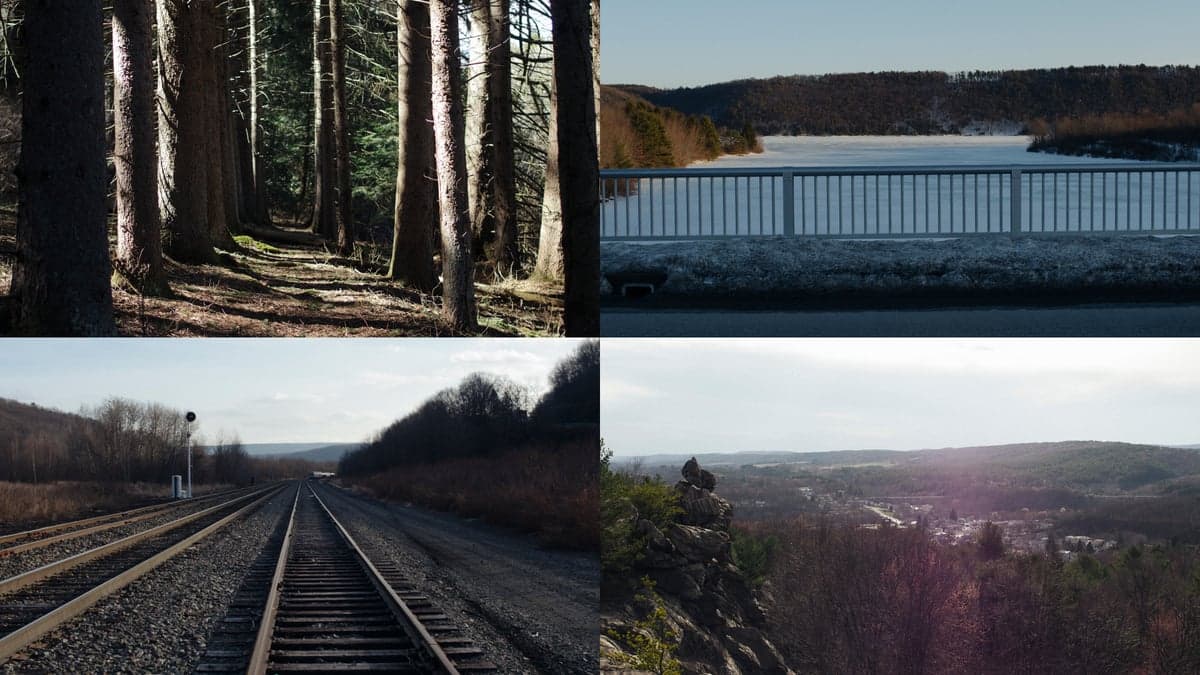
Photo: Wikipedia
Political ClimatePolitical Climate in Carbon County
Showing district-level results — no local-only data available.
Local Political AnalysisPolitical Analysis of Carbon County
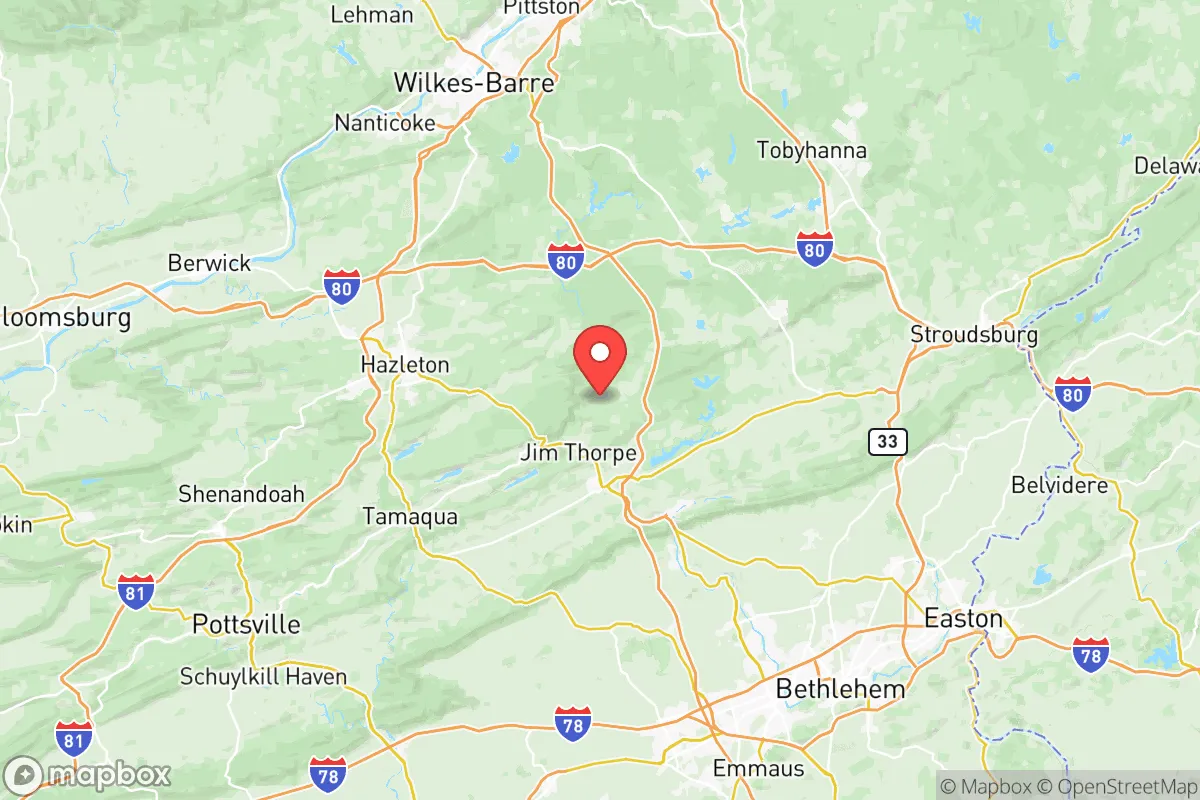
Carbon County sits politically at a knife’s edge, with a Cook Partisan Voting Index of R+1 that makes it one of the most evenly divided counties in Pennsylvania. That R+1 rating means the county has voted about one point more Republican than the national average in recent presidential elections, but the real story is how that margin has shifted. In 2020, Donald Trump carried Carbon County by roughly 16 points over Joe Biden, a narrower margin than his 2016 victory there, and in 2024 the county again went for Trump but by a slightly smaller spread than many neighboring rural counties. The trend line is subtle but real: Carbon County is inching toward the center, even as the rest of Pennsylvania’s coal region has hardened into deep red territory.
How it compares
Pennsylvania as a whole has a Cook PVI of EVEN, meaning it votes almost exactly in line with the national average. Carbon County’s R+1 is therefore nearly identical to the state’s overall partisan balance, but the county’s internal geography tells a more complex story. The borough of Jim Thorpe, the county seat, leans reliably Democratic, often voting 10-15 points bluer than the county average, driven by a mix of state workers, artists, and second-home owners from New York and New Jersey. In contrast, Lehighton and Palmerton are more conservative, with Lehighton’s precincts routinely going 20 points redder than Jim Thorpe’s. The swing precincts are in the rural townships like Franklin Township and Mahoning Township, where ticket-splitting is common—these areas backed Trump but also voted for Democratic state representative candidates in 2022 and 2024. Compared to neighboring Luzerne County (R+4) or Schuylkill County (R+9), Carbon County is noticeably more purple, a relic of its union-heavy history and the lingering influence of moderate Democrats in the region.
What this means for residents
For conservative residents, Carbon County’s R+1 lean means their votes matter in a way they wouldn’t in a deep-red county. Local Republican committee members are highly active because a few hundred votes can flip a township supervisor race or a school board seat. For liberal residents, the county’s purple status means they’re not completely isolated—Jim Thorpe and parts of Nesquehoning provide social and political footholds, but they still face a county commission that has been Republican-controlled since 2019. The practical effect is that both sides have to engage in actual coalition-building rather than relying on a permanent majority. School board meetings in the Lehighton Area School District and Panther Valley School District have become battlegrounds over curriculum and library books, reflecting the same national divides but at a hyper-local scale.
Culturally, Carbon County retains a strong independent streak that predates the current partisan era. The area’s history as a coal and railroad hub means many families have deep roots in labor unions, which still influence local Democratic politics even as national Democrats have lost ground here. The county’s gun culture is robust—open carry is common in rural areas—but there’s also a live-and-let-live attitude in Jim Thorpe, where the annual Fall Foliage Festival draws a diverse crowd. Policy-wise, the county government has focused on infrastructure and tourism promotion rather than culture-war issues, a pragmatic approach that reflects the tight margins. The biggest political distinction from the rest of Pennsylvania is the county’s resistance to the fracking boom that transformed parts of the western and northern tier—Carbon County has seen relatively little drilling, and local opinion remains split between economic opportunity and environmental concerns tied to the Lehigh River watershed.

State Political ClimatePolitical Climate in Pennsylvania
State Political AnalysisPolitical Environment in the State
Pennsylvania is the ultimate swing state, with a Cook PVI of EVEN that perfectly captures its knife’s-edge balance. Over the past 20 years, the state has shifted from reliably blue in presidential races (voting Democratic from 1992 through 2012) to a true battleground, with Donald Trump flipping it in 2016 and Joe Biden narrowly reclaiming it in 2020. The dominant coalitions are a shrinking, union-heavy Democratic base in the southeast and southwest, versus a growing, populist-leaning Republican coalition across the vast rural and exurban middle. For a conservative relocator, the state offers a mixed bag: culturally conservative small towns and suburbs, but a policy environment that often tilts toward the progressive priorities of Philadelphia and Pittsburgh.
Urban vs. rural divide
The political map of Pennsylvania is a tale of two states. The Democratic strongholds are Philadelphia (which delivered over 80% of its vote to Biden in 2020) and its collar counties like Delaware and Montgomery, plus Pittsburgh and its immediate suburbs in Allegheny County. These metros drive the state’s blue vote, fueled by dense, diverse populations and strong union and academic presences. In contrast, the vast rural interior—places like Lancaster County, York County, and the northern tier around Williamsport—vote overwhelmingly Republican. The key battlegrounds are the “collar counties” around Philadelphia (Bucks, Chester, and Montgomery) and the old industrial towns of the Lehigh Valley (Allentown, Bethlehem, Easton). These areas have been trending blue as suburban professionals move in, but they still have significant conservative pockets. The 2020 election saw Erie County flip back to blue after voting for Trump in 2016, while Luzerne County (Wilkes-Barre) stayed red, showing how the old coal country remains a Republican anchor.
Policy environment
Pennsylvania’s policy landscape is a patchwork. The state has a flat income tax of 3.07%, which is relatively low and popular with conservatives, but property taxes are among the highest in the nation—averaging around 1.5% of home value, with significant variation by county. There is no state sales tax on groceries or clothing, but the base rate is 6%. The regulatory posture is moderate: the state is not a right-to-work state, but union membership has declined to about 12% of the workforce. Education policy is a flashpoint: the state uses a funding formula that heavily favors wealthy districts, leading to a 2023 court ruling that the system is unconstitutional and must be reformed. School choice is limited, with only a small tax-credit scholarship program for low-income students. Healthcare is dominated by large systems like UPMC and Jefferson Health, and the state expanded Medicaid under the ACA. Election laws are relatively accessible: no-excuse mail-in voting was enacted in 2019 (Act 77), but it remains controversial among conservatives, with ongoing legal battles over signature verification and drop box rules.
Recent policy direction
The last five years have seen Pennsylvania lurch in a progressive direction on several fronts, though with significant pushback. In 2022, Governor Josh Shapiro signed an executive order banning discrimination based on sexual orientation and gender identity in state employment, and the state’s Human Relations Commission has interpreted existing law to cover LGBTQ+ protections. On gun rights, Pennsylvania is a “shall issue” state for concealed carry, and preemption laws prevent local municipalities from enacting their own bans—a win for conservatives. However, in 2023, the legislature passed a bill to require universal background checks for long guns (still awaiting action). On education, the 2023 court ruling on funding is likely to lead to higher taxes in wealthy suburbs to redistribute to poorer districts. Parental rights have been a hot topic: several school boards in conservative areas like Central Bucks County have passed policies requiring parental notification for changes to a student’s gender identity, but these are being challenged in court. Medical freedom saw a win with the 2023 repeal of the state’s 18th-century ban on abortion, but the procedure remains legal up to 24 weeks. On voting, Act 77’s mail-in provisions remain in place, but the state Supreme Court has ruled that undated or misdated ballots can be counted, a decision that frustrates election integrity advocates. Property rights are generally strong, with no statewide rent control, though Philadelphia has its own tenant protections.
Civil unrest & political movements
Pennsylvania has seen its share of political flashpoints. The 2020 election aftermath was intense: Trump’s campaign filed numerous lawsuits challenging results in Philadelphia and Allegheny counties, and the state legislature held contentious hearings on election integrity. In 2021, a “Stop the Steal” rally at the state capitol in Harrisburg drew thousands. On the left, the Black Lives Matter protests in Philadelphia in 2020 were large and occasionally violent, leading to property damage and a lasting debate over police funding. Immigration politics are relatively quiet compared to border states, but Philadelphia is a self-declared “sanctuary city,” limiting cooperation with ICE, which frustrates conservatives in the rest of the state. There is no serious secessionist movement, but rural counties have passed resolutions declaring themselves “Second Amendment sanctuaries,” vowing not to enforce any future gun restrictions. The most visible flashpoint for a new resident would be the constant political advertising: Pennsylvania is the most expensive media market for political ads in the country during presidential cycles, so expect your TV and mailbox to be flooded every two years.
Projection
Over the next 5-10 years, Pennsylvania is likely to remain a toss-up, but with a slight rightward drift. In-migration is modest compared to Sun Belt states, but the people moving in tend to be younger and more diverse, settling in the Philadelphia and Pittsburgh suburbs, which helps Democrats. However, the rural and exurban areas are growing faster in raw numbers, and the state’s population is aging, with older voters leaning Republican. The key demographic wildcard is the Latino population, which is growing rapidly in places like Reading and Allentown; these voters are not reliably Democratic and could swing the state if Republicans make inroads. The state’s electoral map is likely to stay similar, with the “blue wall” of Philadelphia, Pittsburgh, and their suburbs barely holding against the red tide of the rest of the state. A conservative moving in now should expect a state where their vote matters enormously, but where policy wins will be incremental and fought in the courts and legislature, not sweeping.
For a new resident, the bottom line is that Pennsylvania offers a genuine swing-state experience. If you’re conservative, you’ll find deep cultural alignment in the small towns and many suburbs, but you’ll need to accept that state-level policy will often be a compromise—high property taxes, a functioning mail-in voting system, and progressive policies in the big cities. If you’re liberal, you’ll have strong urban anchors but will face an uphill battle in the legislature. The practical takeaway: your vote truly counts here, and your daily life will be shaped by the county you choose, not the state as a whole. Pick your county carefully—Lancaster for a conservative community, Chester for a moderate suburban mix, or Philadelphia for a deep blue urban experience—and you’ll find a place that fits.
* Values derived from national, state, county, city and local statistics and may differ in a specific area. Last updated: 2026-10-20T22:11:37.000Z
Narrative content on this page is AI-generated and may contain mistakes. Verify any details that matter before acting on them.
ReloMaps may earn a commission from affiliate links at no extra cost to you.

