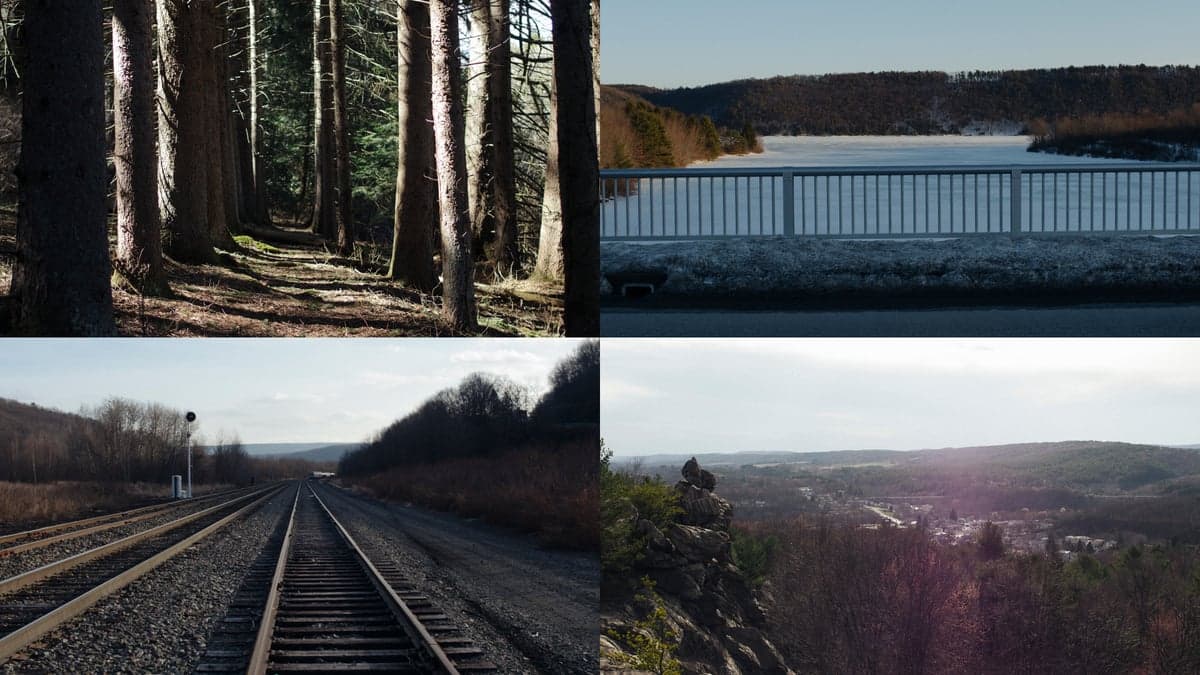
Photo: Wikipedia
Personal Sovereignty in Carbon County
Strong independent fundamentals that actively favor personal liberty and low regulation.
What does Personal Sovereignty tell us?
Personal Sovereignty measures your capacity for self-reliance and independence with minimal government friction. Higher scores mean fewer barriers between you and the way you want to live... but it assumes you have the space you need and good neighbors.
What does this tell us?
Personal Sovereignty measures your capacity for self-reliance and independence with minimal government friction. Higher scores mean fewer barriers between you and the way you want to live... but it assumes you have the space you need and good neighbors.
State Policy
Energy independence: Net exporter (150% of energy produced in-state)
Personal Liberty
Homesteading

Personal Liberty Analysis
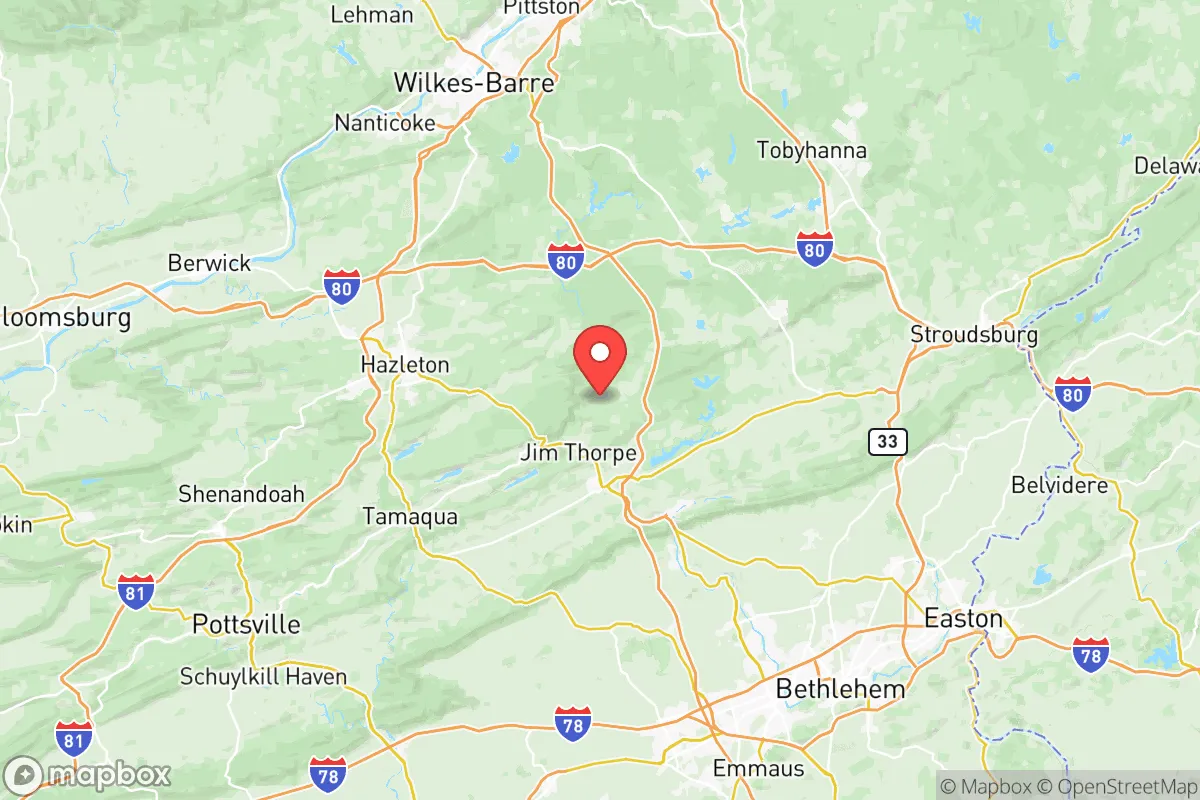
Carbon County, Pennsylvania offers a notably high degree of personal sovereignty compared to the urbanized corridors of the state, with a regulatory environment that generally favors individual autonomy in land use, self-defense, and daily life. Nestled in the coal region of the Poconos, the county’s mix of small towns, rural townships, and state forest land creates a landscape where residents can exercise significant control over their property and lifestyle. For those prioritizing personal freedom—whether through homesteading, carrying a firearm, or minimizing government interference—Carbon County presents a compelling option within a state that balances local control with commonwealth-level mandates.
Tax burden and regulatory posture in Carbon County’s local governments
Carbon County’s tax burden is moderate by Pennsylvania standards, with a county-wide real estate tax rate of approximately 0.5% of assessed value, plus separate municipal and school district taxes that vary by locality. The county’s total effective property tax rate hovers around 1.5-2.0% of market value, which is lower than the Philadelphia suburbs but higher than some rural counties in the state’s northern tier. The regulatory posture is heavily influenced by municipal zoning: townships like Kidder Township and Penn Forest Township have relatively permissive zoning codes that allow for agricultural uses, home-based businesses, and accessory structures without excessive permitting, while boroughs such as Jim Thorpe and Lehighton impose stricter rules on setbacks, lot coverage, and commercial activity. The county’s lack of a county-wide building code beyond the state’s Uniform Construction Code means that many rural properties can be developed with minimal bureaucratic hurdles, especially in unzoned townships like East Penn Township, where land-use decisions are made on a case-by-case basis by the board of supervisors. Pennsylvania’s Right-to-Farm Act provides strong protections for agricultural operations, shielding landowners from nuisance lawsuits if they follow standard farming practices—a key advantage for those pursuing self-reliant lifestyles.
Self-defense and gun law specifics in Carbon County
Pennsylvania is a shall-issue state for concealed carry permits, and Carbon County’s sheriff’s office processes applications efficiently, typically within 45 days. The county has a strong gun-friendly culture, with multiple shooting ranges and gun shops in towns like Nesquehoning and Palmerton. Open carry is legal without a permit for anyone who can legally possess a firearm, though local ordinances in Jim Thorpe and Lehighton restrict carrying in municipal parks and government buildings. The county’s rural character means that firearm ownership is common, and there is no local push for additional restrictions beyond state law. Pennsylvania’s Castle Doctrine provides a strong legal presumption that a homeowner using deadly force against an intruder acted in self-defense, and the state’s Stand Your Ground law eliminates any duty to retreat in public spaces where one is lawfully present. For residents of Weatherly or Bowmanstown, where police response times can exceed 15-20 minutes in remote areas, the ability to defend oneself without legal ambiguity is a practical necessity. The county’s sheriff also issues licenses to carry firearms (LTCF) with minimal hassle, and renewal is straightforward via mail or in person.
Self-reliance and homesteading viability: lot sizes, zoning, and off-grid feasibility
Homesteading and off-grid living are viable in large portions of Carbon County, particularly in the more rural townships. Minimum lot sizes vary dramatically: in Penn Forest Township, residential lots can be as small as 1 acre in some subdivisions, while agricultural zones in East Penn Township require at least 2 acres for a single-family home. For those seeking true self-reliance, unzoned townships like Kidder Township allow for a wide range of uses, including raising livestock, keeping bees, and operating small-scale farms, without the need for special permits. Off-grid feasibility is high in areas without public water and sewer connections—many properties in the county rely on private wells and septic systems, and there is no county-wide mandate to connect to municipal utilities. Solar panels are permitted without restriction in most townships, though some homeowners’ associations in newer subdivisions may impose covenants. The county’s abundance of state game lands and the Lehigh Gorge State Park provide opportunities for hunting, foraging, and timber harvesting, which supplement a self-reliant lifestyle. However, residents should note that Pennsylvania’s building code requires permits for structural additions, and any dwelling must meet basic safety standards, which can be a hurdle for those building entirely from scratch. The county’s agricultural preservation program also limits subdivision of farmland, so buyers should verify deed restrictions before purchasing large parcels.
Personal liberties: parental rights, medical autonomy, speech, and property
Pennsylvania law generally respects parental rights in education and healthcare, though the state has mandatory vaccination requirements for school attendance and a child abuse reporting law that can trigger investigations for alternative medical practices. Carbon County’s school districts—including Jim Thorpe Area, Lehighton Area, and Panther Valley—have not adopted the more restrictive curriculum mandates seen in some urban districts, and parents have significant leeway to opt children out of specific lessons or activities. Medical autonomy is limited by state licensing requirements; while the county has a few holistic health practitioners, access to alternative treatments like ivermectin or off-label prescriptions is constrained by pharmacy policies rather than local regulation. Free speech is robustly protected, with no local ordinances restricting political expression or public assembly beyond standard time, place, and manner rules. Property rights are strong, with Pennsylvania’s Private Property Rights Protection Act requiring compensation for any regulatory taking that reduces property value by more than 50%. The county’s relatively low population density (about 65,000 residents across 387 square miles) means that neighbors are generally respectful of personal boundaries, and disputes over noise, livestock, or land use are rare. The absence of a county-wide noise ordinance or light pollution regulation further enhances personal freedom for those living in rural areas.
Overall, Carbon County offers a level of personal sovereignty that is significantly higher than in Pennsylvania’s urban centers like Philadelphia or Pittsburgh, but slightly lower than in the most libertarian-leaning counties in the state’s northern tier, such as Tioga or Potter. The county’s mix of permissive rural townships and more regulated boroughs means that individuals can choose their level of government involvement by selecting the right municipality. For a relocation-minded reader who values self-reliance, gun rights, and minimal interference in daily life, Carbon County provides a balanced environment where personal freedom is the default, not the exception.

* Values derived from national, state, county, city and local statistics and may differ in a specific area. Last updated: 2026-10-20T22:11:37.000Z
Narrative content on this page is AI-generated and may contain mistakes. Verify any details that matter before acting on them.
ReloMaps may earn a commission from affiliate links at no extra cost to you.

