Photo: Wikipedia
Demographics of Bedford County
Affluence Level in Bedford County
A middle-class area roughly in line with national averages across income, home values, education, and employment.
People of Bedford County
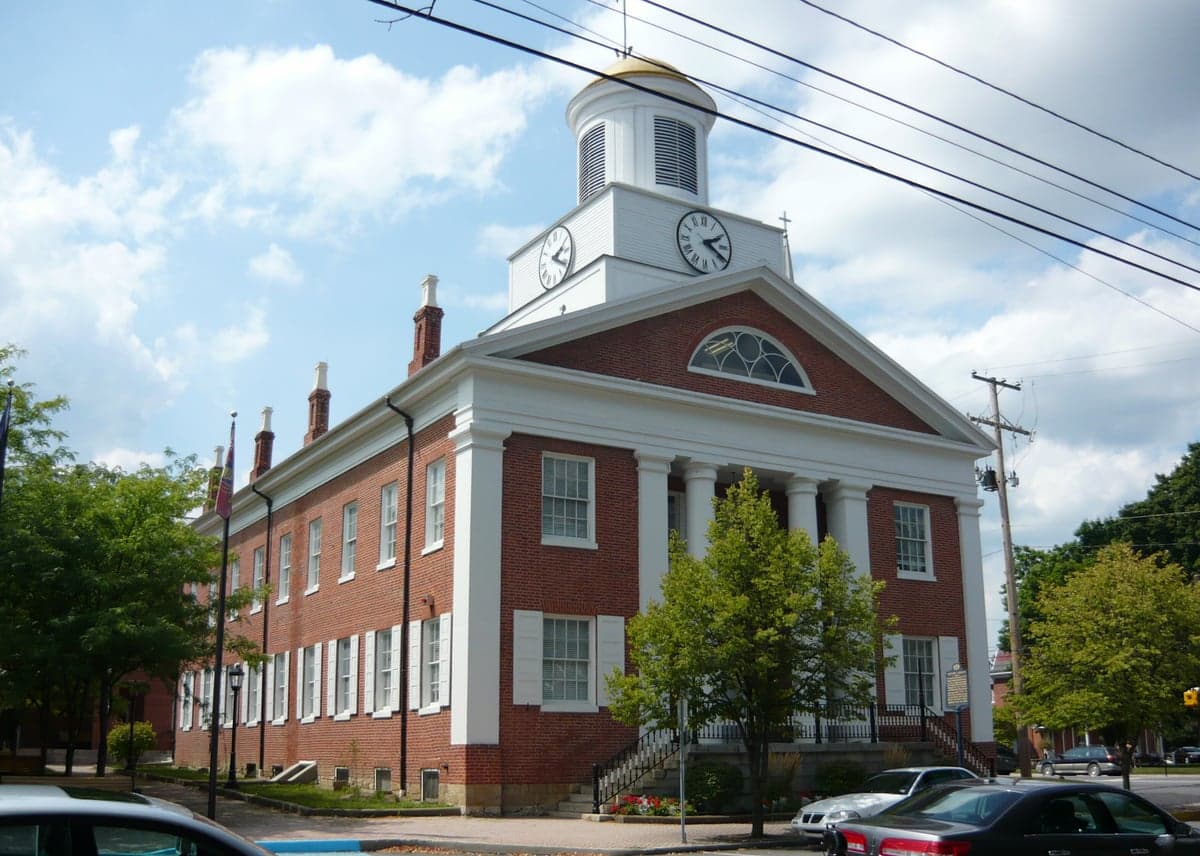
Bedford County, Pennsylvania, is a deeply rooted, predominantly white, rural community of 47,503 residents, where a strong sense of local history and self-reliance shapes daily life. With a population that is 95.9% white and a foreign-born share of just 0.4%, the county is one of the least ethnically diverse in the state, a direct legacy of its settlement by specific waves of European pioneers. The county’s identity is marked by its small, historic towns like Bedford (the county seat), Everett, and Saxton, where family ties often stretch back generations and the pace of life remains tied to the surrounding Appalachian landscape.
Settlement & growth (pre-1960)
Long before European settlers arrived, the region that is now Bedford County was the hunting and trading ground of the Seneca and other Iroquoian-speaking nations, who used the Juniata River valley and the gaps in the Allegheny Front as travel corridors. The area was claimed by both France and Britain during the colonial era, but the first permanent European settlers were primarily Scots-Irish and German pioneers who pushed west from Philadelphia and Lancaster County in the mid-1700s. The British built Fort Bedford in 1758 during the French and Indian War, and the fort’s presence attracted a small community of traders and farmers, laying the foundation for the town of Bedford itself.
The major wave of settlement came after the American Revolution, between 1780 and 1820. Land grants and the promise of affordable farmland drew thousands of Scots-Irish families, who were the dominant group in the county’s early decades. These settlers were largely Presbyterian, fiercely independent, and spread across the fertile valleys, founding communities like Everett (originally Waynesburg) and Saxton along the Raystown Branch of the Juniata River. A smaller but significant number of German-speaking settlers, many of them Lutheran and Reformed, arrived in the same period, establishing farms and villages such as New Paris and Rainsburg, where their descendants still live today. The county’s population grew steadily through the 19th century, reaching a peak of 39,728 in 1900, driven by agriculture, timber, and the arrival of the Pennsylvania Railroad in the 1850s, which connected Bedford and Everett to eastern markets.
Unlike many industrial regions of Pennsylvania, Bedford County did not attract large numbers of Southern or Eastern European immigrants during the late 19th and early 20th centuries. The county’s economy remained based on small-scale farming, logging, and local manufacturing—such as the Saxton coal mines and the Bedford Springs Resort—which did not generate the labor demand that drew Poles, Italians, or Slavs to places like Pittsburgh or Scranton. As a result, the population remained overwhelmingly of Scots-Irish and German descent, with a small number of African American families, many of whom worked as laborers or domestic servants in Bedford town. The county’s population declined after 1900 as younger residents left for industrial jobs in larger cities, a trend that continued through the Great Depression and World War II.
Modern era (post-1965)
The 1965 Hart-Cellar Act, which reshaped U.S. immigration, had virtually no impact on Bedford County. The county’s foreign-born population today stands at just 0.4%, meaning the demographic changes that transformed urban and suburban America over the past 60 years simply passed the county by. The small Hispanic population (1.2%) and Black population (0.8%) are largely the result of domestic migration—individuals and families moving from nearby cities like Altoona, Johnstown, or Harrisburg for work or family reasons, rather than from international immigration. There is no significant enclave of East/Southeast Asian residents (0.2%) or Indian subcontinent residents (0.2%) in the county; these populations are scattered and very small, often consisting of professionals working at the county’s largest employers, such as the Bedford County Jail or local healthcare facilities.
Domestic migration since the 1970s has been a story of slow decline and selective in-movement. The county’s population peaked at 49,984 in 2010 and has since fallen to 47,503, as younger residents continue to leave for college and urban job markets. However, the county has attracted a modest number of retirees and second-home buyers drawn to the natural beauty of the region, particularly around Breezewood (the “Town of Motels” at the I-70/I-76 interchange) and the Bedford Springs area. These newcomers are overwhelmingly white and often have family roots in the region, reinforcing the county’s existing demographic character. Suburbanization has been minimal; the county has no large suburbs, and the small towns of Hyndman and Woodbury have seen little new development, maintaining their historic housing stock and village-scale feel.
The future
Bedford County’s population is projected to continue a slow decline over the next 10-20 years, driven by an aging population and out-migration of young adults. The median age is already above the state average, and the county’s low college attainment rate (16.3%) limits the growth of knowledge-economy jobs that could attract new residents. The county is not becoming more diverse; the white share of the population has remained above 95% for decades, and there is no evidence that this will change significantly in the near future. The small Hispanic and Black populations may grow slightly through natural increase and limited domestic migration, but they will remain a tiny fraction of the total.
The cultural identity of Bedford County is likely to remain strongly tied to its rural, conservative, and family-oriented character. New residents who do move in are typically those seeking a slower pace, lower cost of living, and proximity to outdoor recreation—such as hunting, fishing, and hiking in the nearby Buchanan State Forest and Blue Knob State Park. The county’s few new housing developments are concentrated around Bedford and Everett, but they are modest in scale and cater to local demand rather than outside speculation. The county’s political leanings, which have been reliably Republican for generations, are unlikely to shift, as the population remains homogeneous and culturally traditional.
For someone moving to Bedford County today, the bottom line is clear: this is a place where history and continuity matter more than change. The population is stable, aging, and overwhelmingly white, with little immigration or diversity. The county offers a quiet, affordable, and safe environment for families and individuals who value rural living and strong community ties, but it is not a place of demographic dynamism or rapid growth. Those who move here will find a community that looks and feels much as it did 50 years ago—and is likely to remain that way for decades to come.

* Values derived from national, state, county, city and local statistics and may differ in a specific area. Last updated: 2026-11-22T00:02:26.000Z
Narrative content on this page is AI-generated and may contain mistakes. Verify any details that matter before acting on them.
ReloMaps may earn a commission from affiliate links at no extra cost to you.

