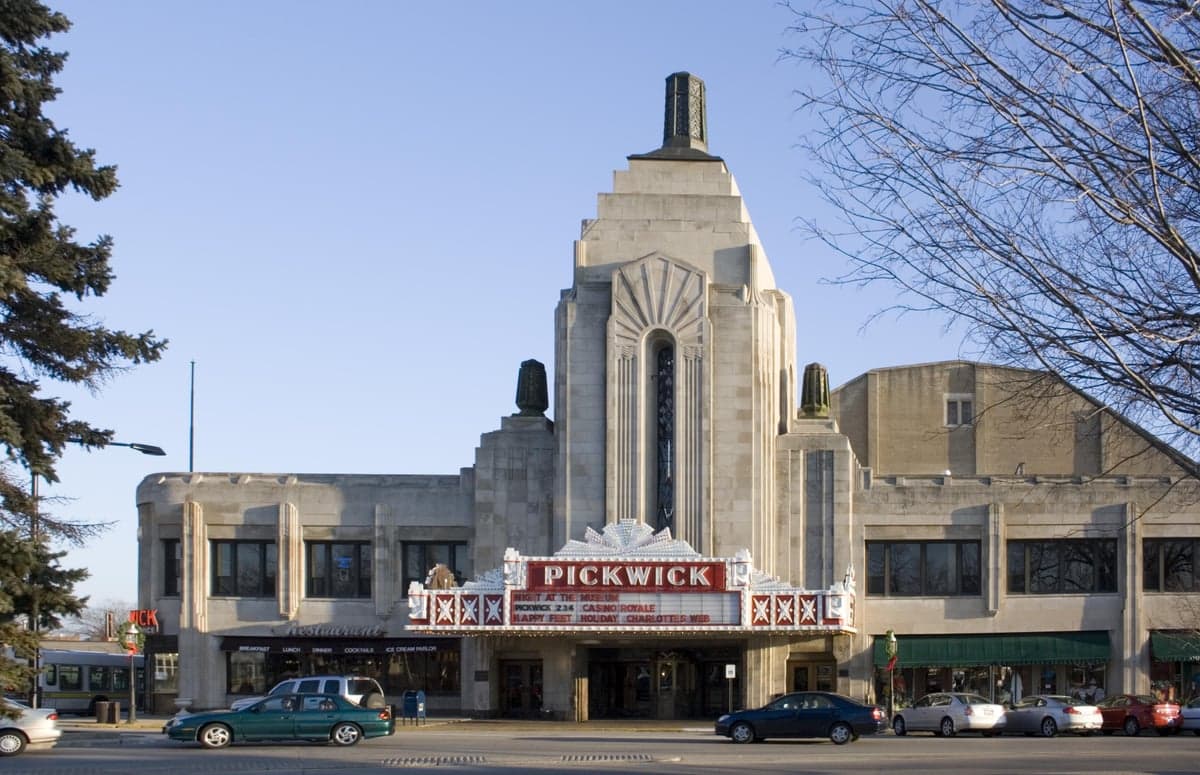
Photo: Wikipedia
Political ClimatePolitical Climate in Park Ridge, IL
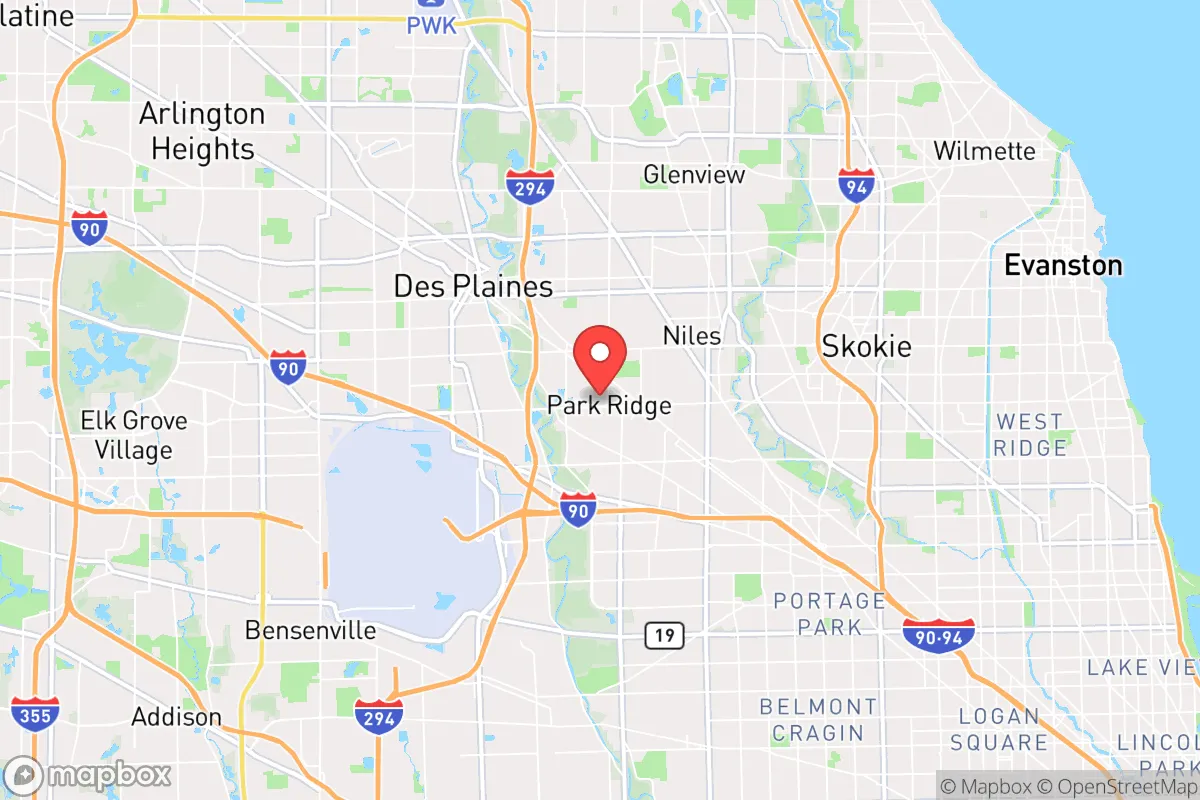
District shown is the primary district for this city’s centroid. Cities may span multiple districts.
Political rankings in Illinois
- Most Conservative Cities in Illinois
- Most Liberal Cities in Illinois
- Best Liberal-Leaning Towns in the Midwest
- Safest Liberal-Leaning Towns in the Midwest
- Safest Conservative-Leaning Towns in the Midwest
- Affordable Small Towns for Conservatives
- Most Affordable Liberal-Leaning Small Towns in the U.S.
- Safest Conservative-Leaning Cities in the U.S.
- Most Conservative Counties in Illinois
- Most Liberal Counties in Illinois
Local Political AnalysisPolitical Analysis of Park Ridge, IL
Park Ridge is a solidly Democratic stronghold, and it’s been trending that way for a while. The Cook Partisan Voting Index (PVI) for the area sits at D+19, meaning it votes about 19 points more Democratic than the national average. That’s a deep blue shade, even compared to Illinois as a whole, which has a PVI of D+7. If you’re looking at presidential elections, Park Ridge has been reliably in the Democratic column for decades, and the margins have only widened since the 2010s. It’s not a swing area; it’s a place where Democratic candidates can expect to win by comfortable double-digit margins, and local elections often reflect that same tilt.
How it compares
To put Park Ridge’s D+19 in perspective, it’s significantly more Democratic than the state average of D+7. That means Park Ridge is a blue island even within a blue state. For contrast, drive a few miles west to places like Des Plaines or Mount Prospect, and you’ll find a more moderate, D+5 to D+8 vibe. Head further northwest to Barrington or parts of McHenry County, and you’re in R+10 territory. Even nearby Niles, just south, is a bit less Democratic at around D+12. So Park Ridge isn’t just Democratic; it’s one of the most consistently liberal suburbs in the northern Cook County region. The shift has been gradual but real: older, more moderate Republican voters who once held sway in the area have largely been replaced by younger families and professionals who lean left, especially on social issues and environmental policy.
What this means for residents
For liberal residents, the political climate is comfortable. You’ll find local government, school boards, and community initiatives generally aligned with progressive values—think strong public school funding, sustainability programs, and inclusive community events. Conservative residents, however, aren’t exactly shut out, but they are a clear minority. You won’t see many yard signs for Republican candidates, and local political discourse tends to assume a Democratic baseline. That said, Park Ridge is still a place where people are generally polite about it. The town’s identity as a family-oriented, safe suburb means that practical, non-partisan issues—like property taxes, road maintenance, and park district funding—often dominate local conversation more than national politics. The real friction point for conservatives is likely the property tax burden, which is high and driven by Democratic-controlled county and state policies, but that’s a complaint shared across the political spectrum in Illinois.
Culturally, Park Ridge wears its politics lightly in day-to-day life. You won’t find the in-your-face activism of downtown Chicago, but you will find a community that expects its leaders to be competent and inclusive. The town’s strong public schools and well-funded libraries are a direct result of its Democratic lean, and most residents, regardless of party, appreciate that. Looking ahead, I don’t see Park Ridge flipping anytime soon. The demographic trends—more educated, more diverse, more suburban professional—all point to a continued Democratic hold. If anything, the D+19 might edge closer to D+25 over the next decade as older conservative homeowners sell to younger liberal buyers. For anyone moving here, the political reality is simple: you’ll be living in a place where the default assumption is Democratic, but where neighborly pragmatism usually trumps partisan heat.

State Political ClimatePolitical Climate in Illinois
State Political AnalysisPolitical Environment in the State
Illinois is a solidly Democratic state with a Cook PVI of D+7, meaning it leans about seven points more Democratic than the national average in presidential elections. Over the past 10-20 years, the state has shifted leftward, driven primarily by the consolidation of Democratic power in the Chicago metro area and the simultaneous exodus of conservative-leaning populations from rural counties. While the state has not flipped in a presidential race since 1992 (when it went for Bill Clinton), the margin has narrowed in some downstate areas, even as the Chicago collar counties have become more reliably blue. For a conservative relocator, the practical reality is that state-level politics are dominated by Democrats, but local control varies dramatically depending on where you settle.
Urban vs. rural divide
The political map of Illinois is a classic tale of two states. Cook County, home to Chicago, accounts for roughly 40% of the state's population and delivers massive Democratic margins—often 70-80% of the vote. The collar counties (DuPage, Lake, Kane, Will, and McHenry) have trended blue over the past decade, with DuPage County flipping from red to purple to reliably Democratic in presidential elections. Meanwhile, downstate Illinois—places like Effingham, Mount Vernon, and Quincy—vote heavily Republican, often by 60-70% margins. The divide is stark: drive two hours west of Chicago and you go from a district represented by a progressive Democrat to one represented by a conservative Republican. The metro areas of Peoria, Rockford, and Springfield are purple battlegrounds, with Peoria leaning slightly Democratic due to union influence and Rockford trending redder as manufacturing declines. The rural-urban split is so pronounced that some downstate counties have discussed secession or joining neighboring states, though no serious movement has materialized.
Policy environment
Illinois has a progressive tax structure (flat income tax at 4.95%, but with a recent failed attempt to switch to a graduated rate), high property taxes (among the highest in the nation, averaging over 2% of home value), and a robust regulatory posture. The state has a strong labor union presence, with public-sector unions wielding significant influence in Springfield. Education policy is centralized: the state funds schools through a formula that favors poorer districts, and Chicago Public Schools remains a political flashpoint. Healthcare is heavily regulated, with Illinois expanding Medicaid under the ACA and passing a law protecting abortion access. Election laws are among the most accessible in the country: Illinois offers automatic voter registration, no-excuse mail-in voting, and same-day registration. For a conservative, the policy environment is generally unfriendly on taxes and regulation, but local school boards and county governments in red areas still offer some buffer.
Recent policy direction
Over the past five years, Illinois has moved decisively left on several fronts. In 2021, the state eliminated cash bail via the SAFE-T Act, a sweeping criminal justice reform that also mandated body cameras for police and limited use-of-force standards. Gun laws have tightened significantly: Illinois now requires a Firearm Owner's Identification (FOID) card, bans assault weapons and high-capacity magazines (passed in 2023), and has a 72-hour waiting period for handgun purchases. On education, the state passed a law requiring schools to teach LGBTQ+ history and banned book bans in public libraries. Parental rights have been a battleground: Illinois has a strong "Parents' Bill of Rights" that gives parents access to curriculum, but it also allows transgender students to use bathrooms matching their gender identity. On medical autonomy, Illinois has codified abortion rights and protects providers from out-of-state lawsuits. Property rights are constrained by high property taxes and strong tenant protections in Chicago. Voting access has expanded, with automatic voter registration and mail-in ballots now permanent. For a conservative, the direction is clear: the state is becoming more progressive on guns, criminal justice, and social issues, while taxes remain high.
Civil unrest & political movements
Illinois has seen significant protest activity, particularly in Chicago. The 2020 George Floyd protests were large and occasionally violent, leading to looting and property damage in the Loop and on the Magnificent Mile. Chicago remains a flashpoint for immigration politics: it is a sanctuary city, and the influx of migrants from the southern border since 2022 has strained city resources and sparked political fights between the mayor and the governor. Downstate, there is a quieter but persistent "Illinois is broke" movement, with some counties passing symbolic resolutions to secede or join Indiana or Kentucky. Election integrity controversies have been minimal compared to swing states, though some rural counties have complained about Chicago's outsized influence. The most visible political flashpoint for a new resident would be the stark contrast between Chicago's progressive politics and the conservative culture of places like Marion or Harrisburg in southern Illinois.
Projection
Over the next 5-10 years, Illinois is likely to continue its leftward drift at the state level, driven by demographic trends: Chicago's population is slowly declining, but the collar counties are becoming more diverse and more Democratic. The downstate population is aging and shrinking, which will reduce its political clout. Expect further gun control measures, possibly including mandatory liability insurance for gun owners, and continued expansion of Medicaid and abortion access. The state's fiscal situation remains precarious—Illinois has the worst-funded pension system in the country—which could lead to tax increases or service cuts. For a conservative moving in now, the realistic expectation is that state politics will remain hostile to their views, but local control in red counties will persist. The best bet for a conservative relocator is to target a county like McHenry or Kendall in the collar counties, where Republican local governments still hold sway, or to head far downstate to places like Carbondale or Murphysboro, where the cost of living is low and conservative values dominate.
For a new resident, the bottom line is that Illinois offers a high level of services (good roads, strong schools in wealthy suburbs, robust healthcare) but at a high cost in taxes and regulation. Conservatives will find themselves in the minority at the state level but can carve out a comfortable life in the right county. Liberals will find a state that aligns with their values on social issues and gun control but may chafe at the high property taxes and pension debt. The key is to choose your location carefully: the difference between living in Chicago and living in Effingham is not just geographic—it's a difference in political universe.
* Values derived from national, state, county, city and local statistics and may differ in a specific area. Last updated: 2026-11-26T16:52:43.000Z
Narrative content on this page is AI-generated and may contain mistakes. Verify any details that matter before acting on them.
ReloMaps may earn a commission from affiliate links at no extra cost to you.

