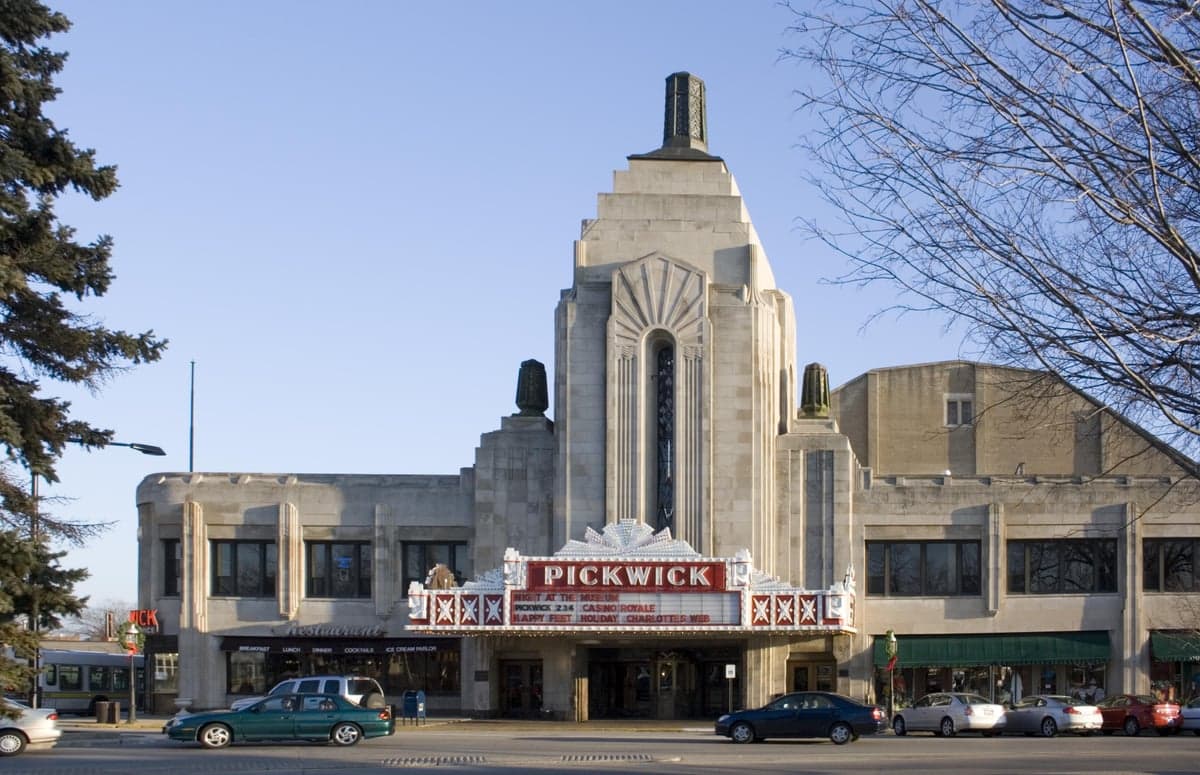
Photo: Wikipedia
Demographics of Park Ridge, IL
Affluence Level in Park Ridge, IL
An upper-middle-class area. Household wealth, education levels, and homeownership run ahead of national benchmarks.
People of Park Ridge, IL
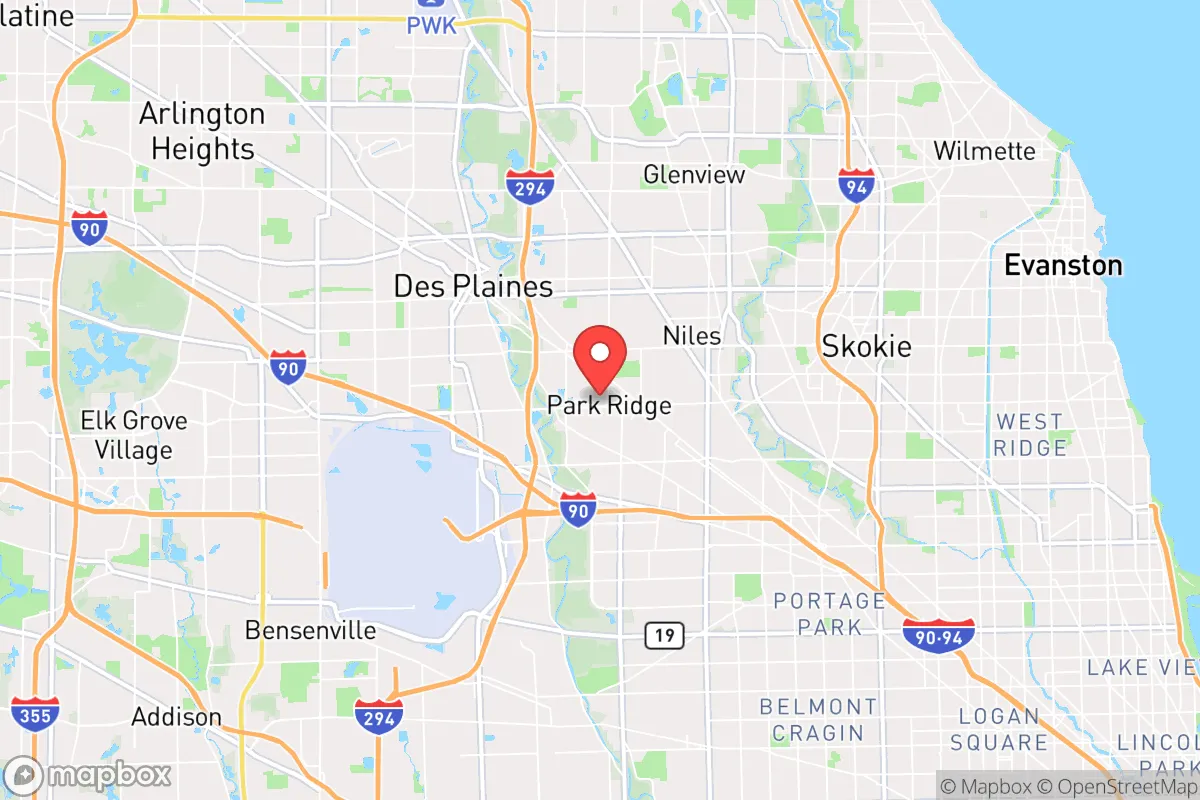
Park Ridge, Illinois, is a predominantly white, highly educated suburb of 39,241 residents, where 65.1% of adults hold a college degree and the foreign-born population stands at a modest 3.2%. The city’s character is defined by its historic, walkable downtown, strong public schools, and a reputation as a stable, family-oriented community with deep roots in Chicago’s Northwest Side expansion. Its population is notably less diverse than the broader Cook County average, with a demographic profile that has remained relatively consistent over the past several decades, though subtle shifts are underway in specific neighborhoods.
How the city was settled and grew
Park Ridge’s original settlers were Yankee and German farmers who arrived in the 1830s and 1840s, drawn by the fertile prairie land along the Des Plaines River. The village was officially incorporated in 1873, and its growth accelerated with the arrival of the Chicago and North Western Railway, which turned the area into a commuter suburb for Chicago’s growing middle class. The Uptown Park Ridge neighborhood, centered around the Metra station, became the initial hub for these early residents, with Victorian and Craftsman homes built by German and Irish tradesmen. A second major wave occurred in the 1920s and 1930s, as the bungalow belt expanded outward from Chicago. The South Park neighborhood, south of Touhy Avenue, was largely developed during this period, attracting second-generation Polish and Italian families who moved out of the city’s Northwest Side neighborhoods like Jefferson Park and Portage Park. These groups established the area’s strong Catholic identity, with parishes like St. Paul of the Cross (founded 1905) and St. Andrew’s (founded 1926) serving as community anchors.
Modern era (post-1965)
The post-1965 era saw Park Ridge solidify its reputation as a white, middle-to-upper-middle-class suburb, largely insulated from the rapid demographic changes occurring in Chicago proper. The 1970s and 1980s brought an influx of families from Chicago’s bungalow belt, many of them of Polish, Irish, and Italian descent, seeking larger homes and better schools. The Countryside neighborhood, a post-war subdivision of ranch homes and split-levels east of Cumberland Avenue, became a popular destination for these upwardly mobile families. The city’s population peaked at roughly 42,000 in the 1970 census and has since declined slightly, reflecting national trends of smaller household sizes. The most notable demographic shift in the modern era has been the growth of East/Southeast Asian communities, who now make up 5.0% of the population, and Indian-subcontinent residents, who account for 2.1%. These groups have concentrated in the Southwest Park Ridge area, near the Touhy Avenue corridor, drawn by the area’s proximity to tech and professional jobs in the O’Hare corridor and the reputation of Maine South High School. The Hispanic population (6.0%) is more dispersed but has a visible presence in the Northwest Park Ridge neighborhoods near Dempster Street, where a small cluster of Latin American restaurants and markets has emerged. The Black population remains very small at 1.0%, with no single neighborhood concentration.
The future
Park Ridge’s population is projected to remain relatively stable in size, but its composition is slowly diversifying. The city’s foreign-born share (3.2%) is well below the national average, but the East/Southeast Asian and Indian-subcontinent populations are the fastest-growing segments, driven by professional families seeking the area’s top-ranked schools. These groups are dispersing across the city rather than forming a single ethnic enclave, though the Mayfield Estates neighborhood, a newer development of larger homes near the golf course, has seen a noticeable uptick in Asian and Indian homebuyers. The white population, while still dominant at 82.8%, is aging, and the city is seeing a modest influx of younger families from Chicago’s North Side, many of whom are more racially and ethnically diverse than the existing population. The city’s cultural identity is evolving from a purely “old-school” Chicago suburb toward a more cosmopolitan, professional-class community, though it remains far less diverse than nearby suburbs like Niles or Skokie. Over the next 10-20 years, the population is likely to become slightly more Asian and Hispanic, while remaining overwhelmingly white and college-educated.
For someone moving in now, Park Ridge offers a stable, low-crime environment with excellent schools and a strong sense of local identity, but it is not a place undergoing rapid demographic transformation. The city’s future is one of gradual, managed diversification, primarily through the in-migration of professional Asian and Indian families, while its core character as a white, upper-middle-class suburb remains intact. New residents should expect a community that values tradition and stability, with a growing but still small multicultural presence concentrated in specific neighborhoods.

* Values derived from national, state, county, city and local statistics and may differ in a specific area. Last updated: 2026-11-26T16:52:43.000Z
Narrative content on this page is AI-generated and may contain mistakes. Verify any details that matter before acting on them.
ReloMaps may earn a commission from affiliate links at no extra cost to you.

