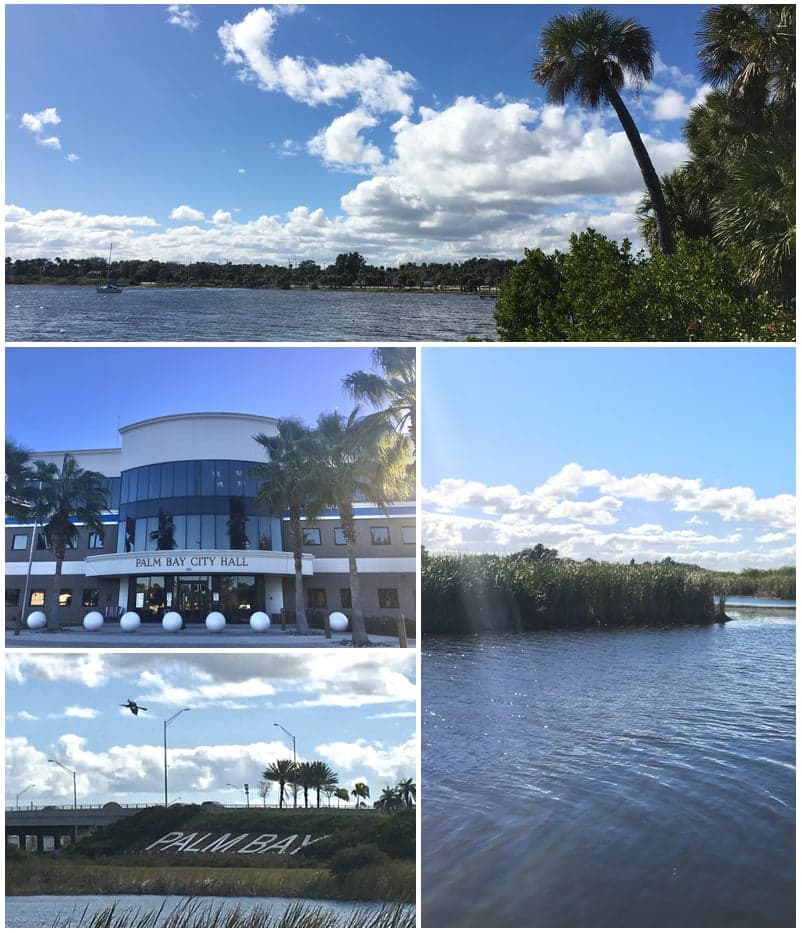
Photo: Wikipedia
Political ClimatePolitical Climate in Palm Bay, FL
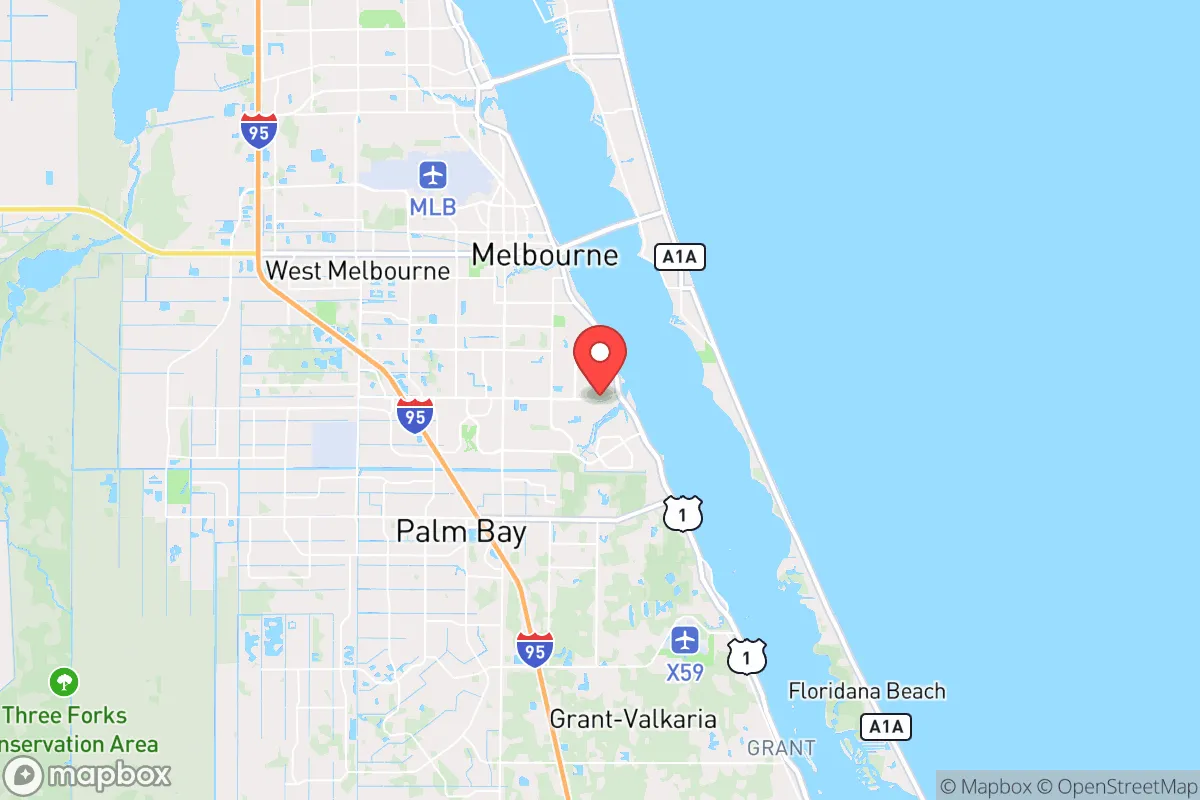
District shown is the primary district for this city’s centroid. Cities may span multiple districts.
Local Political AnalysisPolitical Analysis of Palm Bay, FL
Palm Bay is a solidly conservative community, and it’s been that way for as long as I can remember. The Cook PVI rating of R+11 tells you the math: this isn’t a purple swing town—it’s a place where Republican candidates routinely win by double digits, and the local culture reflects that. Over the past decade, the political trajectory has actually hardened a bit, as retirees and families from more liberal parts of the state and country have moved in, but they’ve largely reinforced the existing conservative lean rather than flipping it. You don’t see the kind of rapid leftward shift you’d find in, say, Orlando or even parts of Brevard County closer to the coast.
How it compares
Palm Bay sits in Brevard County, which overall leans Republican but has some blue pockets—Melbourne and Cocoa Beach, for instance, trend more moderate or even left on social issues. Drive west into Palm Bay, though, and the difference is stark. The city’s politics are closer to what you’d find in rural towns like Fellsmere or Sebastian to the south, where Second Amendment rights and low taxes are non-negotiable. Compared to Melbourne, which has a younger, more transient population tied to the tech and aerospace sectors, Palm Bay feels more rooted in traditional values. The contrast with Viera, a master-planned community with a mix of retirees and professionals, is also noticeable—Viera votes red but with a softer edge, while Palm Bay’s conservatism is more direct and less apologetic.
What this means for residents
For the people who live here, the political climate translates into a government that mostly stays out of your business. You won’t see the kind of overreach you’d get in a city council run by progressive activists—no mask mandates that drag on for months, no heavy-handed zoning that tells you what you can do with your own property, and no push to defund the police. The local leadership tends to focus on keeping taxes low and maintaining basic services, which is exactly what most folks want. That said, there’s a growing concern among long-time residents about the slow creep of state-level policies that feel like they’re testing the limits of personal freedom—things like increased property tax assessments or new environmental regulations that can hit homeowners hard. The city’s rapid growth has also brought in some developers who try to push through higher-density projects, which sometimes feels like a backdoor way to change the character of the community. If you value being left alone to live your life without a bureaucrat telling you how to do it, Palm Bay is still a good bet, but you’ve got to keep an eye on the city council meetings.
Culturally, Palm Bay is a place where church potlucks and neighborhood watch groups are still the norm, and the local gun culture is strong—you’ll see “Come and Take It” flags flying next to American flags in front yards. There’s a noticeable distrust of federal mandates, whether it’s about land use or health policies, and that skepticism runs deep. The biggest policy distinction from nearby towns is the city’s approach to growth management: Palm Bay has historically been more permissive with rural-style living, allowing larger lots and fewer HOAs than you’d find in Viera or Melbourne. That’s changing a bit as new subdivisions go in, but the political will to preserve that independence is still there. If the trend toward more centralized control continues at the state or federal level, you can expect Palm Bay residents to push back hard—this isn’t a community that rolls over quietly.

State Political ClimatePolitical Climate in Florida
State Political AnalysisPolitical Environment in the State
Florida has been a reliably Republican state in presidential elections since 1952, with only a handful of Democratic wins, but the real story is the state’s steady rightward shift over the past decade. The GOP now holds a supermajority in both chambers of the legislature, the governor’s mansion, and both U.S. Senate seats, with a voter registration advantage that has grown from roughly 300,000 in 2020 to over 800,000 by 2025. This isn’t a purple state anymore—it’s a red fortress, driven by a massive influx of conservative-leaning transplants from blue states and a political culture that prizes limited government, low taxes, and individual liberty.
Urban vs. rural divide
The political map of Florida is starkly divided between its urban cores and everything else. The Democratic strongholds are Miami-Dade County, Broward County (Fort Lauderdale), and Orange County (Orlando), which together deliver about 40% of the state’s Democratic votes. But even these bastions are shifting: Miami-Dade, once a Democratic lock, has trended right for three cycles, with Donald Trump winning it in 2024 by a narrow margin—a seismic shift driven by Cuban-American and Venezuelan voters who are fiercely anti-socialist. Meanwhile, the rural Panhandle counties like Walton, Okaloosa, and Santa Rosa are deep red, often voting 70-80% Republican. The I-4 corridor—Tampa, Lakeland, Daytona Beach—is the true battleground, but even here, suburbs like Wesley Chapel and St. Cloud are turning red as families flee high-tax states. The divide isn’t just geographic; it’s cultural, with urban centers like Tallahassee and Gainesville leaning left due to university populations, while the rest of the state embraces conservative values.
Policy environment
Florida’s policy environment is a model of conservative governance. There is no state income tax, a constitutional cap on property tax increases (the Save Our Homes amendment), and a right-to-work law that keeps unions weak. The regulatory climate is business-friendly, with streamlined permitting and no state-level minimum wage beyond the federal floor (though a $15 minimum wage was passed by ballot initiative in 2020, it’s being phased in slowly). Education policy is a flashpoint: Governor Ron DeSantis signed the Parental Rights in Education Act (HB 1557, the “Don’t Say Gay” law) in 2022, banning classroom instruction on sexual orientation and gender identity in grades K-3, and expanded it to all grades in 2023. School choice is robust, with over 1.3 million students using vouchers or tax-credit scholarships. Healthcare is mixed—Florida expanded Medicaid under the Affordable Care Act, but the state has resisted further federal overreach, and there are no state-level mandates for paid leave or abortion coverage. Election laws were tightened after 2020: SB 90 (2021) added voter ID requirements, limited drop boxes, and restricted mail-in ballot requests, making Florida one of the most secure voting states in the nation.
Trajectory & freedom
Florida is becoming more free by any measure, especially compared to the Northeast and West Coast. The 2023 legislative session was a landmark for personal liberty: the “Permitless Carry” law (HB 543) allows any law-abiding adult to carry a concealed firearm without a permit, and the “Stop WOKE Act” (HB 7) banned critical race theory and discriminatory workplace training. On medical freedom, the state passed a ban on COVID-19 vaccine mandates for private employers (SB 252, 2023) and prohibited mask mandates in schools (HB 7, 2021). Property rights were strengthened with the “Live Local Act” (SB 102, 2023), which preempts local rent control and streamlines affordable housing development. The only concerning trend is the expansion of the state’s “public nuisance” laws, which have been used to target drag shows and adult performances (HB 1423, 2023), but these are seen by conservatives as protecting children, not limiting freedom. Overall, the trajectory is toward more individual autonomy, less government intrusion, and a culture that rewards personal responsibility.
Civil unrest & political movements
Florida has seen its share of political flashpoints, but they’ve largely been contained by strong law enforcement and conservative governance. The 2020 Black Lives Matter protests in Miami, Orlando, and Jacksonville were significant but short-lived, with no sustained unrest. The most visible movement is the influx of “MAGA” activists and conservative grassroots groups like Moms for Liberty, which has chapters in every county and has been instrumental in school board elections. Immigration politics are a constant issue: Governor DeSantis has bused illegal immigrants to Martha’s Vineyard and California, and the state passed SB 1718 (2023), which requires hospitals to collect immigration status data and bans local “sanctuary” policies. There is no serious secession or nullification rhetoric, but there is a strong “state sovereignty” movement, with the legislature passing resolutions against federal overreach on gun control and environmental regulations. Election integrity remains a hot topic, but the 2022 and 2024 elections were smooth, with no major controversies—a testament to the 2021 reforms. New residents will notice a palpable sense of civic pride and a low tolerance for political chaos, especially in suburbs like The Villages and Naples.
Projection
Over the next 5-10 years, Florida will only get redder. The state is adding about 1,000 new residents per day, most from blue states like New York, California, and Illinois, and these transplants are disproportionately conservative or libertarian-leaning. The Hispanic vote, especially in Miami-Dade, is trending Republican, and the growing Asian-American population in Orlando and Tampa is also leaning right. The Democratic Party in Florida is in disarray, with no clear statewide leader and a shrinking base. The biggest wildcard is climate change: rising sea levels and hurricane risks could slow growth in coastal areas like Miami Beach and Fort Myers, but inland cities like Ocala, Lakeland, and Gainesville are booming. Expect more preemption of local ordinances (e.g., on short-term rentals, zoning, and environmental regulations), further tax cuts, and continued expansion of school choice. The only potential threat to freedom is if the federal government tries to impose national mandates on voting or education, but Florida’s legislature is ready to fight back. Someone moving in now should expect a state that is increasingly conservative, prosperous, and protective of individual rights.
For a new resident, the bottom line is clear: Florida offers a political environment that respects your wallet, your family, and your freedom. You won’t find state income taxes, mask mandates, or CRT in schools. You will find a government that trusts you to make your own choices—whether it’s carrying a gun, choosing a school, or deciding on medical treatments. The culture is friendly but serious, with a strong sense of community in places like St. Augustine, Sarasota, and Pensacola. If you’re tired of the overreach and chaos in blue states, Florida is the place where you can live your life without the government breathing down your neck. Just be prepared for the heat—and the political heat is exactly where conservatives want it.
* Values derived from national, state, county, city and local statistics and may differ in a specific area. Last updated: 2026-09-21T19:02:03.000Z
Narrative content on this page is AI-generated and may contain mistakes. Verify any details that matter before acting on them.
ReloMaps may earn a commission from affiliate links at no extra cost to you.

