Photo: Wikipedia
Strategic Assessment of Osawatomie, KS
Workable tactical position. Some exposure to population density or targets, but generally defensible in a crisis.
What does the Strategic Assessment tell us?
Our Strategic Assessment grades tactical survivability of an area. Major population centers, military targets, fallout zones, natural disasters, and border exposure all drive risk — lower exposure means a more defensible position in a crisis.
This is heavily inspired by Joel Skousen's Strategic Relocation book. Highly recommended you checkout the book ($)What does this tell us?
Our Strategic Assessment grades tactical survivability of an area. Major population centers, military targets, fallout zones, natural disasters, and border exposure all drive risk — lower exposure means a more defensible position in a crisis.
This is heavily inspired by Joel Skousen's Strategic Relocation book. Highly recommended you checkout the book ($)Strategic Pillars

Key Distances
Regional Safe Places
Below is our recommended "safe zones" in Kansas and the surrounding area based on our strategic heuristics. For most people, it's unrealistic to live in a “safe zone” full-time due to work, family or other personal reasons. They tend to be more rural. However, many of these areas are perfect for second homes and retreat properties that double as a vacation home or even a short-term rental.
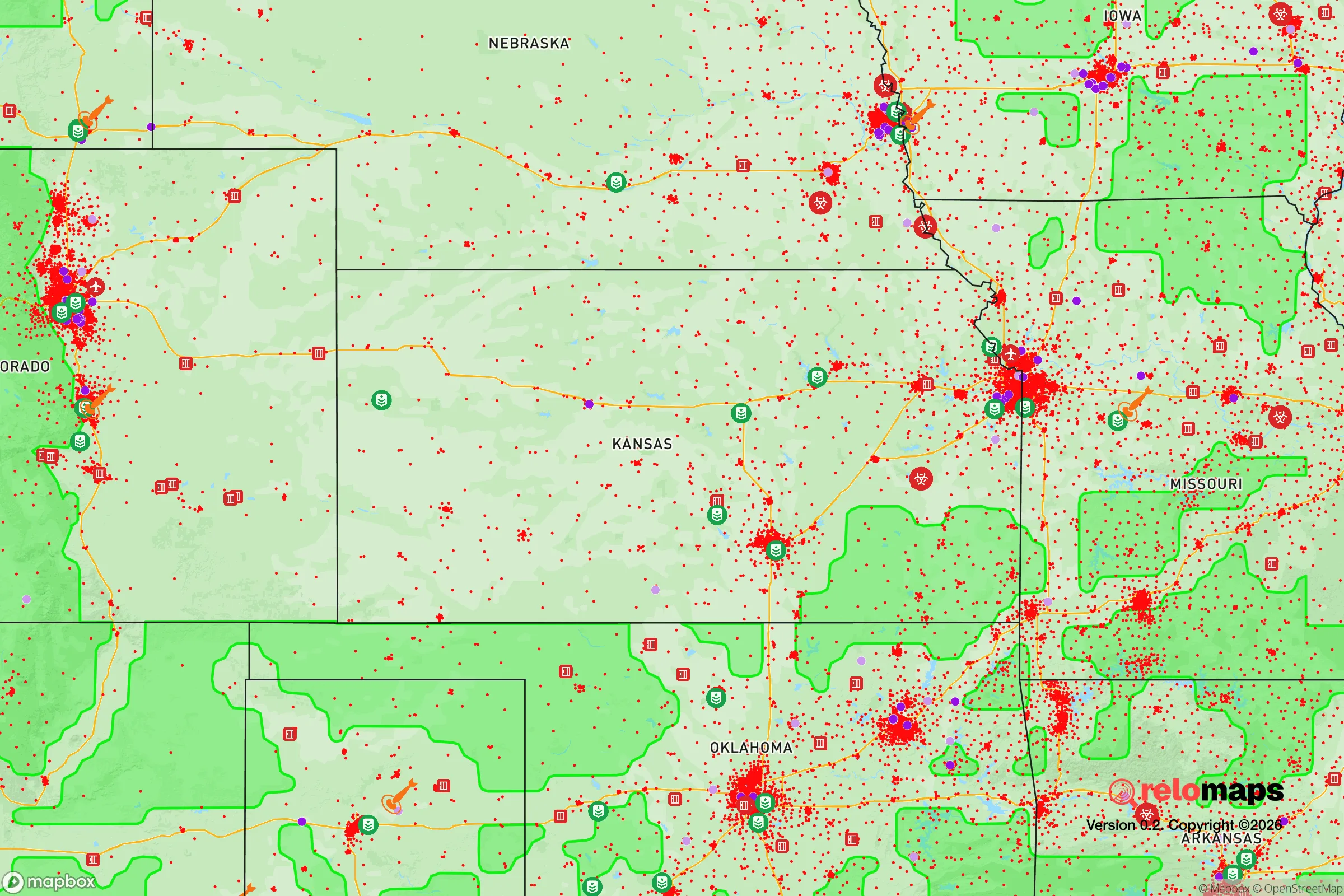
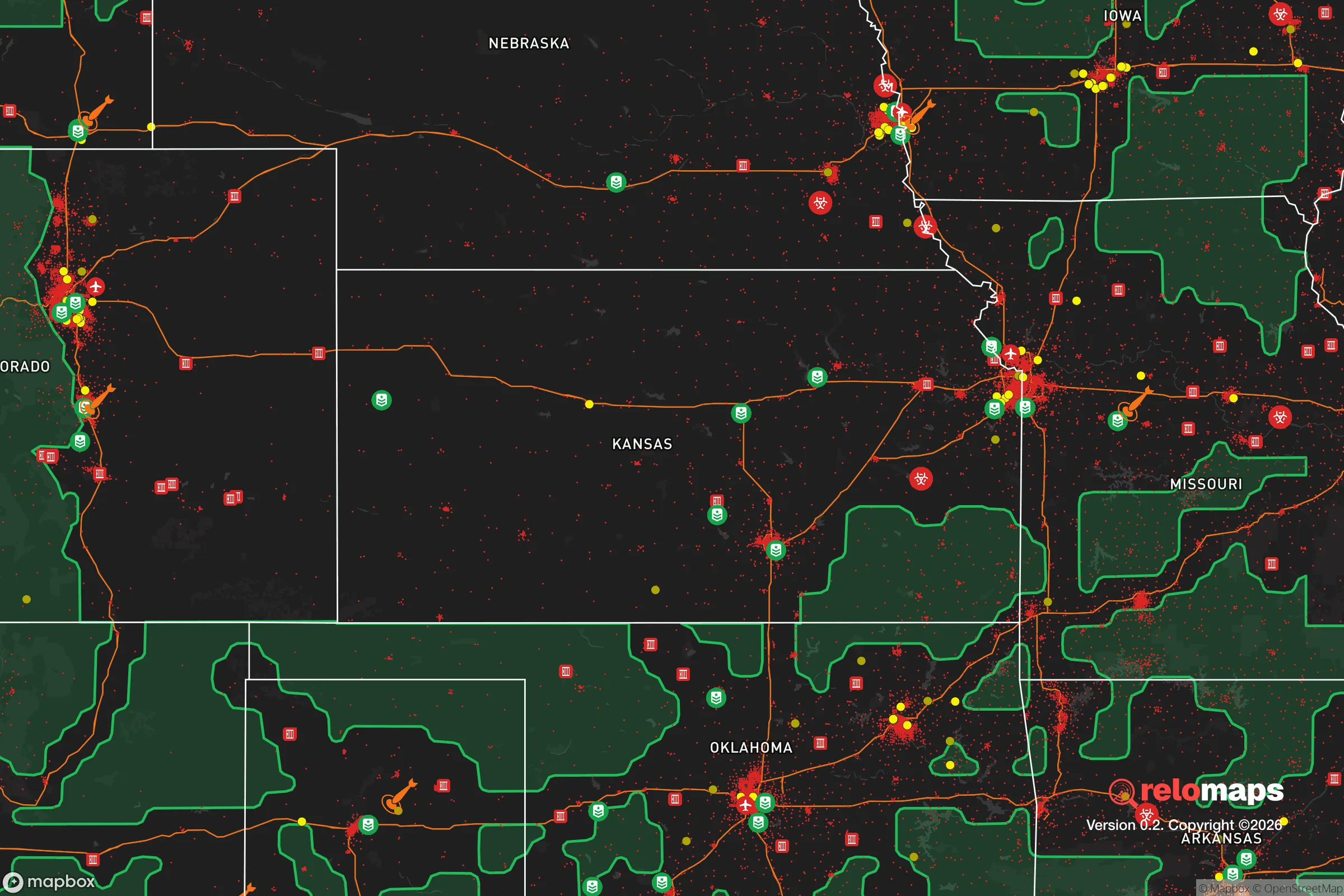


Important Note: For informational purposes only. This does not mean nothing bad ever happens in the green zones. Please use common sense. This is based on public data and modeled with AI. We tried to take a conservative approach but mistakes happen. We update this regularly as new information becomes available.
Solar Generator Recommendations
Backup power matters more here than in safer locations. We've picked three solar generators across budgets and capacity tiers — start with the budget unit if you only need a few essentials, or step up if you want to run a fridge and HVAC for days at a time.

Jackery Portable Power Station Explorer 300
Budget OptionPower on the Go: Weighing only 11 lbs, it's convenient to set up and store with book-sized foldable solar panels

BLUETTI Portable Power Station AC180
Designed for both indoor and outdoor scenarios, AC180 is highly capable as it has a robost capacity and continuous output power.

EF ECOFLOW DELTA Pro Ultra Power Station
Upgraded PickEcoFlow DELTA Pro Ultra is a whole-home energy system designed to grow with your family. Integrated with the Smart Home Panel 2, it scales to meet your evolving energy needs — keeping your home powered, intelligent, and secure through every stage of life.
We earn a commission, at no additional cost to you.
Strategic Assessment Analysis
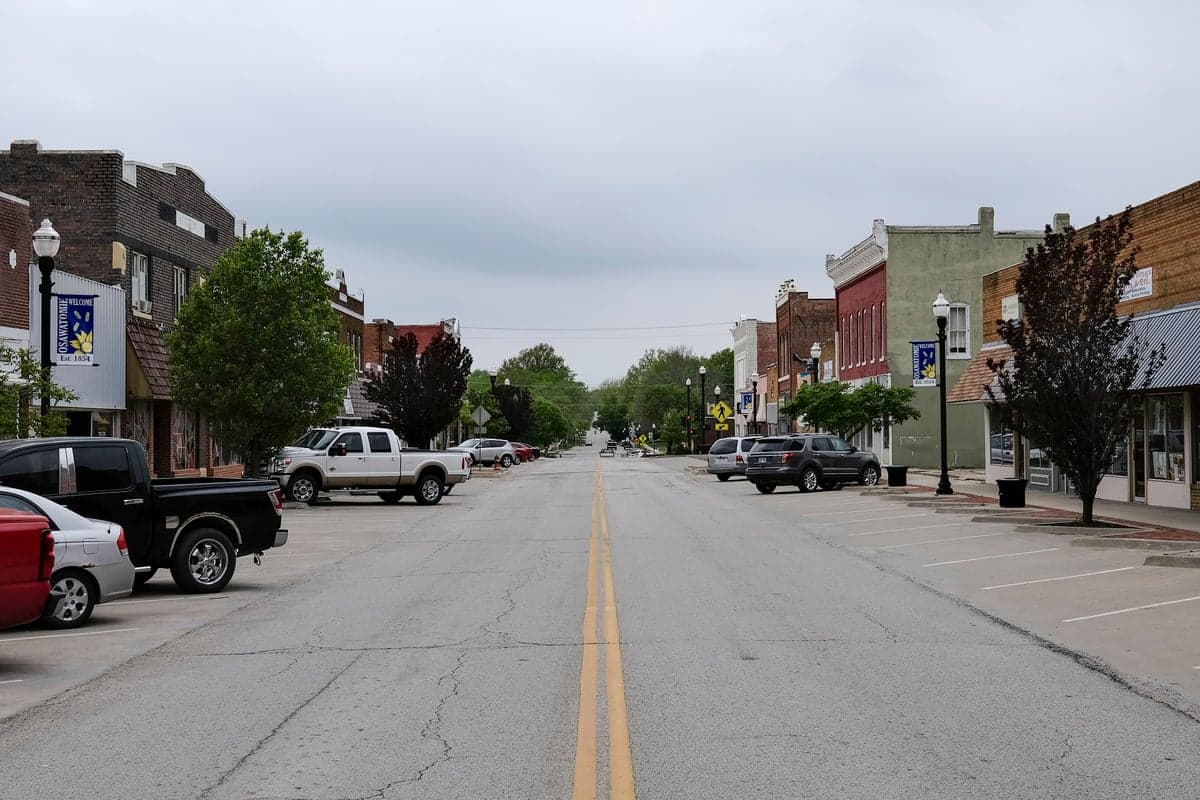
Osawatomie, Kansas, occupies a strategic middle ground for the relocation-minded reader: close enough to the Kansas City metro for supply runs and employment, yet far enough to avoid the worst of a major urban collapse or fallout plume. Its position along the Marais des Cygnes River and the historic role as a Free State stronghold during Bleeding Kansas give it a quiet, self-reliant character that aligns well with preparedness thinking. For a single individual or family weighing disaster readiness, Osawatomie offers a defensible, resource-accessible base that balances isolation with practical connectivity.
Geographic position and natural advantages for a self-sufficient lifestyle
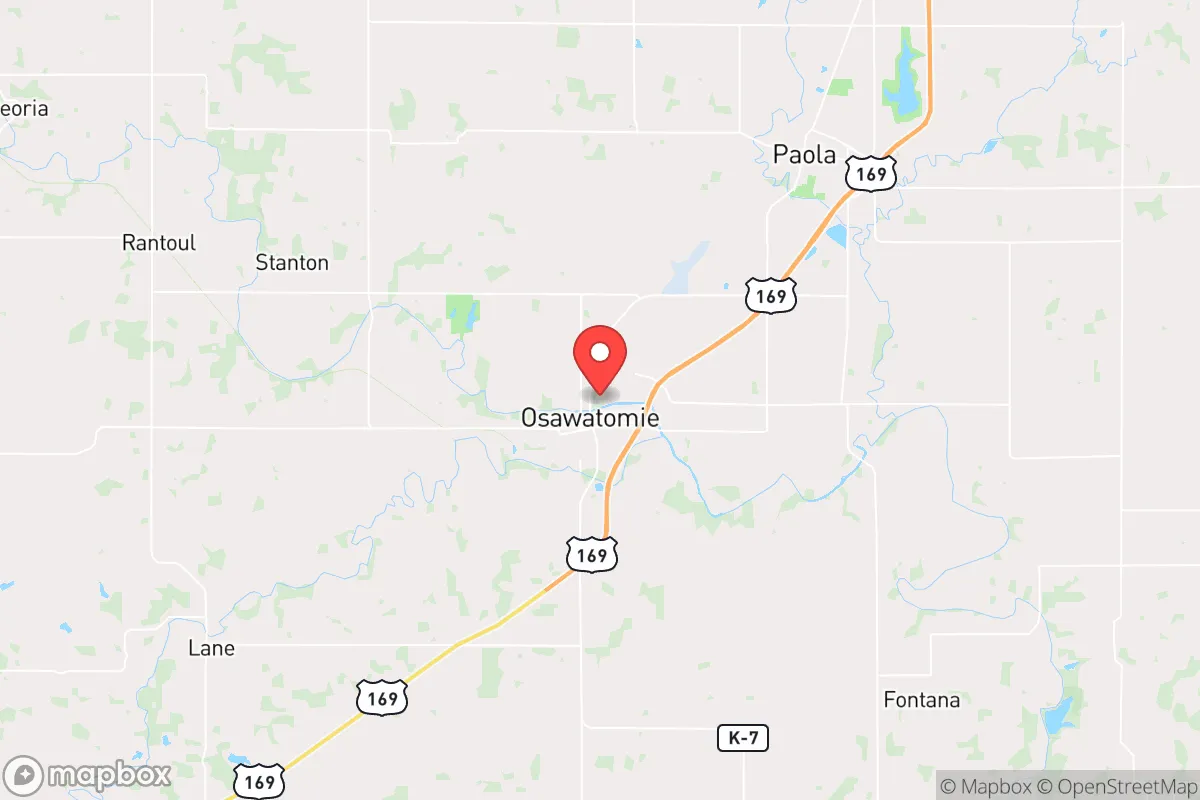
Osawatomie sits in eastern Miami County, roughly 50 miles south of Kansas City and 30 miles southwest of the Kansas City suburbs like Overland Park. This distance is a key asset: it places the town outside the immediate blast radius of a major metropolitan target, yet within a two-hour drive of regional medical centers, big-box retailers, and the Kansas City International Airport. The surrounding terrain is gently rolling prairie and woodland, typical of the Osage Cuestas region, offering natural drainage and decent soil for small-scale agriculture. The Marais des Cygnes River runs through the town, providing a reliable surface water source that can be tapped for irrigation or emergency use with proper filtration. The area’s average annual rainfall of about 40 inches supports rain gardens, cisterns, and dryland farming without the chronic drought pressure seen further west. For a relocator, this means a moderate climate with four distinct seasons, reducing the risk of extreme weather events like hurricanes or wildfires that plague other regions. The town’s elevation around 900 feet above sea level keeps it above floodplain concerns for most residential lots, though low-lying areas near the river do require attention during heavy spring rains.
Risks, exposures, and proximity to fallout-relevant landmarks
The primary man-made risk for Osawatomie is its proximity to the Kansas City metropolitan area, a likely target in a major conflict scenario due to its transportation hubs, military installations (Whiteman Air Force Base is 80 miles east), and economic significance. A ground burst or high-altitude detonation over Kansas City could send fallout plumes southeast or southwest depending on wind patterns, and Osawatomie lies roughly in that downwind corridor. The town is also within 100 miles of the Wolf Creek Generating Station nuclear plant near Burlington, Kansas, and the Fort Calhoun plant in Nebraska, though prevailing winds typically carry any accident debris away from this area. Natural hazards are more predictable: tornadoes are the primary threat, with Miami County averaging one to two significant tornado warnings per year. The 2011 Joplin tornado and the 2003 Osawatomie tornado (an F4 that destroyed much of the downtown) are local reminders that a sturdy storm shelter or basement is non-negotiable. Flooding along the Marais des Cygnes is a secondary risk, with the 1951 and 1993 floods causing major damage in the river bottoms. Earthquake risk is negligible, as the area sits far from active fault lines. For a relocator, the key takeaway is that Osawatomie’s biggest risk is man-made and weather-related, not geological, and both can be mitigated with proper planning—a basement or reinforced safe room, a fallout shelter if budget allows, and a pre-planned evacuation route away from the metro.
Practical resilience for a relocator: food, water, energy, and defensibility
Osawatomie’s practical resilience is solid for a town of its size (roughly 4,400 residents). The local water supply comes from the Marais des Cygnes River and groundwater wells, treated by the city’s water plant. For a relocator, this means a backup plan is straightforward: a hand pump or solar-powered well pump on a private property, plus rainwater catchment from a metal roof, can provide a reliable off-grid supply. The soil in the surrounding countryside is fertile enough for a substantial garden or small farm—corn, soybeans, and hay are the dominant crops in the area, and many rural properties already have fenced pasture for livestock. The local climate supports a 180-day growing season, long enough for tomatoes, peppers, squash, and root vegetables. For energy, the area is served by Evergy (formerly Kansas City Power & Light), which relies on a mix of coal, natural gas, and wind. Solar potential is moderate—about 4.5 peak sun hours per day—making a 5-10 kW rooftop array a viable investment for grid independence, especially with net metering policies still in place. Wood heating is practical given the surrounding hardwood forests (oak, hickory, walnut), and many older homes already have wood stoves or fireplaces. Defensibility is a mixed picture: Osawatomie is a compact town with a grid street layout, which makes it harder to secure than a rural homestead. However, the town’s small population and low crime rate (violent crime is roughly half the national average) mean that social cohesion is higher than in a suburban sprawl. For a relocator, the best strategy is to buy a property on the town’s edge or in the unincorporated areas just outside city limits, where a well, septic, and acreage are common. The local hospital, Osawatomie Memorial Hospital, is a critical access facility with a 25-bed capacity, adequate for routine emergencies but not for major trauma—a factor to weigh for families with chronic health conditions.
Overall, Osawatomie presents a balanced strategic picture for the disaster-conscious relocator. It is not a hardened bunker town, nor is it a high-risk urban center. Its strengths lie in moderate climate, accessible water and farmland, and a location that is close enough to resources yet far enough from primary targets. The weaknesses—tornado risk, proximity to a major metro, and limited medical infrastructure—are manageable with preparation. For a single individual or family willing to invest in a storm shelter, a backup water system, and a modest solar array, Osawatomie offers a defensible, self-sufficient base in the American heartland. The town’s quiet, blue-collar ethos and low cost of living (median home price around $120,000) make it an affordable entry point for those serious about resilience without the premium prices of more remote mountain or desert locations.

* Values derived from national, state, county, city and local statistics and may differ in a specific area. Last updated: 2026-10-06T17:45:54.000Z
Narrative content on this page is AI-generated and may contain mistakes. Verify any details that matter before acting on them.
ReloMaps may earn a commission from affiliate links at no extra cost to you.

