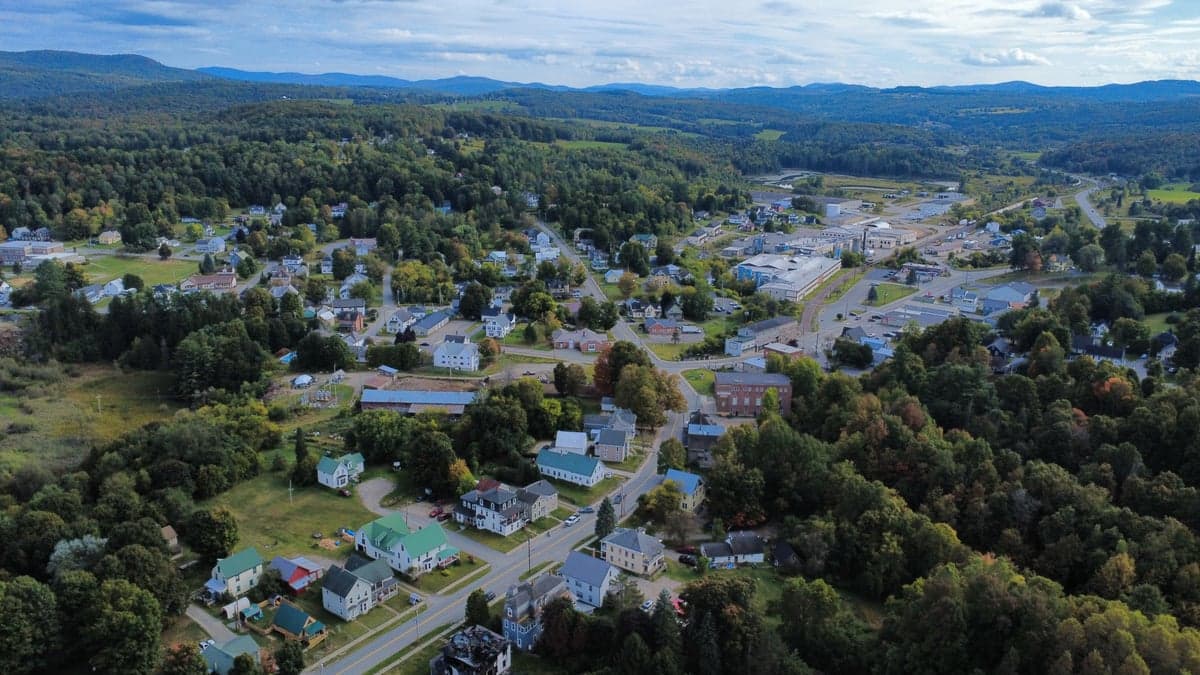
Photo: Wikipedia
Political ClimatePolitical Climate in Orleans, VT
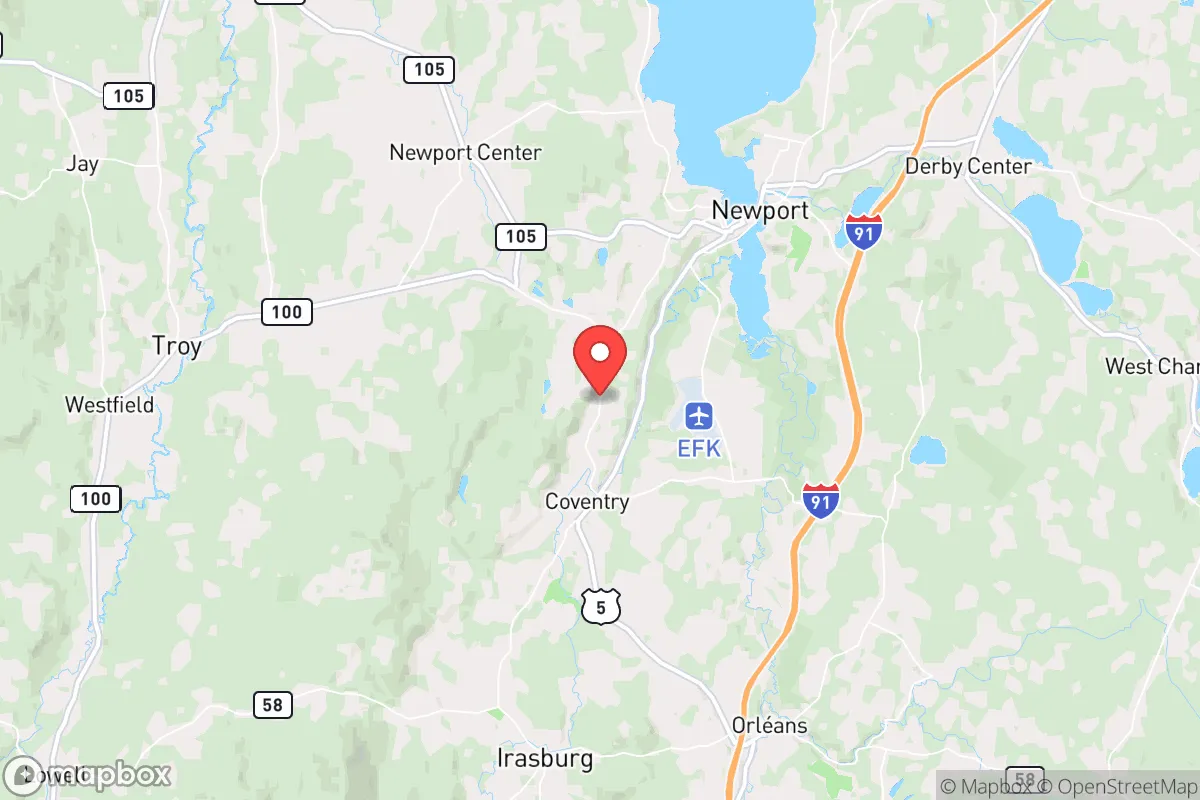
District shown is the primary district for this city’s centroid. Cities may span multiple districts.
Inherited from parent state — no local data available.
Local Political AnalysisPolitical Analysis of Orleans, VT
Orleans, Vermont, sits in a county that has been trending steadily leftward, and the numbers back that up. The area now carries a Cook PVI of D+17, meaning it votes about 17 points more Democratic than the national average. That’s a far cry from what you’d have seen even twenty years ago, when Orleans County was a reliable swing area, often splitting tickets between conservative local candidates and moderate Democrats. Today, the political machine here is firmly blue, and the shift has been accelerating, especially since 2016. If you’re looking for a place where your vote for limited government and personal liberty feels like it counts, Orleans is becoming a tougher sell.
How it compares
Drive thirty minutes south to the town of Barton, and you’ll find a similar story—progressive policies on taxes and land use are the norm. But head west to the more rural stretches of the county, like the towns of Westmore or Morgan, and you’ll still hear folks grumbling about state mandates and property tax hikes. The real contrast is with places like Newport City, just a few miles north, which has a more independent streak and tends to vote more conservatively on local issues. Even so, the entire region is being pulled by the gravity of Burlington and Montpelier, where the state’s political class pushes through environmental regulations and social policies that often feel out of touch with the working-class roots of the Northeast Kingdom. Orleans itself is now a place where a conservative voice can feel like a minority at town meeting, especially on hot-button topics like school funding or gun rights.
What this means for residents
For a long-time resident, the biggest concern is how this political tilt translates into daily life. Property taxes have climbed steadily, driven by state education spending mandates that Orleans locals have little say in. There’s a growing sense that Montpelier doesn’t understand the economic realities here—small farms, logging, and seasonal tourism don’t fit neatly into a progressive agenda that prioritizes climate goals over affordable heating or fuel prices. You’ll also see more local ordinances creeping in, like restrictions on short-term rentals or new building codes that make it harder to add a workshop or garage without a pile of permits. The cultural shift is real, too: the old “live and let live” attitude is being replaced by a push for conformity on social issues, and folks who value their privacy or hold traditional views on family and faith often feel pressured to keep quiet.
Looking ahead, the trajectory is concerning. The state’s Democratic supermajority shows no signs of loosening, and Orleans is likely to keep voting in line with that trend. Younger residents moving in from out of state tend to bring progressive voting habits, while long-time families either adapt or leave. If you value personal freedoms—like the right to use your land as you see fit, keep your taxes low, or speak your mind without being labeled—Orleans is still a beautiful place to live, but you’ll need to be prepared to fight for those values at the ballot box and in town hall. The old Vermont of independent-minded neighbors who respected your business is fading, and what’s replacing it is a more centralized, top-down approach that doesn’t always have the best interests of the Northeast Kingdom in mind.

State Political ClimatePolitical Climate in Vermont
State Political AnalysisPolitical Environment in the State
Vermont has long been a deep blue state, but the reality on the ground is far more complex than the statewide voting totals suggest. Since 1992, the state has voted Democratic in every presidential election, with margins widening from single digits in the 1990s to a consistent 30+ point advantage by 2020. However, this progressive veneer masks a fierce urban-rural split, a growing libertarian streak, and a palpable frustration with the state’s one-party rule that has many conservatives and moderates feeling like they’re living in a political island. If you’re considering a move here, understand that your experience will depend almost entirely on which town you choose.
Urban vs. rural divide
The political map of Vermont is a tale of two worlds. The liberal stronghold is Chittenden County, anchored by Burlington and its suburbs like South Burlington and Winooski. This metro area, home to the University of Vermont and a dense concentration of state government workers, routinely delivers 75-80% of its vote to Democrats. Drive 45 minutes in any direction, and the landscape shifts dramatically. The Northeast Kingdom — towns like Newport and St. Johnsbury — is a Republican stronghold, where Trump won by double digits in 2020. The southern tier, including Bennington and Rutland, is more purple but trending redder as working-class voters abandon the Democratic Party. The most telling divide is in the state’s 58 “unorganized towns” and tiny hamlets like Granby and Victory, where you’ll find some of the most conservative voters in New England — folks who want the government to stay out of their hunting, their land, and their wallets.
Policy environment
Vermont’s policy environment is a mixed bag that should give any freedom-minded person pause. On the tax front, the state is among the highest in the nation: a progressive income tax that tops out at 8.75%, property taxes that are the 4th highest in the U.S., and a sales tax of 6% that hits everything except groceries and clothing. The regulatory posture is aggressively green — Act 250, the state’s land-use law, has been used to block everything from new housing developments to small businesses, making it notoriously difficult to build anything. Education policy is dominated by the teachers’ union, with school choice limited to a few districts and a statewide “universal” pre-K program that adds to the tax burden. Healthcare is a cautionary tale: Vermont tried to implement single-payer in 2014 and failed, but it still runs a state-run health insurance exchange and imposes an individual mandate. Election laws are among the most liberal in the country — universal mail-in voting, same-day registration, and no voter ID requirement — which conservatives view as a recipe for fraud, though no major scandals have emerged.
Trajectory & freedom
Over the past decade, Vermont has been on a clear trajectory toward less personal freedom, particularly in areas that matter most to conservatives. In 2022, the legislature passed Act 179, which eliminated the requirement for a permit to carry a concealed firearm — a rare win for gun rights — but then immediately undercut it with Act 68 in 2023, which banned firearms in hospitals, schools, and state buildings, and raised the purchase age to 21. Parental rights took a hit with Act 1 (2023), which codified a “gender-affirming care” sanctuary law, allowing minors to receive puberty blockers and hormone therapy without parental consent if they travel from out of state. Medical autonomy was further eroded by Act 76 (2022), which legalized possession of small amounts of drugs like heroin and cocaine — a move that many conservatives see as enabling addiction rather than treating it. Property rights are under constant assault from Act 250, which gives neighbors and environmental groups veto power over development. On the plus side, Vermont has no “red flag” law, and the state’s libertarian tradition means that local sheriffs in places like Essex County often refuse to enforce state gun laws they consider unconstitutional.
Civil unrest & political movements
Vermont has seen its share of political flashpoints. The most visible is the Burlington protest scene, where Black Lives Matter and anti-police demonstrations in 2020 led to the defunding of the police department by 30% — a decision that was partially reversed after a spike in violent crime. The state is also a sanctuary for illegal immigrants, with Act 52 (2017) prohibiting state and local law enforcement from cooperating with federal immigration authorities. This has created tension in border towns like Derby Line, where the U.S.-Canada border runs through the middle of town, and where residents report seeing drug and human trafficking increase. On the right, the Vermont Republican Party is small but vocal, with groups like the Vermont Liberty Alliance and the Rutland County Tea Party holding regular rallies. The most controversial movement is the “Second Vermont Republic,” a secessionist group that advocates for Vermont to leave the Union — a fringe idea, but one that reflects deep frustration with federal overreach. Election integrity is a hot-button issue: in 2020, the state’s universal mail-in system led to a 90% turnout, but conservatives point to the lack of signature verification and the fact that ballots were sent to every registered voter, including thousands who had moved or died.
Projection
Looking ahead 5-10 years, the trend lines are concerning for conservatives. In-migration is heavily skewed toward wealthy, progressive retirees from Massachusetts and New York, who are driving up home prices in places like Stowe and Manchester while voting for the same policies they fled. The state’s population is aging and shrinking — Vermont lost 5,000 residents between 2020 and 2023 — and the young people who stay are overwhelmingly liberal. The legislature is likely to pass a carbon tax, a wealth tax, and stricter gun control in the next few years. However, there is a counter-current: the rise of remote work is bringing some conservatives to rural towns like Hardwick and Barton, where they can buy land cheap and live off-grid. The state’s libertarian streak, combined with a growing backlash against high taxes and overregulation, could produce a realignment in the next decade — but it will take time. For now, the political trajectory is toward more government control, not less.
Bottom line for a new resident: If you’re a conservative moving to Vermont, you need to pick your town carefully. Avoid Chittenden County and the ski resort towns unless you’re ready to be a political minority. Instead, look at the Northeast Kingdom, the southern tier, or the rural hill towns where the old Yankee independence still lives. You’ll pay high taxes, deal with a hostile state government, and watch your values be legislated away in Montpelier. But you’ll also find a community of like-minded people who value self-reliance, local control, and the freedom to live your life without the state looking over your shoulder. Just don’t expect the state to have your back — you’ll have to build that life yourself.
* Values derived from national, state, county, city and local statistics and may differ in a specific area. Last updated: 2026-04-19T08:47:47.000Z
Narrative content on this page is AI-generated and may contain mistakes. Verify any details that matter before acting on them.
ReloMaps may earn a commission from affiliate links at no extra cost to you.

