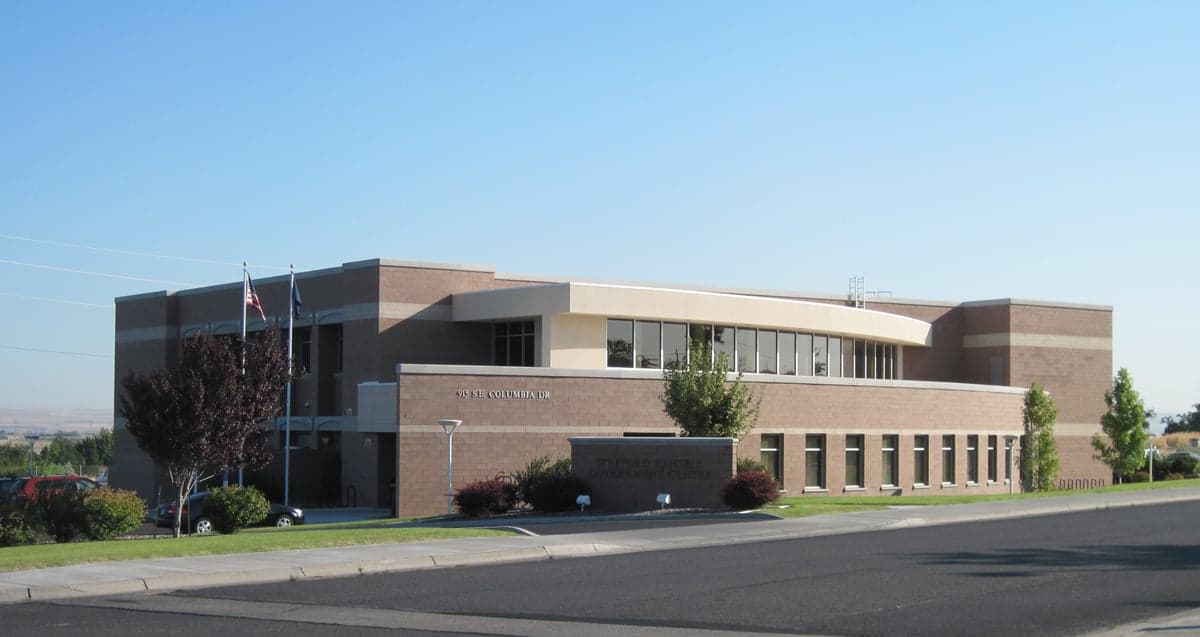
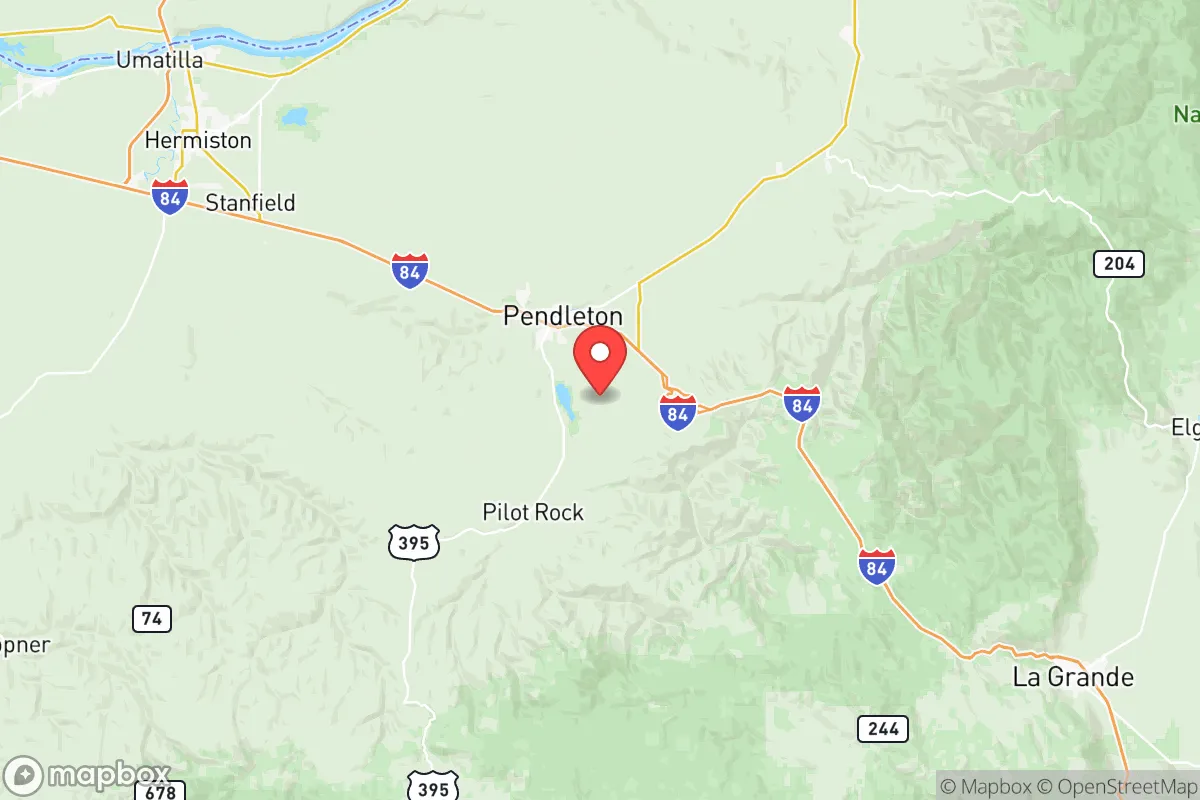
Photo: Wikipedia
Demographics of Umatilla County
Affluence Level in Umatilla County
A below-average socioeconomic profile. Incomes, home values, and educational attainment trail the U.S., with higher poverty and unemployment.
People of Umatilla County
Today, Umatilla County’s 80,087 residents form a distinctive blend of deep-rooted agricultural heritage and a rapidly growing Hispanic population, creating a community that is both traditional and evolving. The county is predominantly white (62.0%) with a significant Hispanic minority (28.9%), a foreign-born population of 6.9%, and a relatively low college attainment rate of 18.0%, reflecting its working-class, rural character. The population is concentrated in the cities of Pendleton, Hermiston, and Umatilla, with smaller communities like Milton-Freewater and Athena anchoring the county’s farming identity. This is a place where rodeo culture, irrigation-driven agriculture, and a growing Latino workforce coexist, shaping a unique social and economic landscape.
Settlement & growth (pre-1960)
The original inhabitants of Umatilla County were the Cayuse, Umatilla, and Walla Walla tribes, whose presence along the Umatilla River and Columbia River dates back thousands of years. These nations lived a semi-nomadic lifestyle, relying on salmon runs, root gathering, and trade. The arrival of Lewis and Clark in 1805 marked the first recorded contact with Euro-Americans, but sustained settlement did not begin until the 1840s, when the Oregon Trail brought waves of American pioneers through the region. The Cayuse War of 1847-1855, triggered by conflict over land and disease, led to the forced removal of Native peoples onto the Umatilla Indian Reservation, which today lies just east of Pendleton.
The first major wave of American settlers arrived in the 1850s and 1860s, drawn by the Donation Land Claim Act of 1850, which offered free land to white settlers. These early pioneers were primarily of English, Scots-Irish, and German stock, and they established the county’s first towns: Pendleton (founded 1868) became the county seat and a hub for the wool and wheat trade, while Milton (later Milton-Freewater) and Athena grew as farming communities. The completion of the transcontinental railroad through the Columbia River Gorge in the 1880s accelerated settlement, bringing more Anglo-American homesteaders and a small number of Chinese laborers who worked on the railroads and in mining. By 1900, the county’s population had reached roughly 20,000, overwhelmingly white and native-born.
The early 20th century saw two transformative developments. First, the Umatilla Project, a federal irrigation initiative begun in 1905, turned arid sagebrush into fertile farmland, attracting a new wave of settlers to Hermiston (founded 1907) and Umatilla. These towns grew rapidly as centers for potato, onion, and alfalfa production. Second, the Dust Bowl and Great Depression of the 1930s pushed thousands of displaced farmers from Oklahoma, Texas, and Arkansas — the so-called “Okies” — to migrate west. Many settled in Umatilla County, finding work in agriculture and timber. This wave reinforced the county’s white, Protestant, and conservative character, a legacy that persists today in the region’s political leanings and cultural values.
World War II brought a temporary boom: the U.S. Army established the Umatilla Chemical Depot near Hermiston in 1941, drawing workers and military personnel. After the war, the depot remained a major employer, while the expansion of irrigation and mechanized farming continued to drive population growth. By 1960, the county’s population had reached 44,352, still overwhelmingly white (over 95%) and rural, with Pendleton and Hermiston as the dominant urban centers.
Modern era (post-1965)
The 1965 Hart-Cellar Act, which ended national-origin quotas, had a delayed but profound effect on Umatilla County. Unlike major cities that saw immediate waves of Asian and Latin American immigration, the county’s demographic shift began in the 1980s and accelerated through the 2000s, driven by labor demand in agriculture. The primary new group has been Hispanic immigrants, predominantly from Mexico and Central America, who arrived to work in the region’s orchards, vineyards, and potato fields. Today, Hispanics make up 28.9% of the population, up from less than 5% in 1980. This community is concentrated in Hermiston and Umatilla, where many work in food processing plants and farms, and in Milton-Freewater, known for its apple and wine grape production. A smaller but growing number of Hispanic residents have settled in Pendleton, where they work in service industries and manufacturing.
Domestic migration has been more modest. The county has not experienced the rapid Sun Belt-style growth seen in other parts of Oregon; instead, it has seen a slow outflow of younger, college-educated whites to larger cities like Portland and Seattle, offset by an inflow of retirees and remote workers seeking affordable land. The county’s college attainment rate of 18.0% is well below the national average, reflecting the dominance of agriculture and blue-collar employment. The East/Southeast Asian population remains tiny at 0.5%, and the Indian subcontinent population at 0.1%, with no significant enclaves. The Black population is 0.7%, largely concentrated in Pendleton and Hermiston, where a small number of families have roots in the military or food processing industries.
Suburbanization has been limited but noticeable. Hermiston has grown from a farm town of 10,000 in 1990 to over 20,000 today, absorbing much of the county’s new housing and retail development. Pendleton, by contrast, has remained relatively stable, its population hovering around 17,000, as its economy shifts from wool and wheat to tourism (the Pendleton Round-Up) and light manufacturing. The county’s overall population grew by about 8% between 2010 and 2020, driven almost entirely by Hispanic births and immigration.
The future
Umatilla County is becoming more diverse, but slowly and unevenly. The Hispanic share of the population is projected to rise to 35-40% by 2040, driven by higher birth rates and continued immigration for agricultural labor. This growth will be concentrated in Hermiston and Umatilla, where the school-age population is already majority Hispanic. The white population, meanwhile, is aging and declining in absolute numbers, as younger whites leave for urban areas. The county’s cultural identity is likely to become more bicultural, with Spanish-language media, Latino-owned businesses, and bilingual services becoming more common, even as the region’s conservative political leanings persist. The East/Southeast Asian and Indian populations are expected to remain negligible, as the county lacks the tech or professional sectors that attract these groups.
The biggest wildcard is water. The Umatilla Basin’s agriculture depends on irrigation from the Columbia River and groundwater, both of which face increasing pressure from climate change and regulatory limits. If water becomes scarcer, the agricultural economy — and the Hispanic labor force that supports it — could shrink, leading to population stagnation or decline. Conversely, if the region attracts new industries like data centers or renewable energy (both of which are being explored near Boardman and Hermiston), it could see a modest influx of new residents with different skills and backgrounds.
For someone moving in now, Umatilla County offers a stable, family-oriented, and affordable rural lifestyle, but one that is increasingly defined by the intersection of a traditional white agricultural community and a growing Hispanic working class. The county is not becoming a melting pot in the urban sense; rather, it is developing a layered identity where distinct communities coexist, often in the same schools and workplaces but with separate social and cultural lives. The next 20 years will likely see this duality deepen, with Hermiston emerging as the county’s most diverse and dynamic hub, while Pendleton retains its role as the historic and cultural anchor. For families seeking a low-cost, safe, and community-oriented environment, Umatilla County remains a solid choice — but one where the demographic future looks markedly different from its past.

* Values derived from national, state, county, city and local statistics and may differ in a specific area. Last updated: 2026-06-27T02:10:23.000Z
Narrative content on this page is AI-generated and may contain mistakes. Verify any details that matter before acting on them.
ReloMaps may earn a commission from affiliate links at no extra cost to you.

