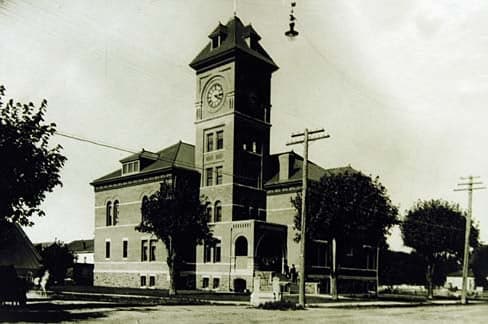
Photo: Wikipedia
Personal Sovereignty in Lane County
Viable for self-reliance. Generally workable, though some barriers may limit total independence.
What does Personal Sovereignty tell us?
Personal Sovereignty measures your capacity for self-reliance and independence with minimal government friction. Higher scores mean fewer barriers between you and the way you want to live... but it assumes you have the space you need and good neighbors.
What does this tell us?
Personal Sovereignty measures your capacity for self-reliance and independence with minimal government friction. Higher scores mean fewer barriers between you and the way you want to live... but it assumes you have the space you need and good neighbors.
State Policy
Energy independence: Importer (35% of energy produced in-state)
Personal Liberty
Homesteading

Personal Liberty Analysis
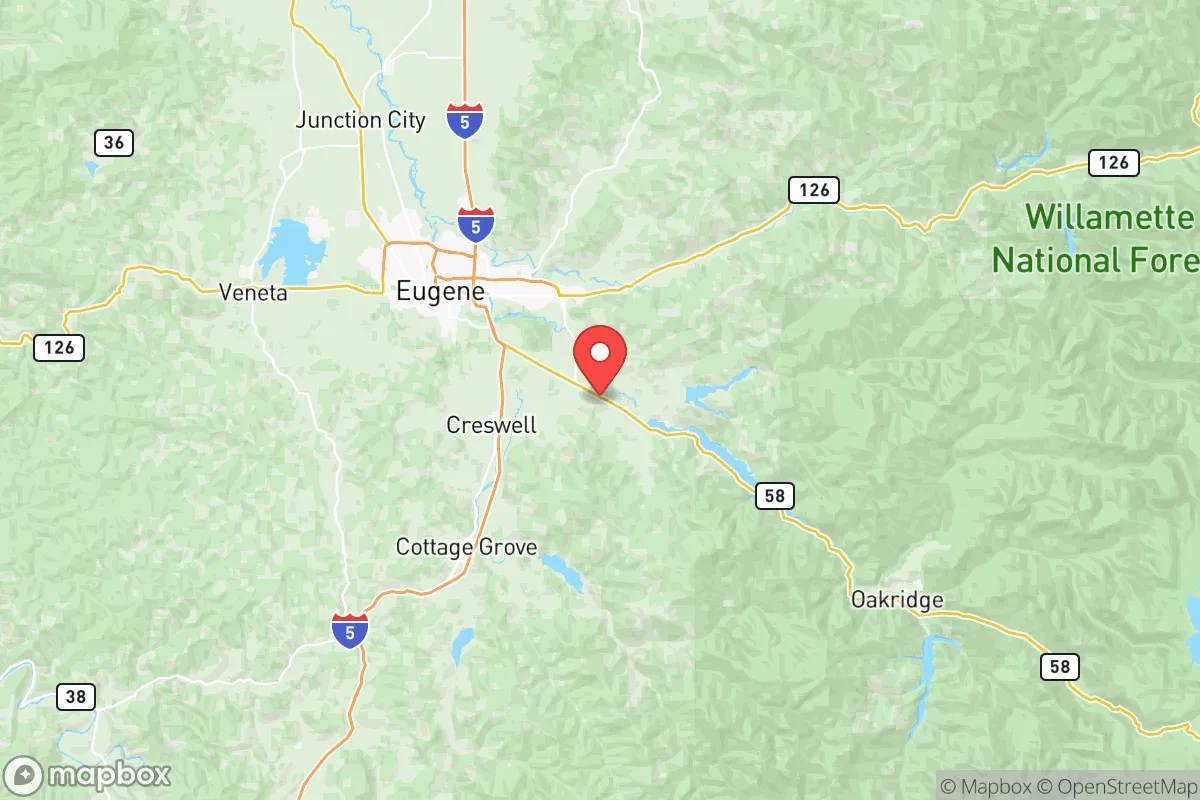
Lane County, Oregon presents a complex personal sovereignty landscape where the urban-rural divide creates dramatically different autonomy environments within a single county. The Eugene-Springfield metro area leans progressive with heavier regulatory oversight, while the eastern and coastal rural zones—including Cottage Grove, Creswell, and Florence—offer significantly more room for self-directed living. For a relocation reader prioritizing personal freedom, the key question is not whether Lane County is "free" but which specific area within it aligns with your sovereignty expectations.
Tax burden and regulatory posture across Lane County
Oregon has no state sales tax, which keeps day-to-day consumer costs lower than in neighboring Washington or California. Lane County's property tax rates are moderate by state standards, with an effective rate around 0.93% of assessed value—slightly below the Oregon average of 1.01%. However, the state's income tax is among the highest in the nation, with a top marginal rate of 9.9% kicking in at $125,000 for single filers. This creates a trade-off: lower property taxes but higher income taxes than many conservative-leaning states. The regulatory posture varies sharply by jurisdiction. Eugene enforces strict land-use codes, including urban growth boundaries that limit rural development and require minimum lot sizes of 5,000 square feet in most residential zones. In contrast, unincorporated areas like Dexter, Pleasant Hill, and the McKenzie River corridor operate under Lane County's more permissive zoning, where 5- to 20-acre parcels are common and building permits are processed with less bureaucratic friction. Cottage Grove has actively courted light industrial and agricultural businesses, maintaining a business-friendly approach that contrasts with Eugene's more restrictive commercial permitting. For a self-reliant individual, the regulatory burden is substantially lighter outside the Eugene city limits.
Self-defense and gun law specifics in Lane County
Oregon is a "shall-issue" state for concealed handgun licenses, meaning Lane County residents who pass a background check and complete a safety course can obtain a CHL without discretionary denial. The county sheriff's office processes applications efficiently, with typical turnaround of 30-45 days. However, Oregon's Measure 114, passed by voters in 2022 but currently tied up in court challenges, would require a permit to purchase any firearm and ban magazines over ten rounds. As of early 2026, the measure remains blocked by a Harney County circuit court ruling, but the legal uncertainty creates an unstable environment for gun owners. Lane County's gun culture is polarized: Eugene has multiple gun-free zones and a city council that has passed resolutions supporting stricter controls, while Creswell and Cottage Grove host active shooting ranges and gun shops with strong community support. Open carry is legal in Oregon without a permit, but Eugene prohibits it within city parks and public buildings. For self-defense-minded residents, living outside Eugene city limits—particularly in Veneta or the unincorporated areas around Lorane—provides more practical freedom to carry and store firearms without local ordinances adding restrictions. The sheriff's office has stated it will not enforce Measure 114 if it takes effect, signaling a pro-Second Amendment posture from county law enforcement.
Self-reliance and homesteading viability: lot sizes, zoning, and off-grid feasibility
Lane County's rural zoning allows for genuine homesteading, but the feasibility depends heavily on location. In the McKenzie River Valley and areas east of Springfield, zoning permits residential uses on parcels as small as 5 acres in exclusive farm use (EFU) zones, though dwelling approvals require demonstrating agricultural income. The Fall Creek and Jasper areas offer more flexible rural residential zoning with minimum lot sizes of 2 to 5 acres, where no agricultural income is required for a single-family home. Off-grid living is legally viable but regulated: Oregon's building codes require septic systems and well permits, and Lane County enforces the state's strict water rights laws. Rainwater collection is legal without a permit for non-potable uses, but domestic wells require a water right permit from the Oregon Water Resources Department—a process that can take 6-12 months. Solar panels are widely permitted, and net metering is available through the Eugene Water & Electric Board (EWEB) and Lane Electric Cooperative, though EWEB's interconnection requirements are more stringent than those in rural co-op territories. Florence, on the coast, has more restrictive coastal zone regulations that limit new well drilling and require additional permitting for structures within the tsunami inundation zone. For a homesteader, the sweet spot is the Dexter-Lowell area, where 5- to 10-acre parcels are affordable (typically $150,000-$300,000 for raw land), zoning allows livestock and gardens without special permits, and the county's planning department has a reputation for reasonable enforcement rather than aggressive code compliance.
Personal liberties: parental rights, medical autonomy, speech, and property
Oregon law grants parents broad authority over their children's education, including legal homeschooling without a teaching license or curriculum approval. Lane County has a robust homeschooling community, with support groups in Cottage Grove and Eugene that organize co-ops and extracurricular activities. The state's vaccine mandate for school attendance does not apply to homeschooled children, and medical exemptions are available for public school students. Medical autonomy is more restricted: Oregon has legalized physician-assisted suicide (Death with Dignity Act) and recreational marijuana, but the state also mandates COVID-19 vaccination for healthcare workers and has some of the nation's strictest vaccine requirements for schoolchildren. Lane County's public health department enforces these mandates uniformly, with no local opt-outs. Free speech protections follow First Amendment standards, though Eugene has a "bias crime" ordinance that enhances penalties for speech perceived as hate-motivated—a provision that some conservative residents view as chilling protected expression. Property rights are strongest in unincorporated areas, where the county's zoning code allows accessory dwelling units, home businesses, and agricultural structures with minimal permitting. In Eugene, the city's rental housing inspection program and strict noise ordinances create a more regulated property environment. For a family prioritizing parental control over education and medical decisions, the rural areas of Lane County—particularly Junction City and the Coburg area—offer the most permissive environment, while Eugene's progressive policies may feel intrusive to those accustomed to lighter-touch governance.
Compared to other Western counties, Lane County offers a mixed sovereignty profile. It is notably more permissive than California's Bay Area or Washington's King County on property rights and homeschooling, but significantly more regulated than Idaho's Kootenai County or Montana's Gallatin County on gun laws and medical autonomy. The county's internal diversity means that a self-reliant individual can find a niche—whether in the homestead-friendly hills of Dexter or the gun-friendly outskirts of Cottage Grove—but must accept that Oregon's state-level tax and regulatory framework imposes constraints that no local jurisdiction can fully escape. For the relocation reader who values personal sovereignty, Lane County's best strategy is to choose a specific community that matches your priorities, rather than expecting the entire county to accommodate your autonomy preferences.

* Values derived from national, state, county, city and local statistics and may differ in a specific area. Last updated: 2026-06-15T09:11:58.000Z
Narrative content on this page is AI-generated and may contain mistakes. Verify any details that matter before acting on them.
ReloMaps may earn a commission from affiliate links at no extra cost to you.

