
Photo: Wikipedia
Quality of Life in Rogers County
A livable area that tracks near national norms for affordability, walkability, and neighborhood health.
What does Quality of Life tell us?
Quality of Life measures an area by evaluating factors like cost of living, nearby amenities, country club access, airport proximity, socioeconomic signals and neighborhood character. For large states, this is a general average — quality of life can vary dramatically between metro areas, suburbs, and rural communities within the same state.
What does this tell us?
Quality of Life measures an area by evaluating factors like cost of living, nearby amenities, country club access, airport proximity, socioeconomic signals and neighborhood character. For large states, this is a general average — quality of life can vary dramatically between metro areas, suburbs, and rural communities within the same state.
Cost of Living
16% below national average
122%
The Real Cost of Living in Rogers County for 2026
| Tier | Individual | Family (4) |
|---|---|---|
| Survival | $16k | $31k |
| Comfortable | $43k | $63k |
| Luxury | $126k+ | $195k+ |
| Elite (Top 5%) | $148k+ | $229k+ |
Quality-of-Life Analysis
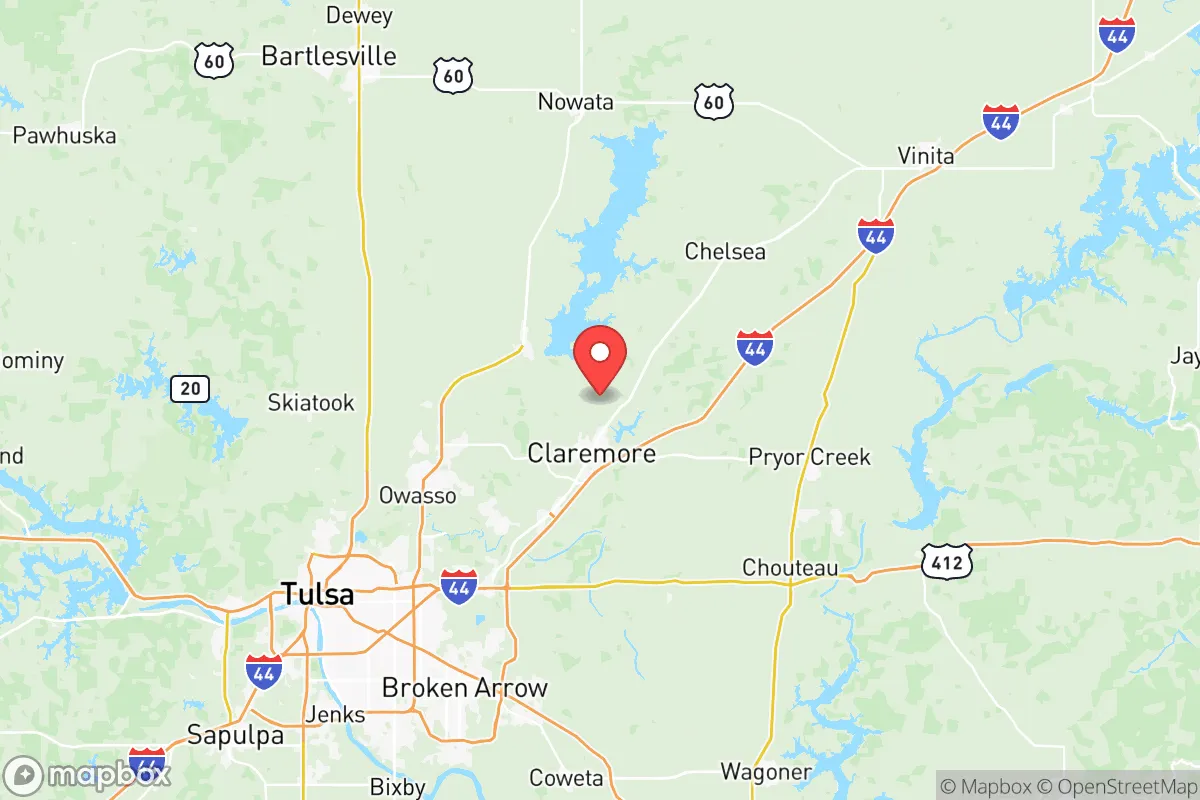
Rogers County, Oklahoma, offers a broad quality-of-life spectrum that ranges from the suburban amenities of its largest city, Claremore, to the quiet, rural character of communities like Oologah and Foyil. With a cost of living index of 84 (well below the national average of 100), the county attracts a mix of Tulsa commuters, families seeking affordable housing, and residents who want acreage without sacrificing access to basic services. The county's character shifts noticeably from its developed western edge near the Tulsa metro to its more sparsely populated eastern and northern reaches.
Largest town(s) & population centers
Claremore is the county seat and the largest population center, home to roughly 19,000 residents. Daily life here centers on a historic downtown district along Will Rogers Boulevard, which features local restaurants, the Will Rogers Memorial Museum, and Rogers State University. The town provides a full range of retail and medical services, including the Claremore Regional Hospital. Commuters make up a significant portion of the workforce, with the average county-wide commute clocking in at just over 25 minutes — a figure that reflects easy access to Tulsa via Highway 66 and the Will Rogers Turnpike. Owasso, while partially in Tulsa County, extends into Rogers County's southwestern corner and represents the most suburban, amenity-rich option in the area, with large shopping centers, top-rated schools, and newer housing developments. For residents who want walkable neighborhoods and chain retail, Owasso's Rogers County side is the most convenient choice.
Smaller towns & rural pockets
Oologah, located about 10 miles north of Claremore, is a smaller community of roughly 1,200 residents situated on Oologah Lake. It offers a slower pace with lake access, a historic downtown, and a strong sense of local identity tied to the Oologah-Talala school district. Foyil, further east on Highway 28, is a tiny unincorporated community known for the Totem Pole Park and Andy Payne's historic cross-country run — it represents the most rural end of the spectrum, with limited services and a population under 300. Collinsville, in the county's northwest corner, is a growing small town that balances rural roots with new subdivisions, attracting families priced out of Owasso. Verdigris, just south of Claremore, is an unincorporated community that has seen steady residential growth while maintaining a rural feel. These smaller areas lack the retail density of Claremore or Owasso, but offer larger lots, lower home prices, and quieter streets.
Cost & lifestyle range
The cost of living across Rogers County varies noticeably by location. At the affordable end, Foyil and the unincorporated areas east of Claremore offer the lowest home prices, often well below the county's median home value of $222,200, with older homes on acreage available in the $150,000–$180,000 range. The median rent county-wide is a manageable $1,018, but rental options are scarce in the most rural pockets. At the higher end, Owasso's Rogers County portion and the newer subdivisions around Verdigris push home values above the county median, with many single-family homes in the $250,000–$350,000 range. Claremore sits in the middle, offering a mix of historic homes near downtown and newer developments on the outskirts. Property taxes remain low by national standards, and no state income tax on retirement income makes the county attractive to older buyers. The trade-off is clear: residents in Owasso and western Claremore enjoy the shortest commutes and most amenities, while those in Foyil or eastern Rogers County trade convenience for space and lower costs.
Rogers County suits a wide range of residents, from Tulsa professionals who want a short commute and suburban schools to retirees seeking lakefront property on Oologah Lake. Families on a budget will find the most value in Collinsville and the smaller communities, while those who prioritize walkability and cultural amenities will gravitate toward Claremore's historic core. The county's diversity of settings — all within a 30-minute drive of Tulsa — makes it one of the more versatile options in northeastern Oklahoma for anyone weighing affordability against lifestyle preferences.

Crime in Rogers County
Crime rates similar to the national median for U.S. locations.
Violent CrimeViolent Crime Analysis
Property CrimeProperty Crime Analysis
Crime Analysis
Rogers County, Oklahoma, reports a violent crime rate of 409.6 incidents per 100,000 residents and a property crime rate of 1,833.2 per 100,000, placing it above the national average for both categories. While the county benefits from its proximity to the Tulsa metro area and includes affluent suburbs like Claremore and Owasso, crime is not evenly distributed. Residents in unincorporated areas and smaller towns such as Oologah and Collinsville often experience lower incident rates than the countywide averages suggest, though the overall safety picture is complicated by property crime and the influence of the broader Tulsa region’s criminal justice trends.
Crime in context
Rogers County’s violent crime rate of 409.6 per 100,000 is roughly 17% higher than the national average of about 350 per 100,000 and significantly above the Oklahoma state average of approximately 440 per 100,000. Property crime in the county, at 1,833.2 per 100,000, also exceeds the national benchmark of roughly 1,950 per 100,000 but sits slightly below the state average. These figures place Rogers County in a middle tier among Oklahoma’s 77 counties — safer than high-crime urban cores like Tulsa County but riskier than rural counties such as Nowata or Washington. The county’s location along the Will Rogers Turnpike and its mix of suburban growth and agricultural land contribute to property crime patterns, including vehicle theft and burglary, that track closely with regional economic activity.
What residents experience
For most residents, the day-to-day reality of crime in Rogers County depends heavily on where they live. Owasso, the county’s largest city, has invested in community policing and maintains a lower violent crime rate than the county average, though property crime — particularly theft from vehicles and package theft — remains a common complaint. Claremore, the county seat, sees a moderate volume of drug-related offenses and domestic incidents, driven in part by its role as a regional hub for services and the presence of Rogers State University. Smaller communities like Oologah and Foyil report very few violent crimes, but residents there often face longer emergency response times and rely on the Rogers County Sheriff’s Office for primary law enforcement. The county’s property crime rate, while not extreme, means that residents in all areas should take basic precautions: locking vehicles, securing outbuildings, and using outdoor lighting.
Neighborhood-level variation is significant. The eastern portion of the county, near the Grand Lake area and the town of Inola, tends to see lower crime rates overall, driven by lower population density and a higher proportion of rural residential properties. In contrast, the western corridor along Highway 169 from Owasso to Claremore experiences more property crime, correlating with higher traffic volumes and proximity to Tulsa. The Rogers County District Attorney’s Office, which operates within the 12th Judicial District, has historically taken a moderately tough stance on property and drug offenses, but the influence of more progressive policies in neighboring Tulsa County — where the district attorney has emphasized diversion programs and reduced sentencing for nonviolent offenders — creates a spillover effect. Criminals operating in the Tulsa metro area can cross county lines easily, and the contrast in prosecutorial philosophy means that Rogers County often bears the cost of crimes committed by individuals who cycle through Tulsa’s more lenient justice system. Residents concerned about public safety should be aware that the county’s relatively conservative judicial approach provides stronger deterrence than what is available just across the county line, but the open border with a large metro area with progressive prosecutors remains a persistent vulnerability.
* Values derived from national, state, county, city and local statistics and may differ in a specific area. Last updated: 2026-06-24T21:40:42.000Z
Narrative content on this page is AI-generated and may contain mistakes. Verify any details that matter before acting on them.
ReloMaps may earn a commission from affiliate links at no extra cost to you.

