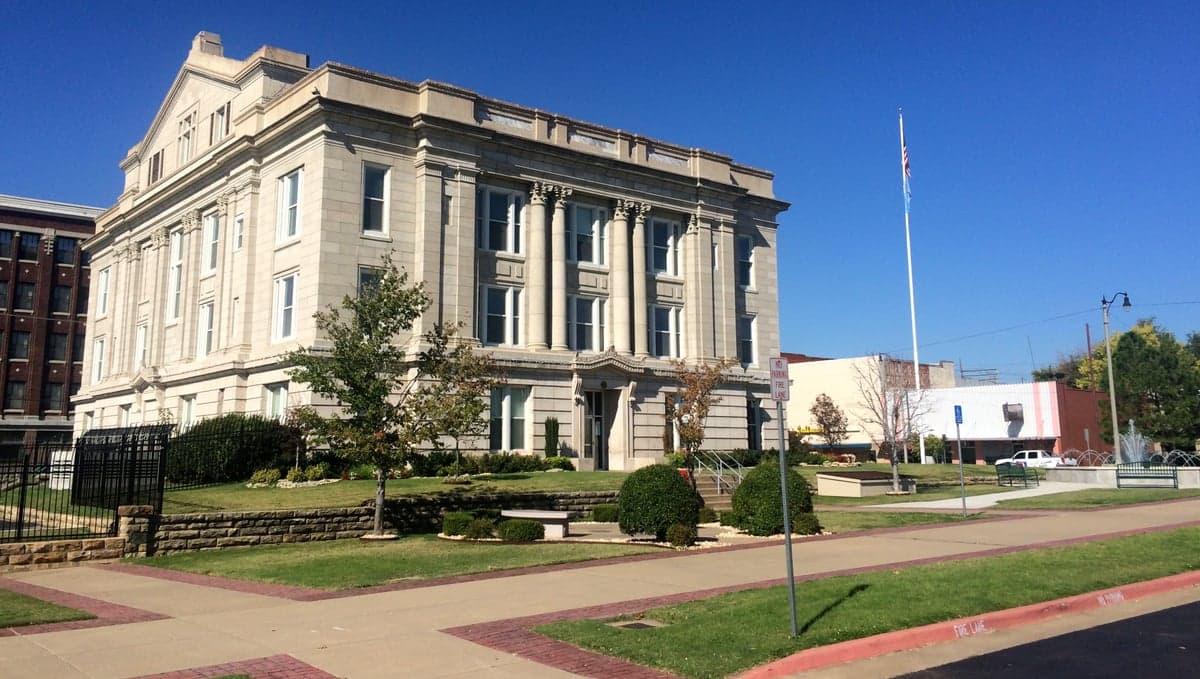
Photo: Wikipedia
Demographics of Creek County
Affluence Level in Creek County
A below-average socioeconomic profile. Incomes, home values, and educational attainment trail the U.S., with higher poverty and unemployment.
People of Creek County
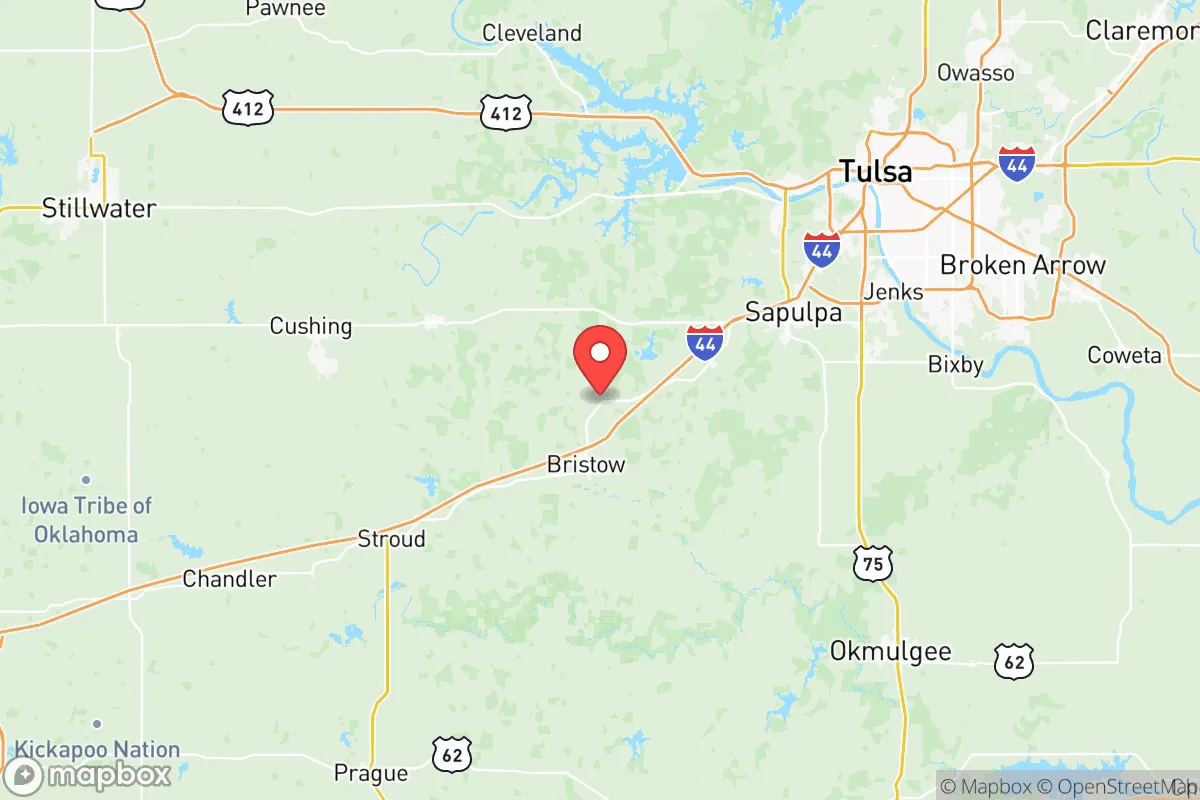
Creek County, Oklahoma, is home to 72,353 residents who reflect a deeply rooted, predominantly white population with a strong Native American heritage and a notably low foreign-born share of just 1.0%. The county’s character is shaped by its rural-to-suburban transition, with a population density of roughly 50 people per square mile, and a distinctive identity tied to the historic Creek (Muscogee) Nation, oil booms, and small-town resilience. Today, the largest concentrations of people live in the county seat of Sapulpa, along with the towns of Bristow, Drumright, and Oilton, each carrying distinct historical imprints from the waves of settlement that built them.
Settlement & growth (pre-1960)
Long before European-American settlement, the area that is now Creek County was part of the ancestral homeland of the Osage and Quapaw nations. However, the defining pre-American chapter began in the 1830s, when the U.S. government forcibly removed the Muscogee (Creek) Nation from the Southeast along the Trail of Tears. The Creeks were resettled in this region, and their presence remains central to the county’s identity—the county itself was named for them in 1907. The Creek Nation’s capital was established at Okmulgee, just south of modern Creek County, but many Creek families settled along the Arkansas River and in what would become Sapulpa, named after a Creek leader.
The first major wave of non-Native settlers arrived after the 1889 Land Run and the subsequent opening of Creek lands through allotment in the early 1900s. These were predominantly white settlers from the Midwest and Upper South—farmers and ranchers seeking cheap land. Towns like Bristow (founded 1902) and Kellyville (1903) grew as agricultural service centers. The discovery of oil in the Glenn Pool field (just east of the county) in 1905 triggered a dramatic boom. Drumright, founded in 1912, exploded from a tent camp to a town of 10,000 within months, drawing workers from across the U.S. and Europe, including a notable influx of Italian and Polish immigrants who worked the rigs and refineries. Oilton and Shamrock also boomed as oil towns. By 1920, Creek County’s population had surged to over 62,000, making it one of Oklahoma’s most densely populated rural counties.
The Dust Bowl and Great Depression of the 1930s hit hard, causing a population decline as farmers and oil workers left for California and other states. The post-World War II era saw a modest recovery, with returning veterans settling in Sapulpa and Bristow, but the oil industry’s volatility kept growth stagnant. By 1960, the population had settled at around 40,000, with a heavily white, native-born, and rural character. The Creek Nation’s presence remained significant, though many tribal members had been displaced or assimilated into the broader white-majority society.
Modern era (post-1965)
The 1965 Hart-Cellar Act had minimal direct impact on Creek County, as the foreign-born population today stands at just 1.0%—far below the national average. The county did not experience the large-scale immigration from Asia, Latin America, or the Middle East that reshaped many U.S. regions. Instead, the post-1965 demographic story is one of domestic migration and suburbanization. The oil bust of the 1980s caused another population dip, but the county has since stabilized through growth in the Tulsa metropolitan area’s outer ring. Sapulpa, just 15 miles from downtown Tulsa, has become a bedroom community, attracting families seeking lower housing costs and a slower pace while commuting to Tulsa for work. This has brought a modest influx of white and Black professionals, though the Black population remains small at 2.1%.
The Hispanic population, now 5.1%, began to grow in the 1990s and 2000s, driven by agricultural and construction jobs. Most Hispanic residents are concentrated in Sapulpa and Bristow, where they work in meatpacking, poultry processing, and construction. The Asian population (East/Southeast Asian) is negligible at 0.6%, with no significant enclave forming. The Indian-subcontinent population is effectively zero. The county’s racial composition remains overwhelmingly white (73.5%), with a notable Native American population (estimated at 12-15% in broader counts, though not separately listed in the provided data) that includes Creek, Cherokee, and other tribal citizens. The college-educated share is just 18.4%, reflecting a workforce historically tied to blue-collar industries like oil, agriculture, and manufacturing.
Suburbanization has been the dominant trend since 2000. New housing developments have spread along Highway 66 and Interstate 44, particularly around Sapulpa and the unincorporated area of Jenks (which straddles the county line). Older oil towns like Drumright and Oilton have seen population loss as younger residents move toward Tulsa or larger regional centers. The county’s cultural identity remains conservative, with a strong emphasis on church, family, and outdoor recreation like hunting and fishing. The Creek Nation’s tribal government, based in Okmulgee, maintains a significant cultural and economic presence, including a casino in Sapulpa that provides jobs and revenue.
The future
Demographic projections suggest Creek County will become slightly more diverse but remain predominantly white and native-born over the next 10-20 years. The Hispanic share is likely to grow gradually, potentially reaching 8-10% by 2040, as families expand and new migrants arrive for agricultural and service jobs. The Black population may increase modestly as Tulsa’s suburban sprawl continues, but the county lacks the economic magnets to attract large numbers of new residents. The East/Southeast Asian and Indian populations are expected to remain negligible, as the county offers few professional opportunities that draw these groups. The foreign-born share will likely stay below 2%.
The biggest demographic shift will be aging: the median age is already above the state average, and younger adults continue to leave for college and careers in Tulsa, Oklahoma City, or out of state. This could lead to population stagnation or slight decline, offset only by continued suburban growth in Sapulpa and the I-44 corridor. The Creek Nation’s influence may grow as tribal enterprises expand, potentially attracting some Native American families back to the area. The county’s cultural identity will likely remain conservative and rooted in its oil-and-agriculture past, with a growing Hispanic presence adding new cultural elements, particularly in food and festivals.
For someone moving in now, Creek County offers a low-cost, low-density, and safe environment with strong community ties and easy access to Tulsa’s amenities. It is not a place of rapid demographic change or cosmopolitan diversity, but rather a stable, traditional American county where the past—Native American, oil-boom, and rural—still shapes daily life. The future points toward slow, incremental diversification, but the core character of a white, native-born, and conservative population will persist for the foreseeable future.

* Values derived from national, state, county, city and local statistics and may differ in a specific area. Last updated: 2026-06-15T23:14:11.000Z
Narrative content on this page is AI-generated and may contain mistakes. Verify any details that matter before acting on them.
ReloMaps may earn a commission from affiliate links at no extra cost to you.

