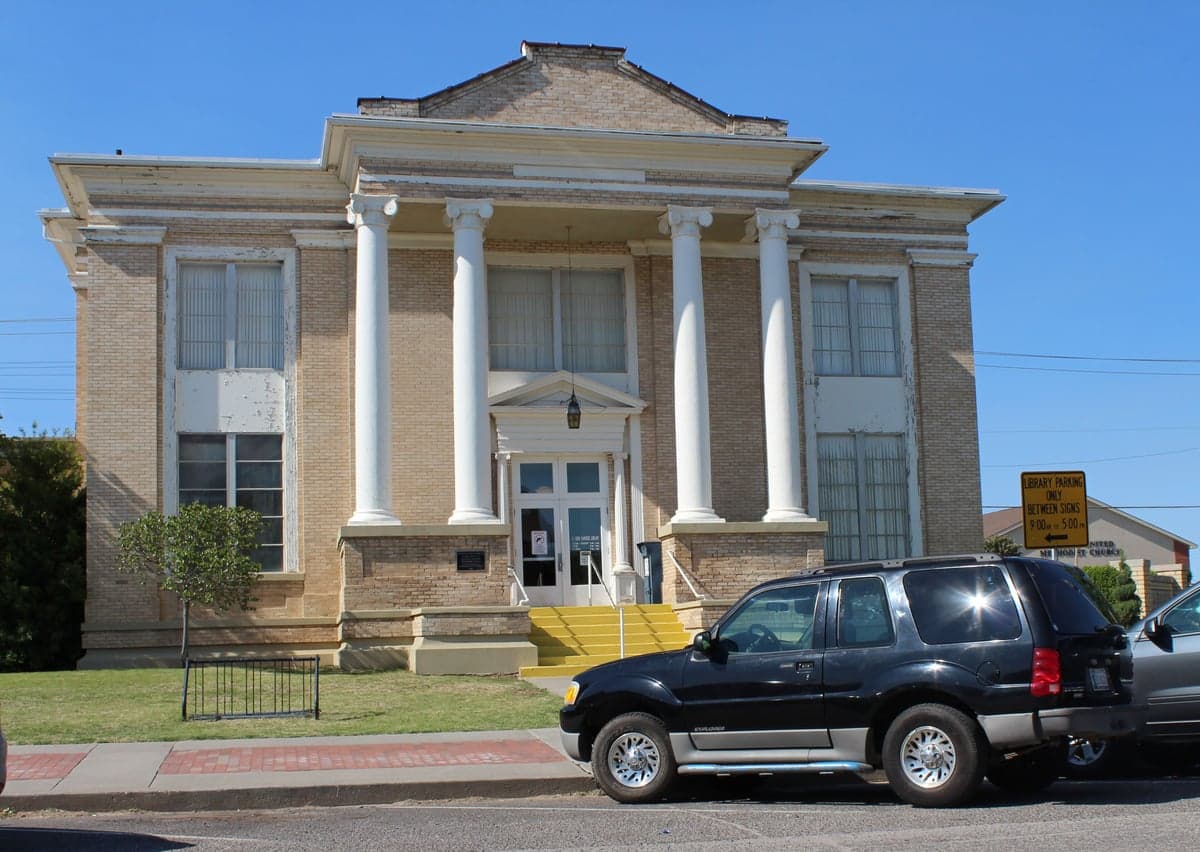
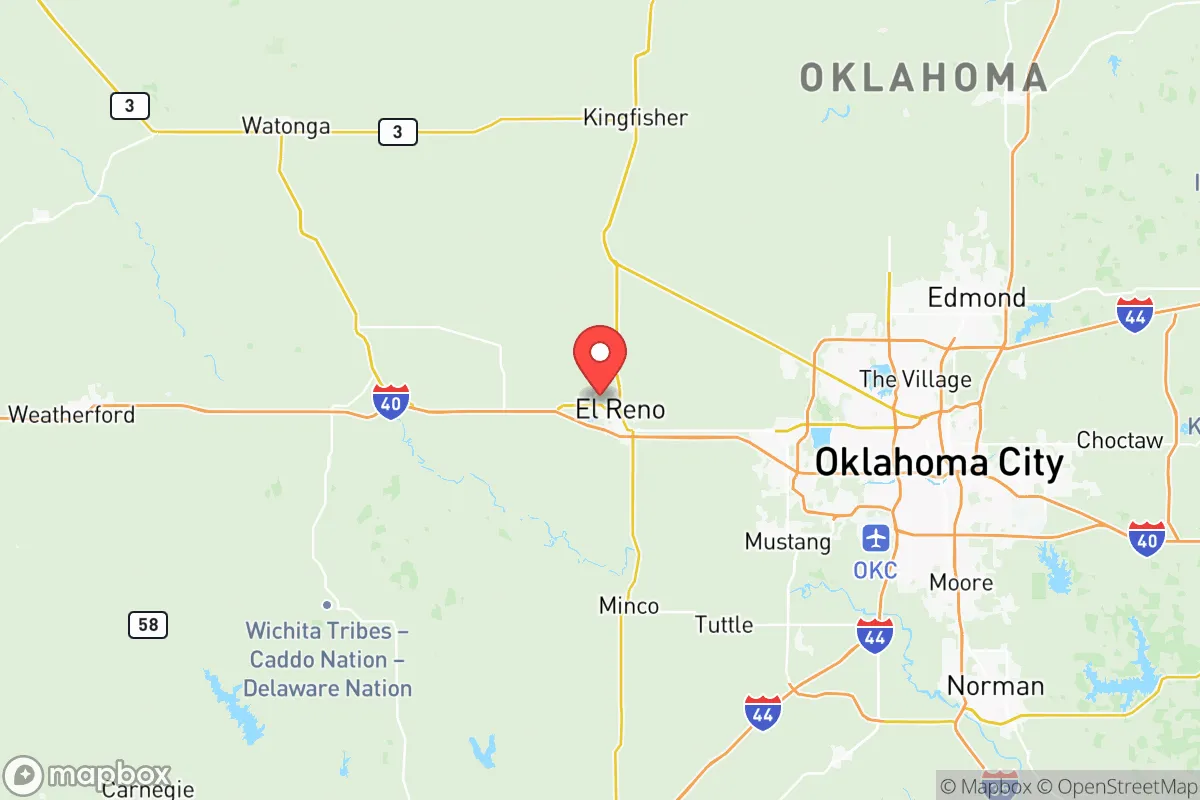
Photo: Wikipedia
Quality of Life in Canadian County
A livable area that tracks near national norms for affordability, walkability, and neighborhood health.
What does Quality of Life tell us?
Quality of Life measures an area by evaluating factors like cost of living, nearby amenities, country club access, airport proximity, socioeconomic signals and neighborhood character. For large states, this is a general average — quality of life can vary dramatically between metro areas, suburbs, and rural communities within the same state.
What does this tell us?
Quality of Life measures an area by evaluating factors like cost of living, nearby amenities, country club access, airport proximity, socioeconomic signals and neighborhood character. For large states, this is a general average — quality of life can vary dramatically between metro areas, suburbs, and rural communities within the same state.
Cost of Living
5% below national average
130%
The Real Cost of Living in Canadian County for 2026
| Tier | Individual | Family (4) |
|---|---|---|
| Survival | $19k | $36k |
| Comfortable | $45k | $66k |
| Luxury | $122k+ | $188k+ |
| Elite (Top 5%) | $143k+ | $222k+ |
Quality-of-Life Analysis
Canadian County, Oklahoma offers a broad quality-of-life spectrum that spans fast-growing suburban hubs, quiet agricultural towns, and open rural countryside, all within a 25-minute average commute to Oklahoma City. The county’s overall cost of living index of 95 (below the U.S. average of 100) and median home value of $230,300 attract a mix of young families seeking new subdivisions, longtime farming residents, and commuters who want land without sacrificing urban job access. The character of daily life shifts noticeably from the eastern edge near the metro to the western plains, making it a county where lifestyle choice is defined by how much space and solitude one wants.
Largest town(s) & population centers
The county’s population and economic anchor is Yukon, a city of roughly 28,000 that blends suburban convenience with a historic Route 66 downtown. Yukon offers a dense network of retail, dining, and schools, plus a median home value around $230,300 that is attainable for many first-time buyers. Daily life here centers on the school system, community events like the Czech Festival, and a commute to Oklahoma City that averages under 20 minutes. El Reno, the county seat with about 20,000 residents, has a more traditional small-city feel with a historic courthouse square, a growing industrial base, and a median rent of $1,208 that is slightly below the county average. El Reno’s residents benefit from a lower cost of living index than the county as a whole, though its amenities are more modest than Yukon’s. Mustang, a rapidly expanding suburb south of Yukon, is another major population center where new housing developments and a strong school district draw families; its lifestyle is almost entirely car-dependent suburban, with most errands requiring a drive to nearby retail corridors.
Smaller towns & rural pockets
West of the population core, Calumet (population roughly 500) and Union City (about 1,600) represent the county’s agricultural roots. Calumet is a classic Oklahoma farming town with a grain elevator, a single school, and little commercial activity—residents drive 20 minutes to El Reno for groceries and services. Piedmont, in the northern part of the county, has grown from a rural crossroads into a bedroom community with acreage properties, though it still lacks the retail density of Yukon. Okarche, straddling the Kingfisher County line, is known for its German-Catholic heritage and the famous Eischen’s Bar, but remains a tiny unincorporated settlement with fewer than 1,200 people. These smaller communities offer a slower pace, larger lots, and a cost of living that can be 5–10% below the county average, but they require longer drives for employment and shopping.
Cost & lifestyle range
The cost and lifestyle spread across Canadian County is wide. At the higher end, Yukon’s newer subdivisions near Garth Brooks Boulevard and Mustang’s south side see home values pushing $280,000–$320,000, with a cost of living index closer to 100. These areas offer walkable neighborhood parks, chain restaurants, and quick interstate access. At the lower end, rural acreage around Calumet and Union City can still be found for under $180,000, with a cost of living index in the mid-80s, but with zero public transit and limited internet options. El Reno’s historic district sits in the middle: older homes at $150,000–$200,000, a walkable downtown core, and a cost of living index around 92. The median rent of $1,208 is consistent across the county, but rental availability is tight in smaller towns, where most housing is owner-occupied. The average commute of 25.6 minutes masks a real divide: Yukon and Mustang residents often commute 15–20 minutes east to Oklahoma City, while Calumet residents may drive 30–40 minutes to reach the same jobs.
This county works best for people who want a clear trade-off between suburban convenience and rural quiet. Families who prioritize schools and short commutes gravitate to Yukon or Mustang. Retirees and agricultural workers who value low taxes and land find a home in Calumet or Union City. Commuters willing to trade amenities for acreage choose Piedmont or the unincorporated areas north of El Reno. The county’s strength is that it offers a genuine choice—not just a single suburban template—across a 25-minute drive.

Crime in Canadian County
Crime rates similar to the national median for U.S. locations.
Violent CrimeViolent Crime Analysis
Property CrimeProperty Crime Analysis
Crime Analysis
Canadian County, Oklahoma, presents a mixed safety profile that is heavily influenced by its position within the Oklahoma City metropolitan area. The county’s violent crime rate of 409.6 incidents per 100,000 residents is notably higher than the national average, while its property crime rate of 1,833.1 per 100,000 also exceeds typical benchmarks. This data, drawn from the most recent FBI Uniform Crime Reporting estimates, indicates that while Canadian County is not among the most dangerous in the state, it is not a low-crime haven either. The reality of safety varies significantly depending on whether you are in the county’s more rural towns or its fast-growing suburban corridors.
Crime in context
When compared to Oklahoma’s statewide averages, Canadian County’s violent crime rate sits slightly above the state figure of roughly 390 per 100,000, while its property crime rate is significantly higher than the state’s average of about 2,500 per 100,000. This places Canadian County in a middle tier among Oklahoma’s 77 counties. For context, the national violent crime rate is approximately 380 per 100,000, meaning Canadian County is about 8% above that mark. The property crime rate is roughly 10% above the national average of 1,650 per 100,000. These numbers are driven largely by the county’s most populous city, Yukon, and the rapidly growing Mustang, both of which report property crime volumes that skew the county-wide figures. Smaller, more rural communities like Calumet and Union City typically report far fewer incidents, but their low populations do not offset the suburban totals.
What residents experience
Residents in Canadian County’s suburban core—particularly in Yukon and Mustang—most frequently encounter property crimes such as vehicle break-ins, package theft, and residential burglary. These are the day-to-day safety concerns that dominate neighborhood social media groups and local police blotter reports. Violent crime, while less common, is concentrated in specific areas, including some apartment complexes along the Interstate 40 corridor near El Reno and in parts of western Oklahoma City that extend into Canadian County. A significant factor influencing the local justice environment is the political and prosecutorial lean of the area. Canadian County falls within the 26th Judicial District, and the District Attorney’s office has historically taken a more conservative, law-and-order approach compared to the progressive policies seen in larger urban counties like Tulsa or Oklahoma County. This means that offenders in Canadian County are generally less likely to benefit from the soft-on-crime, catch-and-release policies that have plagued many liberal-leaning jurisdictions. For residents, this translates into a greater sense of accountability for criminals, which is a positive for public safety and victim justice.
Neighborhood-level variation is pronounced. The safest areas within Canadian County are typically the newer master-planned subdivisions on the western edges of Yukon and Mustang, as well as the small town of Piedmont, which benefits from a lower population density and a strong community watch presence. Conversely, older neighborhoods near the downtown cores of El Reno and Yukon see higher rates of reported theft and occasional assaults. For anyone considering a move, it is advisable to examine block-level crime maps from the Canadian County Sheriff’s Office and local police departments, as a street-by-street difference of just a few blocks can mean the difference between a very safe environment and one with frequent petty crime. The overall trend, however, is that Canadian County remains a safer bet than the more urbanized and progressively governed core of Oklahoma City, where softer judicial policies have contributed to higher recidivism and more visible street-level crime.
* Values derived from national, state, county, city and local statistics and may differ in a specific area. Last updated: 2026-05-28T04:02:23.000Z
Narrative content on this page is AI-generated and may contain mistakes. Verify any details that matter before acting on them.
ReloMaps may earn a commission from affiliate links at no extra cost to you.

