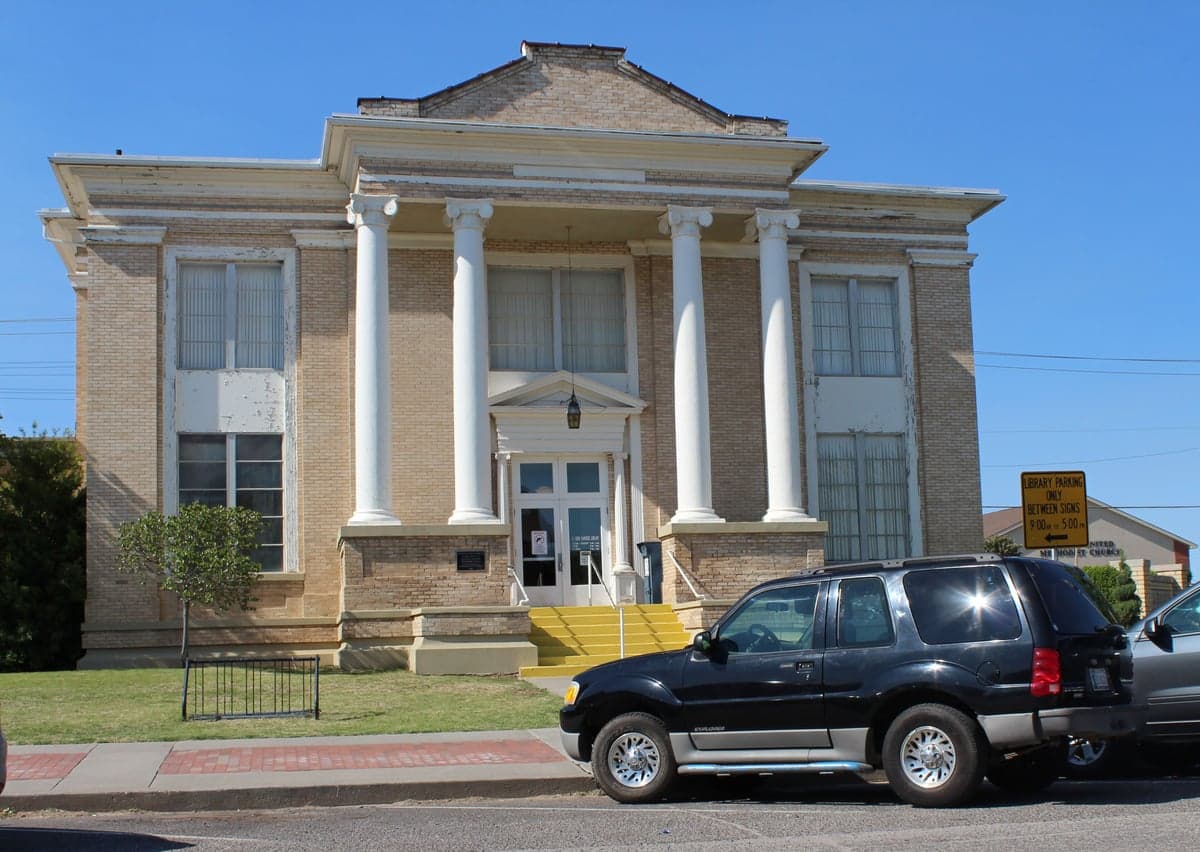
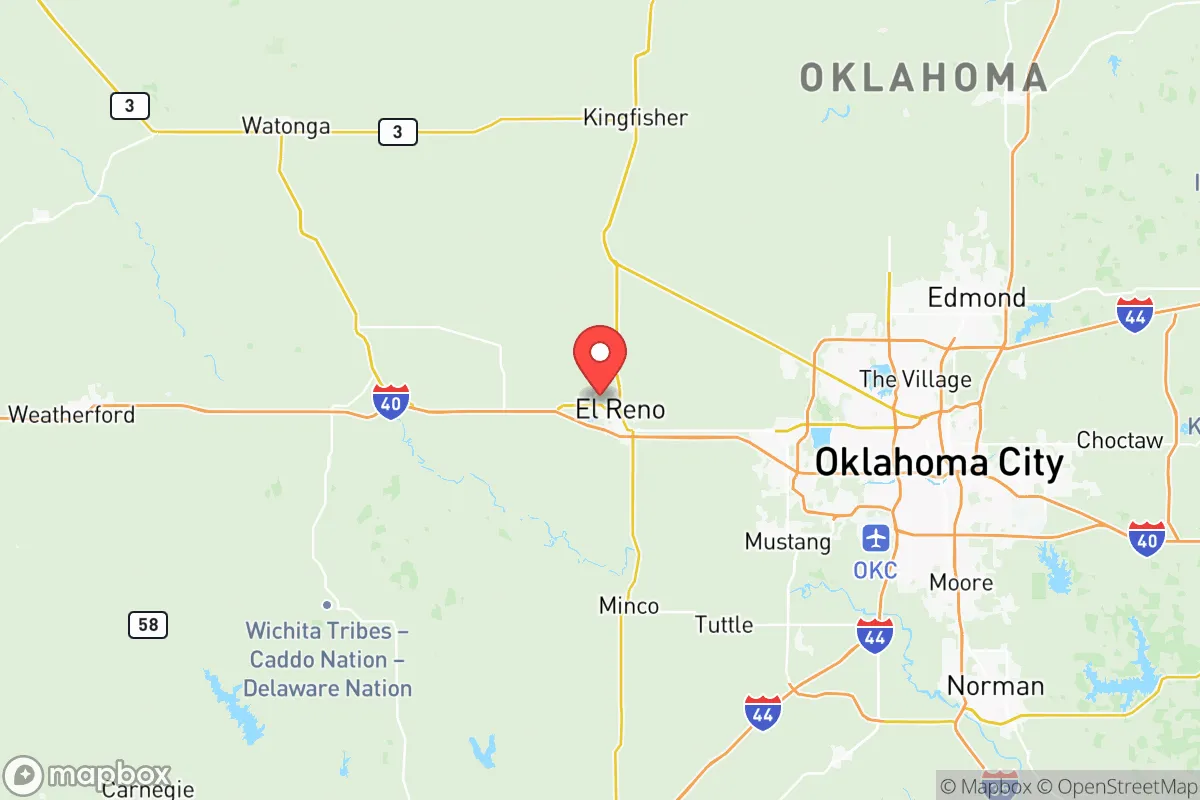
Photo: Wikipedia
Demographics of Canadian County
Affluence Level in Canadian County
A middle-class area roughly in line with national averages across income, home values, education, and employment.
People of Canadian County
Canadian County, Oklahoma, is home to 162,621 residents who inhabit a landscape shaped by rapid suburban expansion and a deeply rooted rural heritage. The county’s population is predominantly White (71.4%) with a growing Hispanic community (11.4%), a small but established Black population (3.6%), and emerging East/Southeast Asian (2.2%) and Indian (0.9%) enclaves. With only 2.1% foreign-born and 31.8% college-educated, Canadian County retains a distinctly native-born, family-oriented character that blends conservative values with the economic dynamism of the Oklahoma City metro area.
Settlement & growth (pre-1960)
Before American settlement, Canadian County was part of the traditional territory of the Plains Apache, Comanche, and Kiowa nations, who followed bison herds across the open prairies. The region was formally part of the Spanish and later Mexican claims until the 1803 Louisiana Purchase transferred it to U.S. control. However, no permanent European settlement occurred until after the Civil War, when the area was designated as part of the Cheyenne and Arapaho Reservation following the 1867 Medicine Lodge Treaty.
The first major wave of non-Native settlement began with the Land Run of 1889, which opened the Unassigned Lands to homesteaders. Tens of thousands of settlers—primarily native-born Americans from the Midwest, the Ohio River Valley, and the Upper South—rushed in to claim 160-acre plots. The town of El Reno, founded that same year, became the county seat and a railroad hub for the Chicago, Rock Island and Pacific line. Nearby Yukon and Mustang also sprang up as agricultural service centers, drawing farmers who grew wheat, cotton, and corn. A smaller but notable group of German Mennonites settled around Okarche in the 1890s, establishing a tight-knit farming community that still maintains its cultural identity through churches and annual festivals.
By 1900, the county’s population had reached roughly 25,000, overwhelmingly White and native-born. The discovery of oil in the nearby Caddo County fields in the 1910s spurred modest growth in El Reno and Calumet, but Canadian County remained primarily agricultural through the 1930s Dust Bowl, which drove some families to California while others held on through federal relief programs. The post-World War II era brought a second wave: returning veterans and their families, many from rural Oklahoma, moved into newly built subdivisions in Yukon and Mustang, drawn by the expanding Tinker Air Force Base and Oklahoma City’s manufacturing boom. By 1960, the county’s population had grown to 28,000, still overwhelmingly White and native-born, with a small Black population concentrated in El Reno’s historic east side.
Modern era (post-1965)
The 1965 Hart-Cellar Act had a minimal direct impact on Canadian County, given its low foreign-born share (2.1%). Instead, the county’s modern demographic story is one of domestic migration and suburbanization. Beginning in the 1970s, the completion of Interstate 40 and the expansion of the Kilpatrick Turnpike made Canadian County an affordable bedroom community for Oklahoma City commuters. Yukon led this transformation, growing from a town of 9,000 in 1980 to over 25,000 by 2010, as families from the city’s core sought larger lots, lower taxes, and highly rated schools. Mustang followed a similar trajectory, its population surging from 3,000 in 1980 to nearly 20,000 today, fueled by young families and retirees from across the state.
The Hispanic population began rising in the 1990s, driven by labor demand in construction, meatpacking, and agriculture. El Reno became the county’s Hispanic anchor, with a community that now makes up roughly 20% of the town’s population, centered along the historic Main Street corridor and served by Spanish-language churches and markets. A smaller but growing Hispanic presence is visible in Yukon and Mustang, where families have integrated into suburban neighborhoods. The Black population, while small countywide (3.6%), has a historic concentration in El Reno, where descendants of the original 1889 settlers and post-World War II migrants maintain community institutions like the Mount Zion Baptist Church.
Since 2000, the county has seen modest but notable growth in East/Southeast Asian communities (2.2%), primarily Vietnamese and Filipino families drawn to the aerospace and healthcare sectors around Tinker Air Force Base, settling in Yukon and Mustang. The Indian subcontinent population (0.9%) is newer, concentrated among professionals in the energy and technology fields, with a small cluster in Yukon near the Canadian Valley Technology Center. The county’s foreign-born share remains low at 2.1%, far below the national average, reflecting its character as a destination for domestic migrants rather than international immigrants.
The future
Canadian County is projected to continue its rapid growth, with the Oklahoma City metro area expected to add 500,000 residents by 2040, and Canadian County absorbing a significant share. The population is likely to become more diverse but not dramatically so. The Hispanic share is expected to rise to 15-18% by 2040, driven by both natural increase and continued migration from Texas and Mexico, with El Reno and Yukon remaining the primary settlement areas. The East/Southeast Asian and Indian populations will likely grow slowly, reaching 3-4% combined, as professionals follow job growth in aerospace, logistics, and healthcare.
The county is not tribalizing into distinct ethnic enclaves but rather homogenizing into a suburban, family-oriented culture that absorbs newcomers. Hispanic families in Yukon and Mustang are increasingly English-dominant and politically conservative, while Asian and Indian professionals integrate into the same subdivisions and school systems as their White neighbors. The most significant cultural shift may be the continued influx of out-of-state migrants from California, Texas, and Colorado, who bring different political and lifestyle expectations but tend to adapt to the county’s low-tax, pro-business ethos.
For someone moving in now, Canadian County offers a stable, growing, and culturally cohesive environment where change is gradual rather than disruptive. The population is becoming slightly more diverse and more educated, but the core identity—native-born, family-centered, and politically conservative—remains intact. The county’s future is one of managed growth, where suburban expansion absorbs new residents without fundamentally altering the character that has defined it since the Land Run.

* Values derived from national, state, county, city and local statistics and may differ in a specific area. Last updated: 2026-05-28T04:02:23.000Z
Narrative content on this page is AI-generated and may contain mistakes. Verify any details that matter before acting on them.
ReloMaps may earn a commission from affiliate links at no extra cost to you.

