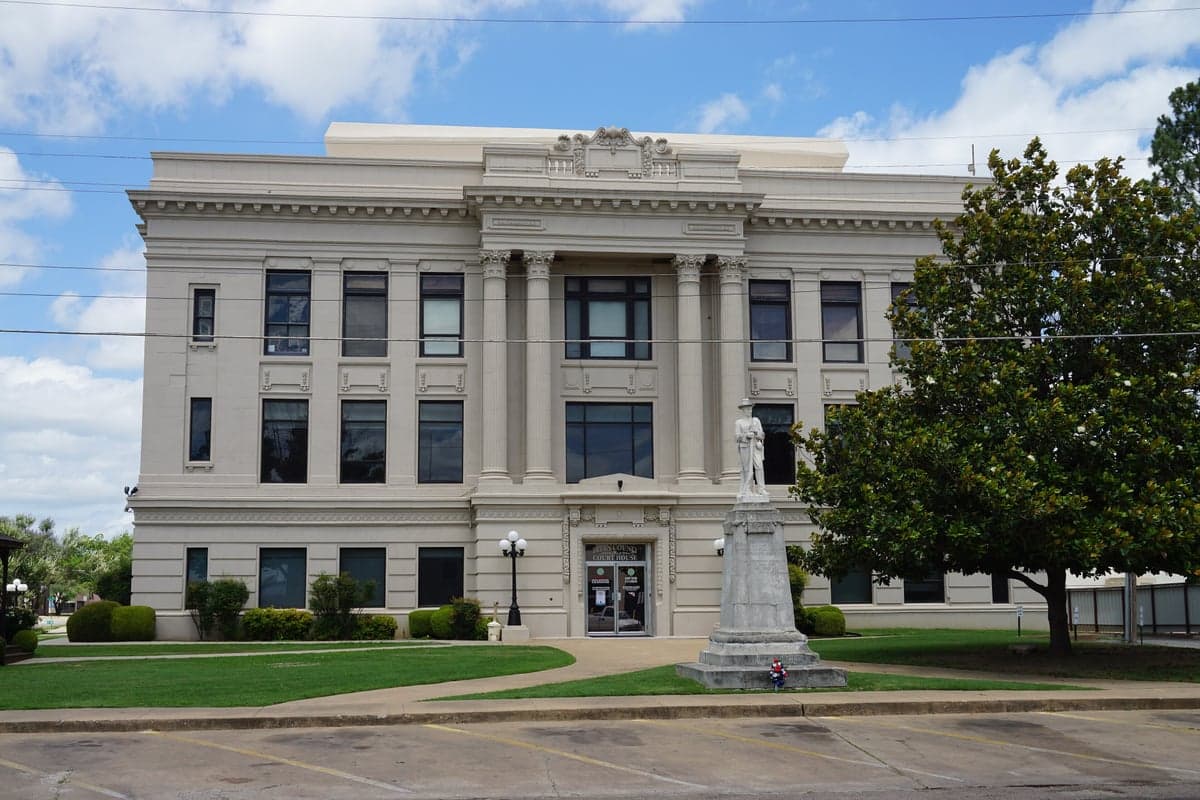
Photo: Wikipedia
Strategic Assessment of Bryan County
Workable tactical position. Some exposure to population density or targets, but generally defensible in a crisis.
What does the Strategic Assessment tell us?
Our Strategic Assessment grades tactical survivability of an area. Major population centers, military targets, fallout zones, natural disasters, and border exposure all drive risk — lower exposure means a more defensible position in a crisis.
This is heavily inspired by Joel Skousen's Strategic Relocation book. Highly recommended you checkout the book ($)What does this tell us?
Our Strategic Assessment grades tactical survivability of an area. Major population centers, military targets, fallout zones, natural disasters, and border exposure all drive risk — lower exposure means a more defensible position in a crisis.
This is heavily inspired by Joel Skousen's Strategic Relocation book. Highly recommended you checkout the book ($)Strategic Pillars

Key Distances
Strategic Assessment Analysis
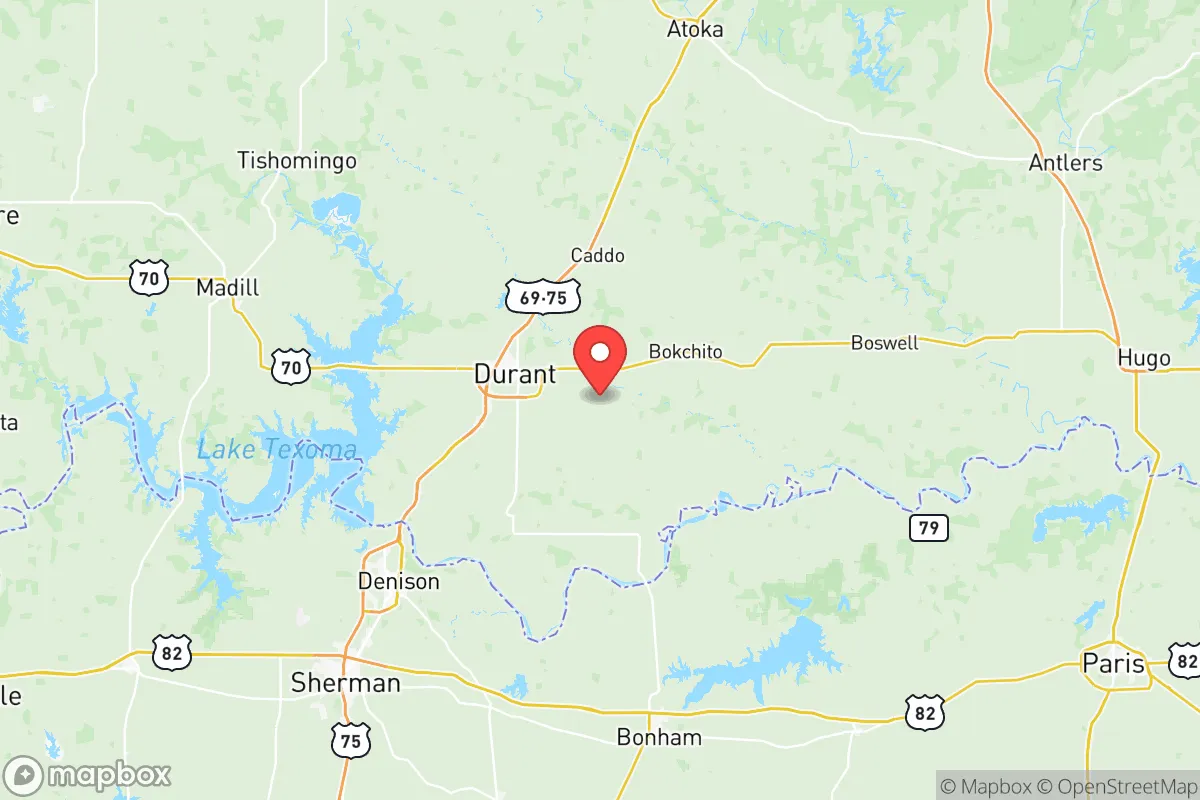
Bryan County, Oklahoma, offers a compelling strategic position for relocators prioritizing resilience and self-sufficiency, balancing the advantages of a low-population-density rural setting with reasonable access to regional infrastructure. Anchored by the county seat of Durant and the smaller communities of Calera, Caddo, and Colbert, the area sits just north of the Texas border, roughly 90 miles north of Dallas and 120 miles southeast of Oklahoma City. This placement provides a meaningful buffer from major metropolitan fallout zones while still allowing for supply runs and medical access, making it a practical choice for those serious about disaster readiness and long-term sustainability.
Geographic position and natural advantages for self-sufficiency
Bryan County's location in south-central Oklahoma places it within the fertile Red River Valley, offering significant agricultural potential for those seeking food independence. The county benefits from a temperate climate with a growing season of roughly 220 days, which supports year-round gardening and small-scale farming. The Red River forms the southern boundary, and Lake Texoma—one of the largest reservoirs in the region—straddles the county's southwestern edge, providing a substantial freshwater resource. The terrain is predominantly rolling plains and low hills, which offers decent drainage and avoids the floodplain risks found closer to the river's immediate banks. For a relocator focused on defensibility, the area's sparse population density (roughly 50 people per square mile) and lack of major interstate highways running directly through the county reduce the likelihood of mass evacuation traffic or refugee flows during a regional crisis. The proximity to the Choctaw Nation's headquarters in Durant also means a stable local government presence and established emergency management infrastructure.
Risks, exposures, and proximity to fallout-relevant landmarks
While Bryan County avoids the highest-risk zones for natural disasters, it is not without exposure. The region lies in Tornado Alley, and severe weather—including tornadoes, hailstorms, and straight-line winds—is a seasonal reality. The 2015 tornado that struck near Durant serves as a reminder that shelter planning is essential. Flooding along the Red River and its tributaries, particularly around Caddo and Colbert, can occur during heavy rain events, though most of the county's developable land sits above the 100-year floodplain. From a man-made risk perspective, the county's primary exposure comes from its proximity to the Dallas-Fort Worth metroplex, a major population and industrial center that would be a high-priority target in a conflict scenario. However, at roughly 90 miles away, Bryan County sits outside the most severe blast and fallout zones for most plausible scenarios. More immediately, the county is within 50 miles of the Sherman-Denison area, which hosts a significant rail and industrial corridor, and within 100 miles of the Red River Army Depot in Texas, a major ammunition storage and maintenance facility. These are moderate-risk landmarks that a strategic relocator should note, though they do not present the same level of danger as being adjacent to a major refinery or military base. The county's lack of nuclear power plants, major chemical facilities, or large-scale refineries within its borders is a net positive for fallout risk assessment.
Practical resilience for a relocator: food, water, energy, and defensibility
For those serious about self-sufficiency, Bryan County offers several practical advantages. Water availability is strong: Lake Texoma provides a reliable surface water source, and the underlying aquifer systems in the region support well drilling at moderate depths, typically 100 to 300 feet. County regulations on well permits are straightforward, and many rural properties already have existing wells. For food production, the soil quality varies but is generally workable for row crops, pasture, and orchards; the area supports cattle grazing, poultry operations, and small-scale grain production. Local farmers' markets in Durant and Caddo provide backup supply options and community connections. Energy resilience is mixed: the county is served by multiple electric cooperatives, and grid reliability is average for rural Oklahoma, with occasional outages during storms. However, the region's relatively low tree density compared to eastern Oklahoma reduces storm-related line damage. Solar potential is good, with roughly 5.5 peak sun hours per day, making off-grid solar a viable supplement. Natural gas is widely available in rural areas, and propane delivery is common. For defensibility, the county's layout works in a relocator's favor: most rural properties are set back from main roads, with good visibility and limited through-traffic. The local law enforcement presence, including the Bryan County Sheriff's Office and Durant Police Department, is adequate for a rural area, though response times in remote parts of the county can exceed 20 minutes. The strong community ties and relatively low crime rates—violent crime in Durant runs about 30% below the national average—contribute to a sense of security that is hard to replicate in more urbanized areas.
Overall, Bryan County presents a balanced strategic picture for the resilience-minded relocator. It avoids the extreme risks of coastal or metropolitan areas while offering genuine advantages in water access, agricultural potential, and low population density. The primary trade-offs are the seasonal tornado risk and the moderate proximity to the Dallas-Fort Worth metroplex, which introduces some man-made risk exposure. For a family or individual willing to invest in a storm shelter, develop a well and solar backup, and build local community ties, Bryan County offers a defensible, resource-rich base of operations that is close enough to regional infrastructure for convenience but far enough to provide meaningful buffer in a crisis. It is not a remote bunker location, but for those seeking a practical, livable balance between preparedness and everyday quality of life, it deserves serious consideration.

* Values derived from national, state, county, city and local statistics and may differ in a specific area. Last updated: 2026-07-04T02:11:26.000Z
Narrative content on this page is AI-generated and may contain mistakes. Verify any details that matter before acting on them.
ReloMaps may earn a commission from affiliate links at no extra cost to you.

