Photo: Wikipedia
Political ClimatePolitical Climate in Stark County
Showing district-level results — no local-only data available.
Local Political AnalysisPolitical Analysis of Stark County
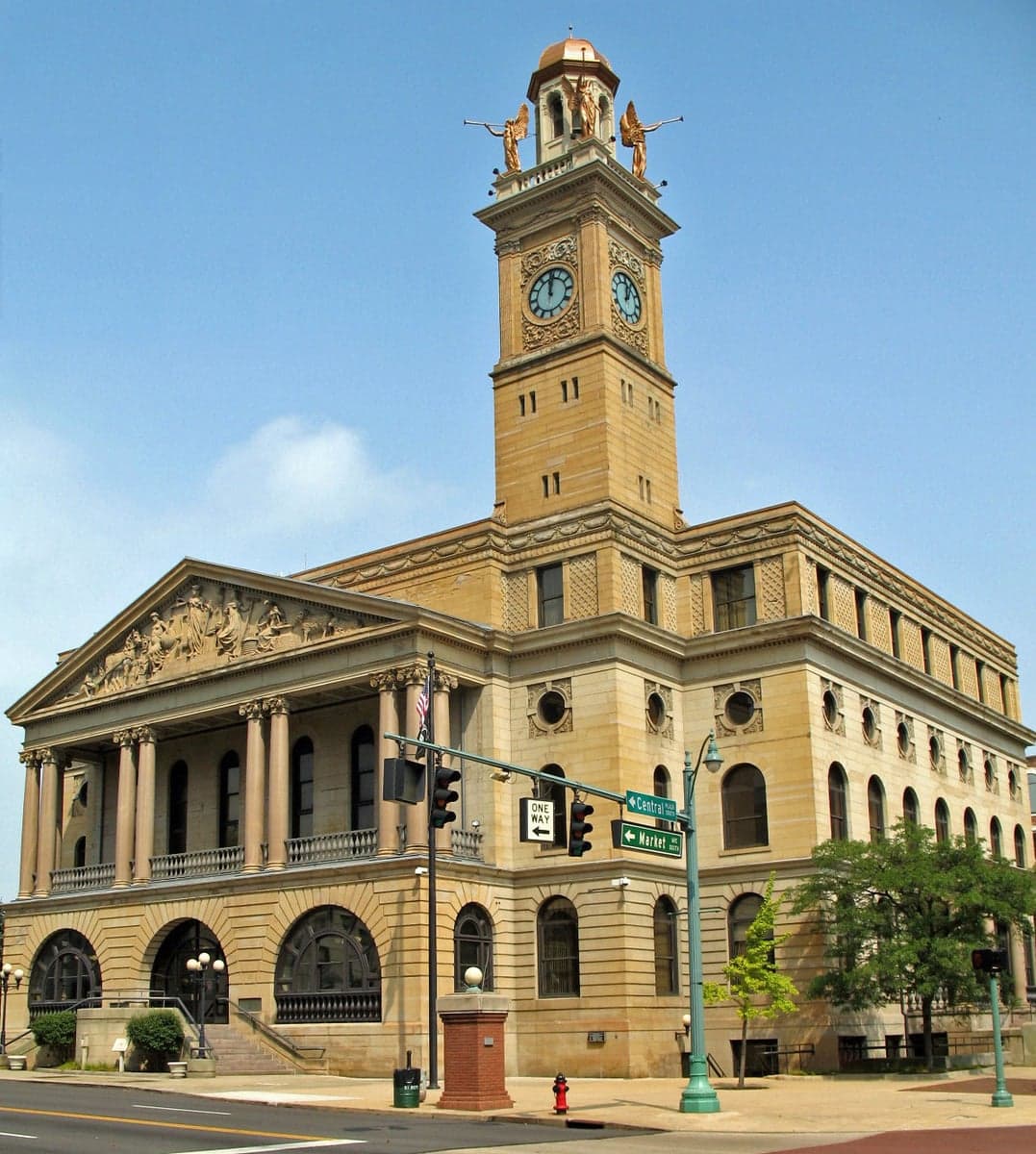
Stark County, you’re looking at Stark County, and I’ll level with you—this place used to be a rock-solid blue-collar Democratic stronghold, but it’s been shifting hard toward the right over the last decade. The Cook PVI is EVEN, meaning it’s a pure toss-up territory, but that’s a huge swing from where it was 20 years ago. Meanwhile, the state of Ohio as a whole sits at R+5, so Stark County is actually more competitive than the rest of the state, but the trend lines are clear: this county is getting redder, and fast. In 2020, Trump won Stark by about 4 points, and in 2024 he carried it by nearly 10. That’s not a fluke—that’s a realignment.
How it compares to the rest of Ohio
Here’s the thing: Ohio is already a solidly red state at R+5, but Stark County is still a bellwether that leans slightly more conservative than the statewide average on cultural issues, even if it’s economically populist. Compare it to places like Cuyahoga County (R+14) or Delaware County (R+9)—Stark is nowhere near that deep red. But it’s also not like Cuyahoga County (D+20) or Franklin County (D+15). What makes Stark unique is the internal divide between the urban vs. rural. Canton, the county seat, still votes blue—barely—leans blue, but it’s getting purple fast. The city proper went for Biden by about 8 points in 2020, but that margin is shrinking as younger families move out and older residents stay. Meanwhile, towns like Massillon, North Canton, and Jackson Township are solidly red—Massillon went +15 for Trump in 2024. The real swing precincts are in the suburbs like Plain Township and Lake Township, where you’ll find working-class families who voted Obama twice, then Trump twice. That’s the story of Stark County: people here—itical voters who feel the Democratic Party left them behind on trade, guns, and cultural values.
What this means for residents
For folks living here, the political shift means a few things in daily life. First, local government is still fairly conservative—the county commissioners are all Republicans, and the sheriff’s office is pro-Second Amendment and tough on crime. But you’ll see pockets of progressive activism, especially in Canton city council, where there’s been push for things like “defund the police” rhetoric and sanctuary city policies. That’s concerning, because it’s a direct threat to public safety and personal freedom. The good news is that those efforts have mostly stalled—voters here aren’t buying it. Property taxes are a hot-button issue, with levies often failing if they’re tied to social programs. The school boards in places like Marlington and Fairless have been fighting to keep critical race theory and gender ideology out of classrooms, and so far, they’re winning. That’s a relief for parents who want to raise their kids without government overreach into their values.
Looking ahead, I see Stark County continuing to drift right, especially as more people move out of Canton into the surrounding townships. The 2026 midterms will be a test—if the GOP can hold the county by double digits again, it’ll confirm the realignment is permanent. But the cultural battles aren’t over. You’ve got groups pushing for bike lanes and bike lanes and “equity” initiatives in Canton, while the rest of the county is focused on keeping taxes low and schools sane. If you’re thinking about moving here, know this is still a place where you can own a gun rights are free to live your life without the government breathing down your neck—just keep an eye on those city council meetings in Canton. That’s where the fight for your rights is happening right now.

State Political ClimatePolitical Climate in Ohio
State Political AnalysisPolitical Environment in the State
Ohio is a state that has shifted from a classic presidential bellwether to a solidly Republican-leaning state, with a Cook PVI of R+5, but the real story is a lot more complicated than that. Over the last 20 years, the state has moved from being a true swing state (voting for Bush in 2004, then Obama twice) to a place where Republicans now dominate state government and most down-ballot races, even as the major metro areas have become deep blue fortresses. The dominant coalition is a mix of working-class voters in small cities and rural areas, combined with suburban conservatives who have grown increasingly wary of progressive overreach from places like Columbus and Cleveland.
Urban vs. rural divide
The political map of Ohio is a textbook example of the urban-rural split that defines American politics today. The three big Cs — Cleveland, Columbus, and Cincinnati — are the Democratic strongholds, with Cuyahoga County (Cleveland) and Franklin County (Columbus) routinely delivering 65-70% of their votes to Democrats. But outside those islands, the state is overwhelmingly red. The real battlegrounds are the suburbs and exurbs: places like Delaware County (north of Columbus) and Warren County (north of Cincinnati) have become reliably Republican, while Lake County (east of Cleveland) and Stark County (Canton) are the true swing areas that decide statewide races. The rural counties like Mercer County (in the west) and Ashtabula County (in the northeast) have trended hard right as manufacturing jobs disappeared and cultural issues took center stage. The divide isn't just about population density — it's about worldview. In the 2020 and 2022 cycles, the rural vote margin for Republicans grew by 5-8 points in many counties, while the urban vote margin for Democrats stayed flat, meaning the state's overall lean has shifted right even as the cities get bluer.
Policy environment
Ohio's policy environment is a mixed bag for conservatives. On the plus side, the state has a flat income tax rate of 3.5% (down from 4.8% a decade ago), no estate tax, and a right-to-work law that was passed in 2011 but repealed by voters in a 2011 referendum — a reminder that organized labor still has a strong union tradition. The regulatory posture is a Republican trifecta (Governor Mike DeWine, a GOP-controlled House and Senate), and they've passed permitless carry (constitutional carry) in 2022, a six-week abortion ban (which was then put on hold by a 2023 voter referendum enshrining abortion rights in the state constitution), and a law banning transgender athletes from girls' sports. However, the state's regulatory environment is still heavier than many Sun Belt states, and property taxes are a growing concern — especially in fast-growing suburbs where assessments have jumped 20-30% in the last five years. Education policy is a flashpoint: Ohio has a robust school choice program (the EdChoice scholarship) that allows students in low-performing districts to attend private schools, and the state has one of the most active charter school sectors in the Midwest. But the state also has a sales tax on most goods (5.75% state rate, plus local add-ons) that can hit 8% in some counties, and the gas tax is 38.5 cents per gallon, which is middle-of-the-pack nationally.
Trajectory & freedom
On the freedom front, Ohio has been a mixed story over the last five years. The good news: the state passed constitutional carry in 2022, meaning no longer requiring a permit needed to carry a concealed firearm, and the state has a strong castle doctrine and stand-your-ground law. Parental rights got a boost in 2023 with a law requiring schools to notify parents of any changes to a student's health or well-being (the "Parents Bill of Rights"), and the state banned transgender procedures for minors in 2024. But there are real concerns. The 2023 Issue 1 vote, which enshrined abortion rights into the state constitution, was a major blow to pro-life advocates, and it showed that Ohio voters are more moderate on social issues than the GOP legislature. The state also has a history of aggressive state-level mandates — during COVID, Governor DeWine was one of the first governors to issue a stay-at-home order and mask mandates, which angered many conservatives. More recently, the state has been cracking down on local "sanctuary city" policies, with a 2024 law requiring local law enforcement to cooperate with ICE. On property rights, the state has a strong "takings" law, but eminent domain is still a concern in areas with pipeline projects. The overall trajectory is toward more conservative governance, but the state's constitution allows for voter referendums that can override the legislature, which is a double-edged sword for conservatives.
Civil unrest & political movements
Ohio has seen its share of political flashpoints. The 2020 protests in Columbus and Cincinnati over George Floyd's death were large but mostly peaceful, though there were some instances of looting and property damage in downtown Columbus. The 2022 "Unite the Right" rally in Dayton was a smaller affair, but the city has a history of racial tension. More recently, the 2023 debate over Issue 1 (the abortion amendment) saw intense activism on both sides, with pro-life groups like Ohio Right to Life and progressive groups like the Center for Christian Virtue facing off against Planned Parenthood and the ACLU. Immigration politics are less heated than in border states, but there have been flashpoints in Springfield and Dayton over refugee resettlement and the 2024 election, there were widespread claims of voter fraud in some counties, though no evidence of widespread issues was found. The state has a strong voter ID law requiring voter ID, and the 2023 law purging inactive voters from the rolls was controversial but upheld in court. The most visible political movement right now is the "Parents' Rights" movement, which has been active in school board meetings across the state, particularly in suburban districts like Mason and Dublin.
Projection
Over the next 5-10 years, Ohio is likely to become more Republican at the state level, but the margin of control may narrow as the suburbs of Columbus and Cincinnati continue to grow and diversify. The state's population is aging and aging and slowly declining, with the biggest losses in rural counties and the biggest gains in the Columbus metro area. This means the political center of gravity is shifting toward the I-71 corridor between Cincinnati and Cleveland and Columbus, which is becoming more moderate and professional-class. The 2024 election results showed that Trump's margins in rural counties were still strong, but they didn't grow much as in 2020, while the suburbs moved slightly left. The wild card is the state's referendum process — if progressives keep using it to bypass the legislature (as they did with abortion and marijuana legalization in 2023), the state could see more direct democracy battles. For a conservative moving in, expect the state to remain a solid Republican stronghold for statewide races, but with a growing progressive minority in the cities that will keep cultural fights over social issues alive. The state's economy is diversifying, with growth in logistics, manufacturing, and tech, which could bring in new residents from blue states who might shift the political balance over time.
For a new resident, the bottom line is this: Ohio is a state where you can live a conservative lifestyle without feeling like you're in a bubble, but you need to pick your local politics carefully. The rural and exurban areas are deeply red and getting redder, while the cities are blue and inner suburbs are blue and getting bluer. If you're looking for a place with low taxes, strong gun rights, and a government that generally stays out of your business, Ohio is a solid choice — just be prepared for the occasional referendum battle and the fact that the state's biggest cities are run by Democrats. The state's political trajectory is positive for conservatives, but it's not a done deal, and the next decade will tell whether the suburban shift toward moderation or the rural shift toward conservatism wins out.
* Values derived from national, state, county, city and local statistics and may differ in a specific area. Last updated: 2026-05-14T19:45:17.000Z
Narrative content on this page is AI-generated and may contain mistakes. Verify any details that matter before acting on them.
ReloMaps may earn a commission from affiliate links at no extra cost to you.

