Photo: Wikipedia
Demographics of Richland County
Affluence Level in Richland County
A below-average socioeconomic profile. Incomes, home values, and educational attainment trail the U.S., with higher poverty and unemployment.
People of Richland County
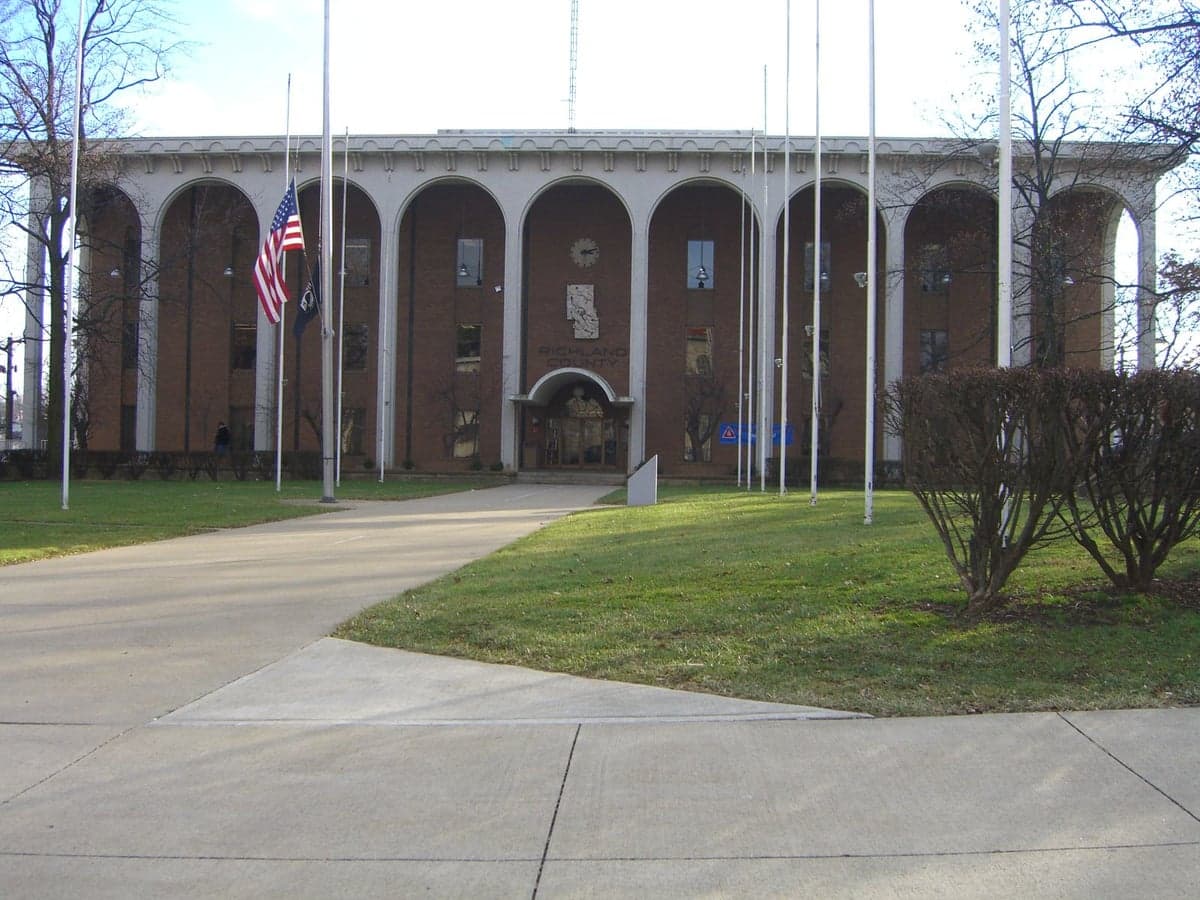
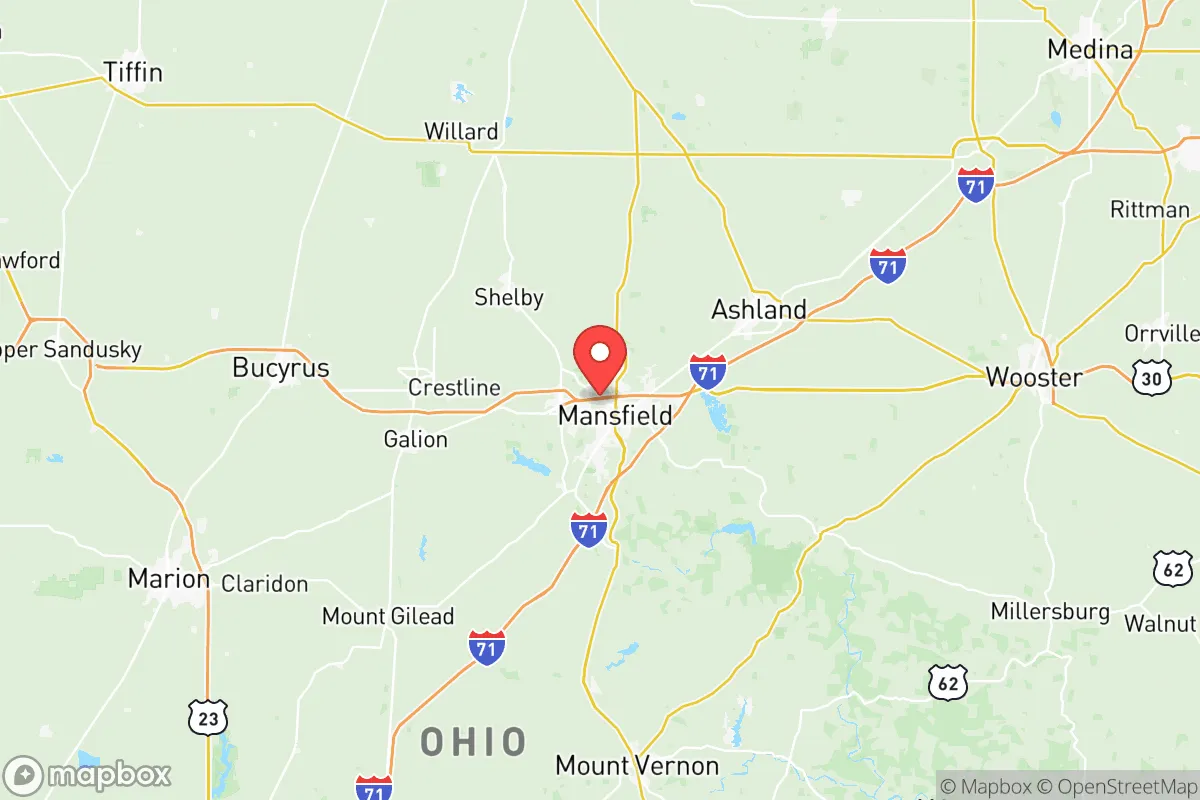
Richland County, Ohio, is a predominantly white, working-class community of 125,138 residents, anchored by the city of Mansfield and characterized by its deep manufacturing roots and a population that is older and less diverse than the state average. With a foreign-born rate of just 0.6% and a college attainment rate of 17.9%, the county remains one of Ohio's most culturally and economically homogeneous regions, shaped by generations of domestic migration and industrial employment. Its identity is defined by a blend of Appalachian heritage, German and Italian immigrant stock, and a slow, steady decline in population that has left a tight-knit, resilient, and politically conservative populace.
Settlement & growth (pre-1960)
Before American settlement, the area now known as Richland County was part of the traditional territory of the Wyandot (Huron) and Lenape (Delaware) nations, who used the region for hunting and seasonal habitation. The land was ceded to the United States through the Treaty of Greeneville (1795) and the subsequent Treaty of Fort Industry (1805), opening the area to Euro-American settlers. The county was formally organized in 1813, carved from Fairfield and Knox counties, with Mansfield established as the county seat in 1808 by pioneers from Pennsylvania and Virginia.
The first major wave of settlers were of Scots-Irish and German stock, arriving from Pennsylvania and Maryland between 1810 and 1840. They were drawn by the availability of cheap, fertile land in the Firelands and U.S. Military District, and they established farming communities in Lexington, Bellville, and Butler. These early settlers were largely Protestant, self-sufficient, and politically independent, laying the foundation for the county's conservative character. By the 1830s, German immigrants began arriving in larger numbers, settling in Shelby and Plymouth, where they established Lutheran and Catholic churches that remain community anchors today.
The second transformative wave came with the arrival of the railroads in the 1850s and the subsequent industrial boom. Mansfield became a major manufacturing hub, producing stoves, farm equipment, and later, electrical components. This drew a wave of Italian immigrants between 1880 and 1910, who settled primarily in Mansfield's south end and in Ontario, working in foundries and factories. A smaller but notable wave of Polish and Slovak immigrants arrived in the same period, concentrating in Mansfield's near-west side and in Mifflin. These groups brought Catholic parish life, fraternal organizations, and a strong union tradition that would define the county's labor politics for decades.
The Great Migration brought a significant Black population to Richland County, primarily between 1910 and 1950. Black families moved from the rural South—especially Alabama, Mississippi, and Tennessee—to work in Mansfield's steel mills, tire plants, and the Ohio Brass Company. They settled predominantly in Mansfield's south-central and east-side neighborhoods, forming a tight-knit community centered around churches like St. James AME and Mount Zion Baptist. By 1950, Black residents made up roughly 6% of the county's population, a share that has remained relatively stable ever since.
The post-World War II era brought an influx of Appalachian white migrants from eastern Kentucky, West Virginia, and southern Ohio, drawn by manufacturing jobs at Westinghouse, Tappan, and General Motors. These families settled in Mansfield's north end and in the villages of Lucas and Perrysville, bringing a distinct Appalachian cultural influence—bluegrass music, evangelical Protestantism, and a strong sense of family and place—that remains visible in the county's social fabric today.
Modern era (post-1965)
The 1965 Hart-Cellar Act had a minimal direct impact on Richland County. Unlike major metropolitan areas, the county did not experience significant immigration from Asia, Latin America, or the Middle East. The foreign-born population today stands at just 0.6%, far below the national average of 13.7%. The county's small East/Southeast Asian community (0.7%) consists largely of second- and third-generation families of Chinese and Filipino descent, concentrated in Mansfield and Ontario, many of whom are employed in healthcare and engineering at OhioHealth Mansfield Hospital and the local manufacturing sector. The Indian subcontinent community (0.2%) is even smaller, primarily professionals working at the area's hospitals and universities, with no distinct ethnic enclave.
The Hispanic population (2.2%) has grown modestly since 2000, driven by Mexican and Puerto Rican families moving into Mansfield and Shelby for work in warehousing, logistics, and food processing. This community remains small but is growing faster than any other ethnic group, with a concentration in Mansfield's near-south side. The Black population (7.3%) has remained stable in absolute numbers but has declined as a share of the total population due to white out-migration and an aging demographic profile.
The most significant demographic shift since 1970 has been domestic out-migration. Richland County's population peaked at roughly 130,000 in 1970 and has declined steadily since, driven by the collapse of heavy manufacturing. The closure of the General Motors stamping plant in Ontario (2006) and the decline of the Tappan appliance plant in Mansfield led to thousands of job losses, prompting a wave of out-migration to the Sun Belt and to larger Ohio cities like Columbus and Charlotte. This has left an older, more settled population, with a median age of 42.5, well above the national median of 38.8.
The future
Richland County's population is projected to continue its slow decline over the next 10-20 years, falling to roughly 115,000 by 2040, according to state demographic projections. The county is becoming slightly more diverse, driven by modest Hispanic and Asian growth, but it will remain overwhelmingly white and non-Hispanic. The Hispanic population is expected to reach 4-5% by 2040, while the Black and Asian shares will likely remain stable or grow only marginally.
The county's cultural identity is evolving slowly. The Appalachian and Rust Belt working-class ethos remains dominant, but the decline of manufacturing has shifted the economy toward healthcare, logistics, and education. The opening of the Richland Correctional Institution and the expansion of OhioHealth Mansfield Hospital have brought new jobs and a small influx of professionals, many of whom commute from Columbus or Cleveland. The county is also seeing a modest return of remote workers and retirees drawn by low housing costs—the median home value is roughly $140,000—and a slower pace of life.
New residential development is concentrated in Ontario and Lexington, where newer subdivisions and retail corridors attract families and commuters. Mansfield's urban core continues to lose population, while the outer townships and villages see modest growth. The county's political and cultural identity remains conservative, with a strong Republican lean in local elections, but the growing Hispanic and professional populations may introduce more political diversity over time.
For someone moving in now, Richland County offers a low-cost, low-stress environment with strong community ties and a slower pace of life, but it is not a place of rapid demographic change or economic dynamism. The population is stable, aging, and predominantly white, with small but growing Hispanic and Asian communities. The county's future is one of gradual decline in numbers but stability in character—a place where family, church, and local tradition remain central, and where newcomers are welcomed but expected to fit into an established way of life.

* Values derived from national, state, county, city and local statistics and may differ in a specific area. Last updated: 2026-06-26T15:50:28.000Z
Narrative content on this page is AI-generated and may contain mistakes. Verify any details that matter before acting on them.
ReloMaps may earn a commission from affiliate links at no extra cost to you.

