Photo: Wikipedia
Demographics of Ohio
Affluence Level in Ohio
An upper-middle-class area. Household wealth, education levels, and homeownership run ahead of national benchmarks.
People of Ohio
The people of Ohio today number 11.8 million, forming a population that is 76.5% white, 12.1% Black, 4.6% Hispanic, 1.3% East/Southeast Asian, and 1.1% Indian (subcontinent), with only 2.4% foreign-born. This makes Ohio one of the most native-born, ancestrally rooted states in the Midwest, where identity is shaped less by recent immigration and more by the layered settlement of Yankees, Appalachians, Germans, and African Americans from the Great Migration. The state’s character is a blend of Midwestern reserve, Rust Belt resilience, and small-town conservatism, with a population density that thins from the industrial northeast and central cities outward into vast agricultural plains. Distinctive markers include a strong union legacy, a deep Catholic and Protestant church presence, and a political swing-state identity that has tilted rightward in recent presidential cycles.
Settlement & growth (pre-1960)
Before American settlement, Ohio was home to the Adena, Hopewell, and later the Shawnee, Miami, and Wyandot nations, who built earthworks and controlled the Ohio Country. The French and British contested the region during the 18th century, but the decisive American victory at the Battle of Fallen Timbers in 1794 opened the Northwest Territory to white settlement. The first major wave was the Yankee migration from New England and upstate New York, who founded Marietta (1788), Cleveland (1796), and much of the Western Reserve in the northeast. These settlers brought Congregationalist and Presbyterian churches, abolitionist politics, and a focus on education, establishing Ohio’s early cultural tone.
The Upland Southern migration followed, with Scots-Irish and English settlers from Virginia, Kentucky, and Pennsylvania moving into the southern and central counties. They founded Chillicothe (1796), the first state capital, and Cincinnati (1788), which became a major river port. This group brought a more rural, evangelical, and Jeffersonian outlook, creating a lasting cultural divide between Yankee northeast and Appalachian south. The German immigration peaked between 1830 and 1860, with tens of thousands settling in Cincinnati’s Over-the-Rhine neighborhood, as well as in Columbus, Dayton, and the rural counties of Auglaize and Mercer. Germans established breweries, Catholic parishes, and tight-knit farming communities that remain culturally distinct today.
The Irish immigration surged during the 1840s potato famine, with many settling in Cleveland, Toledo, and along the canal and railroad construction routes. By the late 19th century, Eastern and Southern European immigrants—Poles, Italians, Slovaks, Hungarians, and Czechs—flooded into the industrial cities of Cleveland, Youngstown, Akron, and Lorain to work in steel mills, auto plants, and rubber factories. These groups built ethnic neighborhoods like Cleveland’s Slavic Village and Little Italy, and they anchored the Catholic and Orthodox church presence in the state. The Great Migration of African Americans from the South began around 1915 and accelerated through 1970, with Black families moving to Cleveland, Cincinnati, Columbus, Dayton, and Youngstown for industrial jobs. By 1960, Cleveland’s Hough and Glenville neighborhoods were majority Black, and the state’s Black population had grown to roughly 8%.
The Appalachian migration from West Virginia, Kentucky, and Tennessee brought white families to Ohio’s industrial cities from the 1940s through the 1970s, seeking work in steel and manufacturing. They concentrated in Cincinnati’s Lower Price Hill, Columbus’s Franklinton, and Cleveland’s near west side, adding a distinct mountain culture to the urban mix. By 1960, Ohio was a dense, industrial powerhouse with a population that was roughly 88% white and 10% Black, with small but established German, Irish, Polish, and Italian enclaves.
Modern era (post-1965)
The 1965 Hart-Cellar Act had a muted effect on Ohio compared to coastal states, as the state’s foreign-born share remained low at 2.4% in 2024. However, post-1965 immigration did reshape specific cities. East/Southeast Asian communities grew modestly, with Chinese and Korean immigrants settling in Columbus’s Dublin and Worthington suburbs, and Vietnamese refugees arriving after 1975 in Cleveland and Columbus. The Indian (subcontinent) population expanded more rapidly after 1990, driven by tech and medical professionals, with concentrations in Columbus’s Dublin and Hilliard suburbs, as well as in Cincinnati’s Mason and West Chester. These communities are highly educated and have integrated into professional sectors without forming large ethnic enclaves.
Hispanic growth has been the most dynamic post-1965 shift, rising from under 1% in 1970 to 4.6% in 2024. The largest groups are Mexican and Puerto Rican, with Mexicans concentrated in the agricultural northwest (Toledo, Findlay, and the Lake Erie fruit belt) and Puerto Ricans in Cleveland’s Clark-Fulton neighborhood and Lorain. This growth is driven by both direct immigration and domestic migration from Texas and California. The Black population has shifted geographically, with many families leaving Cleveland and Youngstown for the Sun Belt, while Columbus has seen a net gain in Black residents, particularly in the east side and suburban Reynoldsburg.
Domestic migration has been the dominant force reshaping Ohio since 1970. The collapse of manufacturing in the Rust Belt triggered a population exodus from Cleveland, Youngstown, and Dayton, with those cities losing 30-50% of their peak populations. Meanwhile, the Columbus metropolitan area has grown steadily, absorbing domestic migrants from the rest of Ohio and from other states, drawn by state government, Ohio State University, and a diversified economy. Suburbanization has been intense: the white population has decentralized into outer-ring suburbs like Dublin, Powell, and West Chester, while inner-ring suburbs have become more diverse. The state’s overall white share has declined from 88% in 1970 to 76.5% in 2024, driven by Hispanic and Asian growth, but Ohio remains far less diverse than the national average.
The future
Ohio’s population is projected to grow slowly, reaching roughly 12 million by 2040, with most growth concentrated in the Columbus region and the Cincinnati suburbs. The state is tribalizing into distinct enclaves rather than homogenizing: the rural and exurban counties are becoming whiter and older, while the urban cores and inner suburbs are diversifying. The Hispanic population is expected to grow to 6-7% by 2040, driven by both immigration and higher birth rates, with continued concentration in northwest Ohio and Cleveland. The East/Southeast Asian and Indian populations will likely grow in the Columbus and Cincinnati tech corridors, but they will remain small relative to the Midwest average.
The white population is aging and declining in absolute numbers, as birth rates fall and younger whites leave for Sun Belt states. This is creating labor shortages in manufacturing and agriculture, which may accelerate Hispanic in-migration. The Black population is stabilizing after decades of out-migration, with Columbus and Cincinnati gaining Black residents while Cleveland and Youngstown continue to lose them. The foreign-born share may rise to 3.5-4% by 2040, but Ohio will remain one of the least immigrant-heavy states in the nation.
Culturally, the state is absorbing new immigrant groups into its existing Midwestern identity rather than being transformed by them. Hispanic and Asian communities are integrating into suburban life, attending public schools, and adopting Ohio’s conservative social norms in many cases. The political divide between urban and rural areas is likely to widen, with Columbus and Cincinnati becoming more Democratic and the rest of the state solidifying as Republican. For a conservative-leaning individual or family moving to Ohio, the state offers a stable, rooted population with low crime in most suburbs, strong religious institutions, and a pace of demographic change that is slow enough to feel familiar.
Ohio is becoming a state of two demographic tracks: a growing, diversifying Columbus-Cincinnati corridor and a shrinking, aging, and whitening rural and industrial north. For someone moving in now, the choice is between a dynamic, job-rich suburban environment with moderate diversity or a quieter, more homogeneous small-town or rural setting where the population is thinning. The state’s future is not one of rapid transformation, but of gradual, manageable change within a deeply established cultural framework.

Most Diverse Cities in Ohio
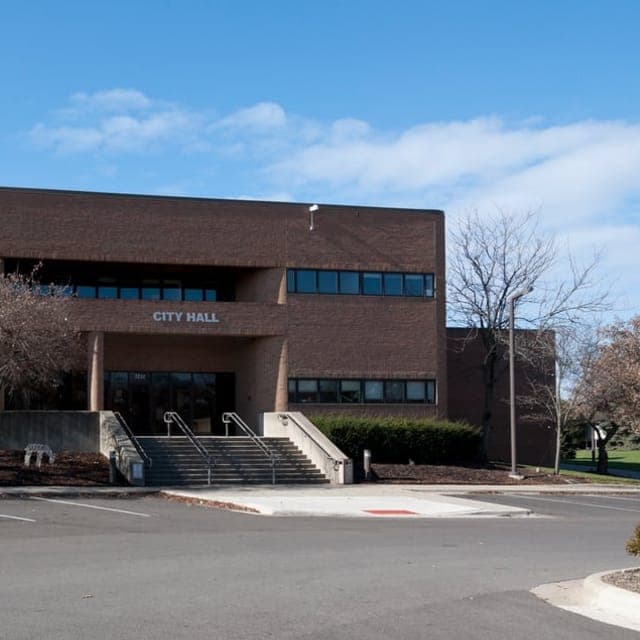
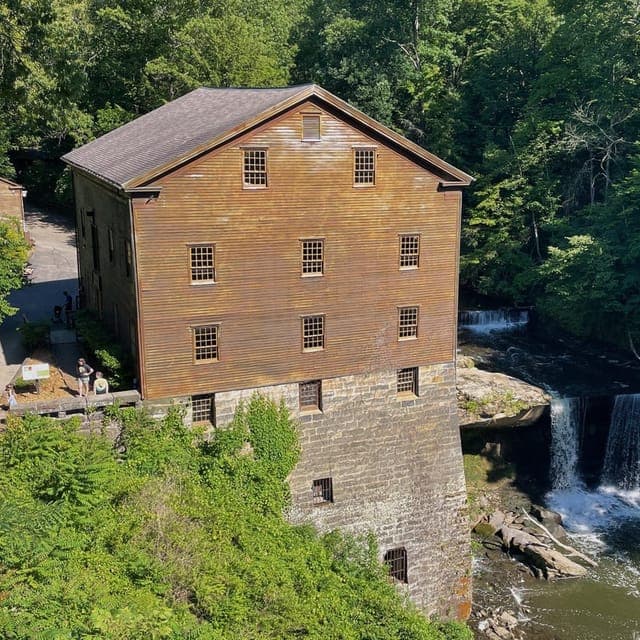
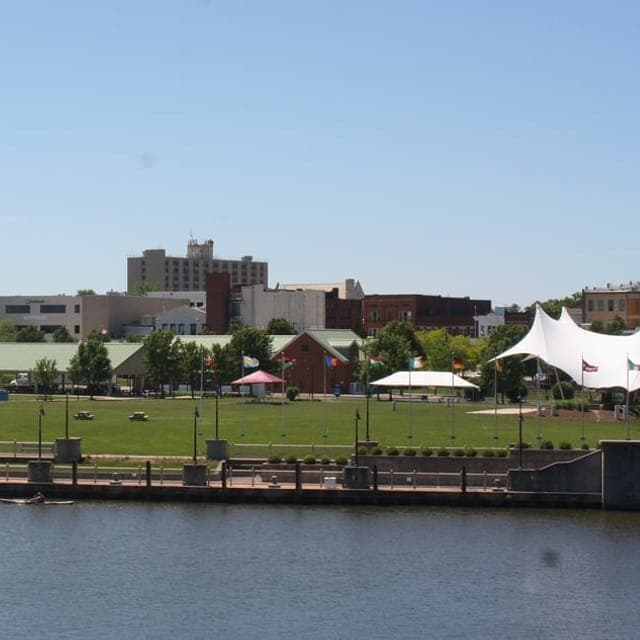
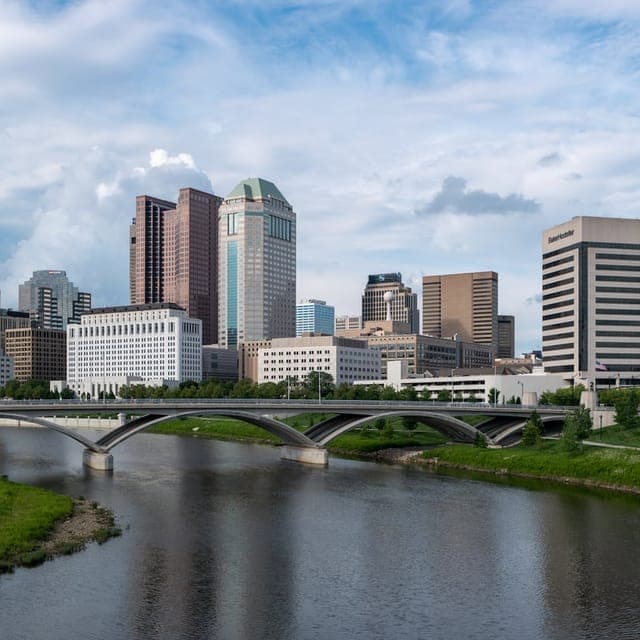
Most Homogenous Cities in Ohio
* Values derived from national, state, county, city and local statistics and may differ in a specific area. Last updated: 2026-04-14T06:19:45.000Z
Narrative content on this page is AI-generated and may contain mistakes. Verify any details that matter before acting on them.
ReloMaps may earn a commission from affiliate links at no extra cost to you.

